AEC Technical Guide · Plumbing Codes · Performance Flow
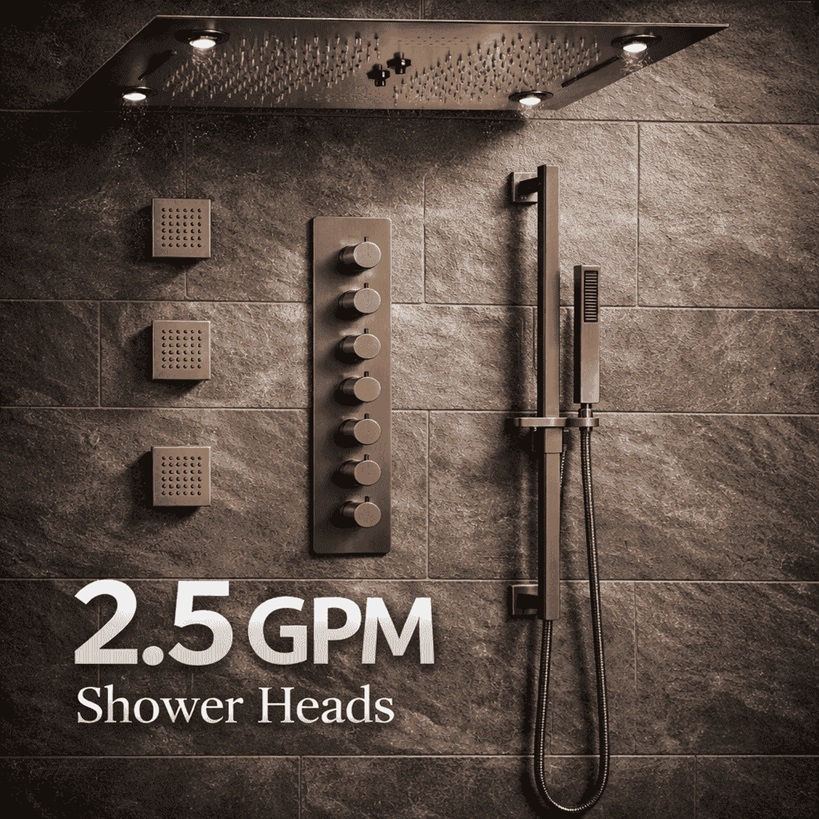
A Technical Guide for AEC Professionals on 2.5 GPM Shower Heads
A 2.5 GPM shower head is a regulated plumbing component that directly affects user comfort, code compliance,
water delivery performance, and system pressure balance. For architects, engineers, and contractors, proper
selection influences shower experience, piping design, and long-term operational reliability in residential
and commercial projects.
2.5 GPM Flow Rate · Pressure Balance · Code-Compliant · Fixed & Handheld · Residential & Commercial Use
Frequently Asked Questions
2.5 GPM Shower Heads for AEC Professionals
Flow rate standards and performance intent
What does a 2.5 GPM rating indicate for a shower head?
A 2.5 gallons-per-minute rating represents the maximum allowable flow rate under federal plumbing standards.
It balances water delivery volume with pressure stability to support consistent spray performance across
varying supply conditions.
Why is 2.5 GPM still specified in many residential projects?
This flow rate supports fuller spray patterns and faster rinse times, which can be important in luxury,
hospitality, and multi-user residential environments where user comfort is a priority.
How does flow rate impact system pressure?
Higher flow requires proper pipe sizing and pressure balancing to prevent temperature fluctuation and
pressure drop when multiple fixtures operate simultaneously.
Spray patterns, coverage, and user experience
How do spray patterns differ in 2.5 GPM shower heads?
Multi-function designs can deliver rain, massage, or full-coverage sprays while maintaining the same
maximum flow rate. Nozzle design determines perceived pressure and coverage.
Why does spray face size matter?
Larger spray faces distribute water across a wider area, improving comfort while reducing localized
pressure points on the user.
What role do internal flow restrictors play?
Restrictors regulate output to remain code compliant while allowing manufacturers to tune spray performance
through nozzle geometry.
Fixed vs handheld shower head selection
When should a fixed 2.5 GPM shower head be specified?
Fixed heads are commonly used in standard residential and hotel installations where simplicity,
durability, and low maintenance are priorities.
What advantages do handheld shower heads offer?
Handheld units improve flexibility for accessibility, cleaning, and user preference while still meeting
the same flow and code requirements.
How should mounting height be coordinated?
Height and angle should be coordinated with user demographics and enclosure size to ensure effective
coverage without overspray.
Materials, finishes, and durability
What materials are commonly used in spec-grade shower heads?
Solid brass and stainless steel bodies offer superior durability compared to lightweight plastics,
particularly in high-use or hospitality environments.
How do finishes affect maintenance?
Chrome remains the most durable and service-friendly finish. Brushed and matte finishes help reduce
visible water spotting and fingerprints in modern designs.
What should be included in shower head specifications?
Documents should list flow rate, spray type, connection size, finish, and any applicable code or
performance notes for coordination with valves and trim.
|
|
|


.jpg)