Countertop Touchless Faucets
Automatic Sensor Bathroom Faucets for Commercial & Residential Use
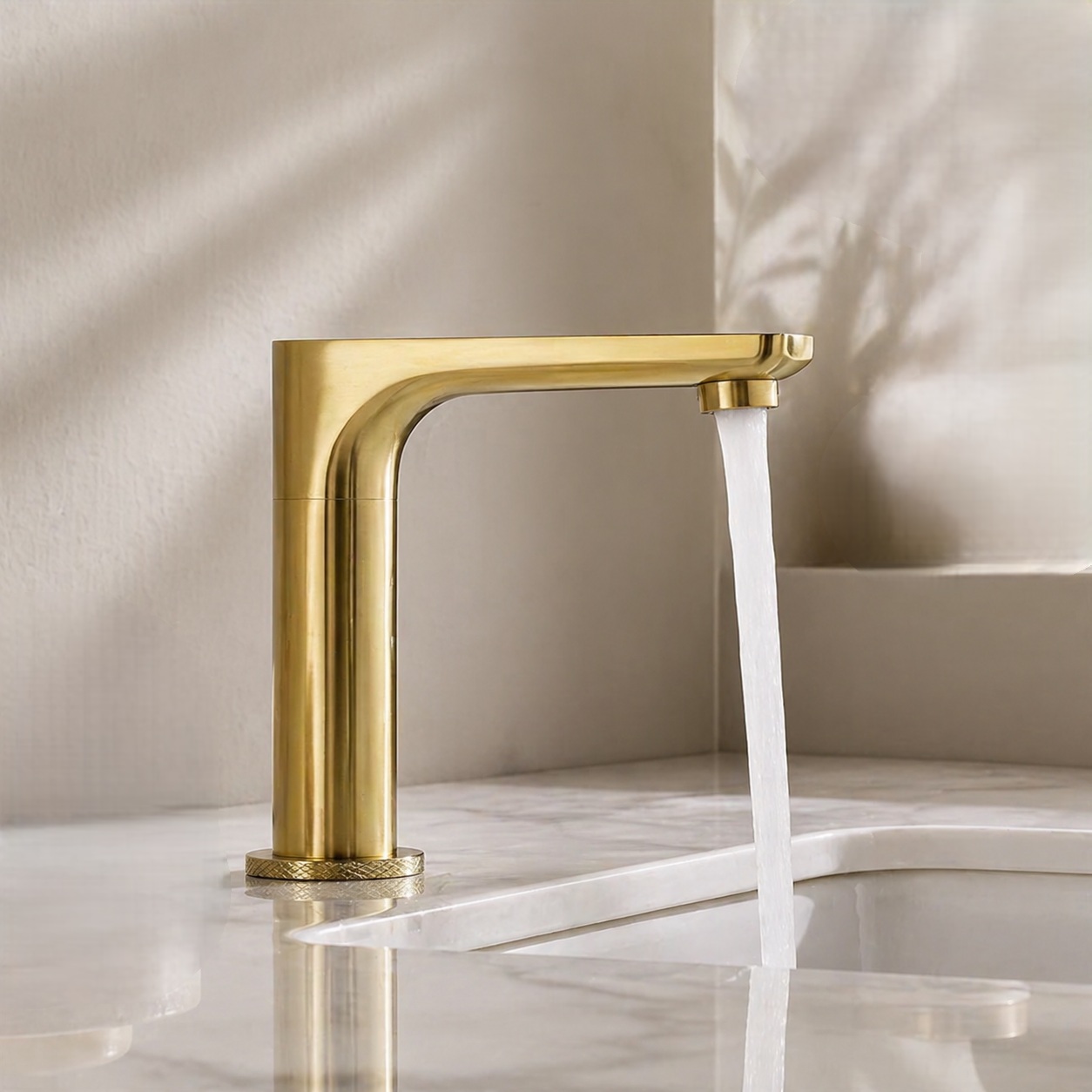
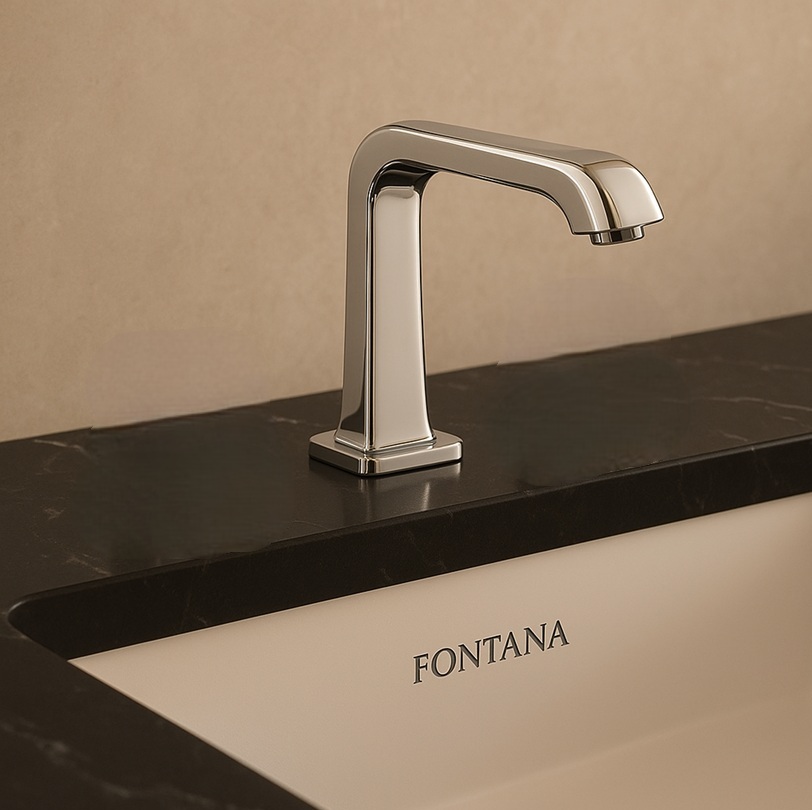
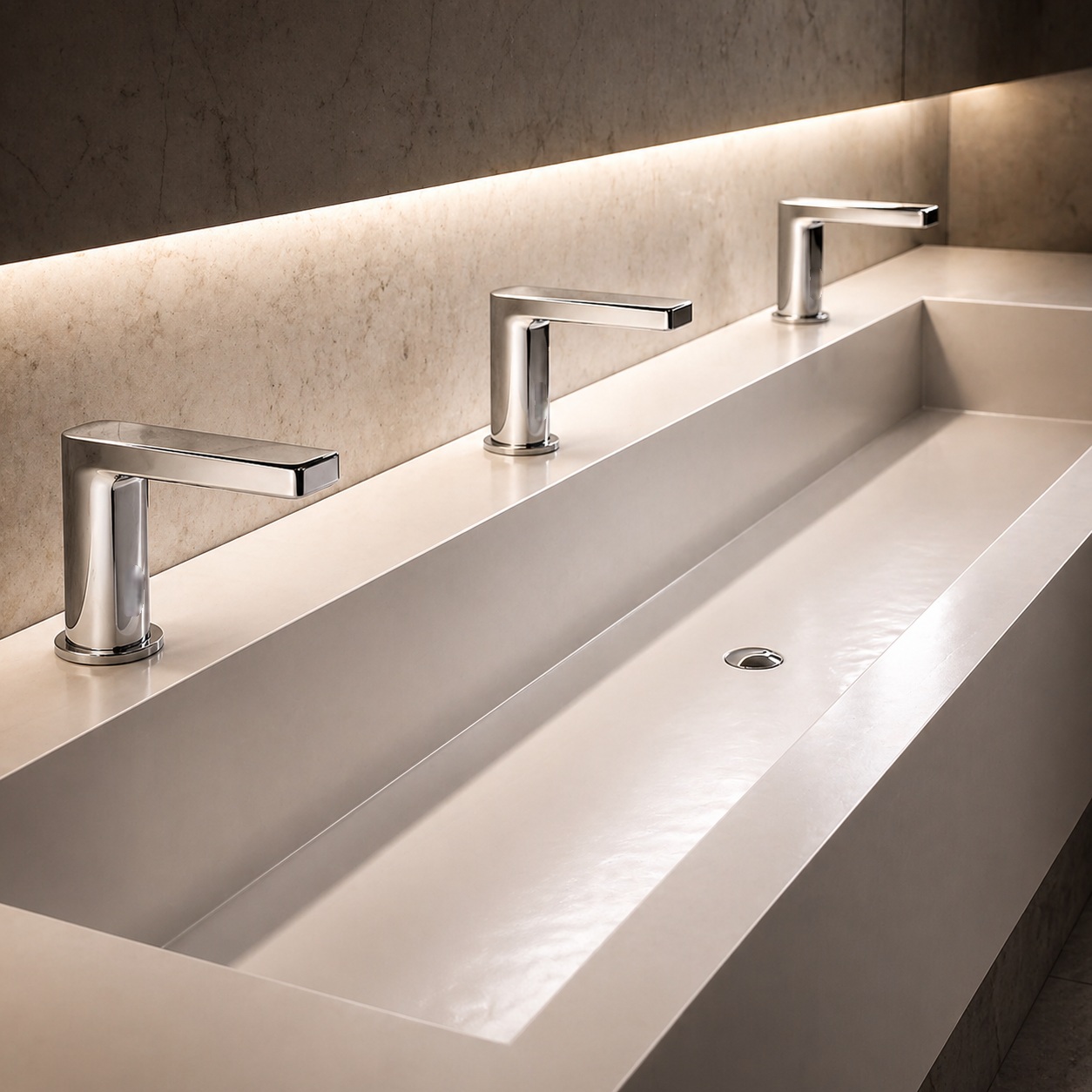
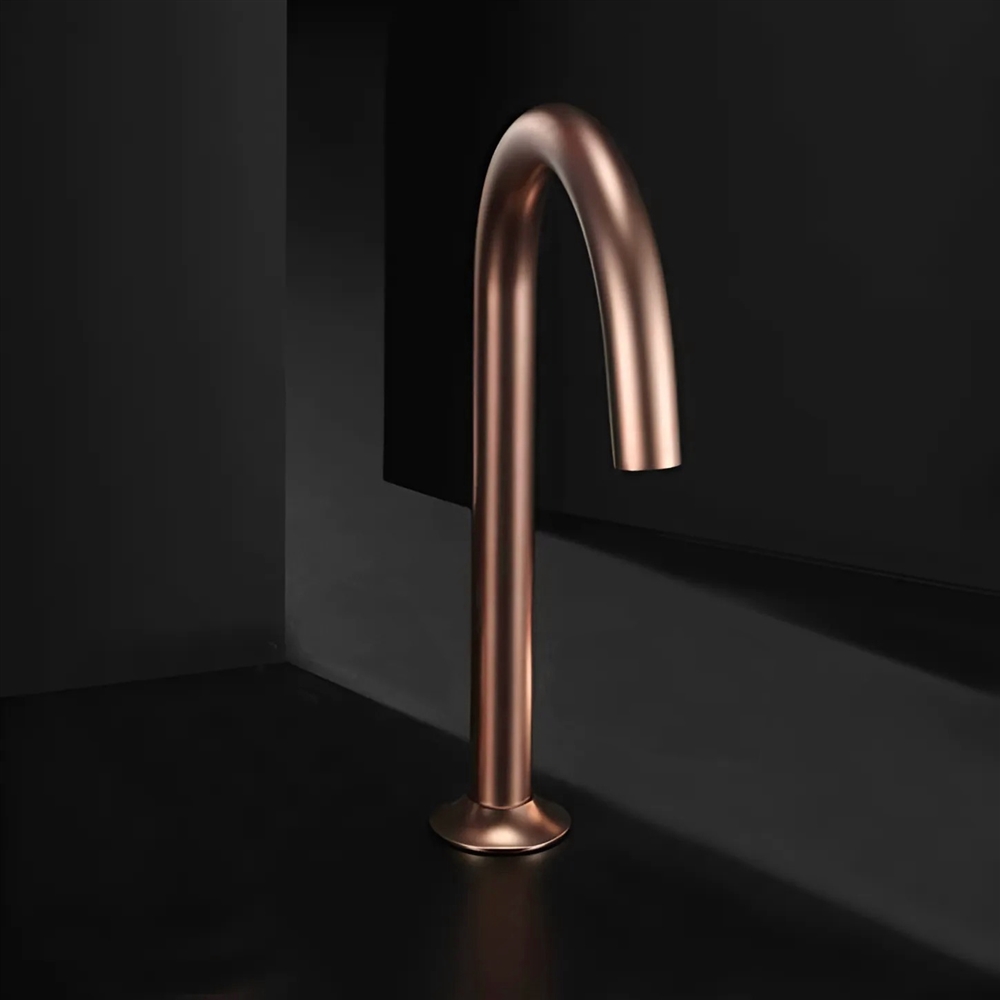
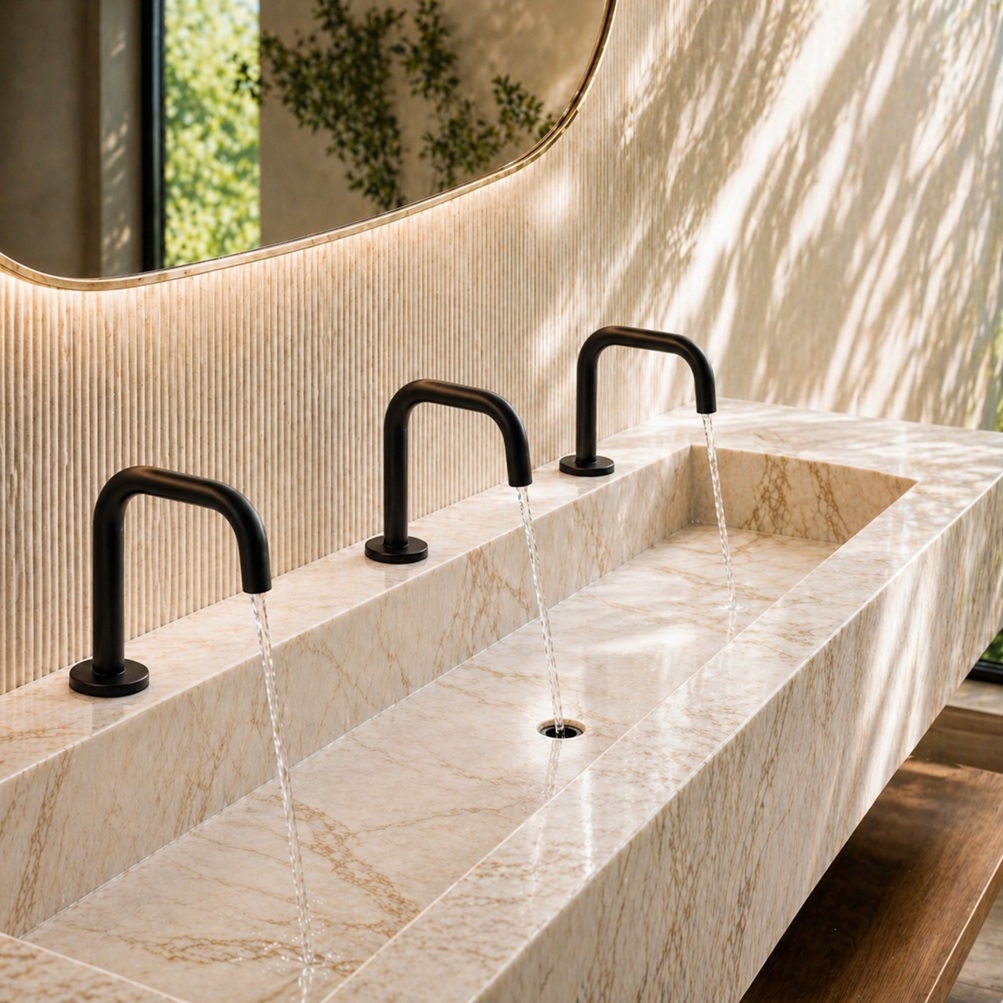
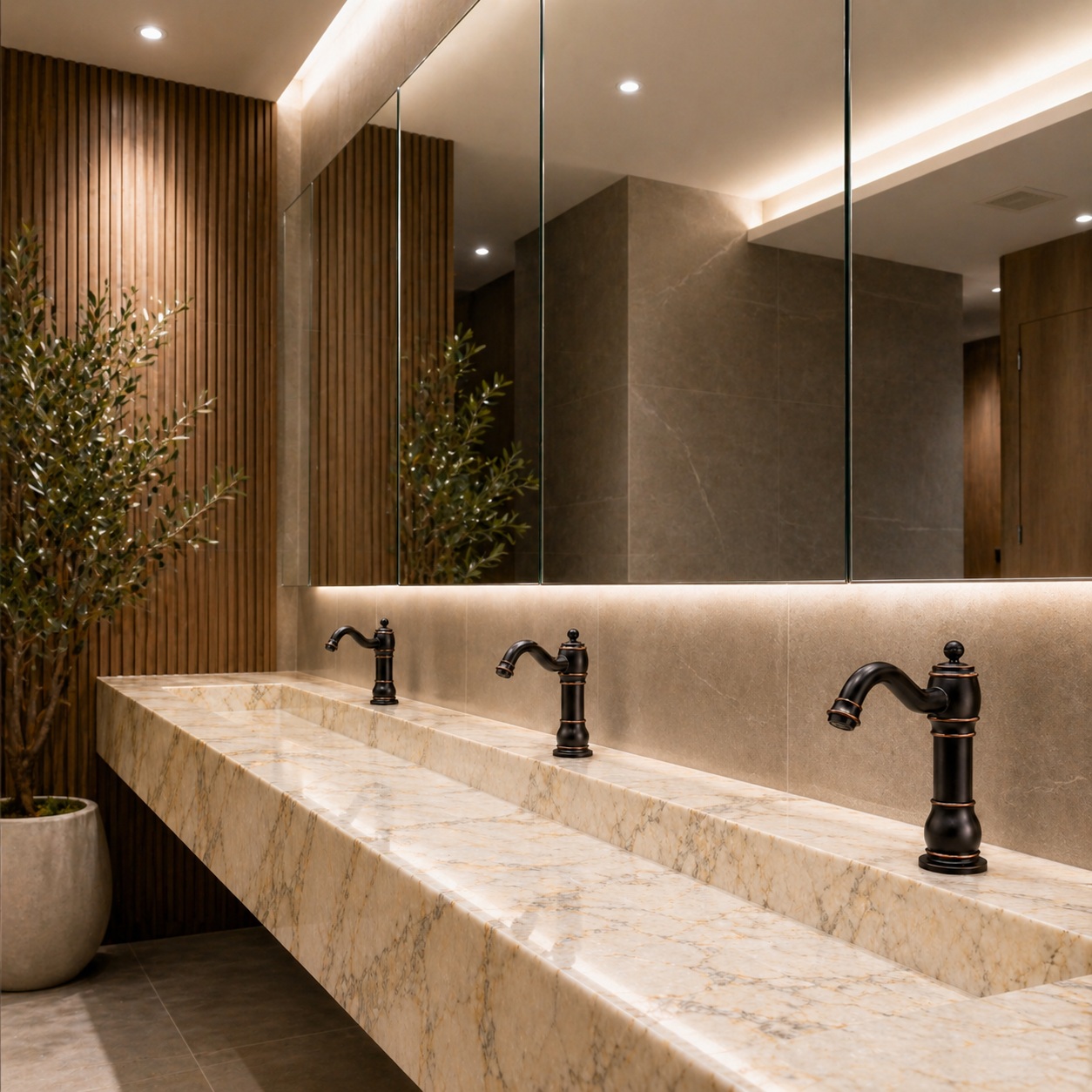
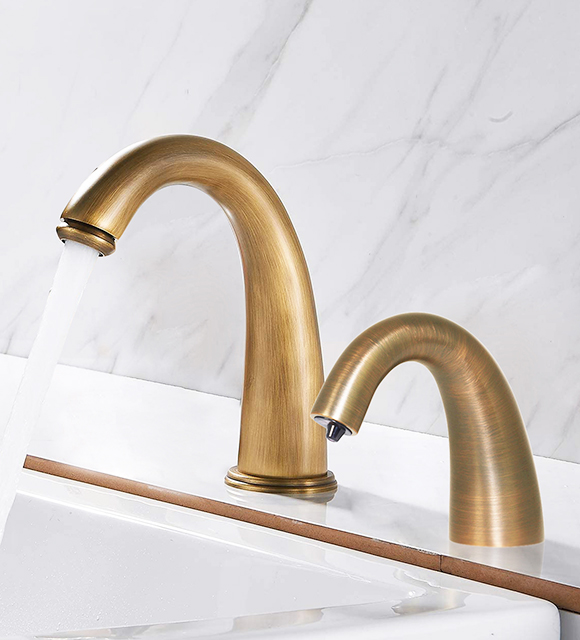
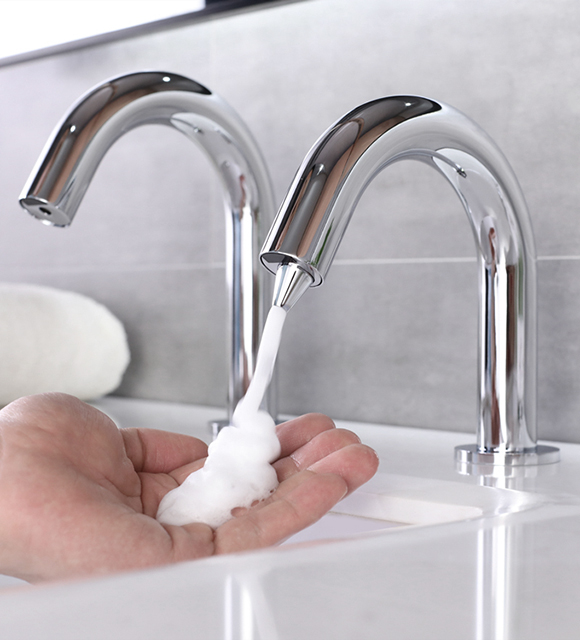
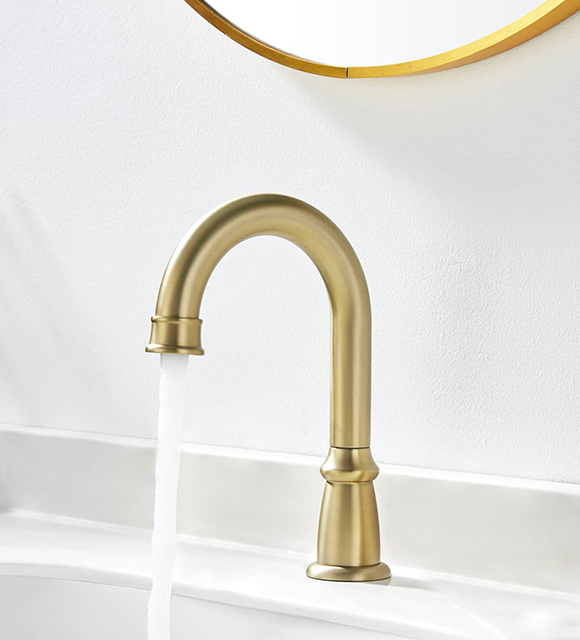
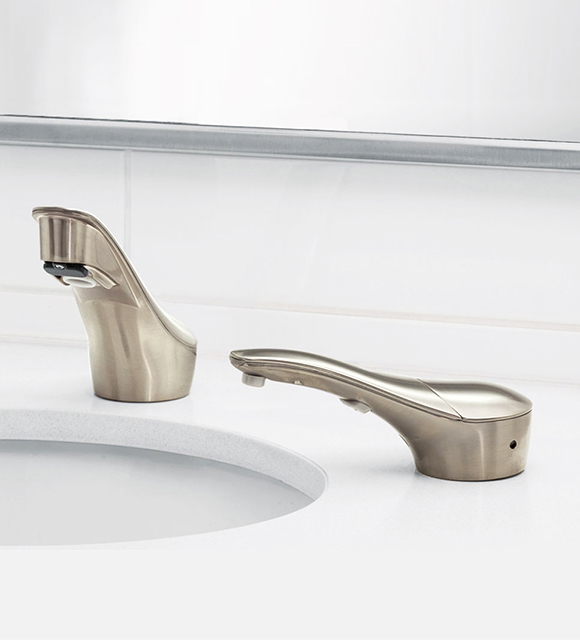
Countertop touchless faucets (deck-mounted sensor faucets) combine hands-free activation, automatic shut-off, controlled flow delivery, and accessible above-counter placement for commercial lavatories.
Selection should consider sensor stability, activation response, flow rate, operating pressure, power configuration, mixing method, vandal resistance, finish durability, and access to replaceable components—not appearance alone.
Countertop Sensor Faucet Performance
Fontana Touchless Faucets
® are engineered for hygienic lavatory applications in offices, hospitality properties, healthcare facilities, educational campuses, transportation terminals, and other high-traffic commercial environments, combining sensor-controlled operation, durable brass construction, and efficient water management.
ToF Sensor Faucet Operation
Fontana Touchless Faucets use Time-of-Flight (ToF) sensing technology to measure the distance between the faucet and the user's hands. Instead of relying solely on reflected infrared intensity, the sensor calculates the time required for emitted light to return, enabling fast, stable, and accurate activation across varying lighting conditions and sink materials.
The ToF sensor communicates with an electronic controller that actuates a solenoid valve to regulate water flow. Proper commissioning, sensor calibration, operating pressure, and power stability help ensure reliable performance, minimize false activation, and maintain consistent operation in demanding commercial environments.
Countertop Installation Advantages
Deck-mounted touchless faucets allow flexible positioning on countertops,
making them ideal for both new construction and retrofit projects.
Flexible Placement & Easy Maintenance
Their accessibility simplifies maintenance while offering design flexibility
for architects and facility managers.
|
|
Read More
ADA Compliance & Water-Saving Performance
Many deck mount touchless sensor faucets are designed to meet ADA accessibility standards, so people with limited mobility can use them without having to touch them. These faucets are easier to use because they don't need manual handles. They also support inclusive restroom design. Also, sensor-activated shut-off helps control flow time and cut down on water waste, which lowers operating costs and helps commercial buildings meet their water-efficiency and sustainability goals.
What is a countertop touchless faucet?
A countertop touchless faucet is a sensor-activated faucet installed
on the sink deck or countertop that automatically controls water flow
without physical contact, improving hygiene and ease of use.
Are touchless faucets suitable for commercial bathrooms?
Yes. Touchless faucets are widely used in hotels, hospitals, offices,
and public restrooms because they reduce contact, improve sanitation,
and perform reliably in high-traffic environments.
Do touchless faucets help reduce water usage?
Yes. Automatic shut-off ensures water only flows when needed, reducing
waste and improving efficiency in both commercial and residential settings.
What is the difference between deck mount and wall mount faucets?
Deck mount faucets are installed on the countertop or sink, while wall
mount faucets are installed above the sink. Deck mounted models offer
easier installation and maintenance access.
What sensor technology is used in touchless faucets?
Most models use infrared sensors to detect hand movement and activate
water flow instantly, ensuring consistent and reliable operation.
Are countertop touchless faucets easy to maintain?
Yes. These faucets are designed for easy access to components, making
maintenance, battery replacement, and servicing simple and efficient.
Where are countertop sensor faucets commonly used?
They are commonly installed in residential bathrooms, commercial offices,
healthcare facilities, airports, hotels, and other high-traffic environments.
Do these faucets support modern building standards?
Many models are designed to meet modern plumbing and efficiency standards,
making them suitable for both new construction and retrofit applications.
|
|
|