Guide for Architects, Interior Designers & Engineers
Bathtub Faucets vs Bathtub Taps: How AEC Teams Should Specify Tub Fillers
Bathtub faucets and taps sound like small details—but on drawings, in specs, and at the jobsite they influence hydraulic loads, rough-in dimensions, user safety, and even perceived brand quality. For AEC teams working with FontanaShowers, understanding how these terms are used (and misused) will help you select the right assemblies, call them out correctly in the schedule, and avoid coordination issues during construction. This guide breaks down the terminology, the actual assemblies behind the language, what to look for in submittals, and which configurations make the most sense for your next project.
“Faucets” vs “Taps” TerminologyAssembly Components & Trim DetailsFlow Rate, GPM & ComfortUse-Case Based Selection GuideSpecs, Schedules & BIM Coordination
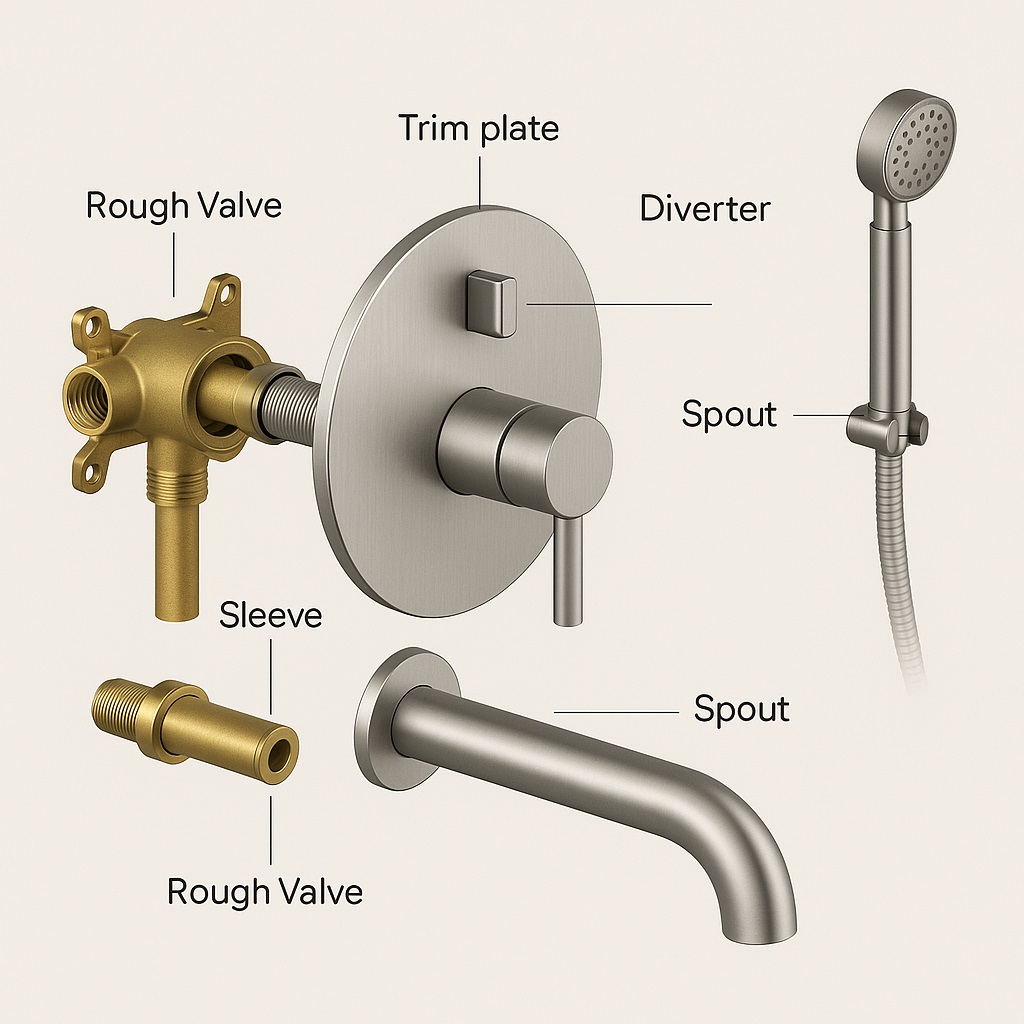
Tub fillers may be described as bathtub faucets or taps, but for coordination, the important part is the complete assembly. This includes the valve, the trim, the spout, and often a hand shower.
From the AEC perspective, tub fillers determine rough-in locations, blocking, sleeve sizes, and clearances, far beyond what the simple words tap or faucet might suggest.
In everyday language, “faucet” is more common in North America while “tap” is widely used in the UK and other regions, but functionally both describe a controlled outlet that fills the tub. On FontanaShowers product pages you’ll see terms like "
bathtub faucets", "tub fillers" and "freestanding tub faucets"—for AEC teams, treat these as equivalent from a performance standpoint and rely on Fontana’s model names, cut sheets, and BIM data as the single source of truth.
Faucets vs Taps – Vocabulary, Assembly, and What’s Actually Included
On a FontanaShowers cut sheet, “tub faucet” or “tub filler” usually describes an assembly made up of the rough valve body, trim kit, spout, and optional hand shower. The language may vary, but the AEC task is the same: confirm whether the model number covers the full set or only trim, and schedule it accordingly in Division 22 alongside other plumbing fixtures.
Trim details—handle count, diverter integration, escutcheon shape—drive clearances and clash checks. A combined bathtub faucet trim plate may consolidate controls and a diverter on one escutcheon. Showing this accurately on elevations avoids last-minute tile cuts and clarifies cutout dimensions for the trades.
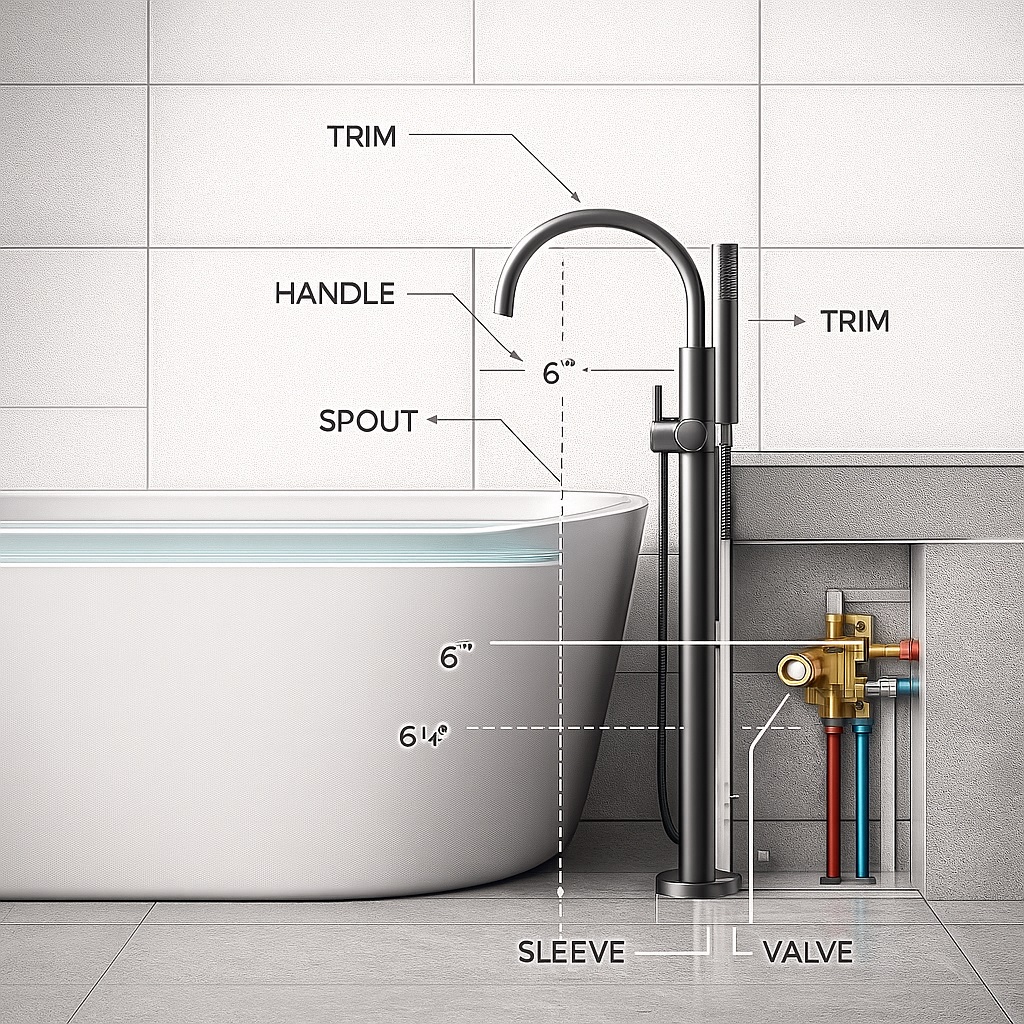
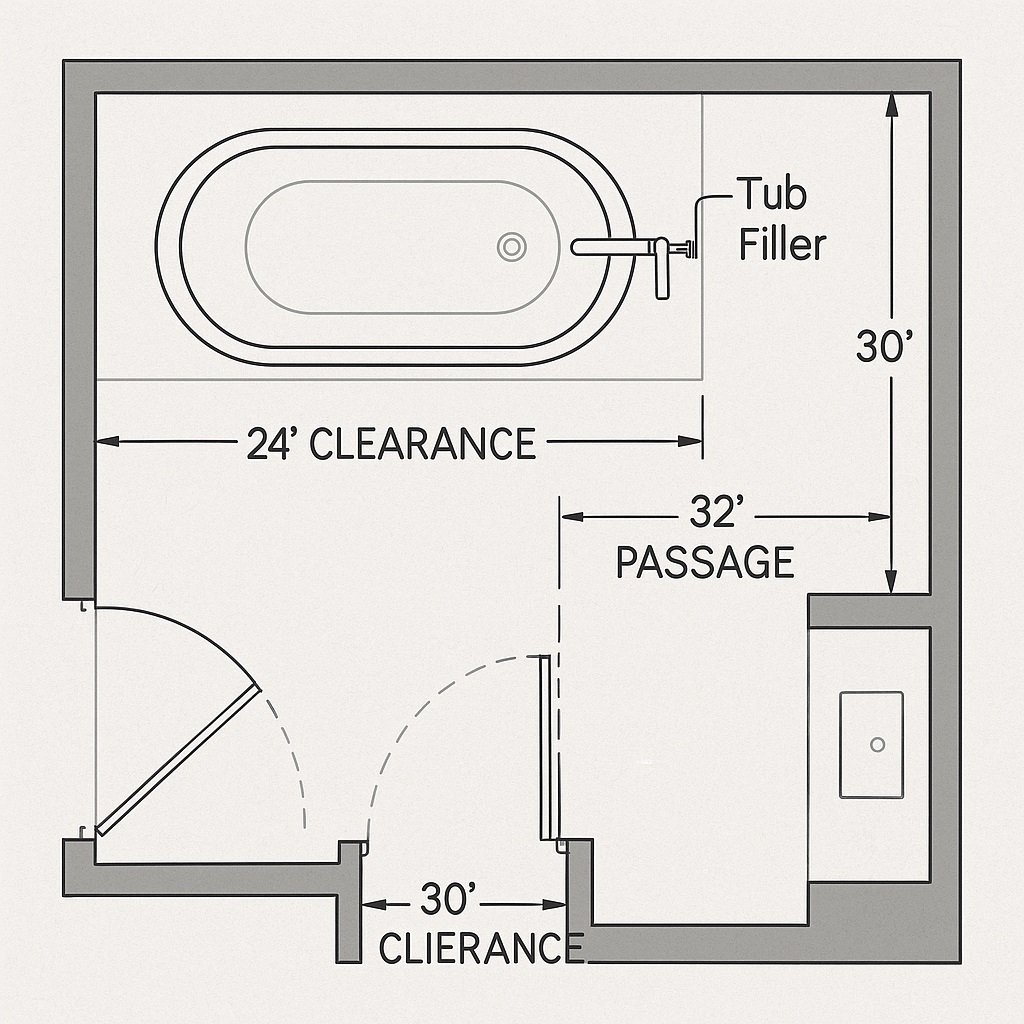
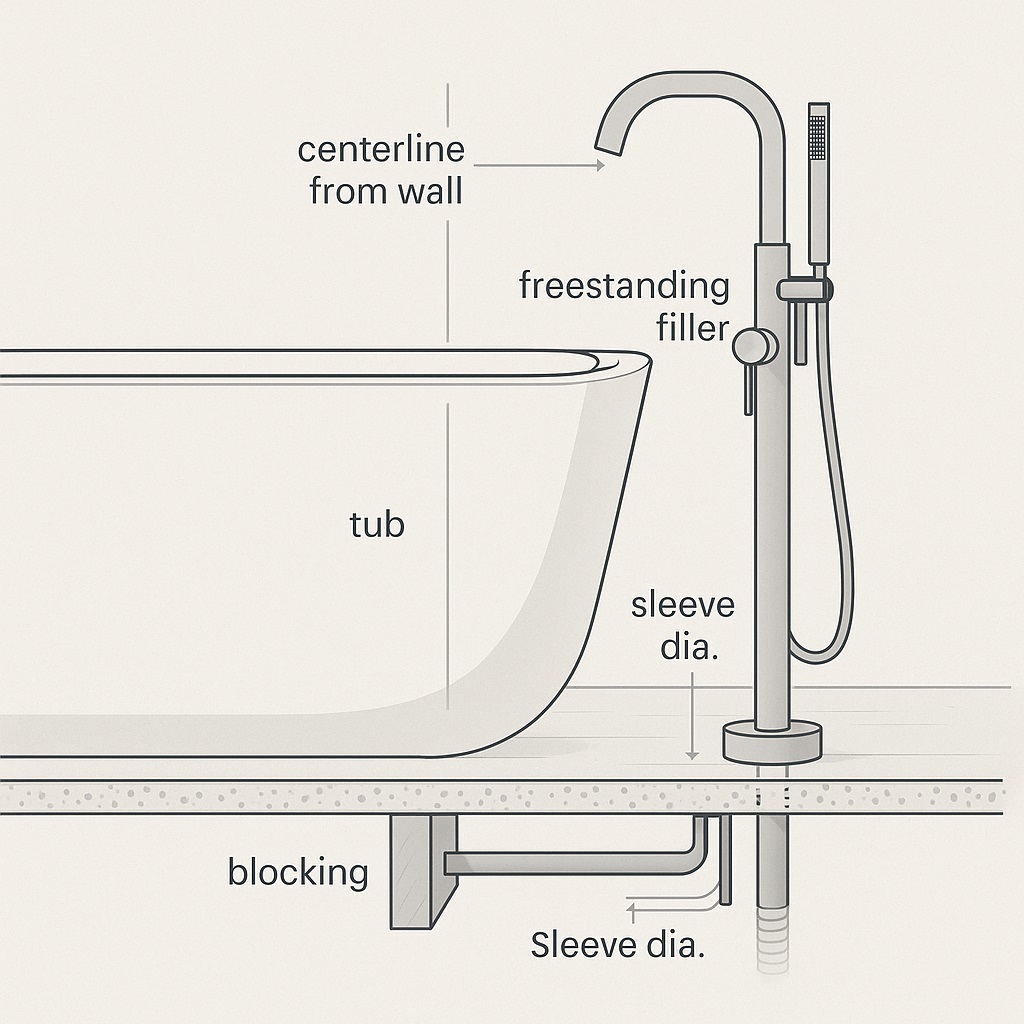
For freestanding tub fillers, verify centerline from finished wall, slab sleeves, blocking, and clearances to the tub rim. For wall-mounted fillers, coordinate valve depth, niche locations, grab bars, and glass. In each case, Fontana’s BIM families and installation diagrams give you the geometry you need to avoid rework on site.
Key Factors When Specifying Bathtub Faucets & Taps
Assembly Scope: Full Set vs Trim Only
When you see a model listed as a tub faucet or tub filler, confirm whether it includes the rough valve body plus trim, or trim only. FontanaShowers often supplies integrated sets, but submittals and CSI specs clearly distinguish between valve, trim, and accessory components. Align fixture schedules and Division 22 language with this scope so contractors know exactly what is provided by the plumbing package versus rough-in by others.
Flow Rate, GPM & Fill Time
Tubs are large-volume fixtures, so flow rate matters. Use published bathtub faucet gpm values to estimate fill time based on tub volume and to coordinate with domestic hot water capacity. Aim for flows that balance comfort and conservation—higher than WaterSense-labeled lavatory outlets, but not so high that they strain the plant or contradict the project’s sustainability goals.
Mounting Type & Rough-In Strategy
Wall-mounted, deck-mounted, and freestanding fillers each come with distinct rough-in requirements. Deck-mounted sets work well for drop-in or undermount tubs with accessible decks, wall-mounted sets suit alcove tubs and tight footprints, and freestanding fillers create a high-impact gesture that relies on precise floor sleeve locations and blocking. Choose the mounting type that fits the tub geometry, structure, and maintenance strategy.
Valve Technology & User Safety
Behind the face plate, the valve body often includes pressure-balancing or thermostatic control. In hospitality, senior living, and healthcare projects, anti-scald performance and stable outlet temperatures are essential. Coordinate valve choice with project standards and document maximum outlet temperature, working pressure, and required balancing in Division 22 to support safe, predictable operation.
Finish & Design Language
Clients notice the exposed metal and the way water enters the tub. Coordinate finishes such as brushed gold, matte black, chrome, and stainless steel across tub fillers, lavatory faucets, and accessories so everything reads as one coherent family. The bathtub faucet ranges and stainless steel collections from Fontana make it easier to keep that design language consistent throughout the project.
Hand Shower Ergonomics & Serviceability
For sets with hand showers, small decisions make a big impact: hose length, bracket position, reach from seated or standing positions, and clearance over the tub edge. Call out access for future service of hoses, check valves, and diverters, and show bracket locations on elevations so MEP and tile installers understand how the system will be used day to day.
Terminology, Documentation, and Regional Language
“Faucets” vs “Taps” in Global Projects
In North America, “faucet” is the dominant term; in the UK and many international contexts, “tap” is still widely used. Functionally, both describe a controlled water outlet that fills the tub.
On FontanaShowers pages, you’ll most often see “bathtub faucets,” “tub fillers,” and “freestanding tub faucets”—all referring to the same general product category that includes the valve, trim, spout, and an optional hand shower.
For AEC teams, treat “bathtub faucet” and “bathtub tap” as equivalent in performance and coordination. When in doubt, default to the manufacturer’s naming and model numbers from cut sheets and BIM content.
In international specs or brand guidelines that prefer “taps,” you can dual-label: for example, “deck-mounted tub faucet, thermostatic mixer, with hand shower,” which keeps wording clear for both regional teams and local contractors.
Using Manufacturer Language in Specs & Schedules
Mirror FontanaShowers’ own naming conventions in Division 22 and fixture schedules—“freestanding tub faucet,” “wall-mounted bathtub faucet,” or “Roman tub faucet”—and always pair the descriptor with the exact model number and finish.
On drawings, tag the fixture with a consistent code (for example, TF-01 for a standard tub filler, TF-02 for a freestanding filler) and reference those codes directly back to the schedule and model.
Where client standards use “taps,” keep that in narratives and marketing copy while letting specs, schedules, and shop drawing reviews follow the manufacturer’s “faucet” terminology to avoid ambiguity during procurement.
Use-Case Strategies for Tub Fillers & Bathtub Faucets
Multifamily & Residential Developments
In multifamily and production residential work, reliability and repeatability are key. Deck-mounted or wall-mounted bathtub faucets with integrated diverters and hand showers simplify rough-ins across stacked units. Use Fontana’s core bathtub faucet collection to standardize assemblies and coordinate practical flow rates that balance fill time with domestic hot water capacity.
Hospitality, Resorts & Spas
Hotels and resorts use tub fillers as part of the brand story. Freestanding fillers and waterfall spouts from Fontana’s waterfall and luxury freestanding categories create strong visuals in guest suites and spa zones. Pair sculptural forms with robust, spec-grade internals so fixtures look good in photography and stand up to high turnover.
Healthcare & Senior Living
In settings where safety and caregiver ergonomics come first, specify
wall-mounted tub fillers with clear lever controls, anti-scald protection, and well-placed hand shower brackets. Minimizing clutter around the tub edge improves cleaning access and reduces trip hazards, while thermostatic valves help maintain safe outlet temperatures.
Custom Luxury Residential
For custom homes, clients are often investing in unique bathing experiences. Combine waterfall spouts, specialty finishes such as brushed gold or matte black, and tailored configurations sourced from Fontana’s commercial catalogs to align the tub filler with the broader interior design language and views around the bath.
Durability & Stainless Steel Solutions
In projects that need long service life and strong resistance to corrosion, such as coastal sites, high-use spaces, or public-facing environments, the stainless steel bathtub faucet options from Fontana provide durable metal bodies and finishes. They are strong candidates in settings where cleaning agents are harsh or where humidity remains high for extended periods.
Sustainability, Comfort & Code
While there is no dedicated WaterSense label for tub fillers, you still need to align with local plumbing codes and owner efficiency targets. Use manufacturer flow data, WaterSense showerhead benchmarks, and domestic hot water sizing to set realistic expectations for tub fill time without oversizing plant or compromising guest comfort.
Flow, Rough-Ins, and BIM for Bathtub Faucets & Taps
Flow Rate, GPM & Fill Time
Manufacturers typically publish tub spout flow at a given pressure, often in the 4–7 gpm range at around 60 psi. Use this data to estimate tub fill time and coordinate simultaneous use scenarios in multifamily or hospitality projects. Compare these values with low-flow lavatory outlets and WaterSense-labeled showerheads so the overall domestic hot water strategy meets comfort and efficiency targets without oversizing the system.
Valve Selection & User Safety
Decide early whether the project standard calls for pressure-balancing or thermostatic valves. In healthcare, senior living, and family-oriented hospitality, thermostatic control and anti-scald protection are critical. Document maximum outlet temperatures, operating pressures, and any mixing or balancing requirements in Division 22 to support both comfort and code compliance.
Mounting, Rough-Ins & Blocking
For freestanding tub fillers, confirm sleeve diameters, backer boards, and clearances from finished wall to spout centerline. For wall-mounted fillers, confirm recess depth, finish build-up, and the relationship to nearby glass, grab bars, niches, and controls. Use Fontana’s installation diagrams and BIM content to call out valve centerlines, rim heights, and blocking in your typical tub section details.
Trim Plates, Controls & Diverters
Escutcheon size and geometry affect tile layout and coordination with accent bands, niches, and accessory locations. Some trim plates consolidate diverter and temperature/volume controls, while others rely on remote diverter valves. Show these plates accurately on elevations and note any special cutouts so finish trades understand the required clearances.
BIM, Clash Detection & Families
Load manufacturer-provided Revit families for bathtub faucets and tub fillers early into the model. Use clash detection in dense wet-wall and slab zones to confirm that carriers, sleeves, waste arms, and supplies can coexist without conflict. Coordinate valve depths, decorative plates, and hand shower brackets using true 3D geometry rather than generic symbols.
Fixture Schedules & Coordination
Assign clear fixture tags to each configuration—such as TF-1 for a standard deck-mounted tub filler or TF-2 for a freestanding filler—and repeat those tags in specs, schedules, and drawings. Include manufacturer, model, finish, mounting type, valve type, and published flow rate in the schedule so MEP modeling and procurement align with the actual selections.
Manufacturer Support & AEC Resources
FontanaShowers provides spec sheets, BIM files, installation diagrams, and architect-focused resources on their site. Direct design teams to these pages when evaluating alternates, confirming rough-ins, or aligning fixture selections with brand and performance criteria. Leveraging these tools early reduces RFIs and change orders during construction.
Specs, Codes & External Standards
In Division 22, call out manufacturer (FontanaShowers), model number, finish, mounting type, valve technology, and maximum working pressure and temperature. Reference external standards and efficiency frameworks, such as EPA WaterSense technical specifications for faucets and showerheads, when setting performance expectations—even though tub fillers themselves are not currently a labeled category.
Bathtub Faucets & Tub Fillers — At a Glance
Deck-, Wall- & Freestanding OptionsThermostatic & Pressure-Balancing ValvesIntegrated Hand ShowersFinish Families for Whole ProjectsBIM & Spec-Grade Documentation
Conclusion
In practice, bathtub faucet and bathtub tap describe the same type of fixture. What truly matters is the mounting strategy, the valve technology, the flow performance, the finish, and the long-term serviceability, not the specific word used in a project brief.
By relying on FontanaShowers product data, BIM families, and installation details, AEC teams can size the domestic hot water system correctly, coordinate rough-ins and blocking, and deliver safe, comfortable tub installations that meet both brand expectations and code requirements.
Use the terms bathtub faucet or tub filler in specs and schedules to match manufacturer language, treat the word tap as an acceptable alternate in narrative text, and keep everyone aligned by tying every reference back to a specific model, finish, and fixture tag in the documentation set.
Flow, Comfort, and Everyday User Experience
Right-sized flow rates and well placed controls make tub fills feel effortless instead of slow or hard to reach.
From the user’s perspective, comfort comes down to fill time, water temperature stability, and ease of operation. Coordinating flow rates with tub volume, selecting appropriate valve technology, and placing handles and diverters within natural reach all work together to create a good experience—regardless of whether the fixture is called a faucet or a tap.
Finish selection, hand shower ergonomics, and alcove or freestanding layouts all shape perceived quality and brand image.
In hospitality and luxury residential work, tub fillers are photographed, shared, and remembered. Freestanding or waterfall styles paired with coordinated finishes reinforce the project’s design language, while well-designed hand shower brackets and hoses keep the area around the tub neat and easy to clean between guests.
Practical Specification Tips for AEC Teams
Create a Coherent Tub Filler “Family”
Choose a small group of bathtub faucets and tub fillers, for example, one deck-mounted set for standard tubs, one freestanding filler for premium suites, and one wall-mounted option for special conditions, and use them across the different unit types. This approach simplifies detailing, procurement, and maintenance while keeping the design language consistent throughout the project.
Align Language with Manufacturer & Client
Use FontanaShowers terminology and model names in specs, schedules, and submittal reviews, and then add whatever wording the client prefers, for example, the word taps, in narratives where it makes sense. Dual labels, such as deck-mounted tub faucet (tap), help international teams stay aligned while still matching the names shown on cut sheets and in BIM families.
Fix Flow Rates & Valve Types Early
Decide early in design whether project standards call for thermostatic or pressure-balancing valves and what target flow ranges are acceptable for each tub type. Once these decisions are set, coordinate them with domestic hot water sizing, energy modeling, and owner sustainability goals so later product swaps do not break your assumptions.
Document Rough-Ins & Serviceability
Show tub filler valve and spout centerlines, rim heights, clearances, and access requirements on plans, sections, and elevations. Call out access panels, removable trim, and service clearances for valves, diverters, and hand shower hoses. This level of detail is especially important in hospitality and healthcare projects where downtime is costly.
Integrate BIM & Fixture Schedules
Embed verified FontanaShowers Revit families for each tub filler configuration into your BIM model and tag them consistently with fixture codes. Use shared parameters for finish, mounting type, and flow rate so coordinated changes propagate cleanly through schedules, details, and quantity takeoffs.
Leverage Fontana’s AEC Support
Direct architects, interior designers, and engineers to FontanaShowers’ architect- and designer-focused resources when you need alternates, flow data, or technical confirmation. Their cut sheets, BIM libraries, and design-assist support help ensure bathtub faucet and tap selections align with both aesthetic intent and performance requirements.
Bathtub Faucet & Tub Filler Reference Points
Key Fontana Resources & Categories
1. Core Bathtub Faucet Collection:
Fontana’s primary bathtub faucet and tub filler category, covering deck-mounted, wall-mounted, and other configurations suitable for multifamily, hospitality, and residential work.
View category.
2. Waterfall Tub Faucet Range:
Waterfall-style tub fillers that deliver a laminar sheet of water into the tub—ideal for projects where the filler is a visual focal point and part of the brand narrative.
View category.
3. Luxury Freestanding Tub Filler Lines:
Freestanding tub fillers for suites, spas, and high-end residential baths that pair sculptural forms with spec-grade internals and finishes.
View category.
4. Stainless Steel Bathtub Faucets:
Stainless steel tub filler solutions aimed at durability, corrosion resistance, and easy cleaning in demanding or coastal environments.
View category.
5. BIM Files for Bathroom Fixtures:
Manufacturer-provided BIM/Revit content for tub fillers and related fixtures that supports accurate clash detection and coordinated documentation.
View BIM resources.
6. Commercial & Hospitality Fixture Catalog:
FontanaShowers’ commercial fixtures catalog, useful when you need spec-grade tub filler options that align with broader commercial bathroom packages.
View catalog.
7. Architects & Designers Hub:
A centralized portal for AEC teams that aggregates specs, BIM files, and design-assist resources for coordinating tub fillers alongside showers, lavatories, and accessories.
Visit A&D hub.
8. Brand & Company Background:
Overview of FontanaShowers as a supplier, including history, capabilities, and general product categories you can reference in Division 01/08 narratives or brand-alignment documents.
About FontanaShowers.
9. Efficiency & WaterSense Benchmarks:
While tub fillers are not labeled, EPA WaterSense technical specifications for faucets and showerheads provide useful context for setting flow and efficiency targets at the project level.
View WaterSense specs.
10. Project-Specific Standard Assemblies:
Use the resources above to define a small set of standard tub filler assemblies for your project, each with a clear fixture tag, flow rate, finish, and valve type that can be repeated across unit types and phases.
Clear Terminology (“Faucets” vs “Taps”)Defined Tub Filler FamiliesValve & Flow StrategyRough-In & ServiceabilityBIM & Documentation
As you finalize CDs, treat bathtub faucets and tub fillers as fully coordinated assemblies, with manufacturer, model, finish, valve type, flow rate, and mounting all clearly defined in one place. Use consistent fixture tags across drawings, schedules, and specs, and align your wording with the product names shown on the FontanaShowers product pages. Rely on their BIM files and AEC resources to refine rough-ins and technical details. Whether a document uses the word faucet or tap, the important point is that every selection can be traced to a specific configuration that supports performance, comfort, and the project's brand intent.
Find Out First
Get FontanaShowers emails of inspiration, new product releases, and more!