Home > Ceiling-Mount Rainfall Shower Systems
Ceiling-Mount · Rainfall · Luxury Comparison

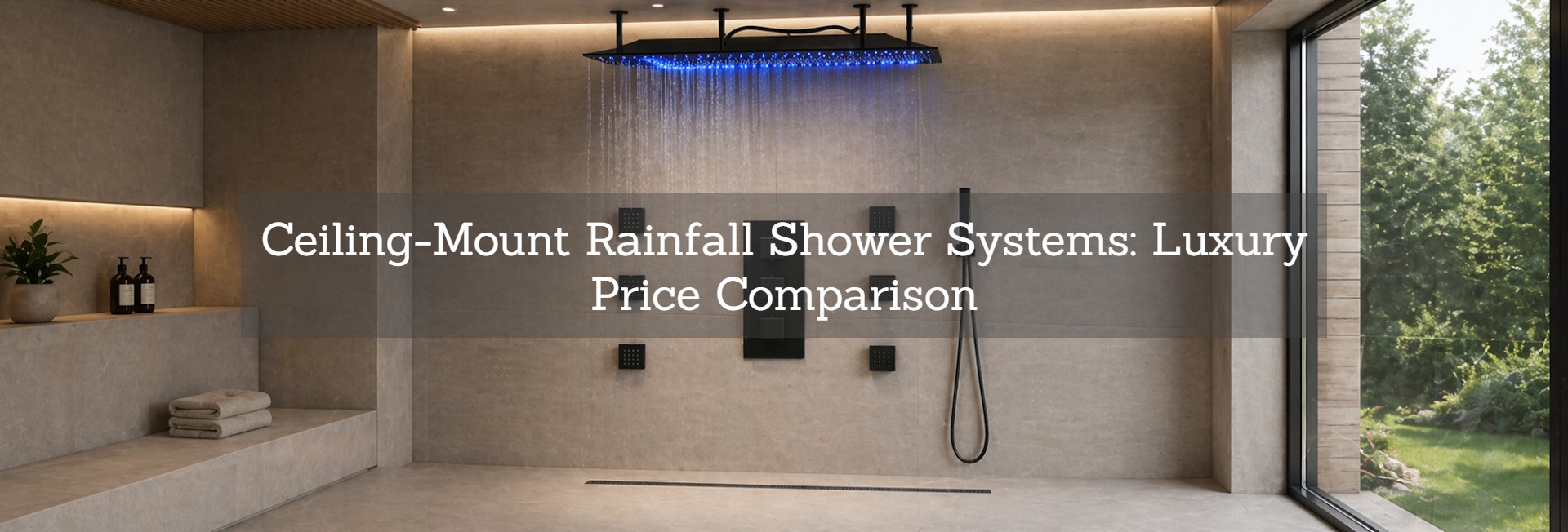
Ceiling-Mount Rainfall Shower Systems: Luxury Price Comparison

Ceiling-mount rainfall shower systems have become a defining element in modern AEC (Architecture, Engineering, and Construction) bathroom specifications. These systems deliver uniform water distribution, high-end aesthetics, and enhanced user experience, making them a preferred choice in luxury residential, hospitality, and commercial restroom design.

Price Comparison · Performance Analysis · Specification Guide

Overview of Ceiling-Mount Rainfall Shower Systems

This technical article provides a detailed price comparison, performance analysis, and specification guide for ceiling-mounted rainfall shower systems, helping architects, contractors, and procurement specialists make informed decisions.

Ceiling-mounted rainfall showerheads are designed to replicate natural rainfall through wide spray coverage and gravity-fed water flow patterns. Unlike wall-mounted fixtures, these systems require precise ceiling integration, structural planning, and concealed plumbing.

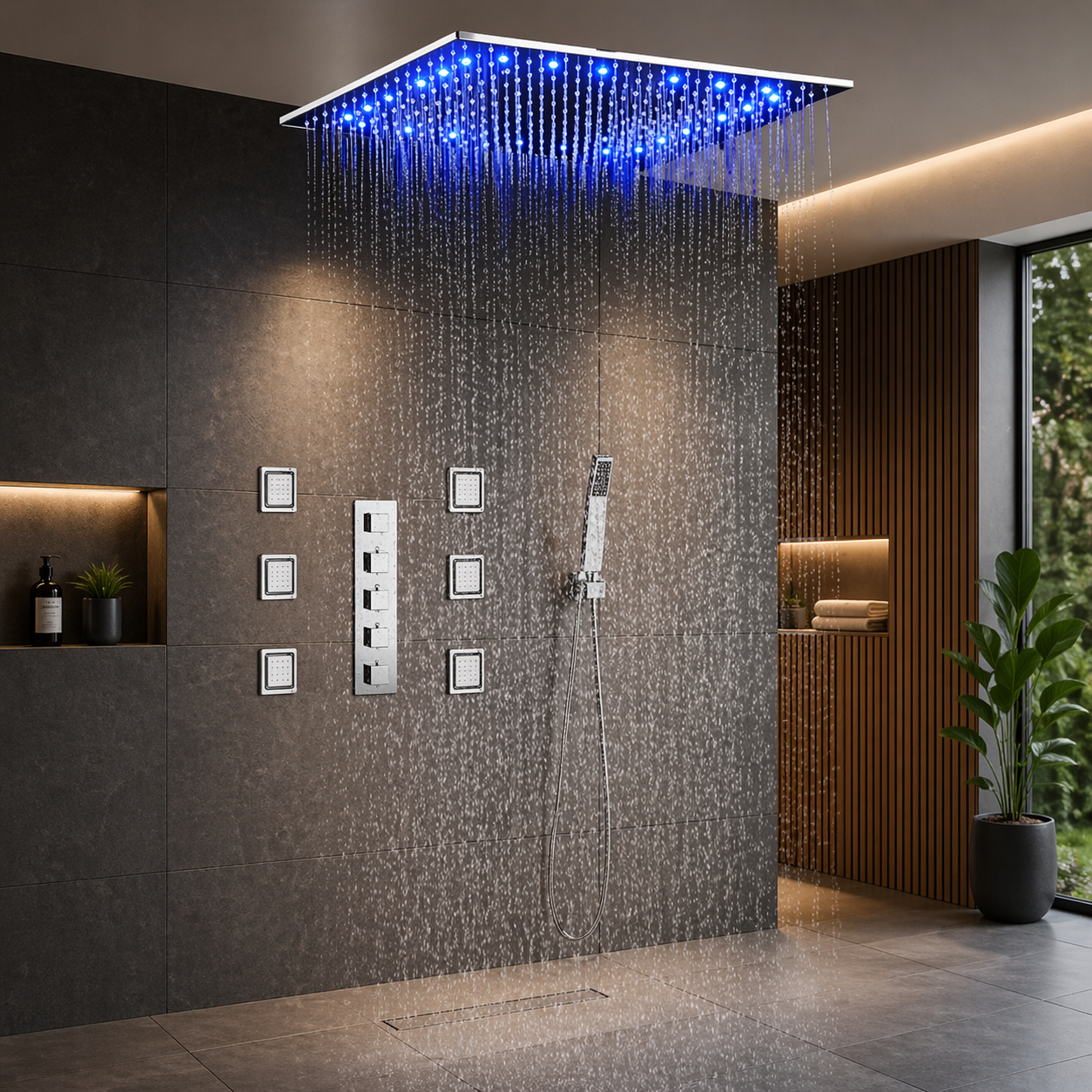
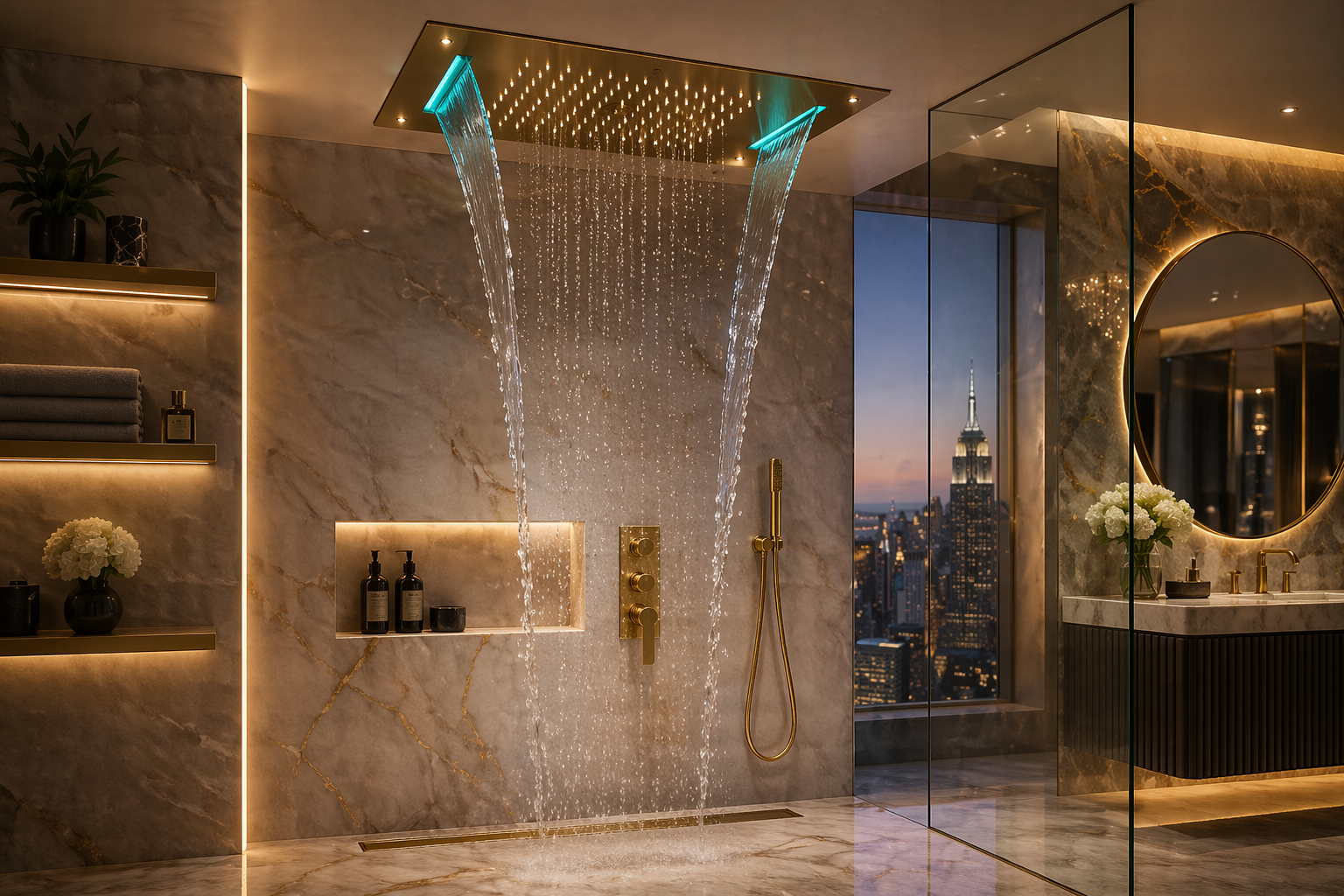
Ceiling mounted rain shower head

Ceiling-Mount Rainfall Design

Key engineering features include:
Large-format spray faces (8”–24”+ diameters)
Even pressure distribution nozzles
Thermostatic mixing compatibility
Ceiling-recessed or flush-mount installation
Anti-limescale silicone jets

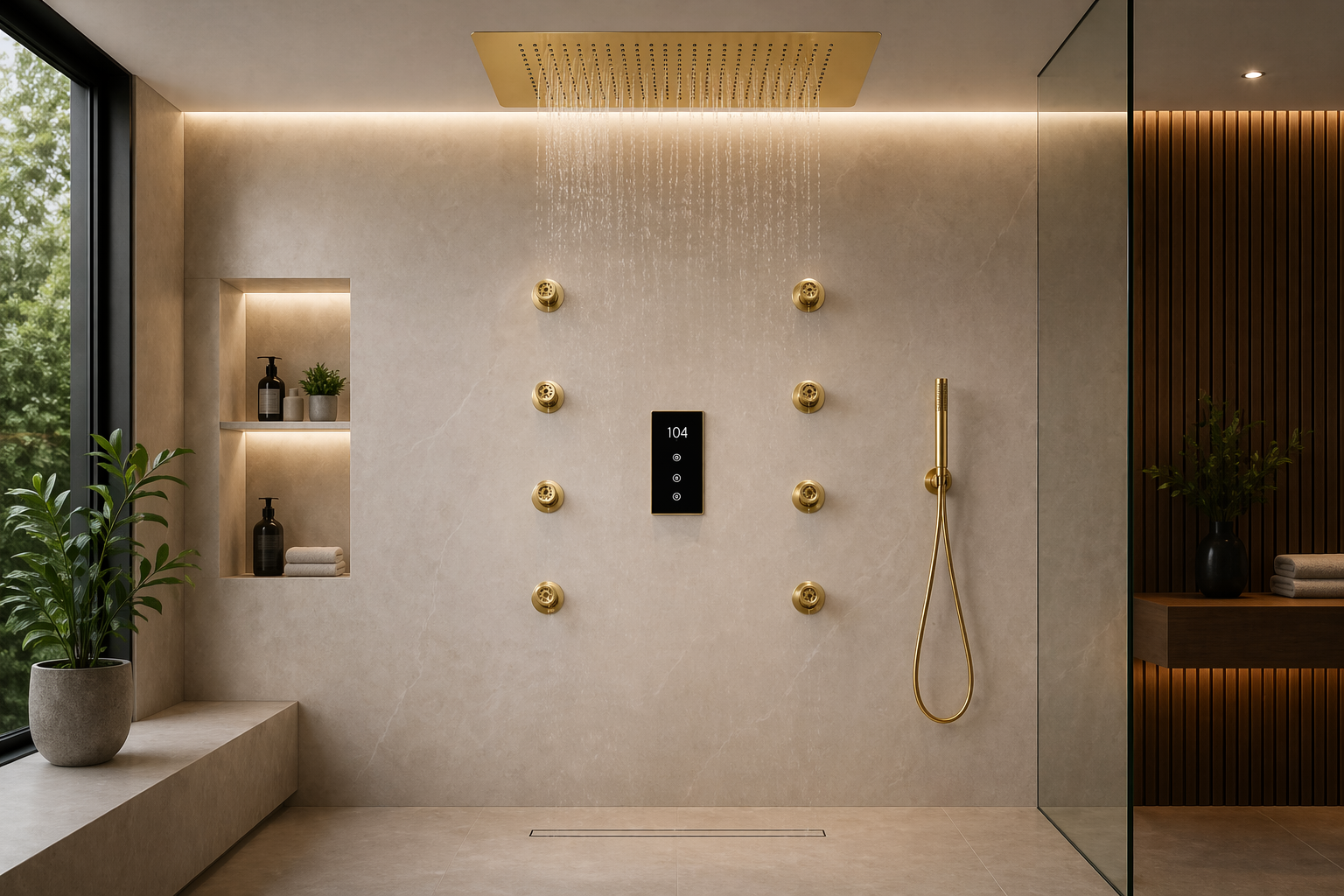
Rain shower head system

System Pairing

These systems are often paired with complete rain shower head system configurations to support multi-outlet planning, improved coverage, and coordinated luxury bathroom performance.

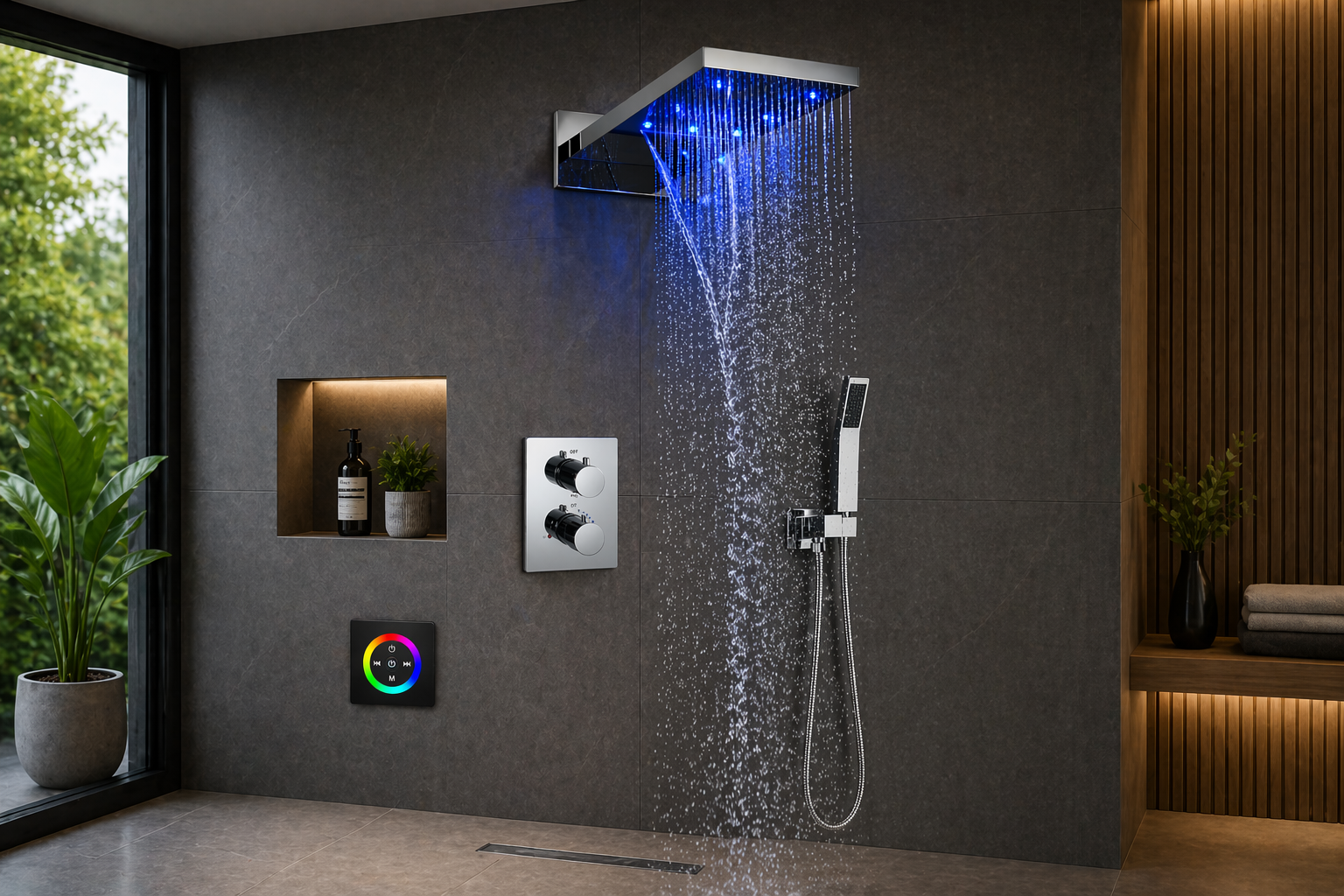
Shower heads with sprayer

Multi-Outlet Flexibility

For projects requiring additional hand-rinse capability, shower heads with sprayer options can complement rainfall fixtures while supporting practical daily use.

Material and Performance Comparison

Feature Entry-Level Mid-Range Luxury
Material ABS / light steel Stainless steel Solid brass / premium steel
Spray Coverage Limited Moderate Wide uniform coverage
Durability Low–moderate Moderate High
Maintenance Frequent Moderate Low
Integration Basic panels Glass panels Smart + thermostatic systems
Read More About AEC Design, Price Ranges, and Installation Planning

AEC Design Considerations

1. Structural Integration

Ceiling-mount systems require:
Reinforced ceiling support
Adequate clearance for plumbing rough-ins
Waterproofing membranes for wet zones

2. Water Pressure Requirements

Optimal performance typically requires:
2.5–3.0 GPM flow rate
Minimum 45–60 PSI pressure

3. Plumbing Complexity

Compared to wall-mounted systems, ceiling-mounted showers involve:
Concealed piping within ceiling cavities
Longer supply lines
Pressure balancing valves

Price Range Breakdown

Entry-Level ($150 – $400)

These systems typically include:
Stainless steel or ABS construction
Basic rainfall spray patterns
Limited size (8”–10” heads)

Entry-level comparisons may include marketplace-style references such as rain shower head Amazon options and retail-oriented selections such as rain shower head Lowes categories for budget-conscious residential builds.

Mid-Range ($400 – $1,200)

Mid-tier systems offer:
Larger spray heads (10”–16”)
Enhanced nozzle technology
Brushed nickel or chrome finishes
Better pressure consistency

Mid-range specifications often align with upgrade-focused product comparisons, including popular shower heads selected for stronger coverage, better finishes, and improved pressure consistency.

Premium / Luxury ($1,200 – $5,000+)

High-end systems feature:
Ultra-wide rainfall coverage (16”–24”+)
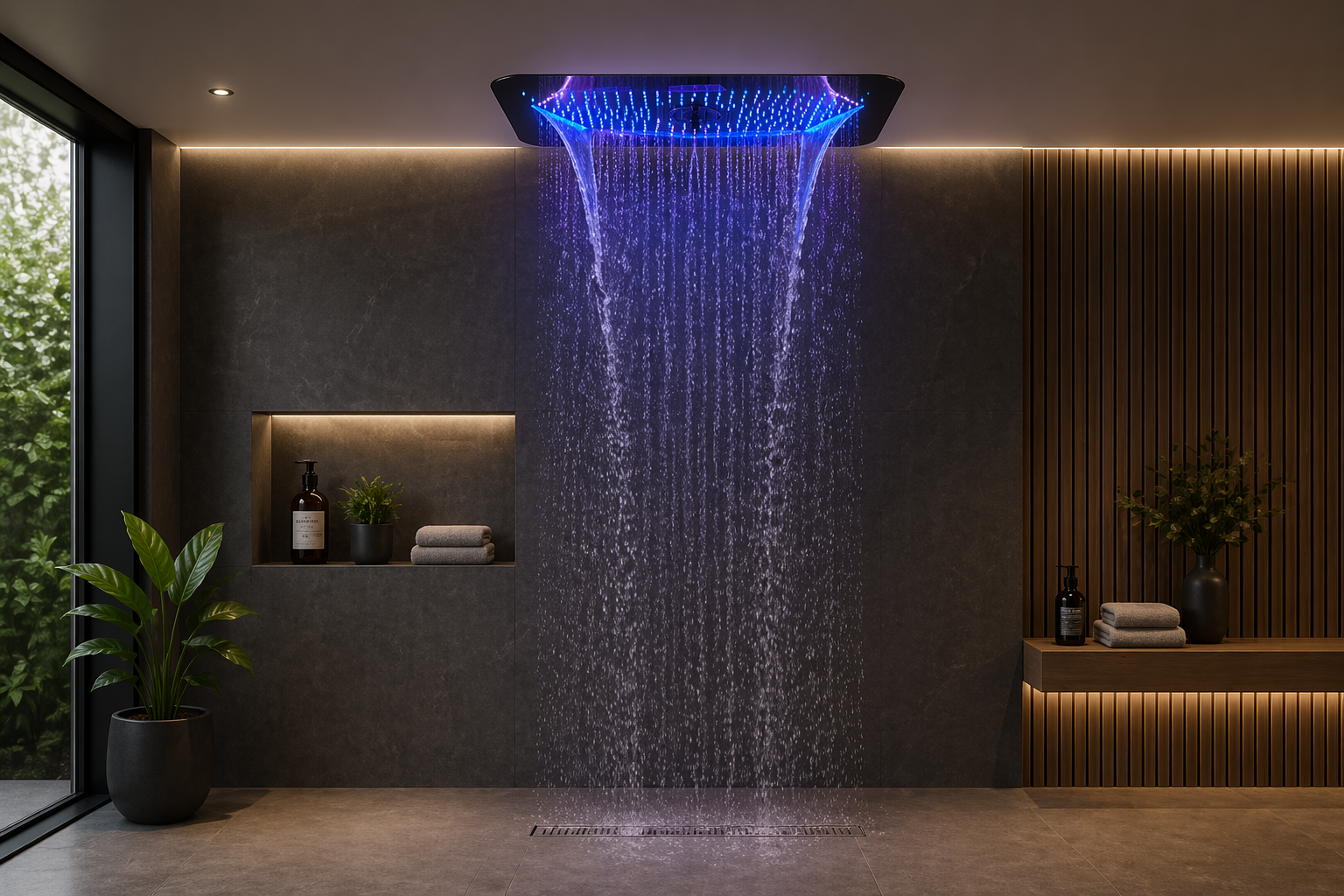
Multi-function spray modes (rainfall, mist, waterfall)
LED temperature indicators
Solid brass or premium stainless steel construction
Smart controls and digital thermostats

Luxury comparisons may also reference premium branded categories such as Moen rain shower head options and distributor-oriented selections such as Ferguson shower heads.

Installation Cost Factors

Beyond product cost, installation expenses significantly impact total project budget.

Labor Costs

Ceiling modification and reinforcement
Plumbing rerouting
Waterproofing and sealing

Estimated installation costs:
Residential retrofit: $500–$1,500
New construction: $300–$800 (lower due to pre-planning)

Maintenance Considerations

High-quality systems reduce lifecycle costs through:
Anti-clog nozzles
Corrosion-resistant finishes
Modular component replacement

For long-term performance, maintenance guidance such as how to descale a shower head can help reduce mineral buildup and keep spray nozzles performing properly.

Rain shower head with wand

Performance Benefits in AEC Projects

1. User Experience Enhancement
Rainfall systems provide:
Even water distribution
Relaxing, spa-like flow
Reduced splash and noise

For added flexibility, a rain shower head with wand can combine overhead comfort with handheld usability.

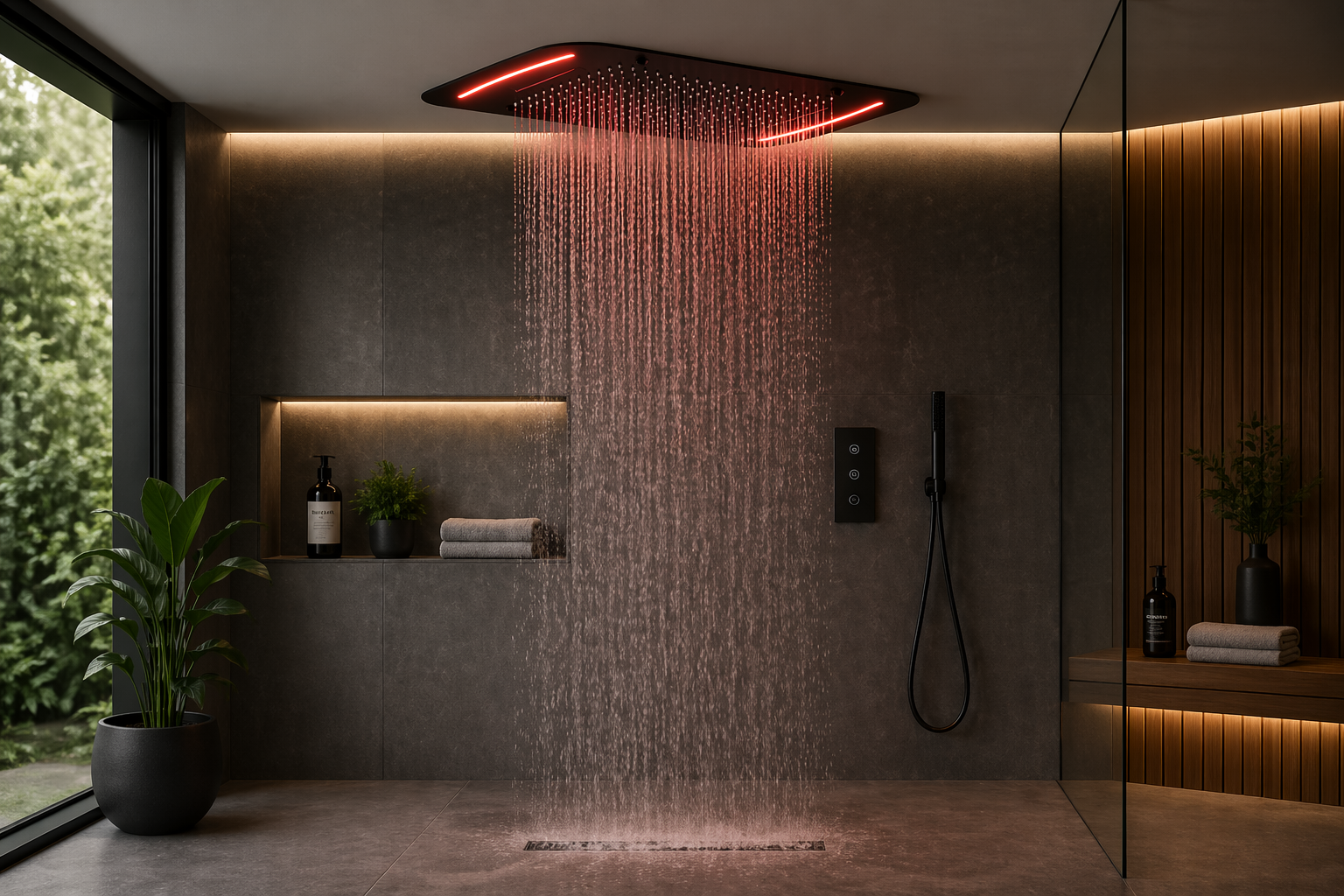
Ceiling mounted rain shower head design

2. Design Aesthetics

Ceiling-mounted systems contribute to:
Minimalist bathroom design
Clean wall surfaces
High-end visual appeal

A ceiling mounted rain shower head supports a cleaner architectural look by moving the main water outlet overhead.

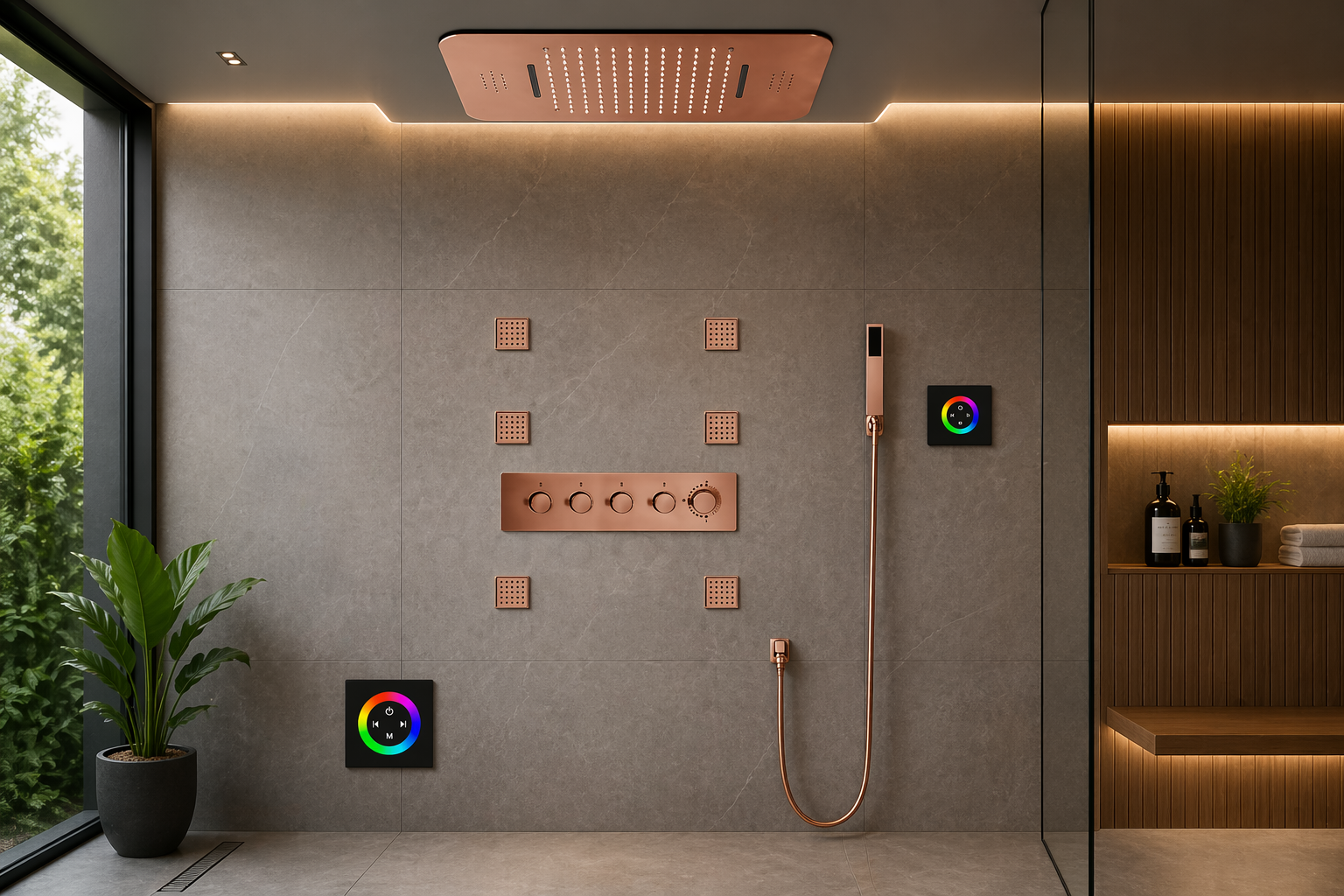
Luxury rain shower head system

3. Market Value Impact

Luxury shower systems can increase:
Property resale value
Hotel room rates
Tenant satisfaction in multi-family developments

When paired with the right rain shower head system, these upgrades support both comfort and perceived property value.

Specification Recommendations for AEC Professionals: When specifying ceiling-mount rainfall systems, consider hydraulic requirements, material selection, compliance, sustainability, and long-term maintenance. Ensure consistent pressure across multiple outlets, use pressure-balancing or thermostatic valves, choose stainless steel or brass for longevity, avoid low-grade coatings in high-humidity environments, verify compliance with local plumbing codes, ensure anti-scald protection, select water-efficient models where applicable, and optimize flow rates without sacrificing performance.

Conclusion: Ceiling-mount rainfall shower systems represent a premium upgrade in modern bathroom design, combining engineering precision with luxury performance. While entry-level options provide affordability, mid-range and high-end systems deliver superior durability, coverage, and user experience. For AEC professionals, the key to successful implementation lies in balancing cost, performance, and integration. By comparing popular shower heads, ceiling-mounted models, wand combinations, and complete rainfall systems, projects can achieve both functional excellence and architectural distinction.