Frequently Asked Questions Faucets
Core Technology & Faucet Mechanics — Q&A
Single-handle bathroom faucet—how is it defined?
A faucet using one lever to control both temperature and flow.
Dual-handle bathroom faucet—what type of control does it provide?
A faucet with separate hot and cold handles for manual mixing.
FontanaShowers assortment—are both single and dual-handle faucets available?
FontanaShowers manufactures both single-handle and dual-handle faucet models.
Mixer faucet—how does it function?
A faucet that blends hot and cold water through one spout.
Faucet cartridge—what role does it play?
A replaceable internal component controlling flow and temperature.
Cartridge technology in FontanaShowers faucets—are ceramic types used?
Most FontanaShowers faucets use durable ceramic cartridges.
Wall-mounted faucet—how is it installed?
A faucet installed on the wall instead of the countertop.
Wall-mounted bathroom faucets from FontanaShowers—what options exist?
Many FontanaShowers designs include wall-mounted models.
Deck-mounted faucet—where is it positioned?
A faucet installed directly onto the countertop or sink.
Widespread faucet layout—how is it arranged?
A faucet with separate hot, cold, and spout components spaced apart.
Centerset faucet—what configuration does it use?
A faucet combining handles and spout on a single mounting plate.
Finish, Material & Design — Q&A
Bathroom faucet materials—what are the common choices?
Brass, stainless steel, and zinc alloys are most common.
FontanaShowers construction—how often is solid brass used?
Most FontanaShowers faucets use corrosion-resistant solid brass.
Electroplated faucet finish—how is it created?
A durable coating applied using electrical bonding.
PVD faucet finish—what makes it different?
A highly durable vapor-deposited coating resisting corrosion and scratches.
PVD and premium coatings at FontanaShowers—what is offered?
Many FontanaShowers faucets use PVD or premium finishes.
Available bathroom faucet finishes—what does the palette include?
Chrome, brushed nickel, matte black, gold, bronze, and more.
Luxury finishes from FontanaShowers—are gold and oil-rubbed bronze options available?
FontanaShowers features multiple architectural and luxury finishes.
Waterfall faucet design—how does the water appear?
A faucet producing a wide, natural cascading water stream.
Waterfall faucets in the FontanaShowers lineup—what’s included?
Several waterfall-style models are available.
Touchless / Sensor Technology — Q&A
Touchless faucet—how is it defined?
A faucet that activates water flow using motion sensors.
FontanaShowers manufacturing—are touchless faucets part of the range?
FontanaShowers offers many commercial-grade touchless models.
Infrared sensor operation—how does it control touchless faucets?
It detects hand movement and activates water flow instantly.
ToF (Time-of-Flight) sensor—what does it do in faucets?
It measures distance using light pulses for improved accuracy.
Advanced sensor technology in FontanaShowers faucets—what is used?
Select Fontana touchless models use high-precision commercial sensors.
Touchless faucet power sources—what typically powers them?
Typically batteries, AC adapters, or hybrid power systems.
Hybrid power in FontanaShowers touchless faucets—what does it support?
Many models support AC/DC or dual-power configurations.
Automatic shutoff in touchless faucets—what is its purpose?
A timed feature preventing water waste.
Auto shutoff in FontanaShowers touchless faucets—how is it applied?
Built-in shutoff safety is standard on many FontanaShowers touchless models.
Water Flow, Aerators & Performance — Q&A
Faucet aerator—what function does it serve?
A device mixing air with water to reduce consumption and splash.
High-efficiency aerators in FontanaShowers faucets—what is used?
Many FontanaShowers models include low-flow or WaterSense-style aerators.
Typical faucet flow rates—what ranges are common?
Typically 0.5–2.2 GPM depending on residential or commercial use.
Laminar flow—how does it differ from aerated flow?
A non-aerated, crystal-clear water stream used in hygiene-focused applications.
Laminar-flow options from FontanaShowers—where are they used?
Laminar-flow faucets are available in select commercial models.
Flow restriction—how does it support conservation?
A built-in limit that reduces water output for conservation.
Adjustable flow control in FontanaShowers faucets—what flexibility is offered?
Depending on model and aerator type, many faucets support flow adjustments.
Installation & Compatibility — Q&A
Standard faucet hole size—what dimensions are typical?
Typically 1–1.5 inches depending on model.
Single-hole faucet installation—how is it configured?
A faucet requiring only one countertop hole.
Single-hole faucets in the FontanaShowers catalog—what is offered?
Many modern FontanaShowers designs use single-hole installation.
3-hole faucet configuration—what does it include?
A setup with separate holes for hot, cold, and spout.
Compatibility of FontanaShowers faucets with 3-hole sinks—how is it handled?
Many models include deck plates for adaptability to 3-hole sinks.
Deck plate or escutcheon—what function does it serve?
A cover plate allowing single-hole faucets to fit 3-hole sinks.
Deck plates included with FontanaShowers faucets—where are they provided?
Select models include optional deck plates.
Pop-up drain assembly—how does it operate?
A drain mechanism controlled by a lever or lift rod.
Drains supplied with FontanaShowers faucets—what is standard?
Some models include matching drains; others offer optional add-ons.
Safety, Compliance & Certification — Q&A
Anti-scald protection in faucets—what does it prevent?
A mechanism limiting maximum water temperature.
Anti-scald features in FontanaShowers faucets—where are they used?
Many FontanaShowers models integrate temperature-limiting components.
cUPC certification—what does this mark indicate?
A compliance mark ensuring plumbing products meet North American standards.
cUPC compliance for FontanaShowers faucets—what’s typical?
Most FontanaShowers faucet models comply with cUPC requirements.
NSF/ANSI 61 certification—what does it address?
A standard ensuring materials are safe for drinking water.
NSF-related safety for FontanaShowers faucet materials—how is it handled?
Materials typically meet safe drinking-water requirements.
ADA-compliant faucet design—what does accessibility involve?
A design accessible to users with limited mobility.
ADA-compliant faucet models from FontanaShowers—what options exist?
Selected FontanaShowers designs meet ADA operability guidelines.
Maintenance, Durability & Service — Q&A
Ceramic cartridge lifespan—what is typical?
Often 500,000+ cycles with proper use.
FontanaShowers cartridge durability—how long-lasting are they?
Their ceramic cartridges are engineered for long service life.
Safe cleaning of faucet finishes—what is recommended?
Use mild soap and water; avoid abrasive cleaners.
Finish durability on FontanaShowers faucets—how corrosion-resistant are they?
PVD, brushed, and electroplated finishes are designed to resist corrosion.
Common causes of faucet leaks—what typically goes wrong?
Worn cartridges, loose fittings, or degraded seals.
Replacement parts for FontanaShowers faucets—what support is available?
FontanaShowers supports replacement cartridges and components.
Hard-water limescale buildup—how is it described?
Mineral deposits forming on faucet surfaces and aerators.
Limescale resistance in FontanaShowers faucets—how is it addressed?
Many finishes and aerators are designed for easy cleaning and reduced buildup.
Smart Faucet Features (Where Applicable) — Q&A
Digital temperature display faucet—what does it show?
A faucet displaying water temperature via LED or screen.
Digital display faucets from FontanaShowers—what is available?
Several models include temperature-sensing LEDs or indicators.
Thermostatic faucet—how does it behave?
A faucet maintaining a stable temperature automatically.
Thermostatic control in FontanaShowers faucets—where is it used?
Available in select luxury and commercial models.
Automatic water shutoff—what is the function?
A feature stopping flow after a preset duration.
Auto shutoff in FontanaShowers smart faucets—what scenarios use it?
Especially common in touchless commercial models for safety and conservation.
Commercial & Hospitality Use — Q&A
Commercial-grade faucet requirements—what characteristics matter most?
Durability, ADA compliance, low-flow performance, and sensor reliability.
Commercial suitability of FontanaShowers faucets—where are they used?
They are widely used in airports, hotels, offices, and retail spaces.
IP-rated faucet sensor system—how is it defined?
Electronics protected against water and dust intrusion.
IP ratings in FontanaShowers touchless faucets—what level of protection is typical?
Many sensor systems include IP65+ protection for demanding environments.
Multi-feed soap integration—how does it relate to faucets?
A system connecting multiple dispensers to a shared tank for coordinated delivery.
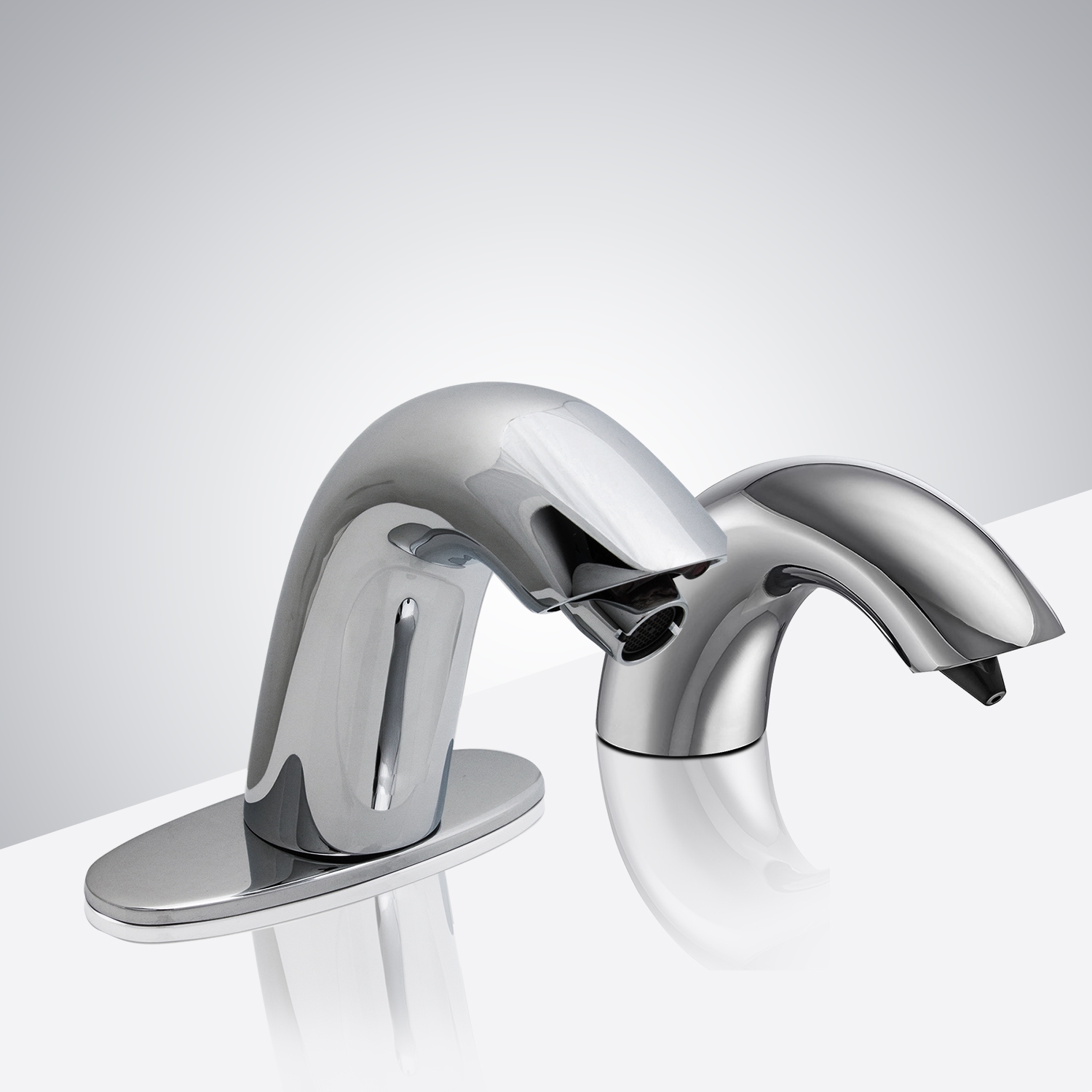
Coordinated soap dispensers with FontanaShowers sensor faucets—what is offered?
Matched faucet and dispenser sets are available for integrated commercial restrooms.