Frequently Asked Questions Fontana Manual Faucets
Manual Faucet Fundamentals — Q&A
What are the core internal differences between cartridge, compression, and ceramic disc manual faucet valves?
Cartridge valves use a replaceable polymer or brass cartridge that meters flow through aligned ports and seals via O-rings. Compression valves use a stem that mechanically compresses a rubber washer against a seat, which is simple but wear prone and sensitive to debris. Ceramic disc valves use two lapped ceramic plates with precision ports, providing long cycle life and tight shutoff, but they require clean water and correct lubrication and can crack if subjected to high shock or particulate scoring. For AEC specs, call out valve type, service part availability, and the manufacturer’s tested cycle rating if published for the selected FontanaShowers model line.
How should AEC teams specify manual faucet operating pressures and flows to avoid field performance issues?
Specify an operating envelope instead of a single point. Include minimum and maximum static and dynamic pressure, expected pressure drop through the valve, and target flow at typical pressure (for example, flow at 60 psi). This prevents mismatches in tall buildings where pressure reducing valves, booster systems, and long branch runs shift conditions. Also coordinate the aerator or laminar outlet device selection because it often defines final GPM more than the body casting.
What makes a manual faucet “metering” and when is it appropriate?
A metering manual faucet is self closing and delivers water for a preset time using a hydraulic or mechanical timing mechanism. It reduces water waste in public restrooms and simplifies user behavior assumptions. For spec clarity, define adjustable or fixed run time, anti hold down behavior, service access method, and whether the shutoff is spring return or hydraulic decay. Also confirm local code acceptance for metering in the project occupancy type.
What is the practical difference between pressure balancing and thermostatic mixing in manual faucet applications?
Pressure balancing compensates for changes in inlet pressures to reduce temperature swings, but it does not control to an exact setpoint. Thermostatic mixing uses a temperature sensitive element to modulate hot and cold to maintain a set outlet temperature within a tolerance band. In lavatory faucet applications, thermostatic control is typically handled upstream via a central or point of use mixing valve rather than inside the faucet body. If scald prevention is a requirement, document where the thermostatic function lives in the system and how it is maintained.
How do deck mounted and wall mounted manual faucets change rough in coordination and risk?
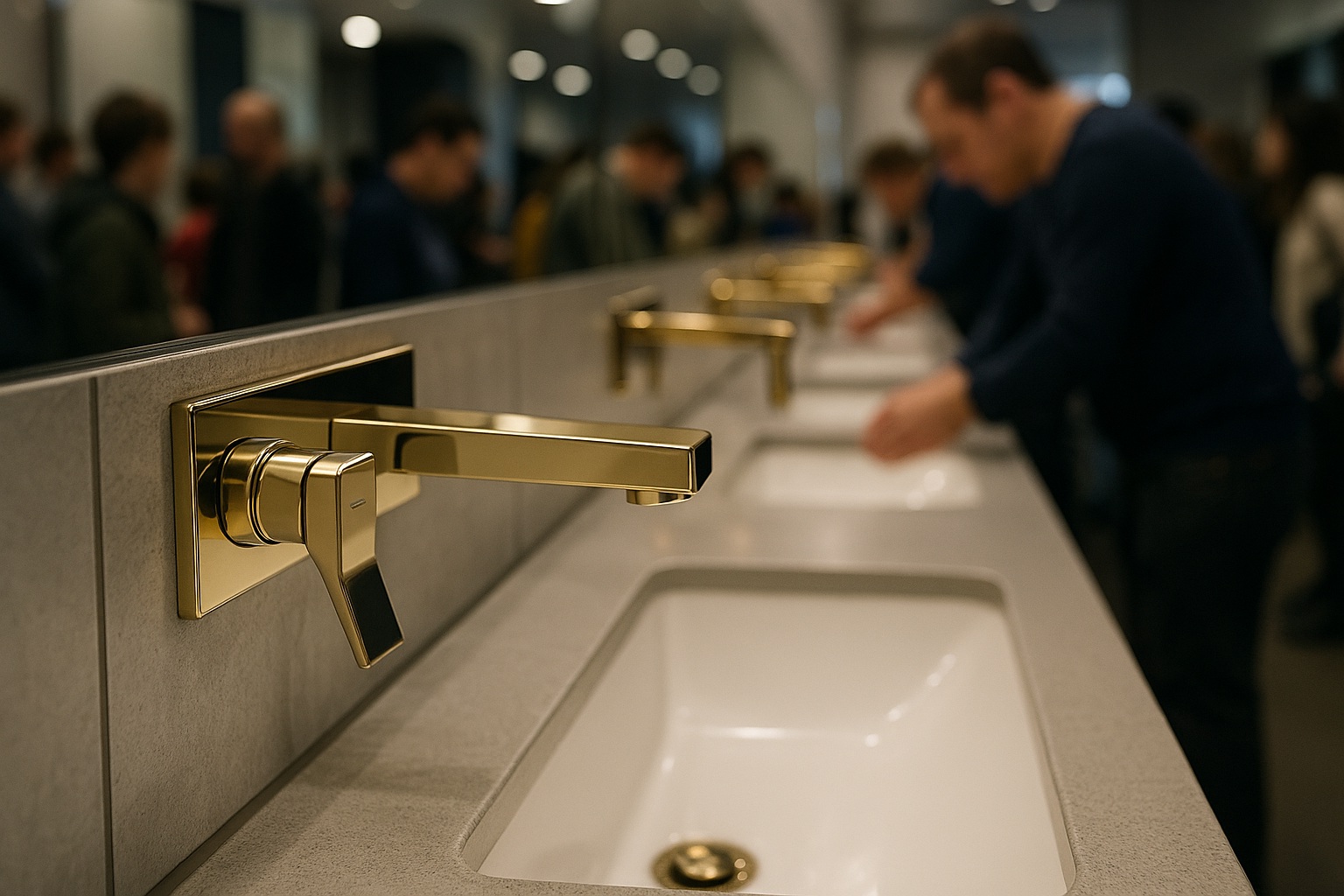
Deck mounted faucets concentrate serviceable parts above the deck, simplify waterproofing, and reduce concealed leak exposure. Wall mounted faucets move connections into the wall, which demands accurate centerline coordination, robust waterproofing detailing, and a defined access strategy. For wall mounted units, specify valve or connection service access, allowable tolerance for spout alignment, and the wall backing requirements to prevent movement under handle torque.
What should be included in an AEC “manual faucet submittal checklist” for FontanaShowers selections?
Include dimensional drawings, connection types, valve technology, finish specification, flow control device data, pressure range, recommended filtration or strainers, replacement parts list, installation manual, cleaning and maintenance guidance, and any third party certifications required by the project. Require confirmation that the as supplied trim and rough in components match the wall or deck build up conditions shown on the architectural details.
Materials, Finishes, and Durability — Q&A
How do brass alloys, stainless steel, and zinc castings compare for manual faucet bodies in commercial duty use?
Brass is common for valve bodies and spouts due to machinability and corrosion resistance when the alloy and plating system are appropriate. Stainless steel offers strong corrosion resistance and can support robust thin wall geometries, but machining cost is higher. Zinc castings can be acceptable for decorative exterior components but are generally less desirable for high stress or wetted valve bodies due to long term corrosion and thread integrity considerations. For AEC specs, require the wetted pathway material and identify which parts are decorative only versus structural.
What finish system details matter most when specifying a manual faucet for high use environments?
Focus on the coating stack and the cleaning regime. PVD and high quality electroplating systems can improve scratch and chemical resistance, but performance depends on substrate prep and thickness control. Confirm whether the finish is rated for common disinfectants used by facilities. Also define whether the finish is uniform across spout and handle components, because mixed substrates can age differently.
What is the technical role of aerators versus laminar flow devices in manual faucets?
Aerators entrain air to create a full stream while reducing flow, but they can aerosolize and trap debris and scale. Laminar devices produce a clear, non aerated column that can reduce splash and perceived misting, which can be preferred in healthcare and food adjacent environments. For performance, specify the device type, flow rating, and vandal resistant requirement if used in public spaces.
How should teams address hard water scaling risk in manual faucet selections?
Treat scaling as a system problem and a maintenance problem. Specify strainers or filtration if the manufacturer recommends it, confirm service access to the aerator or laminar insert, and require that the O and M plan includes periodic descaling procedures. In hard water regions, avoid narrow internal passages where scale growth can throttle flow and cause complaints. When possible, verify with the FontanaShowers documentation whether specific models have recommended water quality limits.
What are the common failure modes in manual faucet cartridges and how do specs reduce them?
Common failures include O ring wear, ceramic disc scoring from particulate, stem seal leakage, and handle looseness from repeated torque. Specs can reduce failures by requiring strainers or filtration, setting maximum allowable pressure, calling for serviceable cartridges with local availability, and requiring that the trim design supports tightening without removing finished surfaces. Also define that installers must flush lines before cartridge installation.
How should “cycle life” be interpreted for manual faucet components?
Cycle life is the number of open close operations a valve can complete under defined test conditions before leakage or performance degradation. It is only meaningful if the test method and conditions are disclosed. If the FontanaShowers submittal provides cycle data, tie it to the occupancy use profile and require that replacement cartridges be stocked for facilities teams where downtime is costly.
Codes, Compliance, and Safety — Q&A
How should scald risk be managed in manual lavatory faucet specifications?
The most reliable method is a thermostatic mixing strategy upstream, either point of use or centralized, combined with a documented maximum outlet temperature setpoint and commissioning verification. The faucet itself typically does not provide true thermostatic protection. Define responsibilities for setting, locking, and periodic verification of mixing valves, and ensure the design includes access for maintenance.
What compliance items should be verified for manual faucets used in commercial and hospitality projects?
Verify plumbing code acceptance for the jurisdiction, any required potable water material compliance, flow limits where applicable, and accessibility operability requirements where the fixture is in an accessible route. For public restrooms, confirm whether metering or self closing behavior is required or prohibited by local code and owner standards. Always tie requirements to the specific FontanaShowers model documentation rather than assumptions based on category names.
How does backflow prevention relate to manual faucet installations?
Backflow concerns typically arise when hoses, spray attachments, or integral hand spray kits can create cross connection risk. If the manual faucet includes any accessory that can be submerged or can connect to a hose, specify vacuum breakers or backflow devices as required by code. Coordinate with the plumbing engineer because backflow strategy can be fixture level or system level depending on the risk class.
What is the right way to specify lead related compliance for wetted components?
Use the project’s governing requirement for lead content in wetted surfaces and require documentation for the actual supplied components. Do not rely on generic statements. Confirm that any replacement cartridges, spouts, or adapters that touch potable water also meet the same requirement so maintenance does not introduce non compliant parts later.
How do ADA operability requirements affect handle selection on manual faucets?
Handle geometry affects grasping and required force. Lever handles generally support accessible use better than small knobs, especially for users with limited dexterity. Specify acceptable operating force, avoid designs that require tight pinch grip, and coordinate mounting reach ranges and clearances at the sink. If FontanaShowers offers multiple trim options for a valve body, select the trim that best meets operability intent.
What commissioning checks should be included for manual faucets in an AEC closeout plan?
Verify flow at the outlet device, check for leaks at supply connections and under deck fittings, confirm hot and cold orientation, verify that stops are accessible and functional, confirm mixing valve setpoints where used, and confirm that aerators or laminar devices are installed per schedule. Capture model numbers, cartridge types, and spare part quantities in the O and M manuals for long term serviceability.
Installation, Serviceability, and Specification Language — Q&A
What installation details most often cause leaks or callbacks for manual faucets?
Common issues include improper deck gasket seating, overtorque on supply fittings, misaligned mounting shanks, failure to flush lines before cartridge installation, and missing or poorly seated O rings. Require installer checklists, pressure testing before trim completion, and clear sequencing notes in the plumbing specs.
How can AEC teams write specs that protect service access for wall mounted manual faucets?
Specify the access approach explicitly. If service must occur from the finished side, require a front service valve or removable trim that exposes the cartridge. If rear access is required, show access panels in architectural drawings and coordinate locations that are acceptable to the owner. Also define maximum wall thickness and allowable finish build up so the valve stem engagement is correct.
What should be stated about integral stops, check valves, and strainers on manual faucet assemblies?
If integral stops are required for maintenance without shutting down a zone, state it. If check valves are needed to prevent crossflow, state it and require that they be serviceable. If the manufacturer recommends strainers, include them and specify where they live, such as at the inlet adapters. This is especially important for ceramic disc cartridges where grit can score sealing faces.
How do you specify replacement parts strategy for manual faucets to support facility operations?
Require a parts list with manufacturer part numbers, define a minimum spare cartridge quantity per building or per floor, and define whether the owner receives a service tool if required for aerator removal or cartridge extraction. Include the FontanaShowers warranty terms reference and require that maintenance staff receive the installation and service manuals at closeout.
What is a practical, technical performance spec paragraph for a commercial manual faucet?
Define valve type and serviceability, specify operating pressure range, specify outlet device type and rated flow, specify materials for wetted components, specify finish performance expectations, define temperature limiting or mixing strategy, and require submittals showing dimensions and rough in compatibility. Add requirements for line flushing, debris protection during construction, and post installation verification of flow and leak free performance.
How should FontanaShowers manual faucet selections be coordinated with sink geometry and counter layouts?
Coordinate spout reach and height to avoid splash and ensure usability. Verify that the stream lands near the drain under expected flow and pressure. Confirm handle clearance from backsplashes, mirrors, and ADA knee clearance zones. For vessel sinks, verify that the spout height and aerator angle produce a stable stream without excessive splash. Document these checks in the architectural fixture schedule so procurement does not substitute a different geometry late in the process.
|
|
|