Fontana Touchless Faucets™ | Architectural and Engineering Resource
Fontana Lymora FS9099BGR Black Granite Automatic Motion Sensor Faucet:
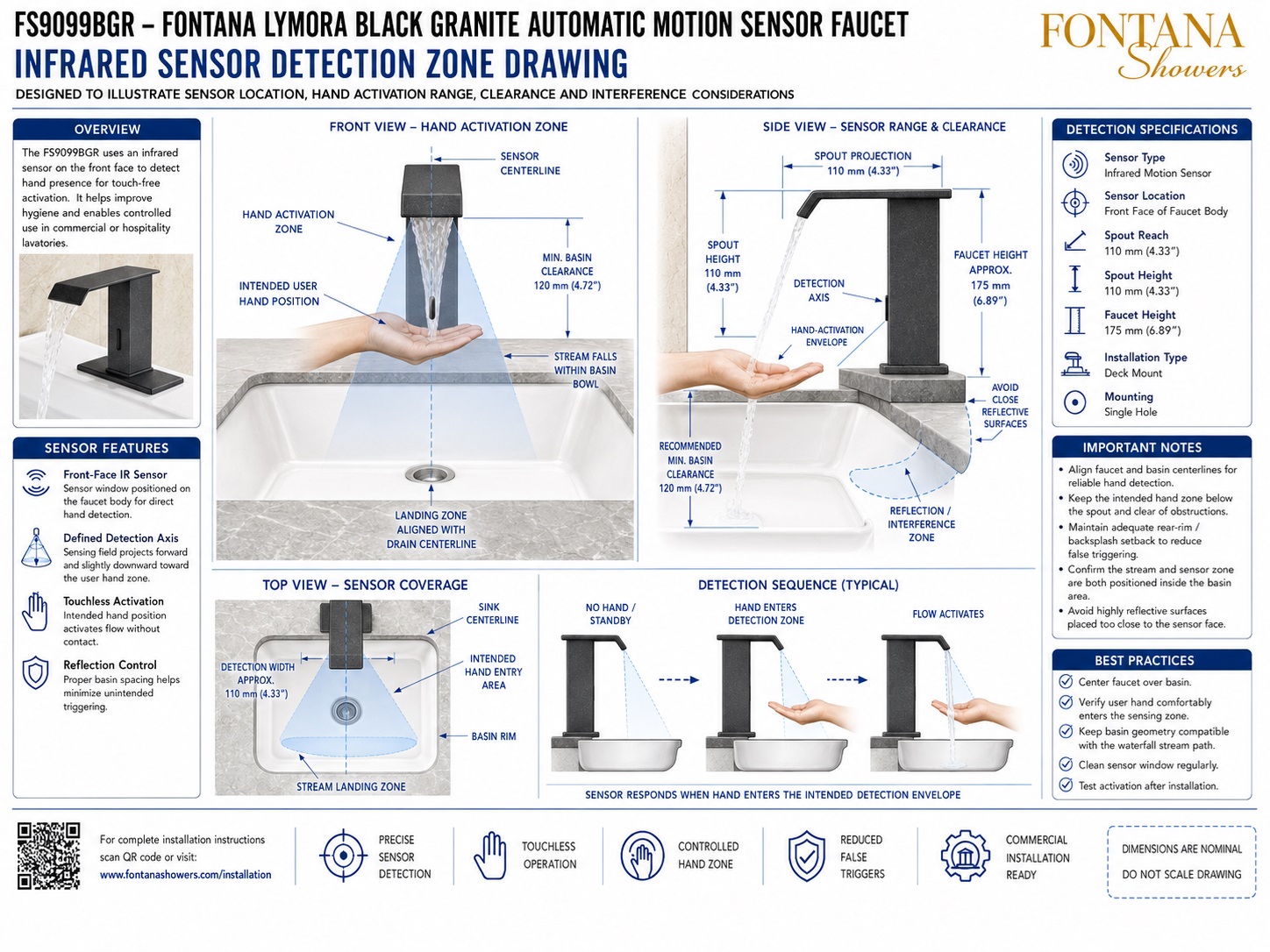
Infrared Sensor Detection Zone Drawing
This infrared-sensor coordination resource is intended to support architects,
plumbing engineers, interior designers, contractors, countertop fabricators,
installers and facility managers coordinating the Fontana Lymora FS9099BGR
Black Granite automatic motion-sensor faucet. The drawing package communicates
the front-face infrared sensor location, hand-activation envelope, detection
axis, basin clearance, sensor coverage, reflection / interference zones,
stream alignment and typical touchless activation sequence.
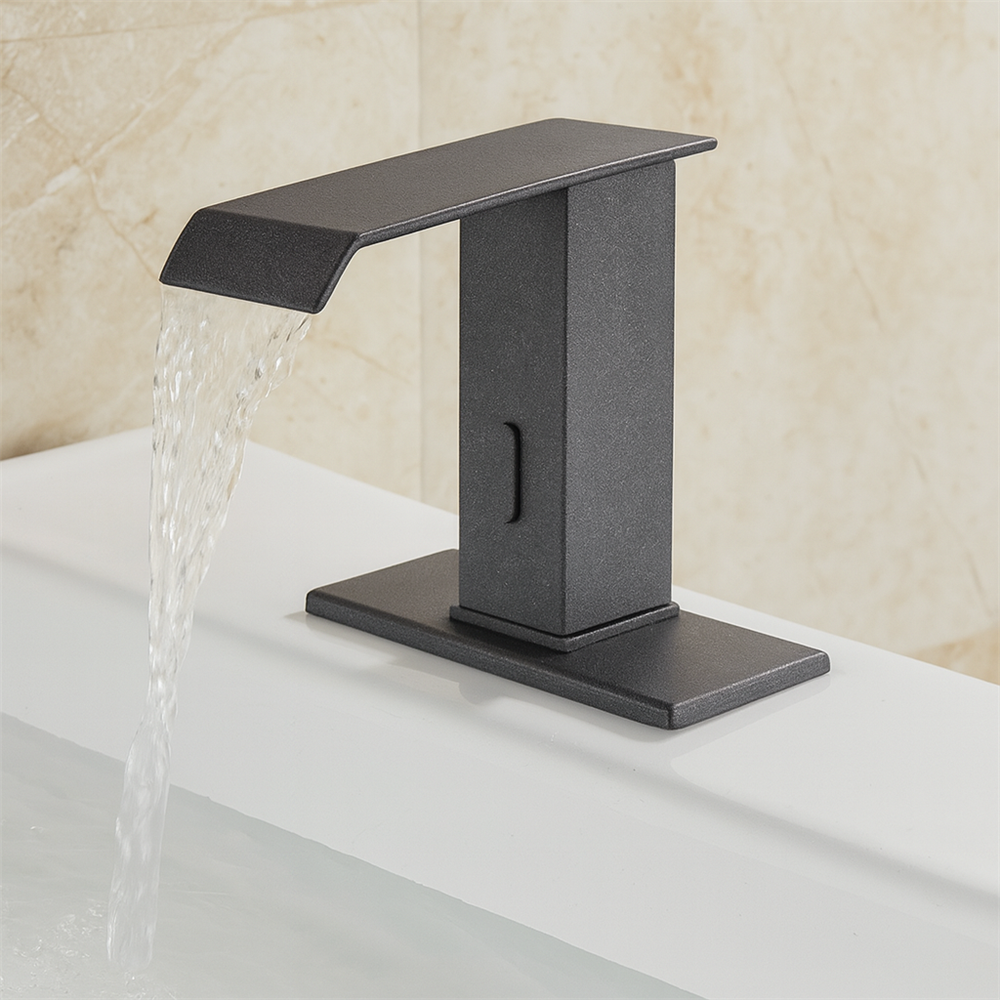
Fontana Lymora FS9099BGR Infrared Touchless Waterfall Faucet
The FS9099BGR uses a front-facing infrared motion sensor to detect hand
presence and activate the waterfall stream without physical contact.
Proper coordination of the sensor field, basin geometry, faucet centerline
and reflective surroundings helps improve activation reliability and
reduce false triggering in commercial and hospitality lavatories.
- Model: FS9099BGR
- Sensor type: Infrared motion sensor
- Sensor location: Front face of faucet body
- Finish: Black Granite
- Installation: Single-hole deck mount
- Stream type: Waterfall flow
- Spout reach: 110 mm (4.33 in.)
- Spout height: 110 mm (4.33 in.)
- Overall faucet height: Approximately 175 mm (6.89 in.)
- Recommended basin clearance: Approximately 120 mm (4.72 in.) minimum
- Detection behavior: Flow activates when hands enter the intended sensing envelope
Required Infrared Sensor Detection Drawing Package
Each sensor-coordination drawing should use a consistent faucet centerline,
basin centerline and finished-countertop datum. The package should clearly
identify sensor position, activation envelope, detection axis, basin clearance,
stream landing zone, reflective-surface risks and the relationship between
the sensing field and the user’s natural hand-entry position.
Infrared Sensor Detection Zone Drawing
Shows the complete touchless-sensor coordination for the Fontana Lymora FS9099BGR, including the sensor centerline, hand-activation envelope, basin clearance, top-view coverage, reflection / interference zone and typical detection sequence. This drawing provides the primary reference for reliable hands-free activation.
Front View — Hand Activation Zone
Illustrates the infrared sensor centered on the faucet body and projecting a defined sensing field forward and downward toward the user’s hands. The intended activation area remains below the spout and within the basin footprint.
Side View — Sensor Range & Clearance
Shows the forward detection axis, hand-activation envelope, 110 mm spout projection, 110 mm spout height, approximately 175 mm faucet height and the recommended relationship between the faucet, basin and reflective surfaces.
Minimum Basin Clearance
Indicates approximately 120 mm (4.72 in.) of recommended basin clearance so the user can place their hands comfortably within the sensing zone while keeping the waterfall stream fully inside the bowl.
Top View — Sensor Coverage
Shows the sensing field aligned with the sink centerline and extending into the basin. The illustrated detection width is approximately 110 mm (4.33 in.), centered with the intended hand-entry and water-landing zones.
Detection Sequence
Illustrates the typical operating sequence: standby with no hand present, hand entering the detection zone and automatic water flow activation. The system should return to standby after the user’s hand leaves the sensing area.
Reflection / Interference Control
Highlights the potential for glossy basin rims, polished countertops or other reflective surfaces to interfere with infrared sensing when positioned too close to the sensor face. Adequate spacing helps reduce false triggering.
Sensor & Stream Alignment
Coordinates the infrared detection field with the waterfall stream so the hand enters the sensor zone naturally before or while reaching the water, while both the hand zone and stream remain inside the basin.
Installation & Functional Verification
Before final acceptance, verify faucet and basin centerlines, sensor clearance, hand-entry position, basin geometry, reflective surfaces, water landing point and reliable activation / shutoff under actual installed conditions.
Engineering note:
All dimensions and detection-zone graphics shown are nominal coordination
references. Final sensor performance may be influenced by basin geometry,
surface reflectivity, ambient conditions, mounting position, water pressure
and nearby objects. The installed Fontana Lymora FS9099BGR should be
function-tested after installation to confirm reliable activation and
correct stream placement.
Architectural, Sensor and Basin Coordination Considerations
Sensor Centerline
Keep the infrared sensor aligned with the faucet and basin centerlines so hand detection remains predictable and the activation zone stays within the usable bowl area.
Hand-Entry Zone
Position the faucet so users can place their hands naturally below the spout without touching the faucet or reaching outside the basin.
Reflective Surfaces
Avoid highly reflective objects, polished surfaces or accessories directly in front of the sensor where they could contribute to unintended activation.
Basin Geometry
Coordinate basin depth, rear-rim shape and bowl width with the detection field and waterfall stream so both sensing and water placement occur inside the basin.
Sensor Window
Keep the front sensor window clean and unobstructed by soap dispensers, raised rims, decorative items or other countertop objects.
Post-Installation Test
Test activation from several natural hand positions after installation and confirm that flow starts and stops consistently without false triggers.
FontanaShowers Installation and Specification Resources
Professional Engineering and Accessibility References
Project verification:
Infrared sensor detection drawings are coordination tools and do not replace
approved project submittals. The architect, plumbing engineer, countertop
fabricator, contractor and licensed installer should verify sensor position,
basin geometry, hand-activation zone, reflective surfaces, stream landing,
faucet centerline, mounting conditions, accessibility criteria and locally
adopted plumbing requirements before final installation.
|
|
|