Shower Faucet With Handheld by FontanaShowers: Designs, Features & Installation
FontanaShowers® | Shower Systems with Handheld for Hospitality, Multifamily & Healthcare
Shower Faucet With Handheld by FontanaShowers: Complete Guide to Designs, Features, and Installation
In contemporary hospitality, multi residential, and healthcare projects, the shower assembly is no longer a minor fixture package item.
The shower becomes a critical interface between plumbing design, accessibility requirements, and architectural experience. A shower faucet
with handheld functionality delivers both operational flexibility and improved user comfort, particularly in guest rooms, accessible suites,
and high-end residential developments. FontanaShowers offers integrated shower systems with handheld showerheads that address performance,
aesthetics, maintenance, and code coordination, giving AEC teams a structured, commercial-grade starting point for specification.
Shower Systems with Handheld
Hospitality & Multifamily
Hydraulics & Codes
Installation & BIM
Use this page as a practical reference for selecting, documenting, and installing FontanaShowers shower faucets with handheld functionality.
Content is oriented to architects, engineers, designers, and contractors who need to align shower systems with code, hydraulic performance,
accessibility, and long-term maintenance goals across hospitality, multifamily, residential, and healthcare portfolios.
Configuration Visuals: Wall, Ceiling & Panel Shower Systems with Handheld
Shower Faucets with Handheld: AEC-Oriented Overview
System Typologies & Layout
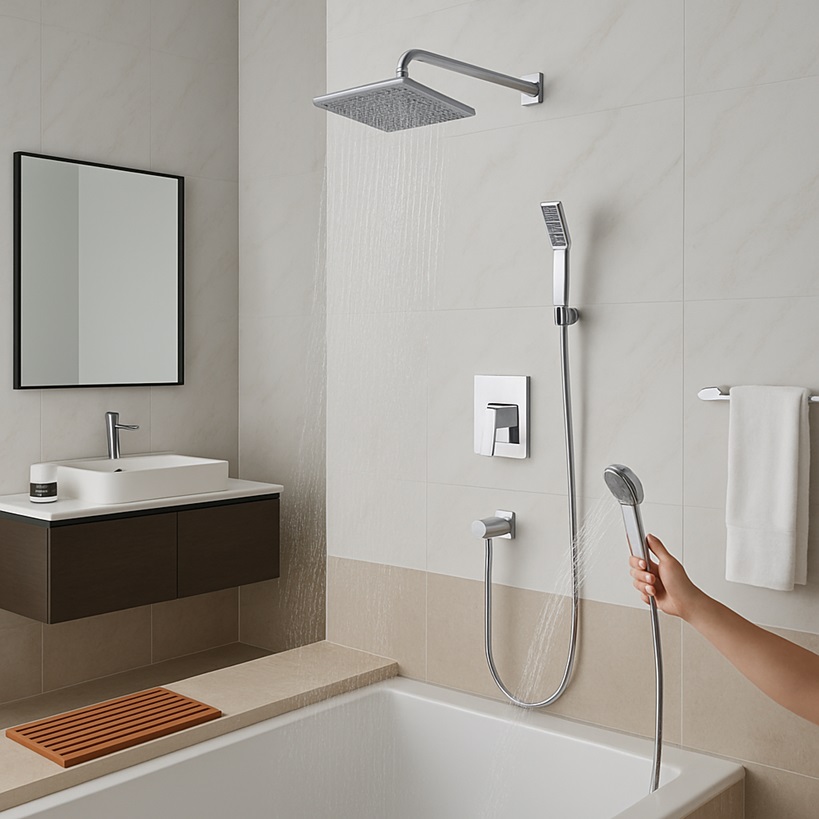
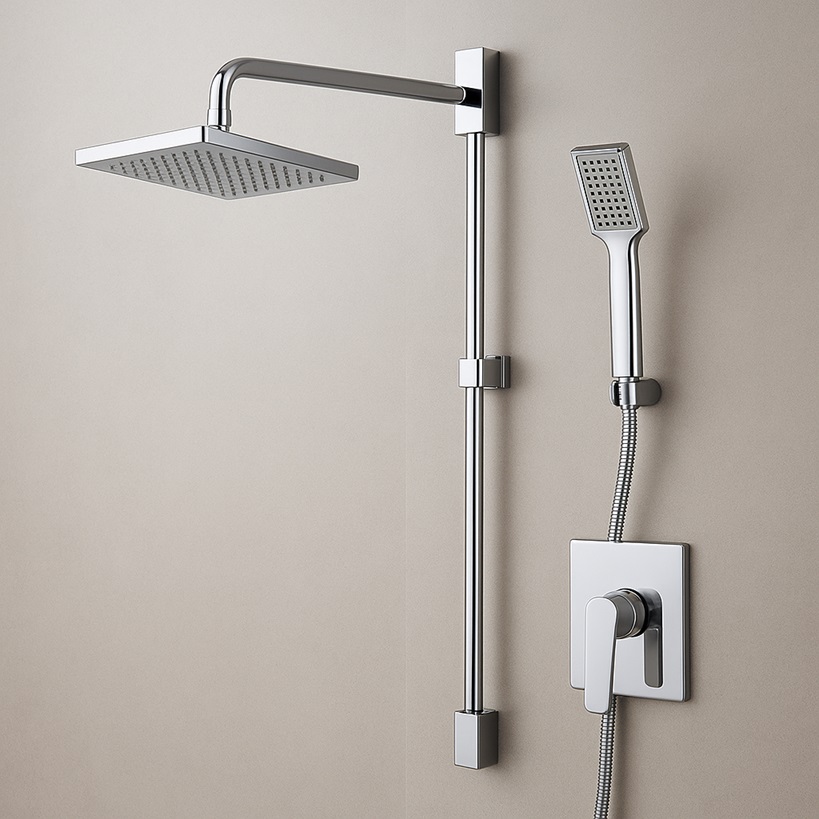
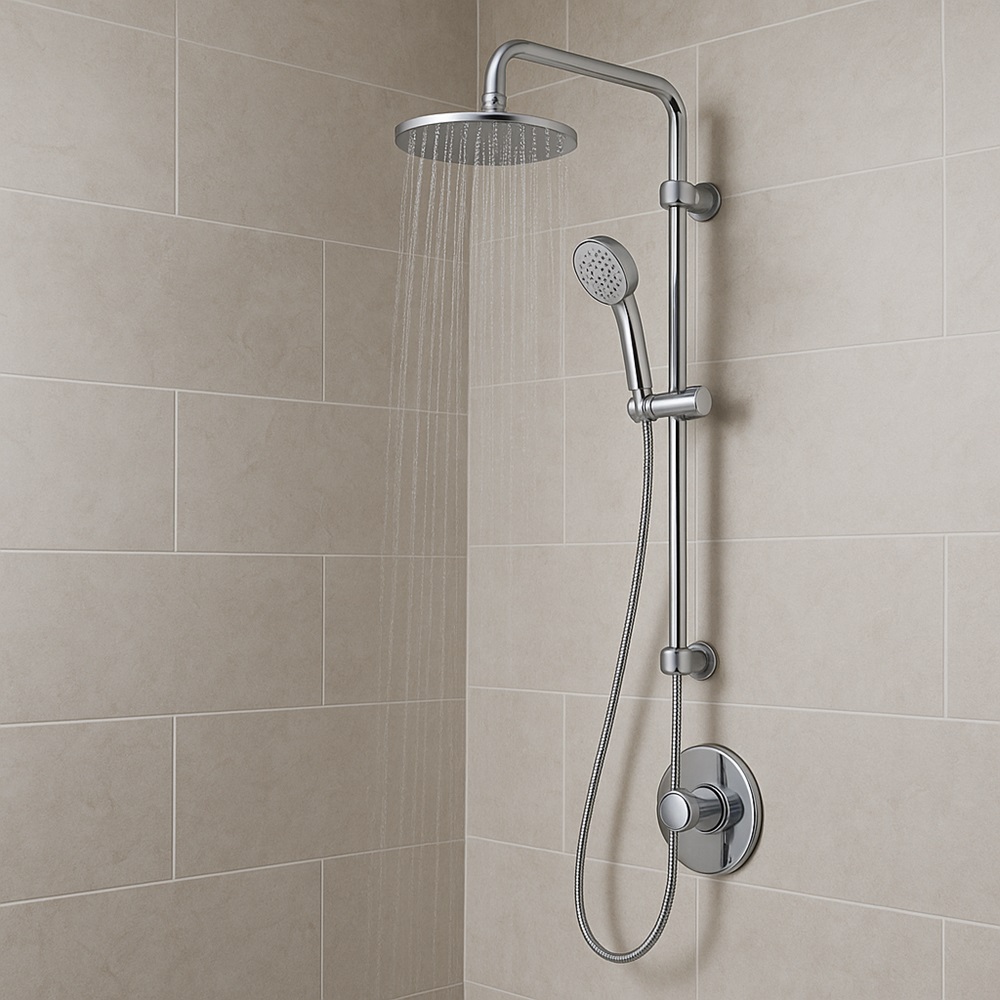
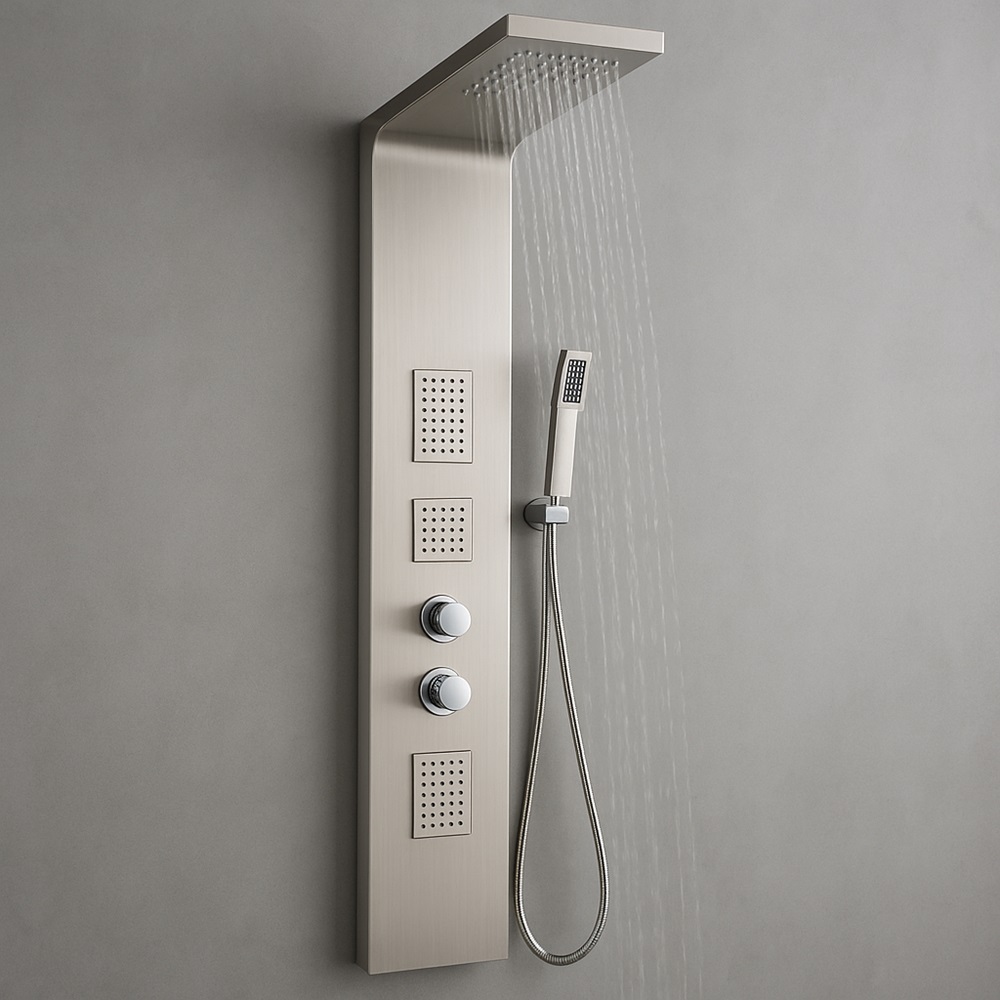
A shower faucet with handheld can be deployed as a wall-mounted system with integrated handheld, a rain ceiling or wall-mounted
system with handheld, or a performance panel combining multiple outlets. Each typology drives the spatial relationship between
overhead head, handheld outlet, diverter, and controls, and must be coordinated with tile layouts, glass, and accessible reach ranges.
Hydraulic Loads & Flow Performance
Shower systems with handheld must be coordinated with domestic hot water capacity and riser design. Flow rates and pressure
requirements for both showerhead and handheld are incorporated into system calculations so that simultaneous operation of
multiple rooms does not compromise comfort or water efficiency targets.
Codes, Flow Limits & Conservation
FontanaShowers systems are engineered to align with common North American flow criteria for showerheads, often near two and a half
gallons per minute subject to jurisdictional limits. Project teams cross-check model flow ratings against plumbing code and
green building or water conservation standards to maintain compliance while meeting guest expectations.
Valve & Diverter Strategy
Thermostatic or pressure-balancing valves help stabilize temperature when other fixtures operate on the same riser. Two-way or
three-way diverters distribute flow between overhead rain, handheld, and body jets. Valve selection must reflect the number of
active outlets and whether concurrent use is allowed or limited by design.
User Safety & Accessibility
Handhelds are essential in accessible guest rooms, assisted living, and healthcare environments. Control locations, hose length,
and bracket or slide bar mounting are coordinated with local accessibility codes so that seated users can safely reach the
handheld and operate controls without overextension or entanglement risks.
Documentation, BIM & Lifecycle Planning
Shower systems with handheld are documented as integrated assemblies with defined flow rates, pressure requirements, and materials.
BIM content, CAD blocks, and coordinated specifications carry outlet heights, valve depths, and accessory locations through
construction documents, submittals, and O&M manuals to support long-term performance and serviceability.
Materials, Finishes & Durability Planning
Base Materials & Construction
- Solid brass and stainless: FontanaShowers handheld systems are typically constructed from solid brass and stainless steel components for corrosion resistance and structural integrity in high humidity applications.
- Commercial-grade performance: Assemblies are designed for demanding hospitality, multifamily, and institutional usage, with internal components selected for frequent actuation and cleaning.
- Compatibility with cleaning protocols: Materials and finishes are coordinated with typical housekeeping chemicals used in hotels and healthcare, supporting long-term appearance and function.
- Brand emphasis on shower systems: FontanaShowers’ brand documentation highlights specialization in contemporary shower systems and digital or thermostatic controls suited to complex installations.
Finishes & Visual Coordination
- Finish palette: Popular finishes include brushed nickel, polished chrome, brushed and polished gold tones, matte black and specialty dark finishes, and satin or brushed stainless steel.
- Unified design language: Coordinating the finish across rain head, handheld, slide bar, hose, and valve trim ensures the system reads as one intentional assembly in guest baths and spa areas.
- Portfolio-level consistency: Multi-property owners can use curated collections and handheld shower set links to align finish families across brands and asset types while maintaining local design flexibility.
- Detailing in documentation: Finish codes and sheen levels are called out in schedules and specs to prevent mismatched components during procurement and installation.
Applications for Shower Faucets with Handheld Across Portfolios
Hospitality Guest Rooms & Suites
In hotels and resorts, shower systems with handheld provide flexibility for a wide range of guests, from quick rinses to extended
spa-style showers. Standardized valve platforms and finishes allow operators to replicate successful assemblies across room types
and properties while preserving brand differentiation through tile and glass selections.
Multifamily & Mixed-Use Developments
Multi residential projects often deploy wall-mounted shower systems with handheld in premium unit types. Fixture unit impacts,
pressure zones, and hot water plant capacity are evaluated so that upgraded bathrooms remain compatible with broader building-wide
water efficiency and comfort targets.
Healthcare & Assisted Living
In healthcare and assisted living environments, handheld showers support assisted bathing, seated use, and infection-control
cleaning routines. Hose lengths, bracket positions, and grab bar layouts are coordinated so staff and patients can safely operate
the system in accordance with accessibility and clinical requirements.
High-End Residential Bathrooms
In luxury residential projects, FontanaShowers systems with handheld extend the design language of the primary shower assembly.
Rain heads, side sprays, and handhelds can be combined to offer immersive and task-oriented modes while maintaining cohesive
metalwork and control logic.
Spa & Wellness Facilities
Wellness centers and spa suites use handhelds to complement rain heads and body jets, aiding in targeted hydrotherapy, cleaning
routines, and flexible use by staff. Acoustic comfort and visual calm are supported by thoughtful outlet placement and finish selection.
Portfolio Standards & BOD Narratives
Owners and operators can embed specific FontanaShowers handheld series into basis-of-design documents and portfolio standards,
defining valve types, finishes, and accessory strategies. This enables consistent guest experience, simplified training for
maintenance staff, and predictable lifecycle performance across a diverse property mix.
Technical Specifications & Code Context for Shower Faucets with Handheld
|
Configurations
|
Wall-mounted systems with rain head and handheld on slide bar or bracket; ceiling or wall-mounted rainfall systems with separate
handheld outlet; stainless steel shower panels combining rain head, body jets, and handheld—selected based on project typology,
wall construction, and desired user experience.
|
|
Standards & Codes
|
Designed to align with plumbing codes and water efficiency standards governing showerhead flow rates and temperature control.
Specifications call out required certifications, anti-scald provisions, and maximum outlet temperatures in accordance with
adopted codes and any jurisdictional amendments or green building requirements.
|
|
Hydraulic & Acoustic Performance
|
Shower and handheld flows are coordinated with domestic hot water plant sizing, recirculation strategies, and pressure zones.
Thermostatic or pressure-balancing valves mitigate temperature swings when other fixtures operate, while target flow settings
and outlet placement help maintain acceptable noise levels in hospitality and multifamily environments.
|
|
Mounting & Rough-In
|
Mixing valves, diverters, outlets, slide bars, and panels are documented with rough-in dimensions, cavity depth, structural
backing, and access provisions. Valve bodies are set relative to finished wall build-up, and handheld outlets are coordinated
with glass panels, niches, and grab bars to avoid conflicts and ensure functional hose reach.
|
|
Materials
|
Bodies and trim components are typically brass or stainless steel, with corrosion-resistant internal parts sized for frequent use.
Specifications can define allowable materials and minimum performance criteria for high-use commercial settings, including
resistance to standard cleaning chemicals and water conditions.
|
|
Finishes
|
Showerhead, handheld, slide bar, hose, and valve trim finishes are coordinated to match the overall metalwork language of
the bathroom. Common options include chrome, brushed nickel, gold tones, matte black, and brushed stainless, selected to align
with accessory packages and brand standards.
|
|
Accessories & Options
|
Options may include slide bars for adjustable height, multiple spray patterns at the handheld, grab bars, niches, body jets,
and glass door configurations coordinated with hose swing. Diverter configurations and outlet counts are matched to the desired
user experience and project water efficiency goals.
|
|
BIM & Documentation
|
Product data sheets, BIM and CAD families, and installation manuals support coordination with wall framing, waterproofing, and
MEP routing. Documentation also captures flow rates, pressure requirements, commissioning procedures, and maintenance guidance
for facility management and long-term asset planning.
|
Configuration Focus (Model-Dependent)
Wall & Rain Shower Systems
Handheld & Multi-Outlet Panels
Thermostatic & Pressure-Balance
Hospitality-Grade Performance
Integration & Coordination Highlights
- Verify that selected shower and handheld combinations comply with applicable plumbing codes, including flow rate restrictions, mixing requirements, and anti-scald protection provisions.
- Coordinate valve depths, outlet locations, slide bar backing, and hose clearances early in design, carrying rough-in data through CDs, shop drawings, and BIM models.
- Align hydraulic calculations, water heater capacity, and recirculation strategies with desired shower experience, water efficiency targets, and simultaneous usage scenarios across hospitality, multifamily, and healthcare projects.
Why AEC Teams Specify FontanaShowers for Shower Faucets with Handheld
Dedicated Handheld Shower Collections
FontanaShowers offers dedicated collections of shower systems with handheld that treat the handheld as an integral part of the
shower experience, not an afterthought. Curated sets align trims, valves, and accessories for hospitality, multifamily, and
high-end residential applications.
Thermostatic & Control Expertise
The brand specializes in contemporary shower systems, including digital and thermostatic controls that stabilize mixed water
temperature in complex riser conditions. This helps AEC teams meet comfort and safety objectives even in stacked, multi-outlet installations.
AEC-Focused Documentation & BIM
Cut sheets, BIM families, and coordination details—supplemented by FontanaShowers articles and technical resources—simplify
integration of shower systems with handheld into construction documents, model-based coordination, and owner standard development.
Finish Coordination Across Fixtures
By pairing handheld-equipped shower systems with coordinated lavatory faucets and accessories, designers can deliver a cohesive
metalwork language across the bath. This is especially valuable where brand standards require consistent finishes across multiple properties.
Maintenance & Lifecycle Support
FontanaShowers emphasizes durable construction and serviceable components, including accessible cartridges and strainers.
Facilities teams benefit from clear maintenance guidance and readily available replacement parts that support long-term performance.
Portfolio-Wide Standardization
Embedding FontanaShowers handheld systems into basis-of-design narratives enables owners and operators to standardize appearance,
performance, and maintenance strategies across hospitality, residential, and institutional portfolios while still allowing for
local design differentiation.
Specification, BIM & Coordination Resources
Included in a Typical Shower System with Handheld Spec Package
- Product data sheets for shower and handheld assemblies, including model-specific flow rates, pressure ranges, and mixing valve options.
- Editable submittal forms aligned with plumbing and accessibility standards, describing configuration, control strategy, number of outlets, and required certifications.
- BIM / CAD families with accurate outlet heights, valve body depths, connection points, and clearance zones for coordination with walls, glass, niches, and risers.
- Rough-in templates illustrating backing requirements for slide bars and panels, valve and diverter locations, and relationships between controls, handheld holders, and grab bars.
- Commissioning and maintenance guidance, including procedures for verifying flow and temperature performance, cleaning recommendations by finish, and cartridge or component replacement intervals.
Project Notes
When documenting a shower faucet with handheld, treat the assembly as an integrated system rather than a late-stage accessory.
Identify manufacturer, collection, valve type, diverter configuration, number of outlets, flow rates, and finish codes in both
specifications and BIM families. Coordinate valve and outlet locations, slide bar backing, and hose clearances with accessibility
standards, glass elements, and storage niches. Reference FontanaShowers brand resources and technical articles when developing
basis-of-design narratives and owner standards, and carry commissioning and maintenance requirements into project O&M manuals
so that shower performance remains consistent over the life of the asset.
|
|
|