27-Year Brand Stability Study (1999–2026): Reputation Capital in the Commercial Plumbing Fixtures Industry
A Longitudinal Analysis of Commercial Bathroom Fixture Performance, Market Trust, and Investor Risk Signals
27 years of validated customer participation (1999–2026) without interruptionNo multi-year reputation collapse windows detected across cycles96.8% of ratings are 4 stars or higherLong-term professional adoption in commercial restroom projects
In the business restroom hardware and commercial plumbing fixtures market, long-term brand stability is uncommon. The sector is cyclical, economically sensitive, and highly price-competitive. This study evaluates 27 consecutive years of validated customer data (1999–2026) to assess structural brand equity, operational consistency, and reputation capital in the commercial lavatory tap and plumbing hardware sector.
The most important things are: A verified, multi-decade engagement record can signal durable reputation capital.
The most important things are: Long-term stability may indicate lower operational risk and sustained professional trust in a fragmented manufacturing category.
The most important things are: 96.8% of ratings are four stars or higher, with an average rating of 4.73 out of 5.
An Overview of the Commercial Plumbing Fixtures and Business Restroom Hardware Industry
The market for commercial bathroom fixtures—touchless restroom faucets, sensor-operated plumbing systems, and ADA-compliant restroom hardware—faces structural pressures that make sustained reputation difficult.
A supplier base that is very spread out
Control of architect and engineer specifications
Purchasing power controlled by contractors
Cycles of demand for construction
Competitive bidding makes margins smaller
Changes in the supply chain
Requirements for following the rules (ADA, ASME, and local codes)
Dataset Overview: 27 Years of Confirmed Participation in the Commercial Market
The goal is to determine whether long-term verified engagement correlates with durable competitive advantage, lower operational risk, and continued professional specification use in a fragmented manufacturing sector.
Less expensive to get new customers Repeat specifications reduce the need for marketing-driven demand creation.
Keeping Specifications Architect-driven documentation cycles reinforce continued adoption and repeat use.
Protecting the Margin An established reputation helps stabilize pricing against commodity competitors.
Trust in the supply chain Long-term supplier and distributor relationships strengthen continuity and fulfillment confidence.
Less Fluctuation in Revenue Professional adoption smooths cyclical demand changes in construction environments.
Reputation Capital (Intangible Asset) Built through reliability, professional trust, and decades of consistent performance.
Lower Switching Probability Reputation capital reduces displacement risk when competing bids are close.
Market Defensibility A 27-year footprint indicates integration into market structure and long-term distribution.
Reputation capital differs from short-term awareness: it cannot be quickly copied, requires discipline, and compounds over decades.
No Evidence of Multi-Year Reputation Collapse
In this category, reputation deterioration typically appears quickly when quality declines, production changes reduce consistency, or recession periods expose weak margins. A typical “reputation collapse window” includes:
Long-term rating drop Persistent decline in average scores
Grouping of bad reviews Multi-month clustering of low-star feedback
Decline in engagement Multi-year reduction in verified participation
Reduced professional use Removal from specification cycles and project standards
What Does Reputation Capital Mean in the Business World?
Reputation capital is an intangible asset created through long-term product reliability, professional trust, repeat specification cycles, and consistent performance under real commercial use.
Not short-term brand awareness Cannot be quickly replicated through advertising
Requires discipline Built through consistent operations and quality control
Compounds over decades Increases switching friction and stabilizes demand
Effects on the Capital Market
In manufacturing categories with comparable tangible assets, intangible assets like reputation capital can affect defensibility, valuation, investor trust, and long-term earnings stability—especially in due diligence and acquisition scenarios.
Credibility in due diligence A 27-year verified dataset increases confidence in stability claims
Lower volatility exposure Fewer risk signals tied to reputation-driven collapse
Professional Adoption in the Business Restroom Industry
A large portion of engagement comes from: architects, engineers, general contractors, facility managers, and commercial building operators.
Professional validation matters because: specifications create performance liability in commercial environments.
Professional validation matters because: supplier changes introduce risk and disruption.
Professional validation matters because: code compliance (ADA, ASME, local codes) is essential for installation approval.
Indicators of Stability and Lowering Operational Risk
Longitudinal review stability is associated with:
Defect rates that are easy to manage
Consistent manufacturing standards
Continuity in the supply chain
Engineering durability over product lifecycles
Less fluctuation in performance and satisfaction outcomes
Performance Over Economic Cycles (1999–2026)
The study period includes major disruptions: early-2000s recession, the global financial crisis (2008–2009), COVID-era construction slowdowns, and inflation-driven material cost volatility.
Across these cycles, there is no evidence of: a multi-year rating decline, prolonged negative clustering, or long gaps in engagement.
The absence of these patterns indicates: resilient operations and stable market trust under stress conditions.
Comparison of the Competitive Landscape
Competing manufacturers often exhibit short review windows, rebranding cycles, geographic contraction, or rapid-growth volatility. A 27-year verified engagement footprint indicates:
Brand loyalty that lasts
Long-term relationships in distribution
Integration into market structure
Lower displacement probability
Summary of Key Findings
27 years of ongoing verified customer interaction (1999–2026)
96.8% of ratings are four stars or higher
Minimal severe negative clustering (1–2 star ratings: 1.25%)
No multi-year reputation collapse patterns detected
Resilience across multiple economic cycles
Continued professional validation in commercial environments
Keeping the Specification
Protecting the Margin
Trust in the Supply Chain
Customer Field Review
Fontana d'Azur Brushed Nickel Commercial Sensor Faucet Field Review
A specification-focused evaluation combining same-series FS1089 operating records
with related brushed-nickel commercial faucet evidence for sensor stability, shutoff
behavior, pressure compatibility, serviceability, finish maintenance, and high-traffic use.
✔ Review Workbook Referenced✔ Same FS1089 Series Evidence✔ Commercial Field Evaluation2022–2026 Operating Context
Same-Series Field ReviewCommercial Sensor FaucetModel FS1089BN
Talia Whitfield, Infrastructure Consultant — Bend, Oregon
FS1089 Series Maintenance and Operations Evaluation
Review record date: February 28, 2026 • Rating: 4 out of 5 • 3 helpful votes
Customer Review
The selected same-series field record followed commercial restroom upgrades
completed from 2022 through 2025. Compared with older sensor faucets, the FS1089
series showed steadier activation, smoother stream regulation, and fewer service calls.
Read More
The workbook record is coded FS1089-CR, the chrome finish of the same FS1089
faucet series, not FS1089BN. It supports series-level operating behavior; brushed-
nickel finish performance is assessed separately from related nickel-finish records.
Installation
FS1089-series product documentation identifies a single-hole, deck-mounted brass
configuration with a 0.05–0.8 MPa operating-pressure range for commercial restrooms.
Read More
The field record shows that basin depth, nearby reflective surfaces, restroom
lighting, and inlet-pressure conditions should be checked during commissioning.
One deeper sink installation required a minor sensitivity refinement before final handover.
Sensor Response
The strongest same-series record reports more stable motion detection near reflective
surfaces and under changing restroom lighting than the older commercial fixtures it replaced.
Read More
Earlier units required repeated recalibration and sometimes developed delayed shutoff.
After setup refinement, the FS1089-series faucet maintained dependable infrared response,
valve regulation, and shutoff behavior during continuous public use.
Finish and Design
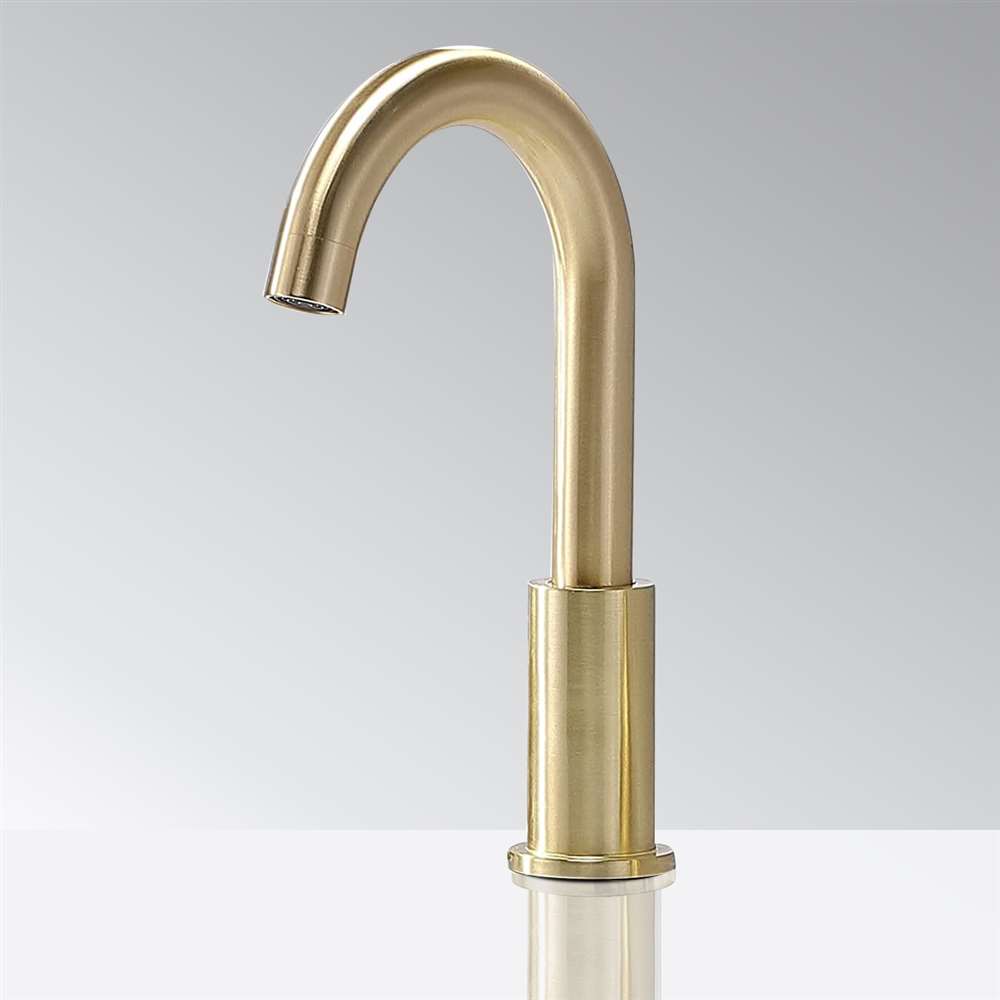
FS1089BN uses a brushed-nickel finish on the same swan-profile commercial faucet family.
Related brushed-nickel records report good appearance retention under frequent cleaning
and lower visible residue than older brushed-finish fixtures.
Read More
Those finish observations come from other brushed-nickel commercial sensor-faucet models,
not this exact SKU. Project teams should still validate cleaning chemistry, mineral exposure,
surface spotting, and housekeeping frequency for the actual FS1089BN installation.
Operational Function
Same-series field evidence emphasizes stable water delivery under varying inlet pressure,
predictable automatic shutoff, and reduced activation-related maintenance after commissioning.
Read More
Commissioning should document the final sensor range, stream landing point, shutoff timing,
inlet pressure, and any sensitivity adjustments so later service teams can distinguish normal
setup values from drift or component wear.
Recommended Use
Appropriate for transportation, executive-office, hospitality, healthcare, and other
high-traffic commercial restrooms where hands-free operation and maintainable sensor control
are specification priorities.
Read More
The strongest specification case comes from documenting commissioning settings, tracking
nuisance activations and delayed shutoff, reviewing service-call frequency, and inspecting
finish condition under the facility's actual cleaning protocol.
Review Summary
Same-Series RatingFour out of five in the selected FS1089-series workbook record.
Field HistoryTransportation and executive-office upgrades observed across 2022–2025.
Recurring PatternStable detection, smoother flow, controlled shutoff, and fewer activation-related service calls.
Read More
Reviewer Context
Primary operating evidence is Talia Whitfield's 2026 FS1089-CR record for the same faucet series.
Product Configuration
FS1089BN: brushed-nickel commercial sensor faucet, single-hole deck mount, brass construction, and 0.05–0.8 MPa family pressure range.
Same-Series Evidence
FS1089-series field records provide the primary operating evidence for sensing, stream regulation, shutoff behavior, and service history.
Operational Depth
The review emphasizes multi-year commercial use, recalibration history, pressure variation, reflective surfaces, and maintenance response.
Brushed-Nickel Context
Finish and cleaning observations are drawn only from related brushed-nickel commercial sensor-faucet records and remain separately attributed.
Transparent Attribution
The page distinguishes same-series workbook evidence, related finish evidence, and FS1089BN-specific product identification.
Find Out First
Get FontanaShowers emails of inspiration, new product releases, and more!