
Does Time-of-Flight Sensing Supports a More Predictable Experience?
In a busy shared space, people expect a station to respond when they approach it and stop when they leave. That simple experience depends on how the system identifies a person within its operating area. Time-of-Flight, or ToF, is one way to measure that presence with greater attention to distance.
What the Sensor Measures
A ToF sensor emits light and measures its return after it reflects from an object. The system uses that measurement to estimate distance. In a public setting, distance information can help distinguish activity within the intended operating area from movement farther away.
For the visitor, the technology should remain unobtrusive. There is no need to understand the measurement taking place; the station should simply respond at the expected point in the sequence. The design challenge is to make that response feel consistent for people with different approaches, positions, and habits.
Why Placement Still Matters
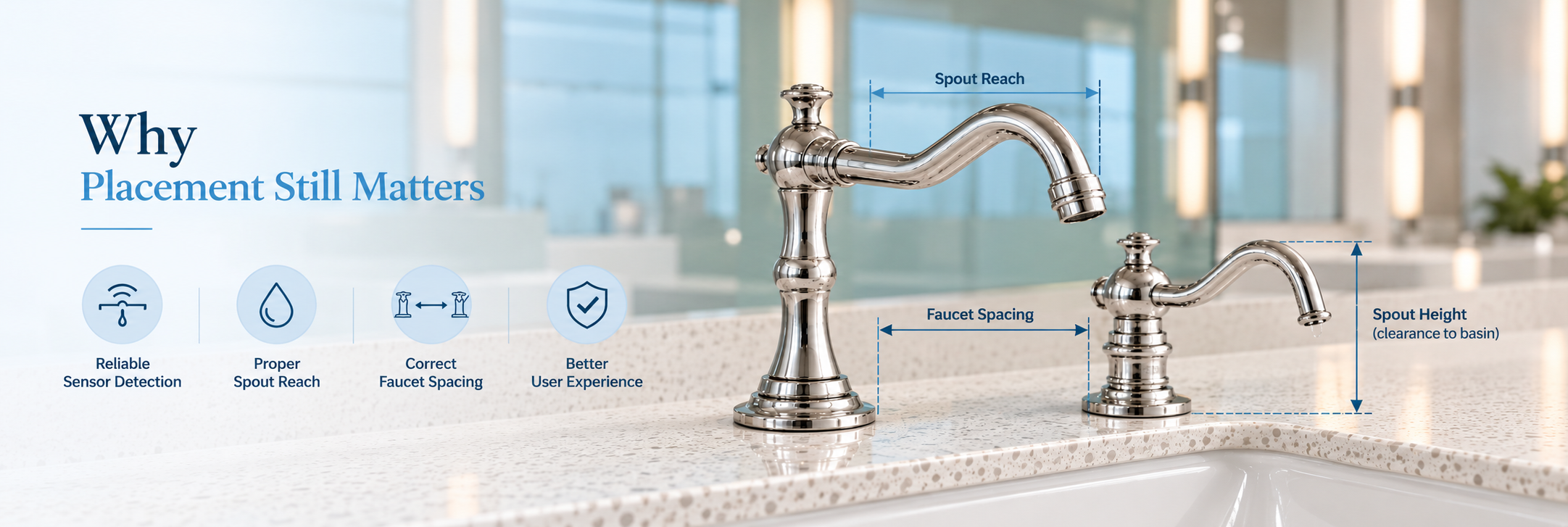
Sensing technology cannot compensate for every layout issue. The angle of the unit, its position relative to the user, and the surrounding surfaces all affect how the operating area is established. A station should be evaluated as an installed arrangement, with its intended mounting position and nearby materials taken into account.
Review the Complete Setting
Design teams should look at the full range of likely use: someone approaching directly, a shorter user standing closer, and a person moving past an adjacent station. This review helps establish whether the response occurs where visitors expect it. It also gives installers and facility teams a practical reference when the system is commissioned.
From Installation to Daily Operation
After installation, the operating area should be checked in the finished space. Countertop reflectivity, mounting geometry, and the final position of surrounding components may differ from early drawings. Testing the installed station under ordinary use helps confirm that its response suits the actual setting.
ToF is one part of a complete design decision. Placement, configuration, and commissioning determine how its distance measurements translate into daily performance. When those elements are considered together, the technology can support an experience that feels clear and dependable without drawing attention to itself.