Commercial Bathroom Design
Touchless Faucet Designs: Styles, Configurations & Architectural Options
Explore touchless faucet designs across wall-mounted and deck-mounted configurations,
architectural finishes, sensor-integrated forms, coordinated faucet-and-soap systems,
and commercial restroom applications. This guide focuses on how faucet form,
installation geometry, finish, basin coordination, and system configuration influence
both design intent and long-term usability.
For the complete product selection by sensor technology, mounting configuration,
power source, flow requirements, finish, and project application, explore
Touchless Bathroom Faucets
.
Explore Faucets
Touchless Faucet Design Priorities
A successful commercial touchless faucet specification coordinates appearance with
installation conditions, basin geometry, sensing architecture, service access, power
strategy, finish durability, and the expected intensity of use.
◇
Mounting Geometry
Coordinate wall-mount or deck-mount configuration with basin dimensions, counter construction,
spout reach, splash control, and service access.
◇
Sensor Integration
Sensor location and activation-zone design should work with the faucet form and intended
hand-washing position.
◇
Finish Coordination
Match faucet finish with soap dispensers, accessories, hardware, counters, basins,
and the overall restroom design language.
◇
Serviceability
Consider battery or hardwired access, valve location, filter access, control-module
placement, and routine maintenance.
◇
Project Application
Design selection should reflect traffic levels, cleaning procedures, user requirements,
accessibility, and architectural intent.
Wall-Mounted vs. Deck-Mounted Touchless Faucet Designs
Mounting configuration has a major influence on the appearance of the lavatory, installation
requirements, cleaning access, service strategy, and the relationship between the faucet and basin.

Wall-Mounted Designs
Wall-mounted touchless faucets can create a highly architectural presentation while
reducing hardware on the countertop. Their specification requires careful coordination
of rough-in position, spout reach, basin geometry, wall construction, concealed plumbing,
and long-term service access.
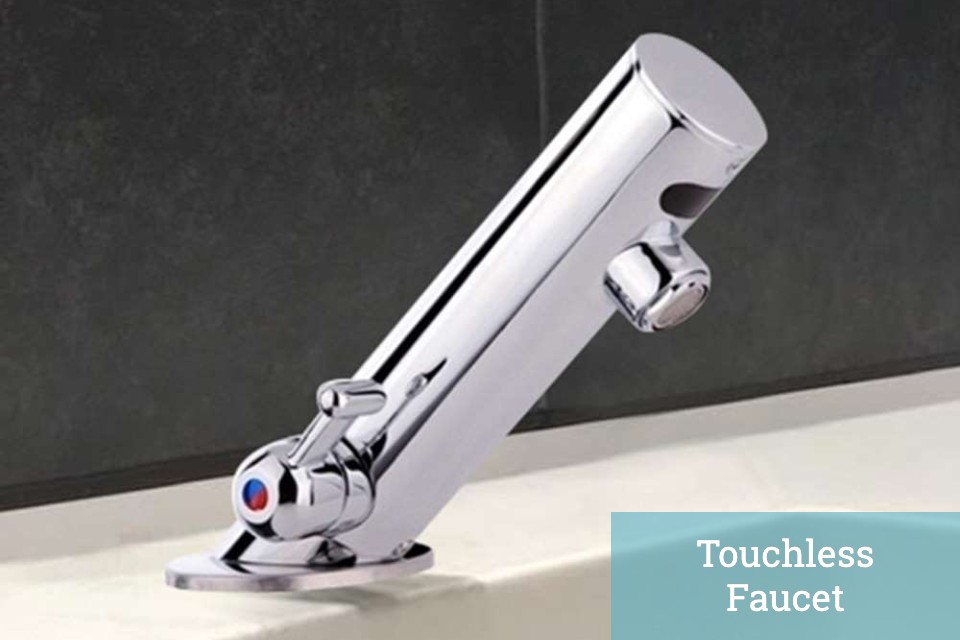
Deck-Mounted Designs
Deck-mounted touchless faucets install directly through the sink or countertop and are
widely used across commercial lavatories. Design coordination should consider mounting-hole
requirements, spout height, reach, counter thickness, basin position, sensor alignment,
and below-deck maintenance space.
Architectural Touchless Faucet Styles
Touchless faucets are no longer limited to a single institutional appearance. Contemporary
collections can support minimalist, sculptural, geometric, curved, traditional-modern,
and coordinated commercial restroom concepts.
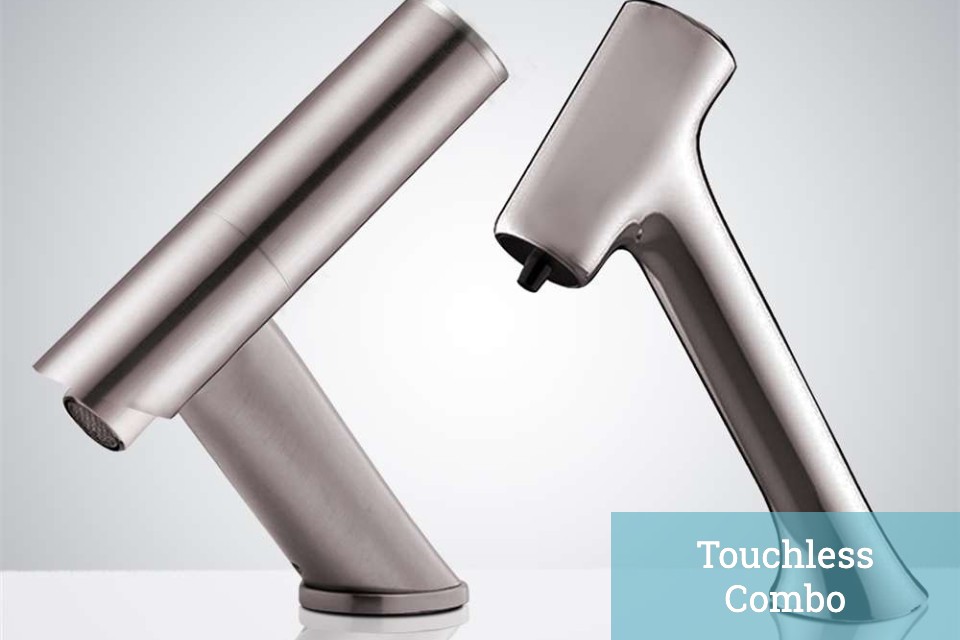
Minimalist & Contemporary
Clean silhouettes and restrained detailing work well in corporate, hospitality,
transportation, retail, and contemporary public restroom interiors.
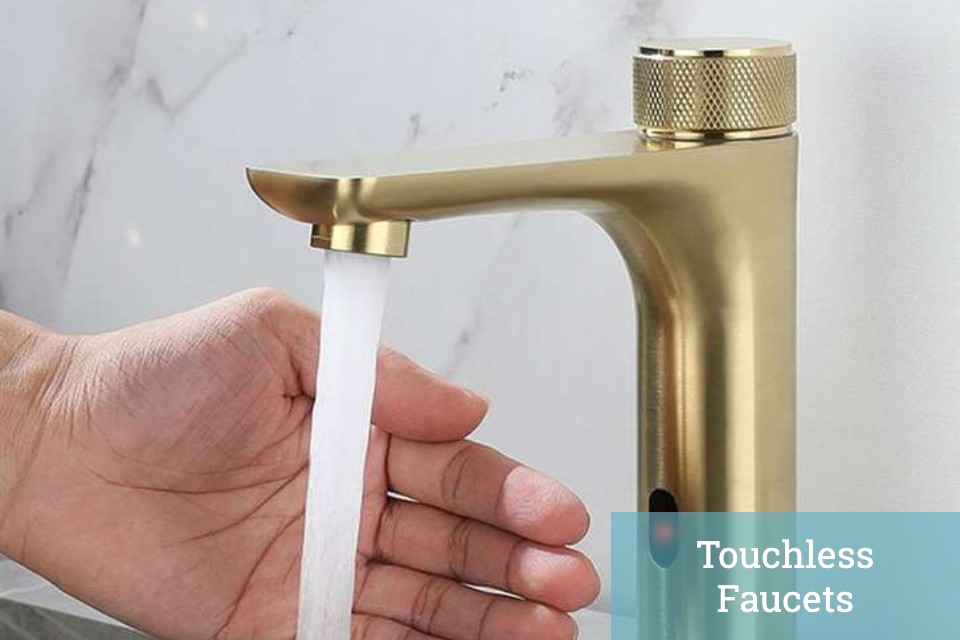
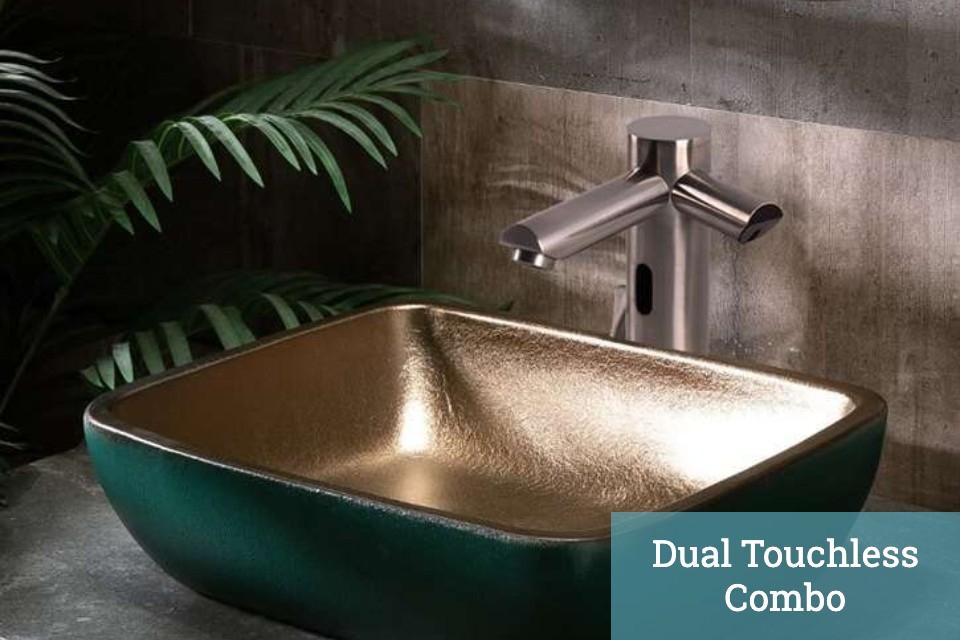
Premium Architectural Finishes
Gold, brushed metallic, black, bronze, and other architectural finishes allow
sensor faucets to coordinate with premium restroom materials and hardware palettes.
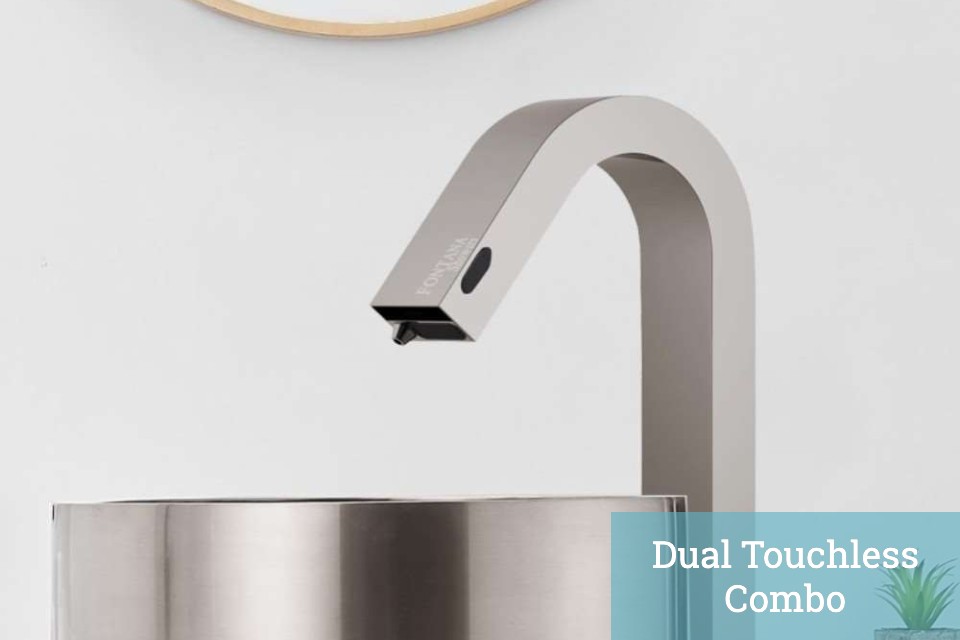
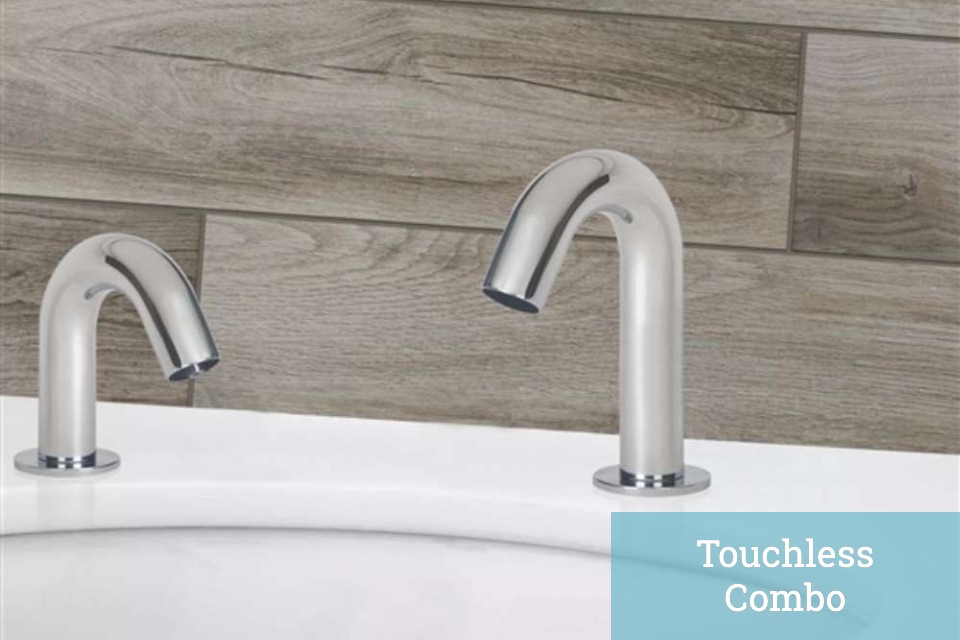
Coordinated Faucet & Soap Systems
Matching faucet and automatic soap dispenser designs help create visual consistency
across commercial lavatory stations while supporting touch-free operation.
Touchless Faucet Finish Selection
Finish selection should be coordinated with the surrounding restroom palette while also considering
expected cleaning frequency, surface durability, maintenance procedures, and the visual relationship
between faucet, soap dispenser, accessories, basin, counter, and hardware.
Touchless Faucet Configuration Comparison
|
Design Factor
|
Wall-Mounted
|
Deck-Mounted
|
|
Installation
|
Mounted through or onto wall assembly
|
Mounted through sink or countertop
|
|
Visual Character
|
Architectural, clean countertop appearance
|
Integrated fixture-and-basin appearance
|
|
Key Coordination
|
Rough-in, wall depth, spout reach, service access
|
Mounting holes, counter thickness, basin geometry
|
|
Cleaning
|
Reduced faucet hardware on countertop
|
Conventional above-counter fixture arrangement
|
|
Typical Applications
|
Hospitality, architectural, premium commercial interiors
|
Offices, healthcare, public, institutional and commercial restrooms
|
Design Selection by Commercial Application
The most appropriate touchless faucet design depends on both architectural intent and operating conditions.
Hospitality
Premium finishes, coordinated accessories, refined forms, and compatibility with the overall
interior design concept often guide selection.
Healthcare
Hands-free operation, basin coordination, serviceability, cleaning procedures, flow requirements,
and facility standards become important specification considerations.
Airports & Public Facilities
High traffic places greater emphasis on durability, sensing consistency, maintenance access,
automatic shutoff, and operational reliability.
Corporate & Office
Contemporary forms, coordinated finishes, efficient operation, accessibility planning, and
straightforward maintenance can support modern workplace restroom design.
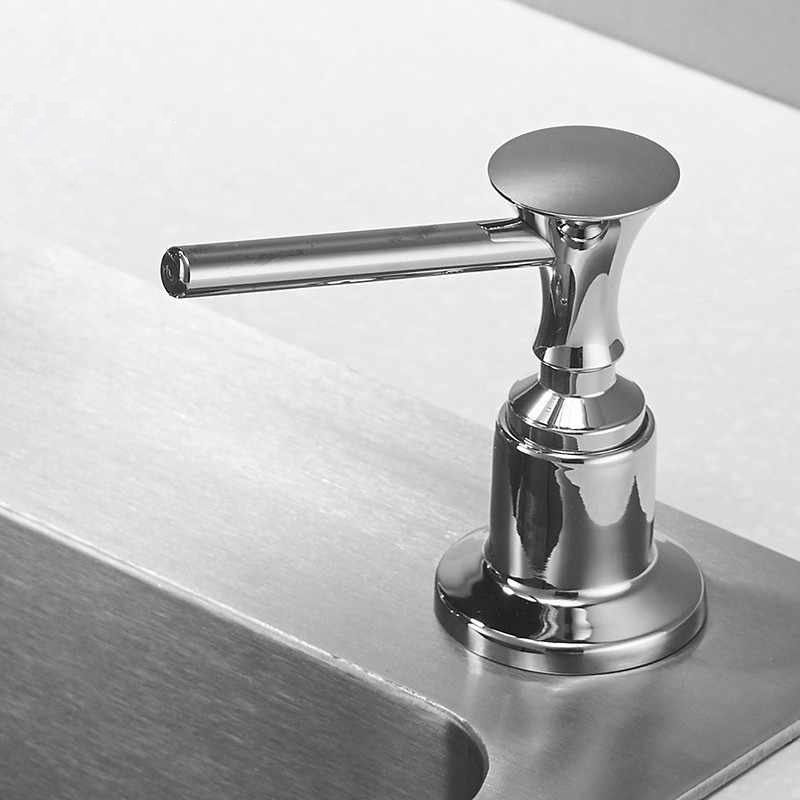
Coordinating Touchless Faucets & Automatic Soap Dispensers
Commercial restroom design increasingly treats the faucet, soap dispenser, basin, counter,
and accessories as a coordinated visual system. Matching fixture geometry and finish can create
a more consistent architectural appearance while supporting hands-free water and soap dispensing.
Explore Sets
Touchless Faucet Design & Specification Checklist
- Mounting configuration: wall-mounted or deck-mounted
- Basin geometry: spout reach, height, hand position, splash control
- Sensor architecture: activation zone and sensor placement
- Power strategy: battery, hardwired, or model-specific configuration
- Flow requirements: coordinate with project and jurisdiction requirements
- Finish: coordinate with restroom hardware and cleaning procedures
- Service access: valves, control components, filters, batteries, and wiring
- Accessibility: verify project-specific ADA and accessibility requirements
- Traffic conditions: evaluate expected operating cycles and maintenance strategy
- Coordinated accessories: soap dispensers and related restroom fixtures
Touchless Faucet Design Questions
What is the main difference between wall-mounted and deck-mounted touchless faucets?
Wall-mounted faucets place the spout on the wall and require coordinated rough-in work,
while deck-mounted faucets install through the sink or countertop. Each approach affects
basin geometry, service access, visual appearance, and installation planning.
Should faucet finish be selected only for appearance?
No. Finish selection should also account for cleaning procedures, environmental exposure,
expected usage intensity, surrounding materials, and coordination with other restroom hardware.
Does basin shape affect touchless faucet selection?
Yes. Spout reach, height, water trajectory, basin depth, drain position, user hand position,
and sensor activation zone should be coordinated to reduce splash and support comfortable use.
Where can I compare the complete FontanaShowers touchless faucet collection?
The complete collection can be reviewed on the
Touchless Bathroom Faucets
page, including multiple configurations, finishes, sensor technologies, and commercial design options.
Design & Specification
Ready to Select the Right Touchless Faucet?
Compare mounting configurations, sensor technologies, finishes, power options,
and commercial faucet designs within the complete FontanaShowers touchless faucet collection.
|
|