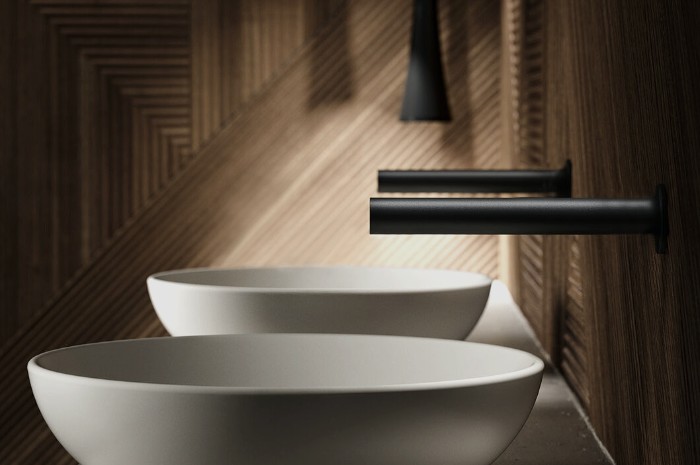
A wall-mount bathroom faucet is a plumbing fixture installed directly into the wall above the sink or bathtub, as opposed to being attached to the countertop or sink surface like a deck-mounted faucet. This installation method gives wall-mounted faucets a streamlined and elevated appearance, allowing for both functional and visual advantages in modern, minimalist, or spa-inspired bathroom spaces.
Unlike deck-mounted faucets, which sit on or through holes cut in the sink or vanity top, wall-mounted faucets leave the countertop completely free. This enhances the usability of the sink area, offering more open surface space and a clutter-free look—particularly valuable in small bathrooms or powder rooms where every inch counts.
Another key difference lies in installation complexity. Wall-mount faucets require in-wall plumbing and proper height placement above the sink or bathtub. The standard installation height is between 4 to 5 inches above the countertop, but this may vary depending on the height of the users, the depth of the sink or vessel bowl, and design considerations.
Because the plumbing is concealed behind the wall, the finish is seamless and easy to clean. This integration also reduces the buildup of soap scum and dirt that commonly accumulates around the base of deck-mounted faucets. From a design perspective, wall-mounted faucets come in a wide variety of styles and finishes—from sleek and contemporary to classic and curved—allowing designers and homeowners to achieve a tailored, high-end look that feels custom and cohesive.
What are the main advantages of choosing a wall-mounted bathroom faucet?
Wall-mounted bathroom faucets offer a wide range of advantages that go beyond their clean aesthetic. One of the most significant benefits is space efficiency. By removing the faucet from the countertop, more usable surface area is freed up around the sink, which is ideal in compact bathrooms, powder rooms, or hospitality suites where space must be optimized without compromising design.
Another major advantage is ease of cleaning and maintenance. Traditional deck-mounted faucets can collect grime, soap, and water around their base and the joints where they meet the sink or vanity. These tight spaces are often difficult to clean and can lead to mold or staining over time. Wall-mount faucets, however, leave the sink deck completely clear, allowing for fast, efficient cleaning and a consistently hygienic surface.
A third benefit lies in design flexibility. Wall-mounted faucets offer diverse styling options—ranging from ultra-modern linear silhouettes to vintage-inspired cross-handle configurations. Finishes like matte black, brushed gold, chrome, and brushed nickel give designers full control to match fixtures with other bathroom elements.
Functionally, these faucets also work well with vessel sinks or deep basins where the faucet must reach further over the bowl. They can be positioned higher or lower depending on the sink design, user height, and intended ergonomics.
From an operational standpoint, wall-mount faucets are often more durable over time because fewer joints are exposed to standing water and humidity. Models built with corrosion-resistant materials like solid brass offer longevity and performance in high-use areas, making them particularly suitable for both residential and commercial bathrooms.
What challenges or disadvantages should I be aware of when installing a wall-mounted faucet?
While wall-mounted faucets offer many compelling benefits, there are several challenges that homeowners, designers, and contractors should consider before committing to installation. One of the most significant concerns is installation complexity. Unlike deck-mounted faucets that connect easily through sink or countertop holes, wall-mount faucets require in-wall plumbing rough-ins, which must be positioned precisely based on the faucet’s spout length and the height of the sink or bathtub below.
If you're retrofitting a bathroom rather than building from scratch, this can involve opening up drywall, rerouting plumbing lines, and ensuring that the faucet aligns perfectly with the basin. This process is more labor-intensive and typically more expensive than installing a traditional faucet. It also requires skilled plumbing and possibly tile work or drywall patching to achieve a clean finish.
Another disadvantage is the difficulty of repairs or replacements. Because the plumbing is embedded within the wall, accessing components like valves, connectors, or cartridges for maintenance can be tricky and may involve removing tiles or drywall, especially in the absence of a maintenance access panel.
There’s also the consideration of compatibility with your sink. Not all sink shapes or sizes are suited to wall-mounted faucets. Vessel sinks, for example, often require precise faucet positioning to avoid splashing, while shallow basins may struggle with water pressure or flow control.
Lastly, design limitations may occur if space inside the wall is restricted—common in older homes or in areas with plumbing or electrical congestion. For these reasons, wall-mounted faucets are best installed during full remodels or new constructions where planning and measurements can be incorporated early in the design phase.
How high should a wall-mounted faucet be installed above a bathroom sink or bathtub?
Proper height placement is one of the most important factors when installing a wall-mounted faucet. While the general recommendation is to install the faucet spout approximately 4 to 5 inches above the sink countertop, this can vary based on a number of factors including the depth of the sink, the type of faucet, and user ergonomics.
For standard undermount or drop-in sinks, the 4–5 inch guideline usually offers sufficient clearance for comfortable handwashing and everyday use. However, for vessel sinks, which sit higher above the counter, you’ll typically need to install the faucet higher to provide adequate space between the spout and the sink bowl. In such cases, 6 to 10 inches above the rim of the vessel sink may be more appropriate, depending on the spout’s reach and angle.
When positioning a wall-mounted faucet above a bathtub, you’ll need to consider not only the spout height but also the location of the valve controls. Bathtub wall-mounted faucets are generally installed 8 to 12 inches above the rim of the tub, and valves are placed within easy reach for seated use.
It's also crucial to factor in the height of the primary users, as comfort plays a key role in long-term satisfaction. An incorrectly placed faucet—either too low or too high—can result in splashback, awkward hand positioning, or water pressure inconsistencies.
To avoid costly mistakes, use mock-ups during the planning stage, and consult both plumbing specifications and user preferences. A licensed plumber or designer can also provide site-specific guidance to ensure the installation height meets both ergonomic and aesthetic standards.
Are wall-mounted bathroom faucets suitable for commercial or hospitality use?
Wall-mounted bathroom faucets are highly suitable for commercial and hospitality applications, offering both aesthetic appeal and functional benefits that align with the high-traffic, design-forward nature of these environments. From luxury hotels and high-end restaurants to boutique fitness centers and executive office spaces, these faucets help deliver a refined, professional image while supporting durability and hygiene.
One of the most compelling advantages for commercial use is ease of maintenance and cleanliness. In high-turnover restrooms, cleanliness is a top priority. Because wall-mounted faucets leave the sink or vanity surface clear, cleaning crews can quickly wipe down surfaces without needing to navigate around faucet bases. This results in faster room turnover in hospitality settings and promotes a sanitary environment for guests.
Wall-mounted faucets also help prevent water pooling around faucet bases—a common issue with deck-mounted units—which reduces the risk of mildew, corrosion, or water damage on the countertop.
From a design standpoint, wall-mount faucets offer a sleek, upscale appearance that enhances the guest experience. Paired with vessel sinks, floating vanities, or minimalist tiles, they become a focal point that communicates thoughtful design and attention to detail.
Durability is another key factor. Many commercial-grade wall-mounted faucets are constructed from solid brass or stainless steel and come in finishes that resist tarnish, fingerprints, and water spots—important features in environments where fixtures are constantly in use.
For ADA compliance or accessibility-focused environments, wall-mounted faucets can also be installed at specific heights to accommodate users with limited mobility.
In summary, wall-mounted bathroom faucets are not only compatible with commercial use—they're often preferred for their combination of hygiene, design elegance, and space efficiency.