Evaluating Vandal-Resistance in Public Restroom Fixtures: Fontana Faucets in a National Research Study
In public restrooms, “vandal-resistant” is not marketing language. It is whether the faucet station stays operational
after impact, pulling, twisting, repeated misuse, and real-world maintenance pressure. This page translates a national
benchmark-style research approach into spec decisions that crews can install, protect, and service without tearing up finished work.
For broader spec planning, use the
spec grade hub
and the
touchless faucet spec guide.
Impact + twist survivabilityProtected access strategySecure power routingService parts planFaucet + soap as one station
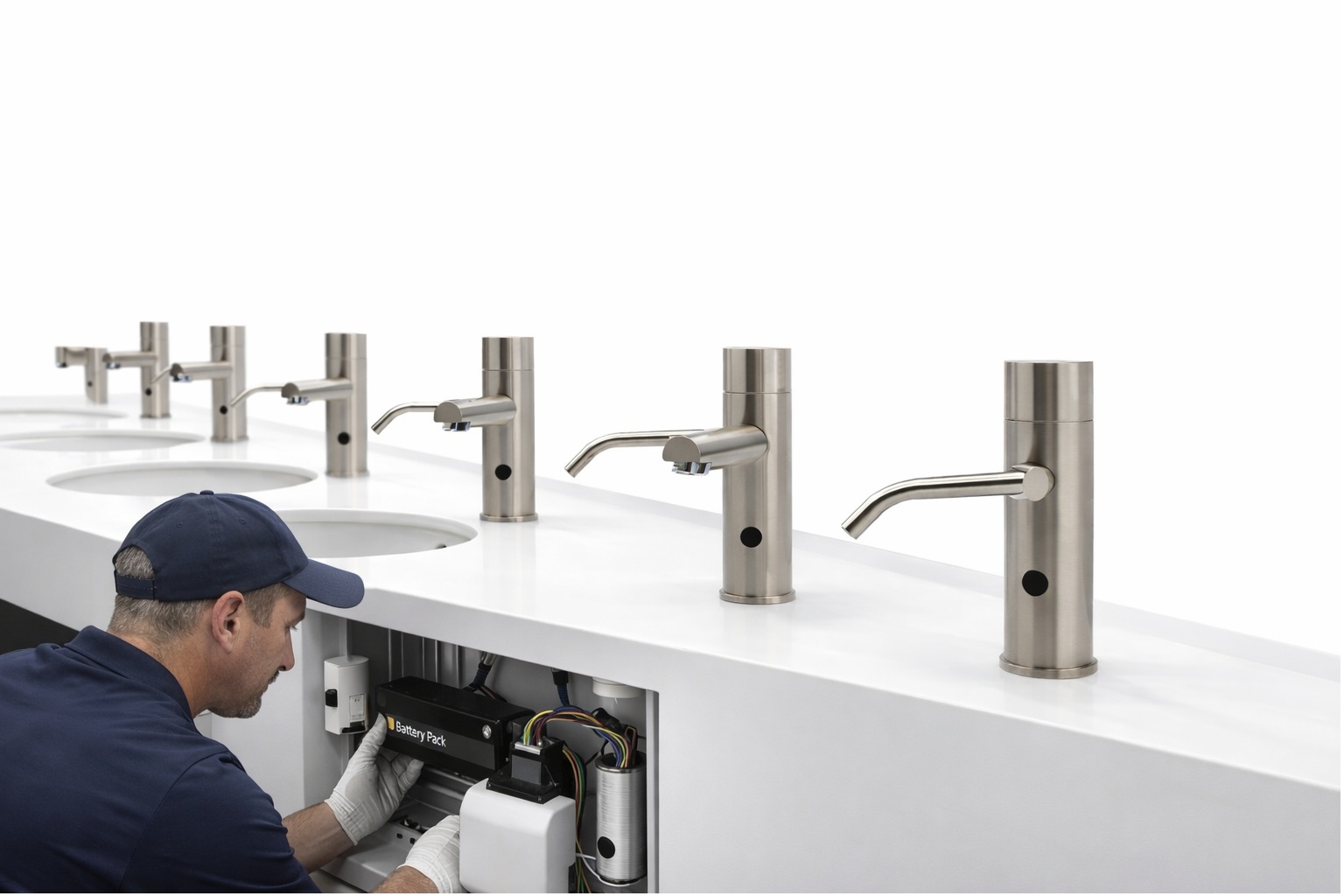
Field note: Vandal-resistance is a system decision. If the control box is reachable, the power path is exposed, or access is not planned,
the station will still fail during the first month of heavy use.
What this research framing is meant to solve
High-traffic public restrooms fail in predictable ways. The faucet may not break first. The station fails because a component is
reachable, a cable can be pulled, a cover is easy to remove, or service requires disturbing finished surfaces.
The “national research study” approach below is a practical way to organize the problem: test the abuse patterns you see in the field,
then choose mounting, access, and power strategies that make those patterns less costly.
For station-wide planning, coordinate faucet selection with
automatic dispensers
and consider standardized sets when appropriate.
Design for misuse, not ideal use
Assume pulling, twisting, and repeated triggering. Choose bodies, mounts, and access plans that absorb abuse without downtime.
Protect what people can reach
Most “vandal events” are access events. Hide power routing, secure boxes, and make service possible from controlled access points.
Reduce the cost of recovery
Standardize parts, document clearances, and align submittals so a tech can restore service fast without demolition.
This is a contractor-friendly way to document performance across many sites without exposing sensitive property details.
Treat it as a repeatable template for schools, transit, stadiums, parks, and civic buildings.
Keep submittals tied to the exact selected model, with BIM coordination from the
BIM / Revit library.
Environment classification
Tag sites by traffic, supervision level, and abuse likelihood. A faucet that performs in a secure lobby may fail in a transit hub.
Incident + downtime logging
Track what happened, what stopped working, and how it was restored. The “repair path” matters as much as the failure itself.
Spec decision mapping
For each issue, document the spec choice that would have prevented it: wall mount vs deck, access door location, power routing, or station layout.
Practical approach: keep the write-up focused on failure modes and fixes. Avoid claiming universal outcomes. Use the results to tighten your standard details and submittal checklist.
Stress tests and exposure patterns
The tests below mirror what maintenance teams report in high-traffic restrooms. They are written in spec language so the outcome can become
a detail, a note, or a submittal requirement.
Impact and prying at the spout
Simulate side impacts, upward levering, and repeated knocks. Look for loosening, misalignment, sensor window damage, and internal leakage after the event.
Twist and pull on accessible parts
Apply torsion to handles (if any), spout bodies, and escutcheons. Verify mounting method and hidden fasteners reduce rotation and loosening over time.
Sensor window abuse + false triggering
Test dirty hands, soap film, and reflective basins. Confirm sensor behavior stays predictable and does not “run” due to reflections or nearby mirrors.
Power-path disruptions
Simulate battery access attempts, unplugging, and intermittent power. Verify the station returns to stable behavior and the box is not easily reachable.
Service access without disturbing finishes
Require a documented path to filters, solenoid, and control box through an access door or controlled location. If a tech must remove tile, the spec is incomplete.
What results typically look like in high-traffic settings
Use this section to document patterns you see across multiple sites. Keep it concrete and build each point into a spec note.
The goal is not a headline. The goal is fewer service calls and faster restoration when incidents happen.
If you need spec-forward examples of concealed service points and tamper-resistant features, reference
this vandal-resistant guidance page.
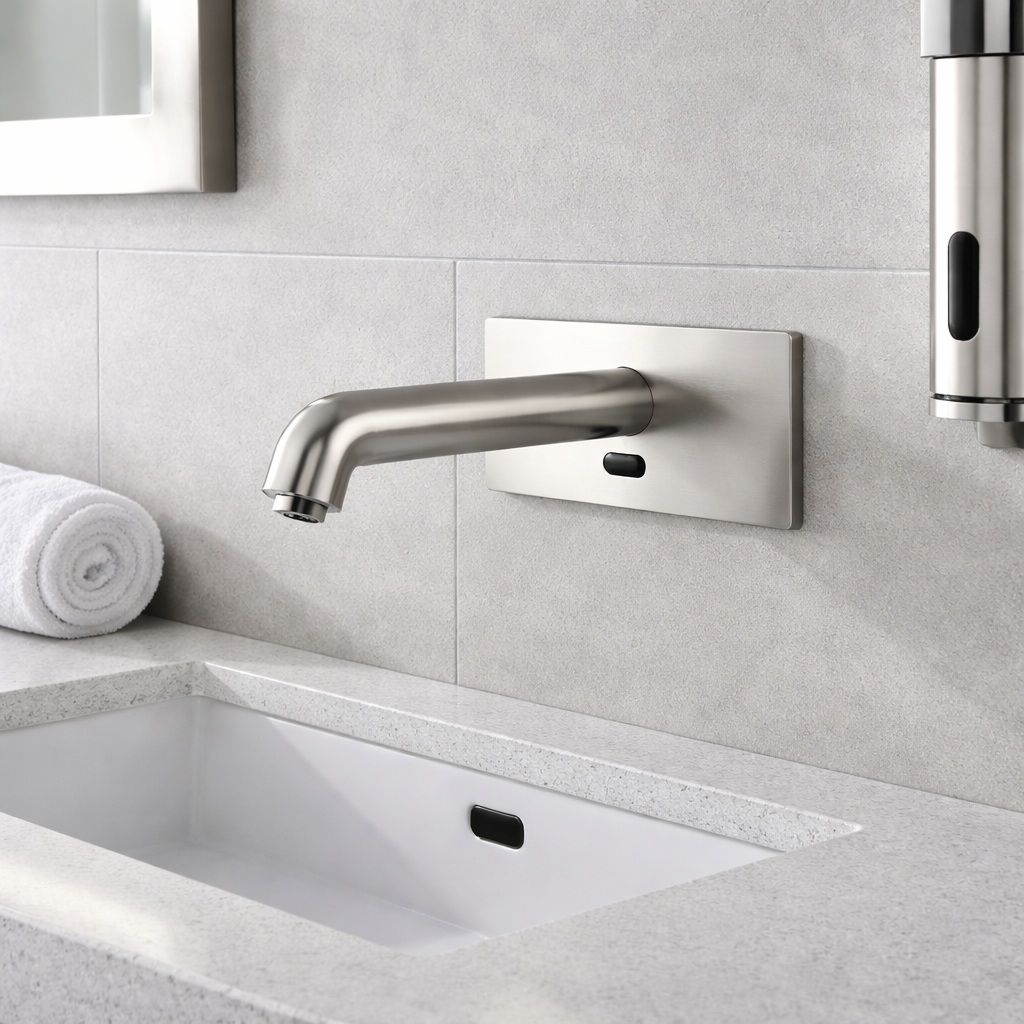
Wall mounting reduces grab points
When the deck is clear, there are fewer accessible parts to pry. A wall-mounted station can also simplify cleaning and reduce countertop damage.
Protected access beats “stronger parts”
Stations last longer when control boxes and routing are not reachable. Many failures are access-driven, not material-driven.
Standardization drives uptime
Using a consistent faucet family across a campus or city reduces downtime because techs carry known parts and follow one service routine.
If you want to add internal findings later: log the event type (impact, pull, access attempt), the component affected (spout, sensor, power, control box), and the restoration time. That is the data contractors and owners actually use.
Engineer and contractor checklist
Use this during design assist, submittals, and rough-in coordination. It targets the issues that create downtime after vandal events
and the issues that cause rework during trim-out.
Mounting + fastening strategy documented
Call out hidden fasteners, backing requirements, and any special rough-in constraints so the body cannot rotate or loosen under abuse.
Power path locked and protected
Confirm AC, battery, or hybrid strategy and ensure the control box is not reachable from the public side. Secure and conceal cables and transformers.
Service access planned before walls close
Require an access door or controlled access zone for solenoids, filters, and control modules. No tile removal should be needed for routine repairs.
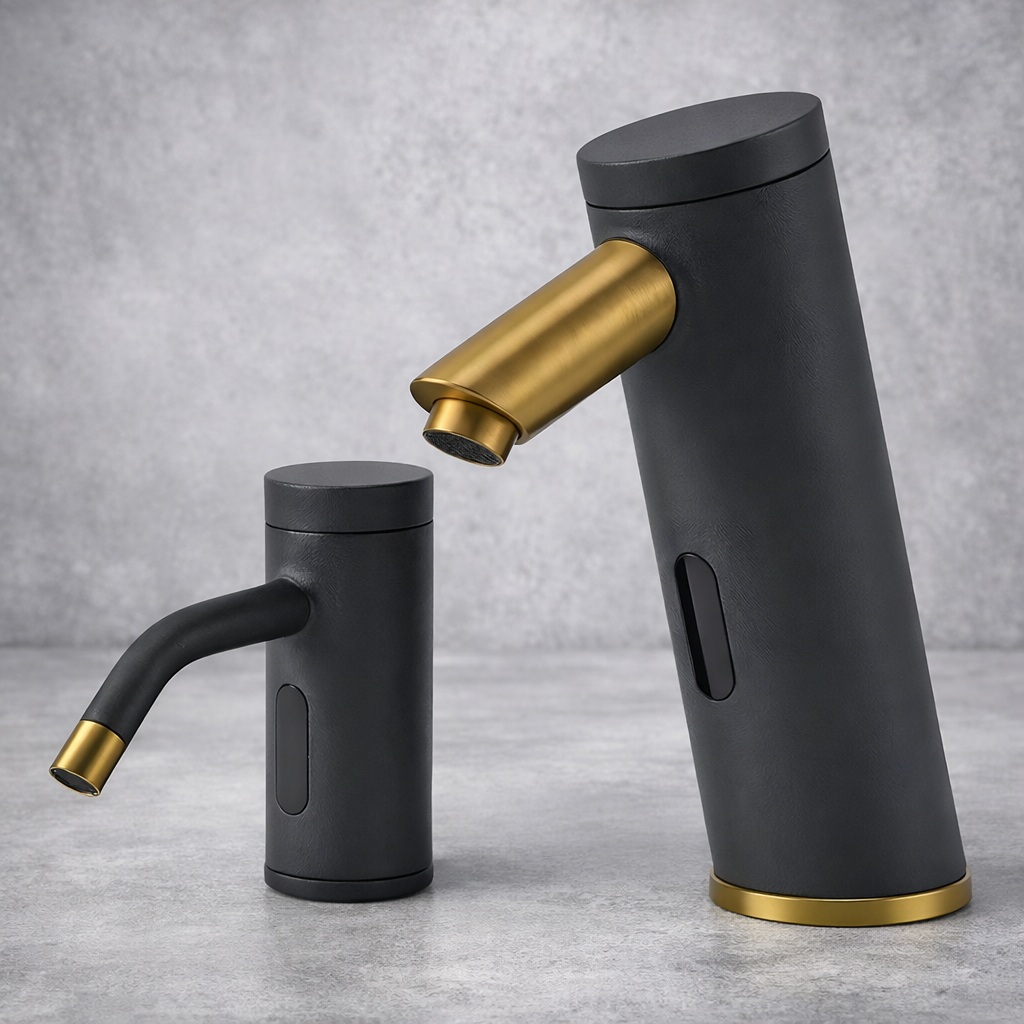
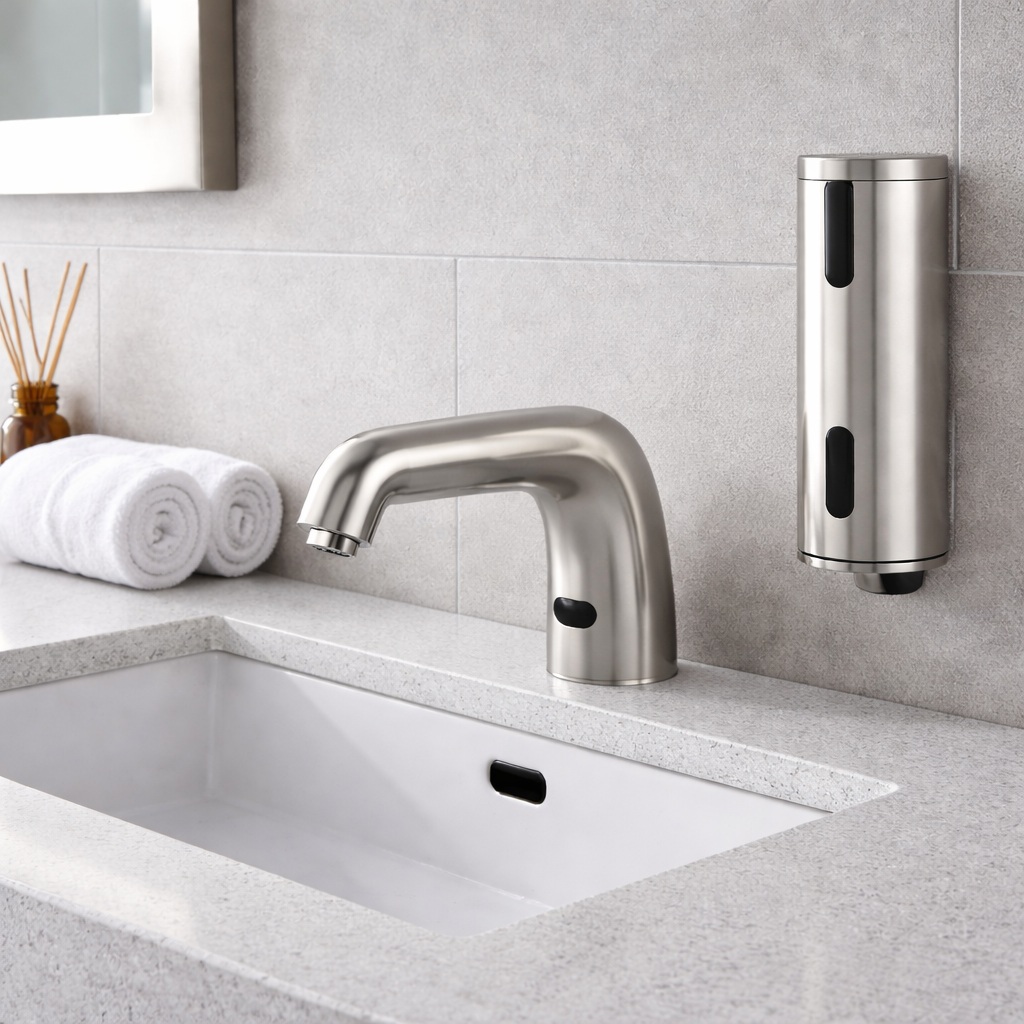
Soap station coordinated as part of the workstation
Choose refill method and placement to reduce drips, reduce reach across traffic, and avoid soap film on sensor windows and countertops.
Spec tip: vandal-resistance improves when the station is consistent across a facility. Standardize the faucet family, lock the power path,
and document service access. Then incidents become quick repairs instead of demolition.
For set-based planning, start with
faucet + soap sets.
Two videos for coordination
Use these in submittals, field orientation, or commissioning checklists. The goal is simple: show access, power routing, and how the station is serviced.
Optional silent site clip
If you host a short MP4, keep this block as a silent loop. A good clip shows: approach, activation, stream stability,
soap dispense, and how the tech accesses components without disturbing finished surfaces.
Show where the control box sits, how power is routed, and how a tech accesses components. If the model supports both AC and battery,
show both paths and how each is secured from public access.
Keep documentation aligned to the selected model and finish. That reduces mismatched parts, wrong power adapters, and service access mistakes.
For vandal-resistance, the most important “document” is often the access plan.
Ranking tip: contractors search for details, not slogans. Add real build-ups (wall type, backing, access door location),
plus service clearance notes. Those specifics are hard to copy and easy to trust.
Compare set
Compare selected items
Designed for high-traffic public restrooms where misuse, heavy cleaning, and frequent service are expected. These touchless faucet stations support protected power routing, controlled access to components, and faster maintenance with less downtime.
Find Out First
Get FontanaShowers emails of inspiration, new product releases, and more!