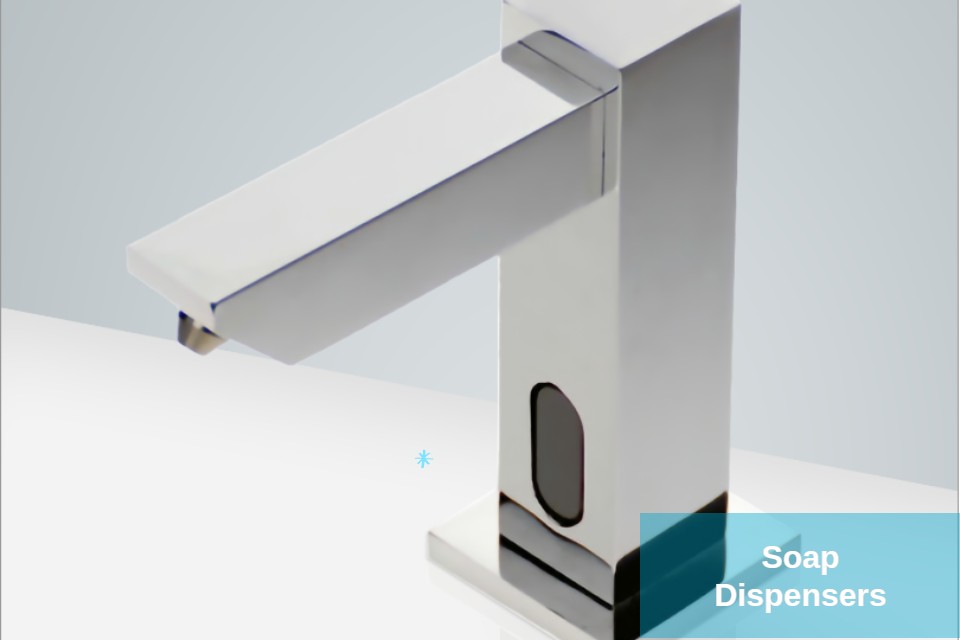
They are more prevalent in alongside touchless faucets, marking a shift toward more hygienic practices.
We provide comprehensive solutions for latest touchless operation in public and high traffic restrooms.
This not only reduces the spread of germs but also promotes efficiency and convenience in high-traffic areas.
Curated Categories for Public Restrooms
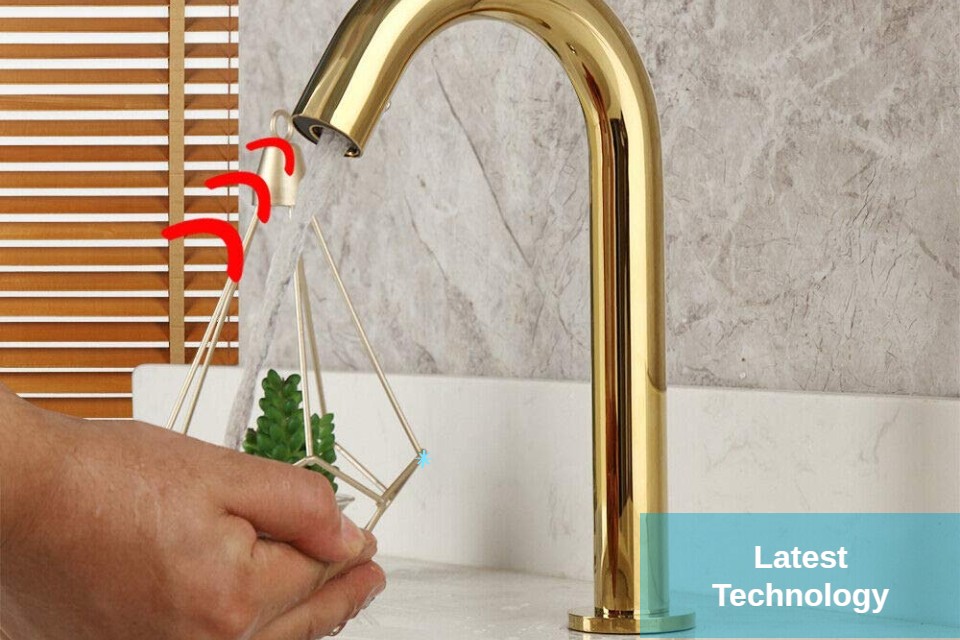
Detection: Infrared sensors emit an infrared light that reflects off a surface (like a hand) and returns to the sensor.
The sensor detects this reflected light to determine the presence of an object.
Activation: Once an object is detected within a specific range, the device is activated, for instance,
water flows from a faucet or soap is dispensed
.
Use cases: Public Restrooms · Healthcare Facilities · Commercial Buildings
Detection: These sensors detect changes in capacitance caused by the proximity of a hand or other conductive object.
Activation:
The change in capacitance triggers the device to operate
.
Use cases: Residential Use · Commercial Buildings · Food Service Industry
Use cases: Public Restrooms · Healthcare Facilities · Outdoor Use
Use cases: Airports · Healthcare · Food Service · Residential · Retail
Touchless sensor technology, while offering numerous advantages, is susceptible to various environmental factors that can influence its performance.
These factors can affect the reliability and effectiveness of sensors, leading to false activations, missed detections, or complete malfunctions.
Understanding these environmental influences is crucial for optimizing the use of touchless sensor technology in different settings.
Use cases: Bright Lighting · High Humidity · Dust/EMI · Outdoor Exposure
|
|
|