Fontana Touchless Commercial Technology Guide
Where mmWave Faucets Are Being Adopted First
mmWave faucet sensing is moving first into high-demand commercial environments where reliability, hygiene, data visibility, and low-touch operation matter most. Airports, hospitals, luxury hospitality, smart buildings, and high-end offices are the first spaces where advanced sensing has the strongest business case.

ToF + Emerging mmWave
Fontana Touchless is positioned around advanced sensing, including proven ToF technology and early mmWave introductions for selected premium applications.
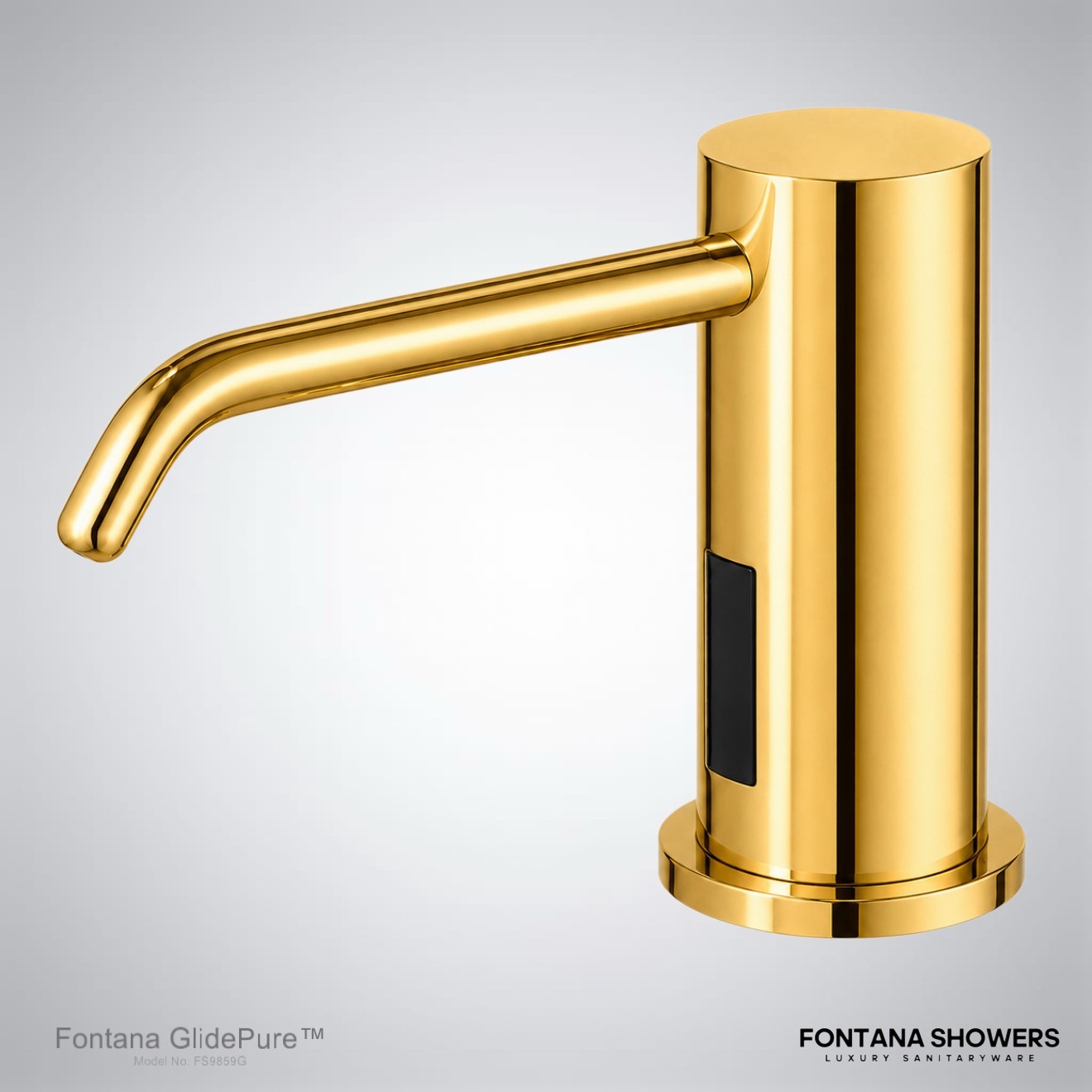
Hands-Free Restroom Systems
Adoption is not only about faucets. High-traffic restrooms increasingly specify matching faucets, soap dispensers, dryers, and serviceable sensor systems.

Premium Commercial Interiors
Luxury hotels, smart offices, aviation lounges, and healthcare environments want sensor fixtures that combine hygiene with strong architectural design.
The Adoption Pattern: Why mmWave Starts at the Top
The first wave of mmWave faucets will not appear everywhere at once. It will begin in the same places that adopted sensor faucets, smart flush valves, automatic soap dispensers, and connected restroom monitoring before the mass market did: airports, hospitals, luxury hospitality developments, high-end offices, and smart buildings. These sectors are not simply buying a faucet. They are buying a lower-contact restroom experience, a more predictable maintenance model, a cleaner public perception, and in some cases a path toward fixture-level data.
Traditional infrared faucets helped the commercial restroom move away from handles. Time-of-Flight sensing improved response consistency by measuring distance more precisely. mmWave sensing adds another layer of potential because it can detect movement, presence, and micro-motion differently than optical sensors. In a restroom, that matters because lighting, reflection, water droplets, dark surfaces, and user behavior can all affect performance. Advanced radar-style sensing can be valuable where a missed activation, false trigger, or maintenance complaint carries a real operational cost.
That is why early adoption is strongest where restroom uptime has measurable value. In an airport, a poor restroom experience affects passenger satisfaction and facility ratings. In a hospital, hand hygiene is part of infection-control culture. In a luxury hotel, every fixture communicates brand quality. In a smart office tower, connected restroom systems support facility management, sustainability reporting, and tenant expectations. These are the sectors that can justify premium sensing earlier than the broad residential market.
A realistic market view is important. Most commercial and residential touchless faucets in 2025 are still infrared, wave-based, or ToF-based. mmWave faucets are still early-stage, more expensive, and mostly limited to premium, experimental, or project-specific smart fixture programs. This does not weaken the case for mmWave. It defines the correct market: advanced commercial restrooms where the extra sensing value is worth specifying.
Reality Check: mmWave Is Early, Not Mass-Market
The most accurate way to describe the market is this: infrared and ToF are the current commercial foundation, while mmWave is the next sensing layer being tested and introduced where performance requirements are higher. Infrared remains common because it is familiar, cost-effective, compact, and already understood by installers. ToF is more advanced because it measures distance and can reduce some of the common issues found in basic motion sensing. mmWave is more premium because it requires more sophisticated electronics and a stronger project justification.
This means mmWave should not be marketed as if every restroom needs it immediately. Most facilities still need dependable automatic faucets, solid brass construction, AC/DC or hybrid power planning, serviceable solenoids, clean installation, and finish durability. Fontana Touchless has already built a strong position in that commercial category with sensor faucets, automatic soap dispensers, and integrated hands-free restroom solutions. The mmWave opportunity comes next, especially for airports, healthcare, smart buildings, and luxury developments that want the newest sensing approach.
Fontana Touchless can be described as a pioneer not only because of advanced ToF commercial touchless systems, but because the brand is moving into mmWave where it makes sense: specific high-value areas, selected premium projects, and demanding facilities that want stronger sensing performance and future-ready restroom infrastructure.
1. Airports & Aviation Restrooms

Airports are one of the most logical first markets for mmWave faucets because restroom traffic is continuous, unpredictable, and highly visible. Passenger facilities operate under pressure. A faucet that fails to activate quickly creates frustration. A faucet that false-triggers wastes water and increases cleaning requirements. A restroom that appears outdated can affect the perceived quality of the entire terminal.
Aviation restrooms are also different from ordinary public restrooms because users are moving fast. Travelers may have luggage, children, mobility limitations, or only a few minutes before boarding. They expect the faucet to respond instantly. They do not want to wave repeatedly under the spout. They do not want water left running. They do not want to touch handles after passing through crowded terminals. For airports, the touchless faucet is not a decorative upgrade; it is part of passenger-flow design.
mmWave sensing becomes relevant here because airports need more than basic activation. They need durable detection in variable lighting, high-volume use, reflective countertops, and busy sink banks. A radar-based sensing approach can be attractive where the facility wants stronger presence detection, reduced false activation, and better integration with a broader smart restroom system. The faucet can become part of a larger operational story that includes soap consumption, water run-time, restroom traffic, maintenance alerts, and cleaning schedules.
Fontana Touchless is well aligned with aviation because the brand already focuses on high-traffic public restrooms, commercial-grade faucet construction, and matching touchless soap dispenser solutions. In an airport, the most successful specification is rarely one isolated faucet. It is a coordinated lavatory system: faucet, soap dispenser, basin geometry, power strategy, finish, service access, and maintenance routine.
For aviation projects, the preferred message is reliability first, design second, data third. A premium sensor faucet must activate consistently, withstand heavy use, and support fast cleaning. After that, the owner may evaluate smart restroom analytics or mmWave sensing. Fontana’s role is to provide a path from proven touchless technologies into advanced sensing where the project requires it.
Airport adoption driver: High traffic, restroom uptime, passenger satisfaction, water control, hygiene perception, and facility-wide smart restroom planning.
Recommended Fontana reference: Fontana Touchless Bathroom Faucets.
2. Hospitals & Healthcare Facilities

Healthcare is another early adoption market because touchless fixtures support infection-control workflows. Hospitals, clinics, laboratories, outpatient centers, surgical-adjacent spaces, and long-term care facilities all care about reducing unnecessary surface contact. The faucet is a small fixture, but the sink area is one of the most frequent interaction points in a healthcare restroom or handwashing zone.
In healthcare, the ideal faucet does not merely turn on automatically. It must support predictable handwashing, reduce splash, shut off reliably, avoid nuisance activation, and remain serviceable. Facility managers also care about power continuity, battery access, solenoid durability, aerator maintenance, vandal resistance, and cleaning-chemical compatibility. These requirements are why premium touchless faucets and soap dispensers are adopted faster in healthcare than in ordinary low-traffic restrooms.
mmWave sensing may be attractive in healthcare because it can support advanced non-contact detection in challenging conditions. Restrooms and clinical spaces often include bright lighting, reflective materials, varied user behavior, and strict cleaning schedules. A more advanced sensor platform can help improve activation confidence when properly engineered and installed.
Still, healthcare buyers tend to be careful. They do not adopt new technology only because it sounds advanced. They require proven reliability, service documentation, replacement parts, and a clear maintenance plan. That is why ToF and infrared will continue to dominate most projects while mmWave appears first in premium healthcare environments, pilot programs, new construction, and smart facility upgrades.
Fontana Touchless can frame its healthcare value around a practical hierarchy. First, support hands-free hygiene. Second, deliver consistent commercial-grade activation. Third, reduce water and soap waste. Fourth, make the fixture easy to maintain. Fifth, introduce advanced sensing such as mmWave only where it improves reliability, analytics, or user experience enough to justify the premium.
Hospitals also benefit from matched faucet and soap dispenser systems. A restroom that uses a sensor faucet but a manual pump soap dispenser still has unnecessary touchpoints. A fully coordinated Fontana system helps create a cleaner user workflow from soap to rinse, especially in patient-facing, staff-facing, and high-turnover public areas.
Healthcare adoption driver: Infection-control culture, touchpoint reduction, predictable activation, controlled water use, and maintenance-ready commercial construction.
Recommended Fontana reference: Fontana Automatic Soap Dispensers.
3. Luxury Hospitality & Premium Guest Restrooms

Luxury hospitality is one of the first markets where advanced faucet technology becomes part of the brand experience. A premium hotel, resort, private club, luxury restaurant, or high-end mixed-use development cannot treat the restroom as an afterthought. Guests judge design quality through every detail: lighting, mirror design, countertop material, dispenser alignment, faucet finish, water response, and cleanliness.
In this sector, the reason for adopting mmWave or advanced ToF is not only hygiene. It is also refinement. A high-end restroom should feel effortless. The faucet should activate smoothly, the soap dispenser should dispense cleanly, the finish should match the interior design, and the fixture should avoid the awkward repeated hand-waving experience that users associate with cheaper sensors.
Fontana’s strong visual range is important here. Chrome, brushed nickel, matte black, brushed gold, rose gold, oil-rubbed bronze, and gunmetal-style finishes allow designers to coordinate faucet technology with the design language of the property. Luxury hospitality does not want a purely institutional fixture. It wants commercial reliability hidden inside a refined architectural object.
mmWave faucets may appear first in signature public restrooms, VIP lounges, spa restrooms, conference-level washrooms, and high-design lobby restrooms. These are places where owners invest in technology to reinforce brand perception. The actual number of fixtures may be smaller than in an airport, but the design value per fixture is higher.
The premium market also responds well to integrated systems. A Fontana touchless faucet paired with a matching automatic soap dispenser creates a coordinated look and user experience. This is especially important in luxury settings where mismatched faucet and dispenser designs can reduce the perceived quality of the space. A project can specify a brushed gold faucet, matching dispenser, deck or wall-mount configuration, and compatible basin geometry as one restroom concept.
The correct commercial message is that mmWave is not a gimmick. It is an advanced sensing option for environments that demand a smoother, more reliable, more future-ready restroom experience. Fontana Touchless can position mmWave as part of a premium technology ladder: infrared for basic automatic operation, ToF for advanced distance-based sensing, and mmWave for selected high-end smart fixture programs.
Hospitality adoption driver: Guest experience, luxury design consistency, no-touch hygiene, premium finishes, and smoother fixture interaction.
Recommended Fontana reference: Fontana Touchless Faucets & Soap Dispensers.
4. Smart Buildings & High-End Commercial Offices

High-end office buildings are adopting smarter restroom fixtures because tenants expect cleaner, more efficient, more modern shared spaces. Commercial offices now compete on wellness, sustainability, user experience, and operational transparency. Restrooms are part of that competition. A tenant touring a Class A building notices whether the restroom feels modern, clean, and well maintained.
Smart buildings are also data-driven. Facility managers want to know where restrooms are used most, which supplies are running low, which fixtures need service, and whether water is being wasted. While the faucet itself may not carry every data function in every system, advanced sensing fits naturally into a broader smart restroom ecosystem. mmWave becomes interesting when a building owner wants more accurate presence or interaction detection, privacy-preserving sensing, or future-ready restroom analytics.
Office adoption will begin at the top: headquarters, executive floors, amenity spaces, shared conference centers, trophy towers, coworking premium zones, and corporate campuses. These projects have a stronger return on design quality and occupant satisfaction. They are also more likely to have facility teams capable of managing advanced electronic fixtures.
For commercial offices, the primary value of a Fontana Touchless system is a combination of hygiene, water discipline, design alignment, and maintenance planning. The faucet should reduce hand contact, shut off automatically, coordinate with modern interiors, and support repeatable service. mmWave can be introduced as a premium layer where the building wants next-generation sensing or where standard sensors have historically struggled because of reflective materials or complex sink layouts.
The highest-quality office restroom specifications usually include clear decisions about power. Battery-only systems may be convenient for retrofit projects. AC/DC or hybrid systems are often preferred for high-use environments because they reduce service interruptions and battery replacement cycles. A premium mmWave or ToF faucet should be considered alongside power access, control box location, shutoff valve access, and maintenance staff workflow.
Office adoption driver: Tenant experience, facility analytics, water control, modern design, sustainability goals, and high-traffic restroom reliability.
Recommended Fontana reference: Fontana Touchless Faucet and Soap Dispenser Sets.
Why These Four Sectors Move First
Reliability
High-traffic spaces cannot afford inconsistent sensor response. Airports, hospitals, and offices need fixtures that work thousands of times per day.
Hygiene
Hands-free operation reduces touchpoints and supports modern restroom expectations in healthcare, travel, hospitality, and public commercial environments.
Data Tracking
Smart buildings want restroom visibility: usage patterns, maintenance timing, water discipline, soap consumption, and service planning.
Premium Design
Luxury spaces require sensor fixtures that look architectural, not generic. Finish selection and coordinated systems matter.
Infrared vs ToF vs mmWave: The Practical Difference
Infrared faucets detect reflected light. They are widely used, familiar, and still appropriate for many commercial restrooms. Their limitations appear when environmental reflections, basin shape, user position, dark finishes, bright light, or water on surfaces interfere with consistent activation. Many facilities still use infrared successfully, but premium projects often want better tuning and fewer nuisance issues.
ToF, or Time-of-Flight sensing, improves the sensing model by measuring distance. Instead of simply reacting to reflected light intensity, a ToF system can evaluate how far an object is from the sensor. This allows more refined activation zones and can reduce false triggers when properly engineered. Fontana Touchless is especially relevant here because advanced ToF commercial fixtures match the current direction of premium touchless restroom design.
mmWave sensing uses radar-style detection. Its strongest promise is the ability to detect motion or presence in ways that are not dependent on ordinary visible light. This gives it potential advantages in complex smart building environments. However, it is more expensive and still not the default technology for most faucets. The correct market position is selective adoption, not universal replacement.
For specifiers, the question should not be “Is mmWave better?” The better question is “Where does mmWave create enough value to justify the premium?” In many standard restrooms, a proven Fontana infrared or ToF faucet is the better specification. In high-performance airport, healthcare, hospitality, and smart office settings, mmWave may be worth considering as part of a premium sensing strategy.
| Technology |
Best Use |
Market Status |
| Infrared |
Standard automatic faucets, retrofit projects, cost-controlled commercial restrooms |
Mass-market and widely adopted |
| ToF |
Advanced commercial faucets requiring better distance-based activation |
Premium commercial growth area |
| mmWave |
Selected smart, premium, high-demand environments needing next-generation sensing |
Early-stage, premium, not yet mass-market |
Where Fontana Touchless Fits
Fontana Touchless fits the mmWave conversation because the brand is already positioned in the commercial sensor faucet category. The path to mmWave is not separate from the current touchless market. It builds on the same foundation: hands-free activation, durable materials, vandal-resistant commercial design, AC/DC planning, automatic shutoff, finish variety, and coordinated faucet-dispenser systems.
Fontana’s strongest argument is not that every buyer should immediately replace existing sensor faucets with mmWave. The stronger argument is that Fontana Touchless understands advanced restroom sensing and is already serving the categories most likely to adopt mmWave first. Airports, healthcare facilities, luxury hospitality spaces, and high-end offices are exactly the environments where Fontana’s commercial-grade touchless platforms make sense.
In practical marketing language, Fontana can say: “Fontana Touchless is a pioneer in advanced commercial sensing, from proven ToF faucet technology to early mmWave introductions for specific premium environments.” That phrasing is credible because it does not overstate the market. It recognizes that most 2025 faucets remain infrared, wave-based, or ToF, while mmWave is emerging for projects that need the next level of detection performance.
This also allows Fontana to educate buyers. Many facility managers hear “smart faucet” and assume it means expensive or complicated. The correct explanation is that smart sensing exists on a spectrum. A standard touchless faucet reduces contact. A ToF faucet improves sensor precision. A connected fixture can support maintenance visibility. A mmWave faucet may support even more advanced presence-aware detection in selected environments. The right specification depends on building type, traffic level, maintenance resources, budget, and design intent.
Fontana should lead with commercial value, not hype. The message should focus on fewer touchpoints, more reliable activation, reduced water waste, cleaner countertops, premium finishes, and coordinated restroom systems. mmWave then becomes the advanced option for clients who want to be ahead of the curve.
Recommended Fontana Product Paths
Automatic Soap Dispensers
Best for reducing touchpoints and completing a fully hands-free restroom workflow.
View Auto Soap Dispensers

Faucet + Dispenser Sets
Best for luxury hospitality, smart offices, and high-design public washrooms.
View Sets
Specification Guidance for AEC Teams
Architects, MEP engineers, plumbing consultants, interior designers, and facility managers should treat mmWave faucets as a strategic specification, not a generic fixture substitution. The first decision is the building type. If the project is a school restroom with tight budget constraints, a proven infrared or ToF commercial faucet may be the best choice. If the project is a major airport terminal, hospital expansion, luxury hotel, or smart headquarters, a premium sensor package can be justified.
The second decision is the sink environment. Sensor performance depends on spout reach, basin depth, deck material, user position, lighting, power access, and cleaning routine. A high-end sensing faucet still requires proper installation. Poor geometry can create splash, awkward activation, or maintenance problems. The faucet must be coordinated with the basin, countertop, mirror, soap dispenser, and drain location.
The third decision is power. High-traffic restrooms should consider AC/DC or hybrid power where possible. Battery-only systems can work well, but they require scheduled replacement and access. Hardwired systems reduce battery maintenance but require coordination during construction. For premium mmWave or ToF fixtures, power stability is part of the reliability story.
The fourth decision is maintenance. A sensor faucet should not be chosen only from a rendering. Teams should review access to control boxes, solenoids, filters, aerators, soap reservoirs, and replacement parts. High-use restrooms need fixtures that can be serviced without shutting down an entire restroom for long periods.
The fifth decision is design consistency. Fontana is strong here because the brand offers multiple finishes and coordinated touchless systems. A high-end office or hospitality project can match faucet and dispenser finishes, while a healthcare or airport project can prioritize durability, cleanability, and service access.
SEO FAQ: mmWave Faucet Adoption
Are mmWave faucets common in 2025?
No. mmWave faucets are still early-stage compared with infrared, wave-based, and ToF touchless faucets. Most current touchless faucets use infrared or related optical sensing. Advanced ToF is already a premium commercial technology, while mmWave is emerging in selected high-end, smart, or experimental fixture applications.
Where will mmWave faucets be adopted first?
The fastest adoption will be in airports and aviation restrooms, hospitals and healthcare facilities, luxury hospitality properties, smart buildings, and high-end commercial offices. These sectors can justify premium sensing because they need reliability, hygiene, water control, user experience, and sometimes data tracking.
Why are airports a strong market for mmWave faucets?
Airports have extremely high restroom traffic and strong passenger experience expectations. A faucet must activate quickly, shut off reliably, and withstand constant use. Advanced sensing can support more dependable operation in busy sink banks and may fit into smart restroom monitoring programs.
Why are hospitals interested in advanced touchless faucets?
Hospitals care about infection-control culture and reducing unnecessary touchpoints. Touchless faucets and automatic soap dispensers support cleaner handwashing workflows. Advanced ToF and future mmWave systems may be specified where consistent activation and service reliability are especially important.
Is Fontana Touchless only infrared?
Fontana Touchless includes commercial sensor faucet and automatic soap dispenser solutions, with advanced ToF positioning and early movement toward mmWave in selected premium areas. The strongest message is that Fontana is a pioneer in advanced commercial sensing, not simply a basic infrared faucet supplier.
Should every project specify mmWave faucets now?
No. Many projects are better served by proven infrared or ToF touchless faucets. mmWave should be considered for premium environments where the owner wants next-generation sensing, future-ready smart restroom planning, and a higher-performance user experience.
Fontana Touchless: From Proven ToF to Early mmWave Adoption
The market is moving in stages. Infrared and wave-based faucets remain common. ToF is the advanced commercial standard for many premium projects. mmWave is the emerging next step for airports, healthcare, luxury hospitality, smart buildings, and high-end offices that need stronger sensing, better hygiene workflows, and future-ready restroom infrastructure.
Shop Fontana Touchless Faucets
View Commercial Soap Dispenser
|
|
|