Touchless • Vandal-Resistant • High-Traffic
FontanaShowers® | High‑Traffic Performance Guide
How do Fontana products perform in high‑traffic environments like airports and universities?
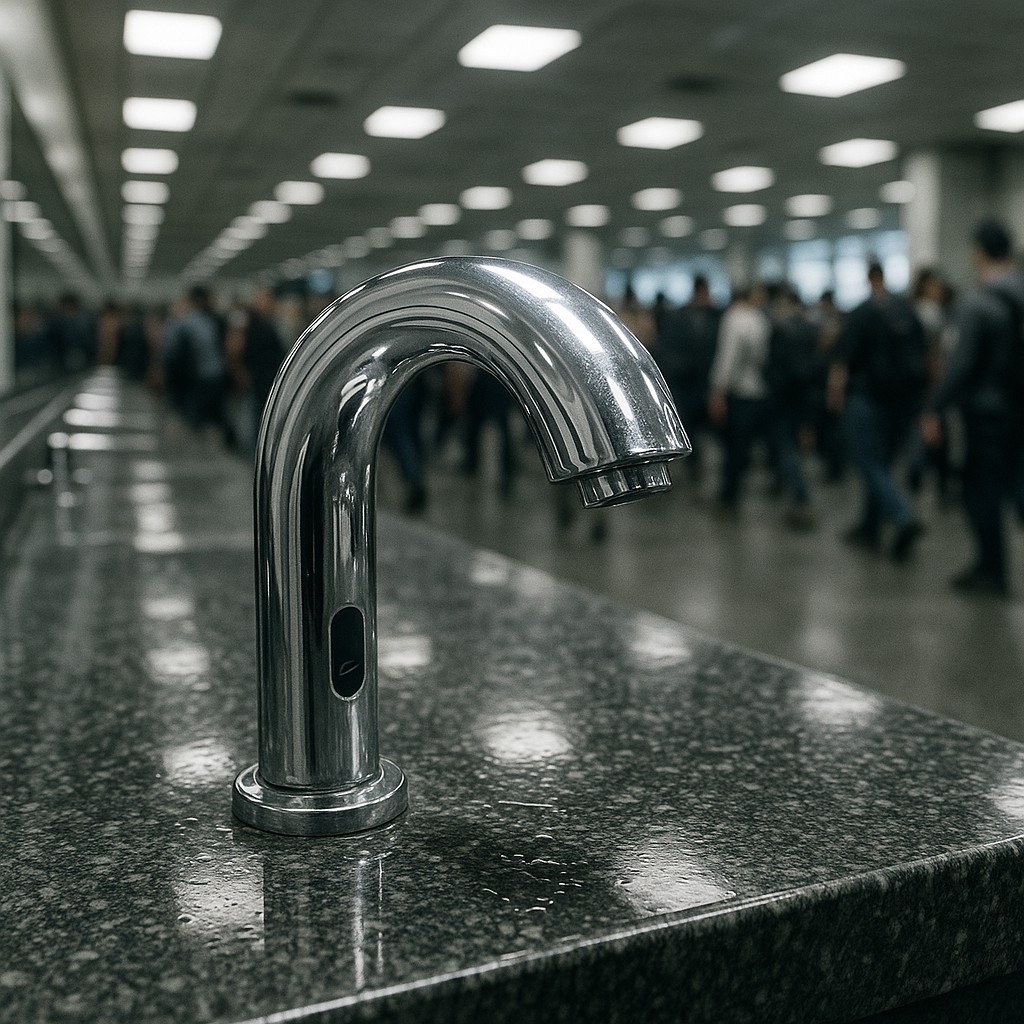
High‑traffic facilities—airport terminals, student unions, residence halls, stadium restrooms, and science buildings—impose a unique operational burden on plumbing fixtures. Peak windows are long, users are often first‑time or inattentive, supply pressure and water quality swing, and maintenance teams race the clock. In this context, fixtures must do three things exceptionally well: survive, self‑regulate, and stay sanitary. Fontana’s commercial portfolio is engineered around those realities.
Below is how Fontana’s design, controls, and serviceability translate into uptime, user experience, and total cost of ownership across high‑traffic venues.
High‑Traffic
Vandal‑Resistant
Water Savings
Hygiene
ADA
Sensor reliability and water management at scale
Reliable activation
Fontana IR sensors use multi‑object filtering to avoid bounce activations and dead zones, maintaining performance across bright curtain‑wall daylight and varied ambient conditions. Adjustable ranges and timeouts keep cycles consistent without constant re‑tuning.
Flow control & hydraulics
Integrated restrictors and pressure‑compensating aerators stabilize flow through class‑change and flight‑bank pressure swings. Fixed run‑time shutoff prevents “stuck on” events and materially lowers waste.
Building‑level savings
Aggregate controls cut water consumption versus legacy manuals, easing utility budgets and supporting sustainability reporting without degrading user experience.
Hygiene and infection control
Touchless, cleaner by design
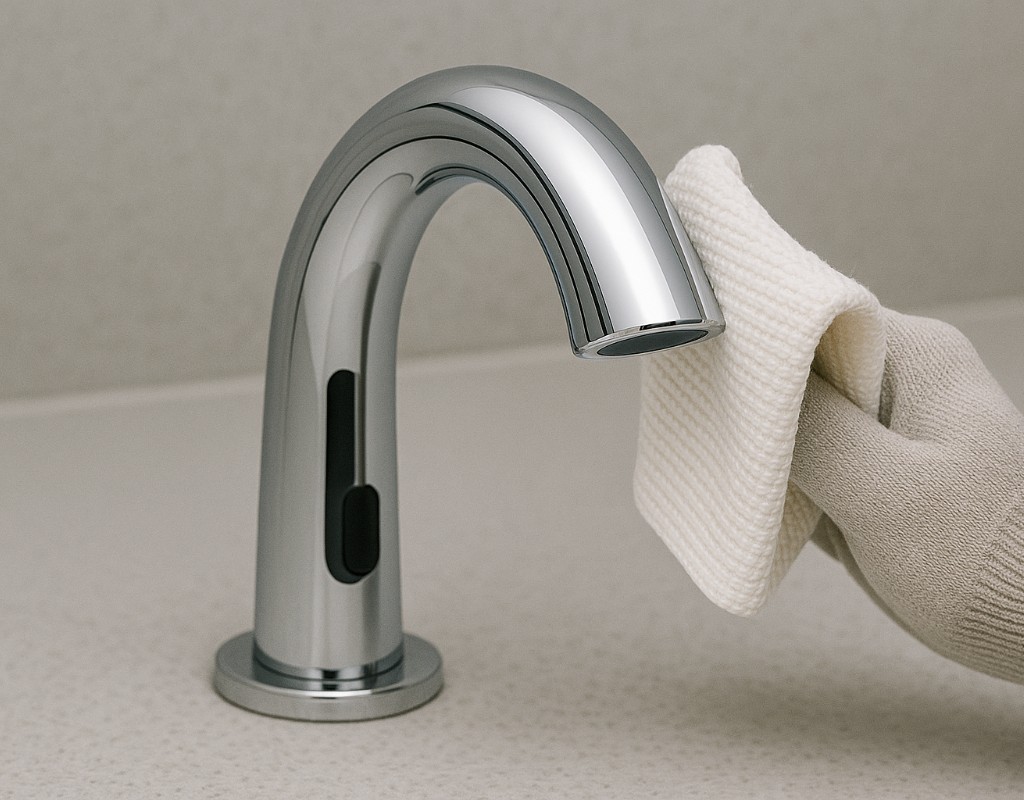
Touchless activation reduces surface contacts. Laminar‑flow options minimize aerosolization where prioritized (e.g., healthcare teaching facilities). Smooth, low‑crevice exteriors simplify wipe‑downs and reduce harborage points.
Safe temperature control
Thermostatic mixing valves (TMVs) and anti‑scald safeguards protect users without fine manual adjustments. Compatibility with thermal disinfection and chemical shock treatments supports campus protocols.
Serviceability: the unsung metric
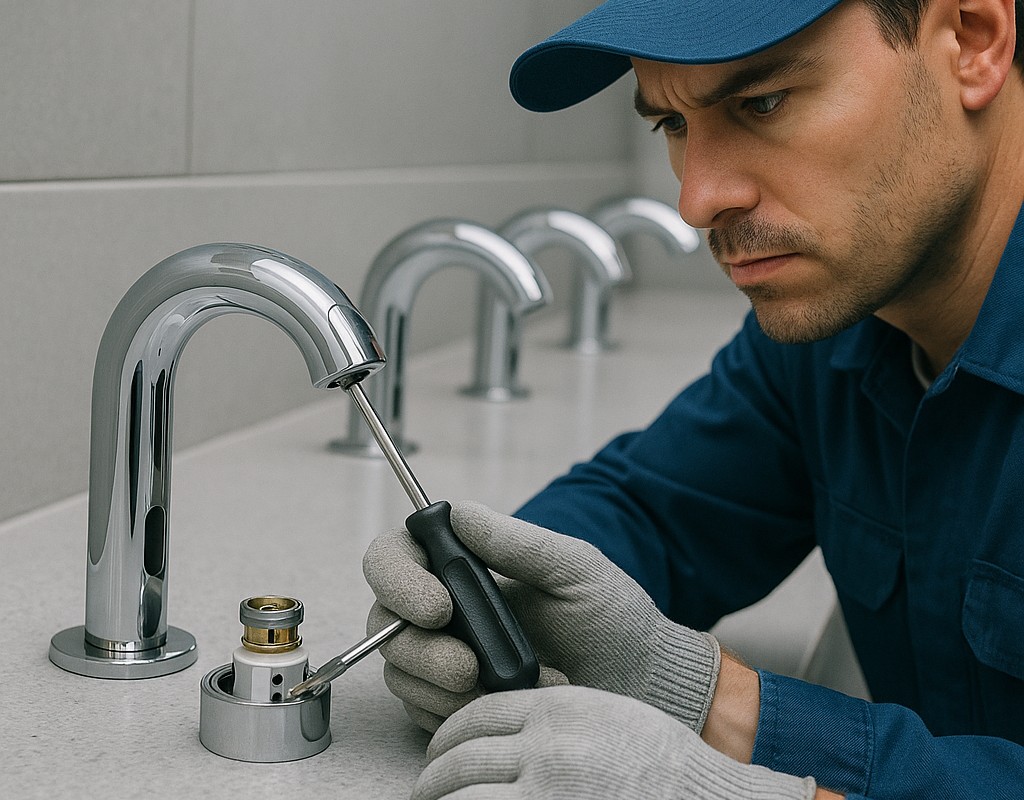
Top/front access to cartridges, solenoids, and sensors shortens repair windows. Standardized subcomponents across families simplify truck stock and reduce MTTR. Quick‑disconnect power/water connections and service LEDs/low‑battery indicators create predictable maintenance cadence. Battery options sized for commercial duty cycles or optional hard‑wire power prevent silent failures. Fewer SKUs for parts means faster diagnostics and less downtime during peak loads.
Integration with building systems
Operational hygieneSupport for purge cycles, configurable run times, and centralized low‑voltage power improves water stewardship and simplifies lifecycle maintenance. New builds & retrofitsFixtures that accept consolidated power reduce battery waste; optional smart SKUs enable portfolio‑level management without making every faucet “smart.”
Accessibility and inclusive design
Equitable usabilityTouchless, one‑gesture activation lowers cognitive load for first‑time users. Clear, immediate sensor response reduces confusion for travelers and students alike. ADA in practiceProper spout reach, knee clearance, and force requirements are met when installed per plan; models within Fontana’s commercial lines are designed to meet these dimensional needs.
Total cost of ownership (TCO) in the real world
- Durability: Heavier cast bodies and vandal‑resistant design reduce replacement frequency.
- Water savings: Sensor logic and flow regulation lower consumption and wastewater fees.
- Maintenance efficiency: Common parts, fast access, and predictable power options minimize labor.
- Aesthetic longevity: Finishes that mask wear delay “looks tired—replace it” cycles.
Standardizing on a focused SKU set and training staff compounds benefits: fewer parts to stock, faster fixes, and higher uptime during peak hours.
Installation best practices that influence performance
- Water quality: Use inline strainers/filtration to protect solenoids and aerators.
- Power strategy: Hardwire in very high‑traffic cores; for batteries, use commercial‑grade cells and scheduled replacement.
- Sensor calibration: Commission ranges/timeouts to basin and counter geometry.
- Purge routines: Enable automatic purges for dormant wings (semester breaks/overnight concourses).
- Spare parts kit: Stock cartridges, solenoids, and aerators matched to chosen models and label storage.
Venue notes
| Airports | Design for constant peaks, variable lighting near curtain walls, and centralized power where feasible. |
|---|
| Universities | Plan for semester‑driven dormancy and surge; standardize parts across buildings for faster MTTR. |
|---|
| Stadiums | Prioritize vandal‑resistant aerators and low‑profile spouts to limit leverage during crowd events. |
|---|
Sustainability and certifications
Low‑flow options and shut‑off logic support water conservation goals; durable, repairable fixtures with available parts reduce embodied environmental costs over the lifecycle. When projects seek green‑building credits, select flow rates and controls aligned with program thresholds to earn points while maintaining throughput.
Common pitfalls—and how Fontana designs around them
“Ghost” activations: tuned IR filtering, clear detection windows, and adjustable ranges mitigate false triggers. Under‑sensitive sensors: predictable hand‑detection zones and clear spout geometry prevent miss‑fires. Clogged aerators: tamper‑resistant, accessible aerators plus upstream filtration reduce recurring issues. Finish degradation: specify PVD/brushed finishes and share cleaning guidance with custodial teams. Battery failures: hardwire where feasible; otherwise, proactive replacement tied to service logs.
The bottom line
Airports and universities demand reliability under constant use, intuitive operation by untrained users, and easy service by lean teams. Fontana commercial fixtures pair rugged construction and vandal‑resistant details with trustworthy sensor logic, efficient water management, and maintenance‑friendly internals. With thoughtful installation and proactive upkeep, they deliver high uptime, predictable costs, and a consistently clean user experience—exactly what high‑traffic environments need to keep people moving.
Request the Architect Kit
Included
- High‑Traffic Performance Guide & Cut Sheets
- Editable Submittal Forms
- BIM / CAD Families
- Maintenance & Coordination Notes
Project Notes
High‑TrafficVandal‑ResistantWater SavingsADA
|
|
|