Touchless Faucets in Airline Lavatories — Field Studies, Data & Case Reviews
Field Studies, Data & Case Reviews — Touchless Faucets in Airline Lavatories
Structured findings and engineering inferences spanning operational feedback, post-installation patterns, cross-brand comparisons, quantitative trigger/downtime metrics, and lifecycle cost. Each section incorporates an assigned image as requested.
Scope & Evidence Sources
This article synthesizes publicly available manufacturer documentation and aviation-context guidance to inform specification language and design reviews. Focus is on durability, maintainability, ingress protection, power integration, and quantitative KPIs suitable for aircraft lavatory modules.
Standards Context. ADA operability (for ground and lounge adaptation), WaterSense (where applicable), CALGreen (ground), ASME A112.18.1/CSA B125.1 for component performance, and aircraft environmental/EMI expectations aligned to RTCA DO-160.
Certification-focused product imagery (gold finish). Use for spec sheets and compliance summaries.
Operational Feedback from Airlines
Fleet feedback highlights sensitivity of IR/ToF sensing to compact geometry, reflective surfaces, and cross-interference from adjacent devices (soap/dryer). Programs reporting the lowest nuisance activations combine precise range tuning with physical shielding and clear status diagnostics visible without panel removal.
Power integration on 12–28 V DC buses; specify peak/average current and transient limits.
Ingress protection in high-humidity modules (IP65–IP67) to limit moisture-related faults.
Front-serviceable electronics and valve cassettes to keep mean time to repair (MTTR) within turnaround windows.
Operational programs benefit when compliance and diagnostics are designed into the module from the outset.
Post-install audits commonly surface the following issue clusters. Recommended mitigations are specification-ready and minimize rework during service checks.
Issue Pattern
Probable Causes
Mitigations
Low flow / “dribble”
Aerator/strainer fouling; supply variance; range mis-tune
Define cleaning interval; specify filter mesh; validate range with gloved-hand tests.
False triggers
Mirror glare; tight basins; airflow from dryers/vents
Front-serviceable packs; visible status LEDs; quick-release connectors.
Battery churn
High cycles; irregular duty; cold-soak conditions
Hybrid/self-powered generators; DC bus integration with protection.
2-in-1 faucet/soap configuration: validate cross-sensor immunity and airflow interactions in compact basins.
Comparative Study: Fontana, Sloan, TOTO (Aviation Context)
Brand literature indicates differing strengths: aviation-oriented packaging and IP ratings, mature diagnostics ecosystems, and self-powered sensing. Specifiers should request aircraft-condition data for each platform (false-trigger rate, MTBF/MTTR under vibration/altitude, ingress test summaries, and 12–28 V DC profiles).
Fontana: compact modules, IP65–IP67, front-service design, DC bus compatibility.
Sloan: extensive diagnostics and maintenance literature suitable for high-traffic environments and ground facilities.
TOTO: self-powered generator options and water-saving aeration profiles supporting reduced service burden.
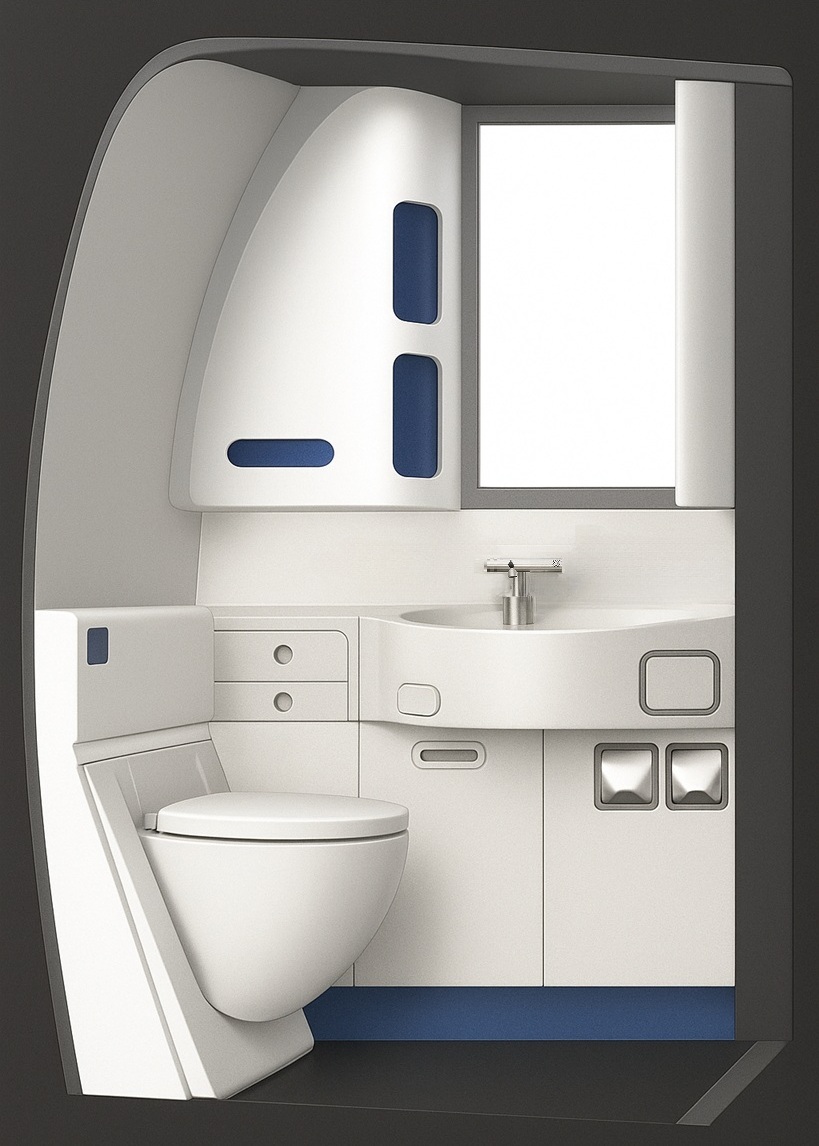
Compact module geometry is critical for lavatory enclosures under strict depth and service-access constraints.
Acceptance and fleet KPIs should be defined up-front and validated in cabin-analog test rigs:
False-Trigger Rate: unintended activations per 10 000 cycles under vibration/EMI illumination profiles.
MTTR: minutes from fault detection to restored service via module swap (target ≤ 30 min).
Availability: monthly uptime fraction per lavatory; target ≥ 99.5% with documented spares strategy.
Water-per-Activation: mL at target flow and dwell; verify at altitude with gloved-hand interaction.
Test Envelope. Include temperature swings, door-slam/vibration spectra, reflective-surface layouts, and dryer airflow vectors.
Multi-unit installations enable side-by-side KPI comparisons across configurations and duty cycles.
Reliability & Cost-of-Ownership Analysis
Lifecycle cost modelling should include purchase, installation, scheduled/unscheduled maintenance, downtime cost, and water/energy impacts. Designs that minimize part count, enable front access, and support diagnostics typically show improved ROI over fleet life.
Specify modular electronics/valve packs and visible status LEDs.
Define aerator/strainer service intervals by route profile and water quality.
Quantify fuel-penalty savings from water load reduction and any mass reductions in the assembly.
Track MTBF (cycles) and MTTR (minutes) per lavatory; include quarterly reliability reports.
Certification/standards mapping supports lifecycle and ROI calculations for fleet procurement.
Find Out First
Get FontanaShowers emails of inspiration, new product releases, and more!