Fontana Touchless Faucet Systems™ |
Architectural and Engineering Resource
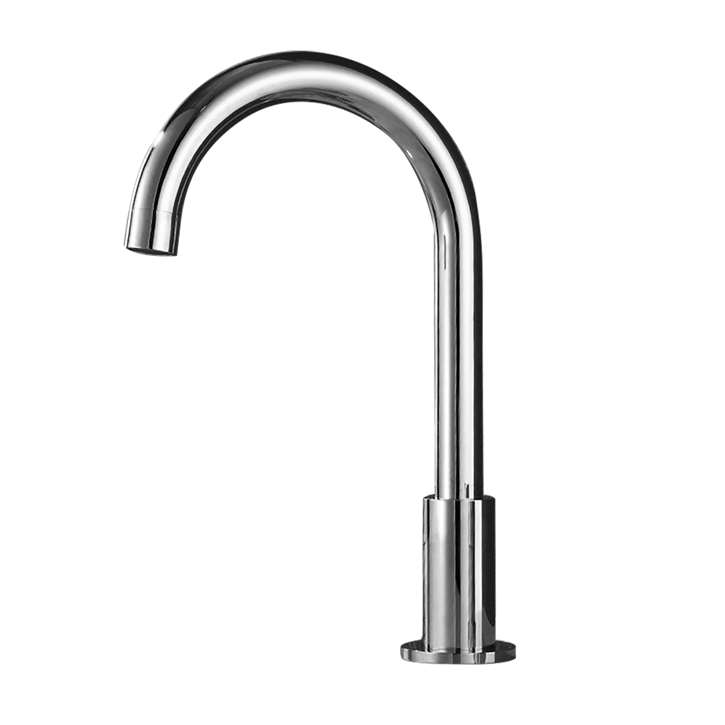
Fontana DSFD0024GS Vessel Sink and Chrome Touchless Sensor Faucet:
Sensor Detection Zone Drawing
This sensor-detection resource is intended to support architects,
plumbing engineers, contractors, installers and facility personnel
coordinating the Fontana DSFD0024GS vessel sink and chrome touchless
sensor faucet combination. The drawing package communicates the
touchless sensing zone, recommended hand position, infrared sensor
axis, activation band, no-drip release area, water-delivery path,
basin alignment and automatic shutoff sequence required for reliable
hands-free operation.
Fontana DSFD0024GS Touchless Sensor Operating Zone
The DSFD0024GS uses an infrared motion sensor positioned beneath
the chrome spout near the water outlet. The sensing field projects
downward toward the intended hand position so the faucet can
activate without physical contact. Proper alignment between the
faucet, sensing field and vessel basin helps maintain reliable
operation and controlled water delivery.
-
Model:
DSFD0024GS
-
Finish:
Chrome
-
Operation:
Touchless motion detection
-
Sensor location:
Under the spout
-
Typical detection range:
60–100 mm (2.4–3.9 in.)
-
Automatic shutoff:
30 seconds, adjustable
-
Power supply:
AC 110 V / DC 6 V
-
Installation:
Countertop / deck mount
-
Overall faucet height:
320 mm (12.6 in.)
-
Spout projection:
180 mm (7.1 in.)
-
Application:
Vessel-sink touchless faucet coordination
Required Sensor Detection & Activation Drawing Package
Each sensor coordination drawing should use a consistent faucet
centerline, basin centerline and sensing-axis reference. The package
should clearly identify the infrared sensor location, activation
zone, recommended hand position, no-drip release area, water-delivery
path, detection range and automatic shutoff sequence before final
installation and commissioning.
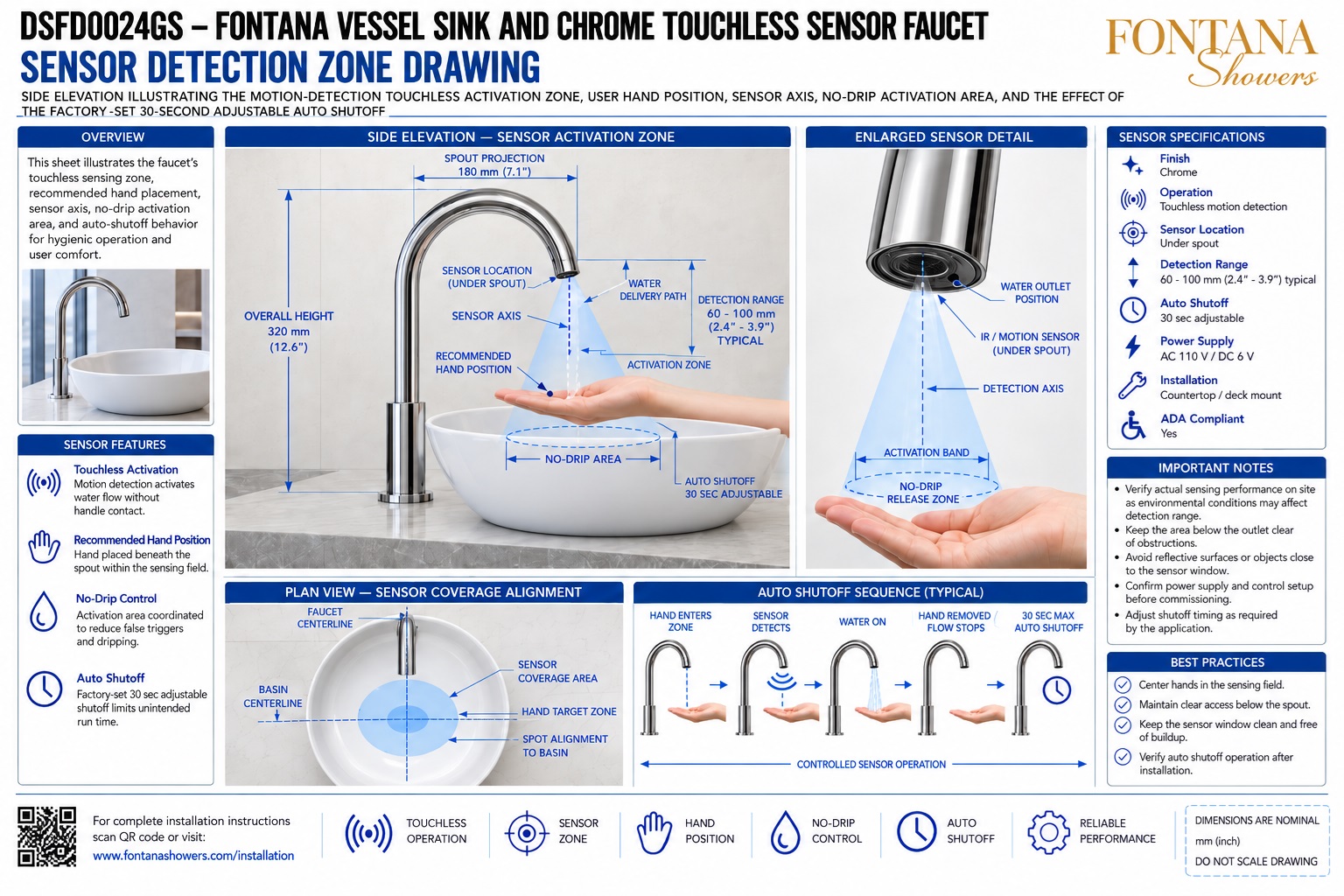
Sensor Detection Zone Drawing
Provides the complete operating relationship between the
touchless sensor, hand target area, water stream, vessel
basin and automatic shutoff sequence.
Side Elevation — Sensor Activation Zone
Shows the infrared sensing field beneath the spout, the
recommended hand position and the typical 60–100 mm
(2.4–3.9 in.) detection range.
Sensor Location
Identifies the infrared / motion sensor on the underside
of the spout near the water outlet, positioned to monitor
the user's hand below the faucet.
Sensor Axis
Defines the central detection line projecting downward from
the sensor and provides the primary reference for coordinating
the hand-use area.
Recommended Hand Position
Shows the user's hand positioned beneath the water outlet
and within the sensing field for comfortable, hygienic and
reliable hands-free activation.
Activation Zone
Identifies the sensing envelope where hand presence triggers
the faucet control system and initiates water flow.
No-Drip Release Zone
Shows the lower release area beneath the spout intended to
reduce unintended reactivation and dripping as the user's
hand leaves the sensing field.
Plan View — Sensor Coverage Alignment
Shows the faucet centerline, basin centerline, sensor coverage
area and hand-target zone aligned over the usable vessel-basin
wash area.
Automatic Shutoff Sequence
Summarizes the operating sequence as hand enters zone →
sensor detects → water turns on → hand removed → flow stops,
with a 30-second adjustable maximum shutoff reference.
Engineering note:
The detection range, activation area, sensor axis, hand position
and automatic shutoff behavior shown are nominal coordination
references. Final sensing performance should be verified on site
because environmental conditions, reflective surfaces, basin
geometry, faucet mounting position, power configuration and control
settings may affect operation.
Sensor, Basin and User Coordination Considerations
Sensor Alignment
Keep the infrared sensing field centered beneath the spout
and oriented toward the normal hand-use area above the vessel basin.
Hand Target Zone
Position the faucet so users can place their hands naturally
within the sensing field without touching the spout or
reaching awkwardly over the vessel rim.
Water-Stream Alignment
Coordinate the sensor zone and outlet so water reaches the
user's hands while remaining fully inside the vessel sink.
Reflective Surface Control
Avoid highly reflective accessories, polished objects or
other surfaces immediately adjacent to the sensor window
that may affect detection behavior.
No-Drip Performance
Keep the lower sensing area clear so the faucet can recognize
when the user's hand leaves the active field and shut off
without unnecessary retriggering.
Power & Control Setup
Verify the AC or DC power source, control connections and
sensor wiring before commissioning so activation and
automatic shutoff operate consistently.
Sensor Operation and Commissioning Best Practices
Verify Detection Range
Test the faucet after installation and confirm that normal
hand movement is detected reliably within the intended
60–100 mm operating zone.
Clean Sensor Window
Keep the sensor window free from fingerprints, soap film,
mineral deposits and construction debris that could reduce
detection performance.
Test Activation
Confirm water begins promptly when a user's hand enters the
sensing field and remains stable during normal washing.
Test Shutoff
Remove the user's hand from the detection zone and confirm
that water flow stops correctly without repeated activation.
Verify 30-Second Limit
Confirm the adjustable maximum automatic shutoff operates
as intended if the sensing condition remains active for an
extended period.
Final Basin Check
Verify that the sensing field and water stream both remain
within the usable basin area and do not conflict with the
vessel rim or nearby accessories.
FontanaShowers Installation and Specification Resources
Professional Engineering and Accessibility References
Project verification:
Sensor detection drawings are coordination tools and do not replace
approved project submittals. The architect, plumbing engineer,
contractor and licensed installer should verify sensor location,
detection range, hand-entry zone, faucet centerline, basin geometry,
power configuration, controller setup, automatic shutoff timing,
water-stream alignment and locally applicable plumbing or accessibility
requirements before final installation and commissioning.
|
|
|