Integrated Sink Countertops Guide
Integrated Design Guide for AEC Professionals
Integrated Sink Countertops: Modern Bathroom Design Solutions
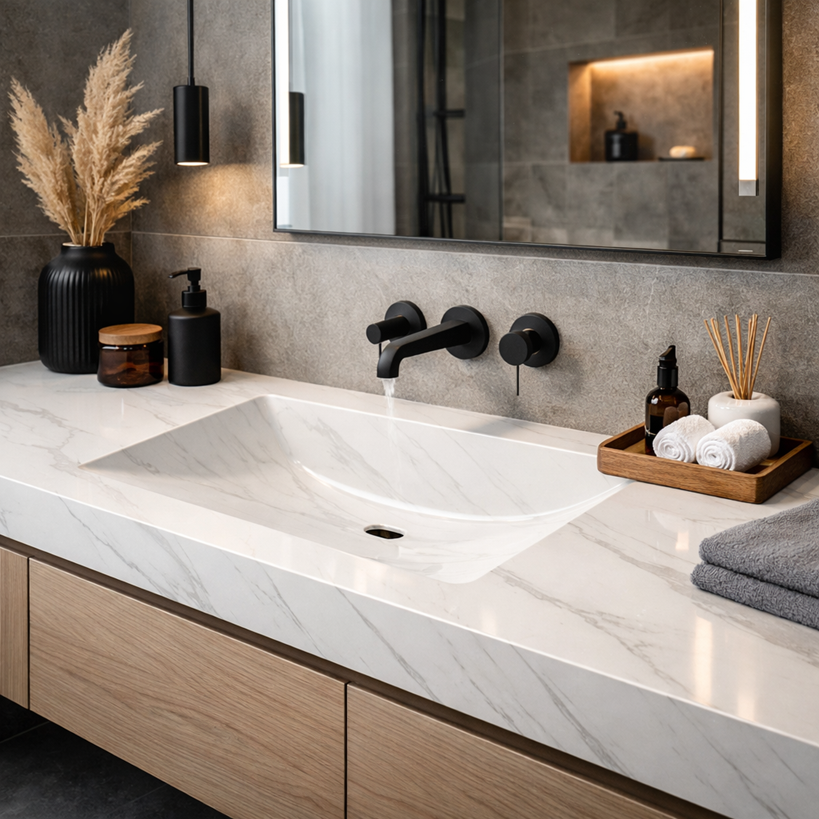
Integrated sink countertops combine the sink and countertop into a single seamless surface, offering a modern and hygienic solution for bathroom design. This design eliminates joints and edges where dirt and bacteria can accumulate, making it ideal for both residential and commercial environments. These sinks are widely used in luxury homes, hotels, healthcare facilities, and office buildings where aesthetics, durability, and ease of maintenance are essential.
Architects and designers are increasingly specifying integrated sink countertops for projects that demand both form and function. Browse our collection of modern integrated bathroom sinks designed for luxury and commercial applications.
Seamless design
Superior hygiene
Easy cleaning
Modern aesthetics
Durable materials
📚 Related Resources from FontanaShowers
🔄
What Are Integrated Sink Countertops?
Integrated sink countertops combine the sink and countertop into a single continuous surface, eliminating visible seams and joints. This seamless design creates a sleek, modern aesthetic while improving both hygiene and functionality.
Unlike traditional sinks that are installed as separate units with visible rims or seams, integrated sinks are fabricated as one complete piece from materials such as solid surface, quartz, or engineered stone. The result is a smooth, uninterrupted surface that flows from counter to sink.
Browse our integrated sink collection to explore modern design options.
Key Characteristics
-
1
Seamless design: No joints or visible edges
-
2
Sink + countertop combined: Single integrated unit
-
3
Modern aesthetic: Clean, minimalist appearance
-
4
Custom fabrication: Tailored to project specifications
✨
Benefits of Integrated Sink Design
🧼
Improved Hygiene
No seams or joints where bacteria can accumulate, making integrated sinks the most hygienic option for healthcare and food service facilities.
🧽
Easy Cleaning
With no edges or crevices, cleaning is simple and quick. Wipe directly from counter into sink without obstruction.
🎨
Modern Appearance
Sleek, minimalist design complements contemporary architecture and luxury interiors.
⚡
Reduced Maintenance
Durable materials and seamless construction reduce long-term maintenance costs in commercial environments.
🏥
🏥
Why Integrated Sinks Are Ideal for Healthcare Environments
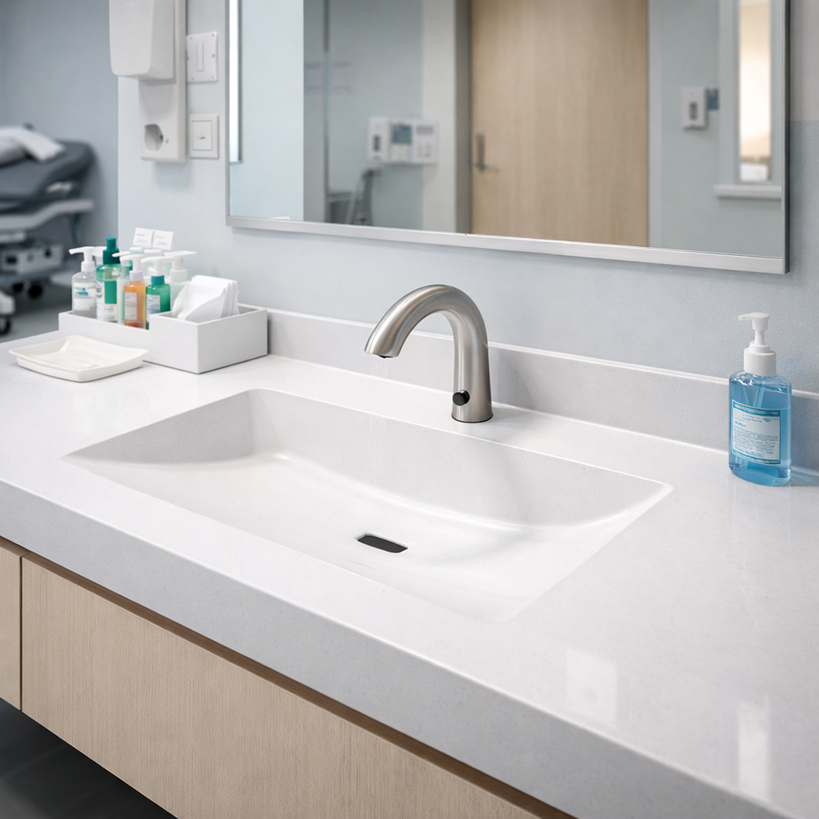
Integrated sinks are widely used in healthcare settings because their seamless design reduces bacteria buildup and simplifies cleaning, helping maintain higher hygiene standards. In hospitals, clinics, and laboratories, eliminating joints and crevices prevents microbial growth and makes disinfection more effective.
The smooth, non-porous surfaces of integrated sinks meet strict infection control requirements and are easier to clean with hospital-grade disinfectants.
Healthcare Benefits
- ✓ No bacteria-trapping seams
- ✓ Easy to disinfect
- ✓ Meets infection control standards
- ✓ Ideal for operating rooms and clinics
Related: For healthcare facility design, review our commercial restroom design guide and materials guide for hygienic surface options.
⚙️
Technical Advantages of Seamless Sink Design
-
1
No Joints or Silicone Seals
Eliminates weak points where traditional sinks often develop leaks or collect debris.
-
2
Reduced Risk of Water Leakage
Continuous surface construction prevents water from seeping behind or under the sink.
-
3
Improved Durability Over Time
Fewer vulnerable points means longer lifespan, especially in high-traffic commercial settings.
-
4
Better Resistance to Mold and Bacteria
Smooth, non-porous surfaces prevent microbial growth, essential for healthcare and food service.
Material performance: For detailed technical specifications, refer to our sink materials guide.
Integrated vs Undermount vs Vessel Sinks
Integrated sinks provide a seamless surface, while undermount and vessel sinks have visible edges that require more maintenance and cleaning. Understanding the differences helps architects and designers select the right solution for each project.
| Feature |
Integrated Sink |
Undermount Sink |
Vessel Sink |
| Seams |
No seams |
Joint under counter |
Visible rim |
| Cleaning |
Very easy |
Easy |
Moderate |
| Hygiene |
Highest |
High |
Standard |
| Design |
Modern seamless |
Clean minimalist |
Statement piece |
| Maintenance |
Lowest |
Low |
Moderate |
🧱
Materials Used in Integrated Sinks
🧪
Solid Surface
Non-porous, seamless, repairable. Ideal for luxury residential and healthcare. Available in wide range of colors.
learn more →
💎
Quartz
Engineered stone with excellent durability, stain resistance, and consistent appearance. Popular in high-end residential.
learn more →
⛰️
Engineered Stone
Combines natural stone particles with resins for durability and design flexibility. Suitable for commercial applications.
learn more →
Material selection guide: For detailed specifications on material properties, refer to our complete sink materials guide.
Where Integrated Sink Countertops Are Commonly Used
🏨
Luxury Hotels
Seamless elegance in guest bathrooms and spa facilities
🏥
Healthcare Facilities
Hygienic surfaces for hospitals, clinics, and labs
🏠
High-End Residential
Modern aesthetics for luxury homes and apartments
🏢
Commercial Offices
Durable, low-maintenance restroom solutions
For commercial project guidance, see our commercial restroom design guide.
Applications in Luxury and Commercial Projects
🏨
Hotels
Seamless design for luxury guest bathrooms and public restrooms
🏥
Healthcare
Superior hygiene with no seams for hospitals and clinics
🏢
Offices
Durable and easy to maintain in employee restrooms
🏠
High-End Homes
Modern aesthetic for luxury residential bathrooms
Integrated vs Traditional Bathroom Sinks
| Feature |
Integrated Sink |
Traditional Sink |
| Seams |
No seams |
Visible joints |
| Cleaning |
Very easy |
Moderate |
| Hygiene |
High |
Standard |
| Design |
Modern seamless |
Conventional |
| Maintenance |
Low |
Moderate |
Complete Guide to Integrated Sink Countertops
Integrated sink countertops represent one of the most advanced solutions in modern bathroom design. By combining the sink and countertop into a single continuous surface, these systems eliminate visible seams and joints, improving both aesthetics and hygiene.
This seamless design makes cleaning significantly easier compared to traditional sinks. Without edges or gaps, there is less space for dirt, bacteria, and water buildup, making integrated sinks especially suitable for healthcare facilities, hotels, and high-end residential bathrooms.
Materials commonly used in integrated sink countertops include solid surface composites, quartz, and engineered stone. These materials provide durability, stain resistance, and flexibility in design, allowing architects and designers to create custom shapes and finishes that match modern interior styles.
In commercial environments, integrated sinks are often selected for their ability to improve maintenance efficiency and reduce long-term operational costs. Their smooth surfaces require less cleaning effort and are more resistant to wear in high-traffic areas.
When planning bathroom layouts, integrated sinks can be combined with large bathroom sinks to create functional and visually appealing spaces. Designers should also consider factors such as sink dimensions, installation requirements, and material performance when selecting integrated systems.
FontanaShowers offers a wide range of modern bathroom fixtures designed to support contemporary design, hygiene standards, and long-term durability in both residential and commercial projects.
❓ Integrated Sinks FAQ
Frequently Asked Questions About Integrated Sink Countertops
What is an integrated sink countertop?
It is a sink built directly into the countertop as one seamless unit, with no visible seams or joints. This creates a smooth, continuous surface that is both hygienic and visually appealing. Browse our integrated sink collection.
Are integrated sinks more hygienic?
Yes, they eliminate gaps and seams where bacteria can accumulate, making them the most hygienic option. This is why they are preferred in healthcare facilities and food service environments.
What materials are used for integrated sinks?
Solid surface, quartz, and engineered stone are the most common materials. Each offers different benefits in terms of durability, appearance, and maintenance. See our materials guide for details.
Are integrated sinks suitable for commercial use?
Yes, especially in healthcare and high-traffic environments where hygiene and easy maintenance are critical. They are also popular in luxury hotels and office buildings. Explore commercial applications.
Summary: Integrated Sink Countertops Guide
Integrated sink countertops offer a modern, hygienic, and aesthetically superior solution for bathroom design. By eliminating seams and joints, they provide easier cleaning, reduced maintenance, and a sleek appearance ideal for luxury and commercial projects.
Seamless design
Superior hygiene
Easy cleaning
Modern aesthetics
Commercial grade
|
|
Integrated sink countertops represent one of the most advanced solutions in modern bathroom design. By combining the sink and countertop into a single continuous surface, these systems eliminate visible seams and joints, improving both aesthetics and hygiene.
This seamless design makes cleaning significantly easier compared to traditional sinks. Without edges or gaps, there is less space for dirt, bacteria, and water buildup, making integrated sinks especially suitable for healthcare facilities, hotels, and high-end residential bathrooms.
✓
No bacteria-trapping seams
✓
Easy wipe-clean surfaces
Materials commonly used in integrated sink countertops include solid surface composites, quartz, and engineered stone. These materials provide durability, stain resistance, and flexibility in design, allowing architects and designers to create custom shapes and finishes that match modern interior styles.
Solid Surface
Quartz
Engineered Stone
🏢
Commercial & Healthcare Applications
In commercial environments, integrated sinks are often selected for their ability to improve maintenance efficiency and reduce long-term operational costs. Their smooth surfaces require less cleaning effort and are more resistant to wear in high-traffic areas. This makes them ideal for hospitals, clinics, hotels, and office buildings where hygiene and durability are paramount.
🏥
Hospitals
Maximum hygiene
🏨
Hotels
Luxury aesthetics
🏢
Offices
Low maintenance
📐 Design Considerations
When planning bathroom layouts, integrated sinks can be combined with large bathroom sinks to create functional and visually appealing spaces. Designers should also consider factors such as sink dimensions, installation requirements, and material performance when selecting integrated systems.
Key Planning Factors
- Sink dimensions and bowl depth
- Faucet placement and reach
- Countertop overhang requirements
- Integration with adjacent fixtures
⚙️ Installation Requirements
Integrated sink countertops require professional fabrication and installation. The entire unit is manufactured as one piece and must be precisely fitted to the space. Proper support and sealing are essential for long-term performance.
Installation Checklist
- Custom fabrication required
- Professional installation only
- Adequate cabinet support
- Proper sealing at edges
Integrated vs Traditional Sinks: Key Differences
| Feature |
Integrated Sink |
Traditional Sink |
| Seams |
No seams |
Visible joints |
| Cleaning |
Very easy |
Moderate |
| Hygiene |
High |
Standard |
| Design |
Modern seamless |
Conventional |
| Maintenance |
Low |
Moderate |
FontanaShowers offers a wide range of modern bathroom fixtures designed to support contemporary design, hygiene standards, and long-term durability in both residential and commercial projects.
|
|
|