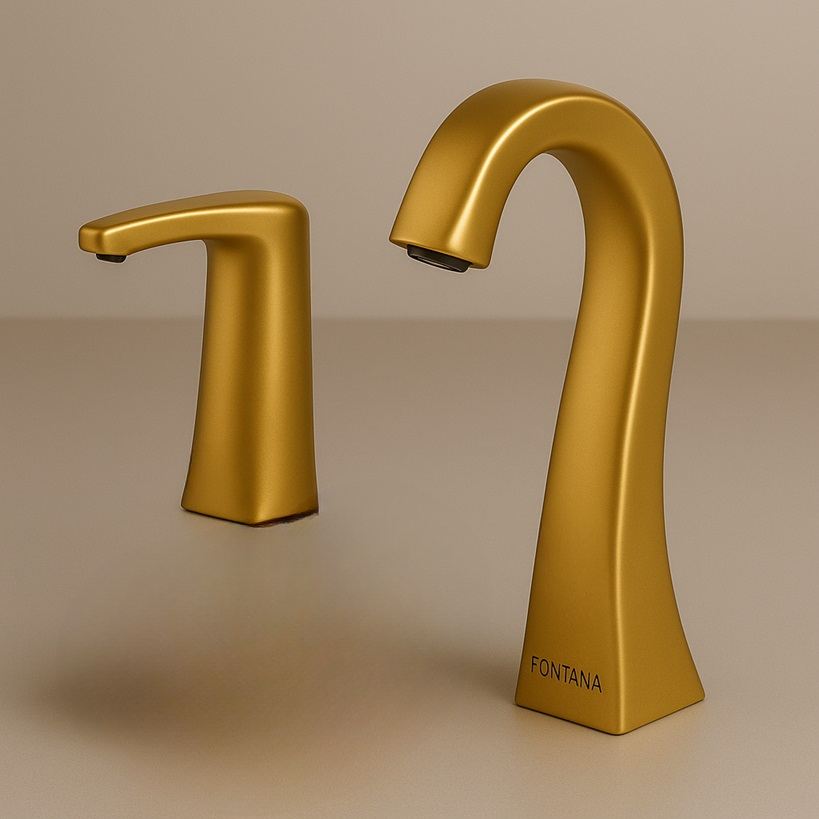
Integrated Soap Dispensing System · Automatic Sensor-Operated Valve · Low-Voltage Electronic Control
IP67 Sealed Touchless Faucets
Fully sealed, water-resistant sensor and control architecture engineered for demanding commercial restrooms in airports, hospitals, universities, stadiums, and government facilities. Access BIM/Revit families, CSI submittals, and technical support built for architects, designers, engineers, and contractors.
Proximity Sensor Technology · Dual Power Supply (Hardwired / Battery) · Multi-Feed Dispensing Capability · UPC Listed / ASME A112 Compliant · Energy-Efficient Power Management
|
|
Frequently Asked Questions IP67 Sealed Touchless Faucets & Automatic Soap Dispensers for AEC Specifications
IP67 sealing — what it really means for touchless faucets
What does an IP67 rating technically mean for touchless faucet electronics?
IP67 indicates that the electronic components are fully protected against dust ingress and can withstand temporary immersion in water up to defined limits. For touchless faucets, this means the sensor module, control electronics, and critical connectors are sealed against moisture exposure common under deck, including leaks, condensation, cleaning splash, and intermittent flooding events.
Why is IP67 sealing critical for commercial and public restroom installations?
Under-deck environments are unpredictable and often damp due to supply stops, drain condensation, floor washing, and janitorial practices. Non-sealed electronics are a common failure point. IP67 sealing significantly reduces corrosion, short circuits, and sensor instability, extending service life in high-traffic commercial restrooms.
What parts of a touchless faucet should be IP67 sealed?
Best practice is to seal the sensor housing, control module, and electrical connectors. Partial sealing—where only the sensor window is protected—still leaves wiring junctions and control boards vulnerable. When reviewing submittals, confirm which components are IP67 rated rather than assuming system-wide protection.
How does IP67 sealing improve sensor stability and activation accuracy?
Moisture intrusion can distort infrared signals, cause intermittent triggering, or lead to delayed shutoff. Fully sealed electronics maintain consistent sensor calibration over time, reducing false activations and missed triggers caused by humidity or condensation inside the control housing.
Is IP67 sealing relevant for both deck-mounted and wall-mounted touchless faucets?
Yes. Wall-mounted installations often place electronics in chases or concealed cavities where leaks can go unnoticed. Deck-mounted faucets face direct exposure from cleaning chemicals, splashing, and basin overflow. IP67 sealing mitigates risk in both installation types.
Differentiating good vs bad IP67 sealed touchless faucets
How can AEC teams verify a faucet is truly IP67 sealed and not just marketed as “water resistant”?
True IP67 products will explicitly list the rating in technical documentation for the specific SKU. Vague terms such as “moisture resistant” or “sealed electronics” without an IP classification are red flags. Always require SKU-specific documentation rather than series-level marketing language.
What are common failure patterns in non-IP67 touchless faucets?
Common issues include corrosion at connectors, sensor drift due to humidity, intermittent valve actuation, and complete electronic failure after minor leaks. These failures often appear months after installation, making them costly to diagnose and disruptive to facility operations.
What construction details separate good IP67 designs from poor ones?
Good designs use sealed connectors, molded cable entries, gasketed housings, and potted or conformally coated electronics. Poor designs rely on loosely sealed plastic boxes, exposed wire terminations, or tape-sealed access covers that degrade over time.
Does IP67 sealing eliminate the need for proper installation detailing?
No. IP67 sealing reduces risk but does not replace good detailing. Control modules should still be mounted away from direct drip paths, and cable routing should avoid tension and sharp bends. IP67 protects against incidents, not chronic misuse.
How does IP67 sealing affect long-term maintenance and lifecycle cost?
Faucets with sealed electronics experience fewer moisture-related failures, reducing service calls and unplanned downtime. Over large deployments, this reliability translates directly into lower lifecycle cost and more predictable maintenance planning.
Power systems + IP67 protection
How does IP67 sealing interact with battery-powered touchless faucets?
For battery-powered units, sealing must include the battery compartment or isolate it from electronics through gasketed barriers. Poor designs allow moisture to reach battery contacts, causing voltage drop and intermittent behavior even when batteries are new.
What should be verified for IP67-rated hardwired low-voltage systems?
Confirm that cable entry points and connectors maintain the IP67 rating after installation. If the transformer or junction box is remote, verify how the sealed boundary is maintained between the faucet electronics and incoming power wiring.
Are hybrid AC/DC systems compatible with IP67 sealing?
Yes, when properly designed. Hybrid systems often benefit from sealed control modules that protect electronics during power transitions and outages. Documentation should clarify which components are sealed and how backup power interfaces with the system.
Water exposure, cleaning, and IP67 durability
How does IP67 sealing protect against aggressive cleaning practices?
Commercial restrooms are frequently cleaned with sprayed chemicals and pressurized water. IP67 sealing prevents liquid ingress during routine cleaning, reducing the risk of chemical damage to sensors and electronics.
Does IP67 sealing improve performance in flood-prone or wash-down environments?
Yes. In facilities such as transit hubs, stadiums, and airports, temporary flooding or wash-down procedures are common. IP67-rated electronics can withstand short-term immersion events that would permanently damage unsealed systems.
How should IP67 performance be documented in AEC specifications?
Specify the IP67 requirement explicitly in Division 22 language and require contractor verification that the installed SKU meets the rating. Avoid blanket statements and reference the manufacturer’s published documentation for compliance.
Maintenance advantages of IP67 sealed touchless faucets
How does IP67 sealing reduce service calls in large facilities?
By eliminating moisture-induced failures, IP67 systems reduce intermittent faults that are difficult to diagnose. Facilities teams benefit from predictable operation rather than reactive troubleshooting.
What service access considerations still apply to IP67 products?
While electronics are sealed, consumable components such as aerators, valves, and batteries still require access. Good designs balance sealing with modular serviceability so maintenance does not compromise environmental protection.
Why is IP67 especially valuable for portfolio-wide standardization?
In multi-building portfolios, environmental conditions vary widely. IP67 sealing provides a consistent reliability baseline, allowing facilities teams to standardize SKUs without tailoring specifications to each building’s risk profile.
Explore More with FontanaShowers
|
|
|