Commercial Shower Systems | Architecture & Engineering Guidance
System Architecture: Showerheads and Valves
Commercial shower assemblies require coordinated design between plumbing engineering, architecture, and operations. The configuration of showerheads and valves directly influences hydraulic performance, safety, temperature stability, accessibility, and long-term maintainability. This guide outlines the fundamental system types, valve technologies, hydraulic considerations, compliance requirements, durability factors, and integration strategies.
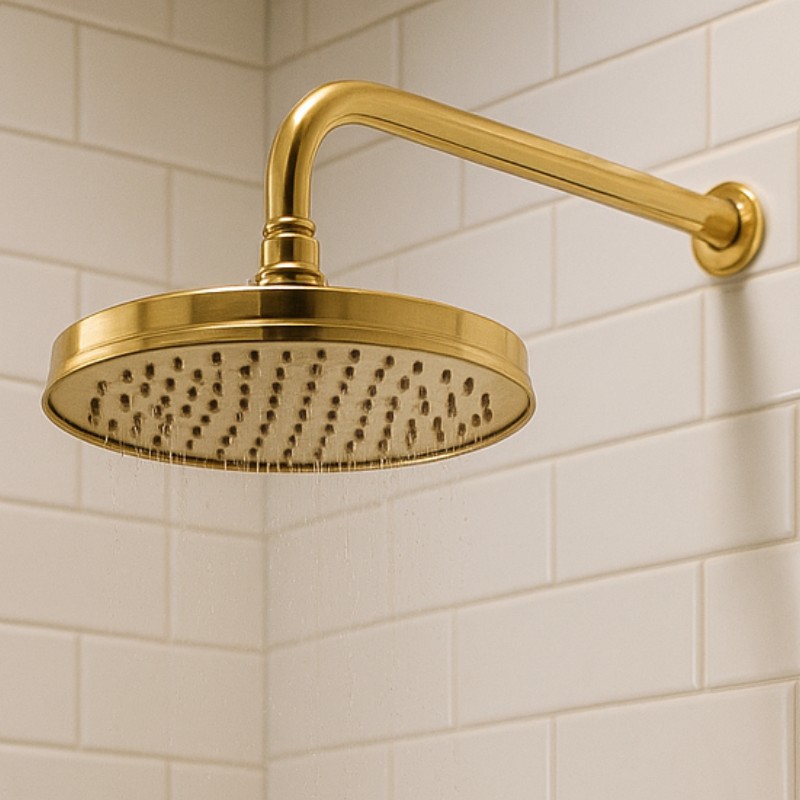
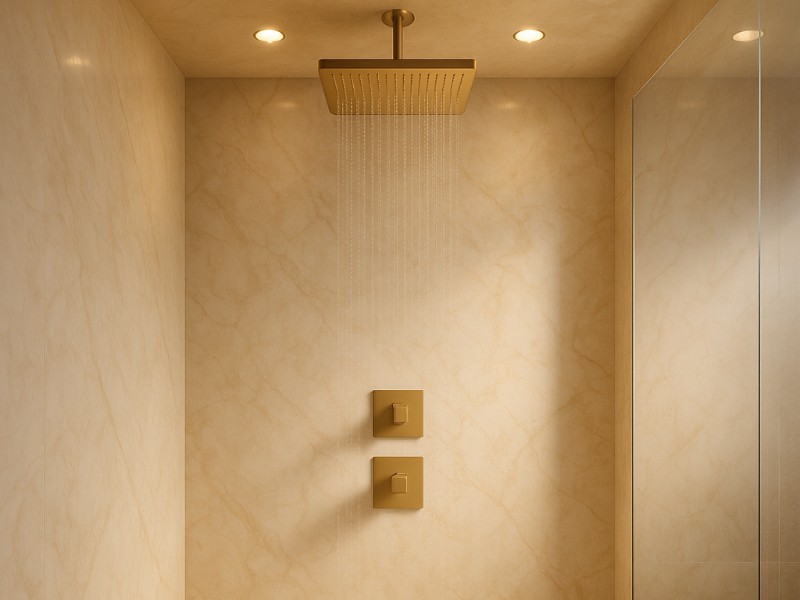
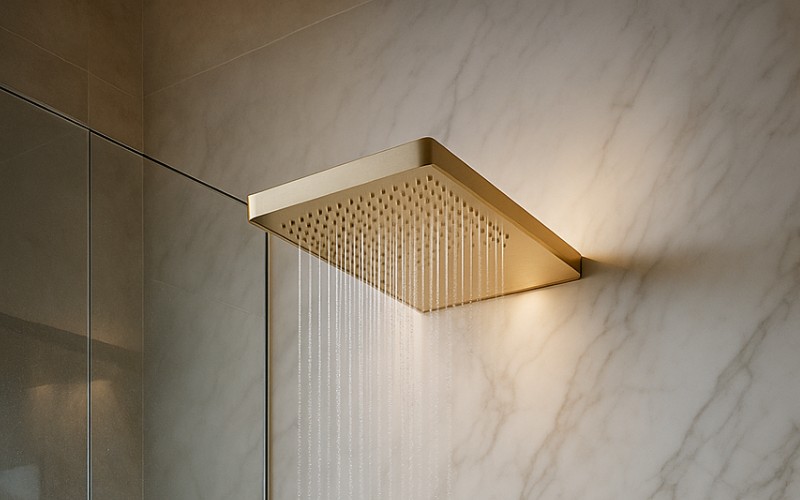
Single Outlet Assemblies — fundamental configuration for standard commercial halls and athletic facilities.
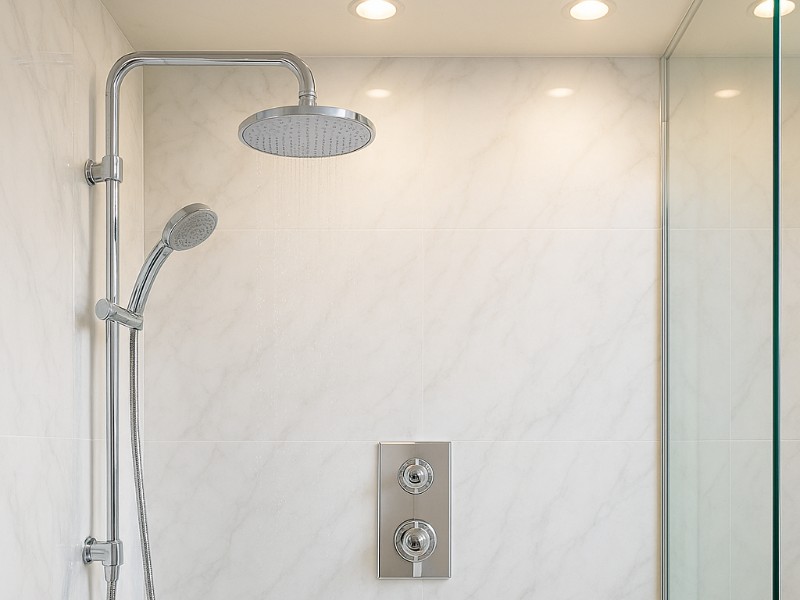
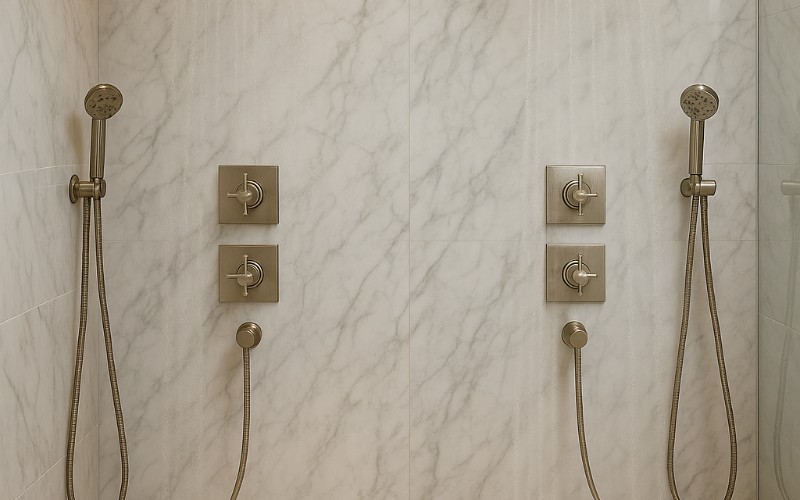
Multi-Outlet Systems — balancing pressure, diverter logic, and spray performance.
Tempered Loop Systems — centralized temperature control, distributed volume regulation.
Valve Types & Functional Behavior
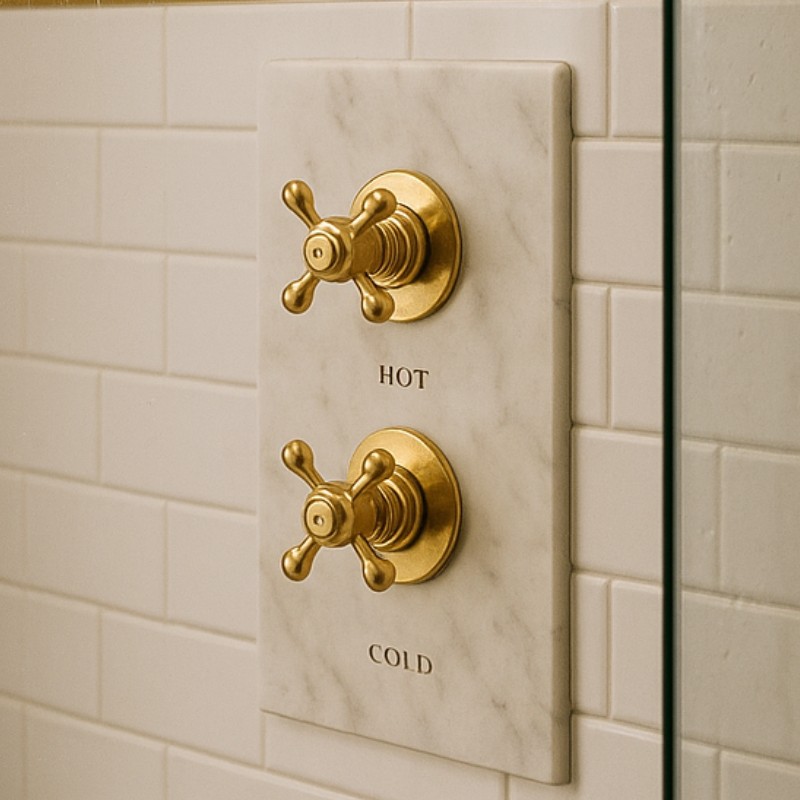
Pressure-Balancing Valves
Regulate temperature by modulating flow in response to supply-side pressure changes. Essential where supply pressure fluctuations are common.
Thermostatic Mixing Valves (TMVs)
Sense and maintain outlet temperature by proportionally adjusting hot and cold flow. Provide tight control and fast response in commercial settings.
Combination Valves
Deliver both pressure and temperature stabilization, supporting safety and performance across varying demand profiles.
Electronic Valves
Enable digital control, time-out safety, automated flushing, BMS integration, and advanced temperature monitoring features.
Selection Criteria
Evaluate minimum flow, failure mode behavior, temperature response time, compatibility with low-flow heads, and operational reliability under reduced pressures.
Hydraulic Performance
Review pressure–flow curves for valves and showerheads to verify adequate performance under expected operating conditions.
Coordinate outlet temperature limits (commonly 110–115 °F).
Ensure showerhead flow does not drop below the valve’s minimum controllable flow.
Durability & Material Selection
Valve bodies of brass, bronze, or stainless steel, with corrosion-resistant finishes.
Cartridge engineering (ceramic/hybrid) aligned with ASME endurance requirements.
Robust debris screening and easily serviceable assemblies.
Sustainability, Water Efficiency & Energy Considerations
Water Efficiency Requirements
Compliance with WaterSense (2.0 gpm) and CALGreen (1.8 gpm) depends on appropriate valve selection and ensuring diverters restrict simultaneous flow where required.
Energy & Hot Water Management
Reduced flow increases the impact of distribution heat loss and recirculation tuning; line velocities and temperatures must be maintained to mitigate Legionella risks.
Field Verification
Review manufacturer spray data at low flow and conduct mock-ups when needed to confirm spray performance and user experience.
BMS Integration
Electronic valves can support flushing routines, temperature alarms, fault detection, time-out controls, and usage analytics.
System-Level Coordination
Showerheads are passive components; valves determine monitoring and automation capability, influencing whole-building control strategies.
Maintenance & Access
Include accessible cartridges, strainers, isolation valves, and O&M procedures for calibration, cleaning, and periodic verification.
Technical Specifications
Operation
Pressure-balancing, thermostatic, combination, or electronic mixing mechanisms
Installation
Single outlet, multi-outlet, or tempered loop configurations
Materials
Brass, bronze, or stainless valve bodies; corrosion-resistant finishes
Hydraulics
Performance verified by pressure–flow curves for valves and showerheads
Temperature Limits
Set and adjusted per code; typical limits 110–115 °F
Water Efficiency
Compliant with WaterSense / CALGreen flow requirements
Control Systems
Optional digital control, flushing logic, and BMS connectivity
Maintenance
Accessible cartridges, checks, strainers; isolation for local servicing
Applicable Standards
ADAWaterSenseASME A112.18.1ASSE 1016CALGreen
Specification Requirements
Flow/pressure performance limits and valve minimum flow compatibility
Material and finish requirements for durability and corrosion resistance
Cycle testing, service life standards, and accessible service points
Control-wall layout, ADA heights, waterproofing compatibility
Discipline Coordination & Field Implementation
Application A
Control & Mounting Coordination — ensuring ergonomic and compliant installation.
Application B
Field Testing — temperature verification, flow checks, and electronic controls.
Guidance on Specification & CSI Framework
Discipline Coordination
Documentation must address control-wall layout, ADA constraints, structure for shower arms, compatible wall assemblies, and waterproofing details.
CSI Section 22 40 00
Part 1: ADA, ASME A112.18.1, ASSE 1016, WaterSense, CALGreen
Part 2: Showerheads, valves, materials, performance
Part 3: Installation, adjustment, flow verification, functional testing
Integrated System Approach
Commercial shower assemblies should be specified as coordinated systems rather than individual products, ensuring reliability and long-term performance.
Coordinate with mechanical engineering early for hydraulic balance, temperature control, and integration with recirculation and monitoring systems.
Customer Field Review
Fontana Aquessia Brushed Nickel Digital LED Shower System Field Review
A specification-focused evaluation using clearly disclosed related digital
and LED shower-system review evidence covering thermostatic stability,
multifunction outlet coordination, LED synchronization, Bluetooth and
remote-control behavior, inlet-pressure variation, commissioning adjustments,
maintenance demand, and prolonged hospitality operation.
✔ Related Digital Shower Evidence
✔ LED + Thermostatic Performance Focus
✔ Bluetooth / Control Coordination
2022–2026 Field Context
Related Digital-Shower Field Evidence
Multifunction Digital LED Shower
Model FS20150BN
Xavier Bennett, Architect
— Miami, Florida
Luxury Hospitality Smart-Shower Evaluation
Review record date: May 12, 2026 • Rating: 4 out of 5 •
1 helpful vote
Customer Review
The supplied workbook contains no exact FS20150BN record, so no testimonial
is presented as exact-model evidence. The closest deep-performance record is
FS11151BG from Xavier Bennett, Architect, covering luxury hospitality spa
renovations where Bluetooth pairing, LED response, thermostatic regulation,
water-pressure fluctuation, and ongoing maintenance were evaluated under
continuous commercial use.
Read More
That related smart-shower record reports smoother audio connectivity,
dependable LED response, stronger temperature stability, and fewer servicing
interruptions after the control configuration was refined. Supporting
records from FS11039BG, FS145149, and FS145165 independently describe similar
issues involving LED synchronization, remote or touch-panel response,
thermostatic recalibration, building-automation coordination, and prolonged
high-traffic operation.
Installation
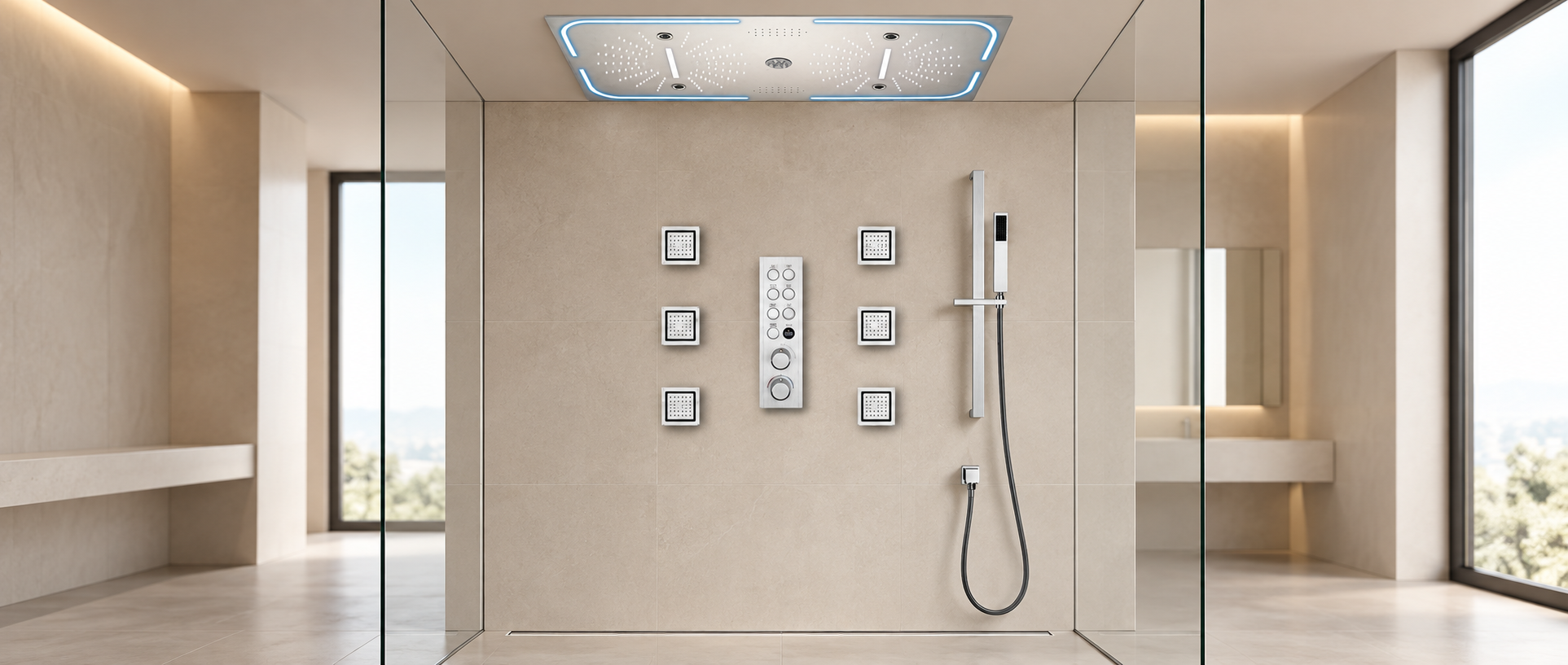
The live FS20150BN product page identifies a recessed, ceiling-mounted
digital shower set constructed from stainless steel and brass. The system
combines a 27.56 x 13.78-inch shower head, a 16.14 x 4.53-inch digital
mixer, six body jets, a handheld shower, G1/2 connections, hot-and-cold
supplies, and multiple electronic control functions.
Read More
For commissioning, coordinate ceiling framing, waterproofing, valve and
mixer access, G1/2 supply routing, body-jet spacing, handheld-hose reach,
digital-control location, Bluetooth connectivity, remote and phone-control
setup, and access to serviceable electronics before enclosure. Related field
records show that advanced systems often need initial control synchronization
and pressure balancing before stable operation is achieved.
Digital and LED Response
FS20150BN includes a multifunction digital mixer, touch-panel control,
remote-control lighting, phone-control lighting, Bluetooth music capability,
and 64-color LED operation. The closest workbook records show that digital
shower performance depends on control synchronization as much as on the
hydraulic system itself.
Read More
Xavier Bennett reports that Bluetooth, digital response, LED coordination,
and thermostatic stability remained dependable once the smart-control
configuration was optimized. Ava Monroe reports fewer LED synchronization
problems after smart-control calibration, while Ethan Blake and Logan Pierce
describe improved remote or touch-panel responsiveness after synchronization
settings were refined for the building control environment.
Finish and Design
The current product page specifies a brushed-nickel finish with
stainless-steel and brass construction. The recessed ceiling head,
coordinated digital mixer, body jets, and handheld shower create an
integrated architectural system rather than a single exposed fixture, so
finish continuity and trim alignment should be reviewed across all visible
components.
Read More
The review workbook does not contain an exact FS20150BN brushed-nickel
long-term finish record. Brushed-nickel LED-shower records elsewhere in the
workbook support installation and appearance observations, but they involve
different components and are not used as exact evidence for this system.
Finish durability should therefore be monitored against cleaning chemistry,
water spotting, mineral deposits, and repeated hospitality sanitation cycles.
Operating Function
Manufacturer information lists rainfall, water-column, and side-rain
functions, six body jets, a handheld shower, hot-and-cold water, Bluetooth
music, 64 LED colors, touch-panel control, remote light control, and phone
light control. These functions create a multi-outlet hydraulic and electronic
system that must be commissioned as one coordinated assembly.
Read More
Related field evidence repeatedly identifies fluctuating inlet pressure,
outlet synchronization, thermostatic recalibration, delayed control response,
and LED timing as the main long-horizon issues in advanced digital showers.
Once balancing and control configuration were corrected, reviewers reported
stable temperature regulation, smoother outlet performance, dependable LEDs,
and fewer maintenance interruptions during prolonged operation.
Recommended Use
The evidence is most applicable to luxury hospitality suites, executive
wellness spaces, premium residences, spas, and other projects where digital
temperature control, multiple water outlets, LED lighting, Bluetooth audio,
and integrated controls are design priorities and where commissioning support
is available.
Read More
Before approval, document ceiling and wall access, hot/cold supply capacity,
simultaneous-outlet pressure behavior, mixer and control-module
serviceability, body-jet spacing, Bluetooth commissioning, remote and
phone-control setup, LED synchronization, temperature calibration, and
maintenance access. These coordination items are more critical to long-term
performance than the visible finish alone.
Review Summary
Exact-Model Evidence
No exact FS20150BN review is present in the supplied workbook; all customer
evidence below is explicitly related-model context.
Closest Technical Match
FS11151BG provides the strongest overlap for Bluetooth, LED, thermostatic,
pressure, maintenance, and continuous hospitality operation.
Recurring Pattern
Advanced digital showers stabilize after control synchronization, pressure
balancing, and thermostatic calibration, with fewer service interruptions
afterward.
Read More
Reviewer Context
Primary related evidence comes from Xavier Bennett, Architect, with
supporting records from specialists, contractors, and designers evaluating
smart or digital LED shower systems.
Product Configuration
FS20150BN: brushed-nickel digital shower set with stainless-steel/brass
construction, recessed ceiling head, multifunction digital mixer, six body
jets, handheld shower, 64-color LEDs, Bluetooth, remote, phone, and
touch-panel controls.
Long-Term Follow-Up
Track temperature drift, outlet imbalance, LED synchronization, Bluetooth
stability, control lag, pressure variation, recalibration frequency,
electronic service access, and maintenance calls after turnover.
Transparent Review Evidence
No exact FS20150BN testimonial was found. Related smart/digital shower
records are labeled as related evidence rather than converted into
exact-model claims.
Deep Digital-Shower Context
Related 2026 records cover Bluetooth pairing, LED synchronization,
thermostatic drift, pressure fluctuation, control lag, recalibration,
automation integration, and service interruptions.
Product-Specific Configuration
Brushed nickel, stainless-steel/brass construction, recessed ceiling head,
digital mixer, six body jets, handheld, 64-color LEDs, Bluetooth, remote,
phone, touch controls, and dimensions follow the current FS20150BN page.
Commissioning Focus
The field-review emphasis is on hydraulic balance, thermostatic accuracy,
control synchronization, electronics access, LED response, connectivity,
waterproofing, and long-term serviceability.
Find Out First
Get FontanaShowers emails of inspiration, new product releases, and more!