While both
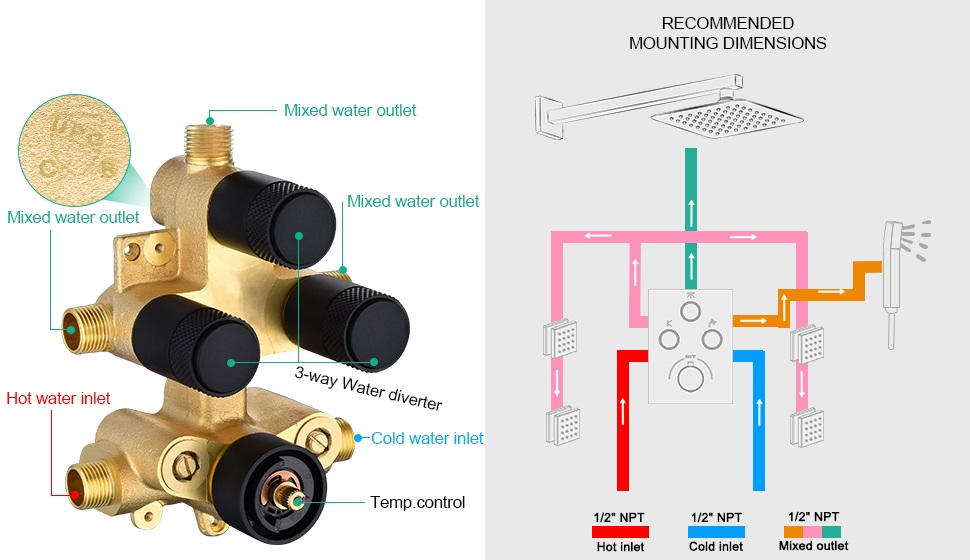
thermostatic shower mixers and shower valves regulate water flow and temperature, the primary distinction lies in their temperature control mechanism and functionality.

1. Thermostatic Shower Mixer
A
thermostatic shower mixer is an advanced temperature-regulating device that blends hot and cold water to maintain a precise, pre-set temperature. It features a built-in thermostat that constantly adjusts the water temperature to compensate for any fluctuations in pressure or supply.
Key Features:
- Constant Temperature Control – Once set, the mixer maintains the selected temperature, even if other water fixtures (like sinks or toilets) are in use.
- Anti-Scald Protection – Automatically shuts off hot water if the cold-water supply fails, preventing burns.
- Energy Efficient – Reduces water wastage by quickly reaching the desired temperature.
- Ideal for Multi-Function Showers – Works well with rainfall, body jets, handheld, and multi-outlet shower systems.
✅
Best for: High-end bathrooms, commercial restrooms, hospitals, hotels, and homes requiring precise temperature control and safety.
2. Shower Valve
A
shower valve is a general term for a device that controls water flow and mixing but doesn't necessarily include thermostatic regulation. It comes in two main types:
- Manual Shower Valve: Requires manual adjustment of hot and cold water, meaning temperature can fluctuate due to water pressure changes.
- Pressure-Balancing Valve: Adjusts water pressure to reduce sudden temperature changes but doesn't regulate precise temperature like a thermostatic mixer.
Key Features:
- Basic Water Control – Regulates hot and cold water flow but lacks advanced temperature stabilization.
- May Require Adjustment – Users might need to fine-tune the handles to achieve their desired temperature.
- Less Expensive – More budget-friendly but offers less precision than thermostatic mixers.
✅
Best for: Residential bathrooms with single showerheads, where temperature consistency isn't a primary concern.
Which One Should You Choose?
- Go for a Thermostatic Shower Mixer if you need precise temperature control, safety features, and protection from scalding, especially in high-traffic commercial settings or multi-function showers.
- Opt for a Basic Shower Valve if you are looking for a cost-effective option with manual control and don't require temperature stability.
For
premium performance, a thermostatic shower mixer is the superior choice, especially for modern shower systems that integrate rainfall heads, body jets, and hand showers.