Water Efficient Large Bathroom Sinks
Sustainability Guide for AEC Professionals
Water Efficiency in Large Bathroom Sinks | Low Flow & Sustainable Fixtures
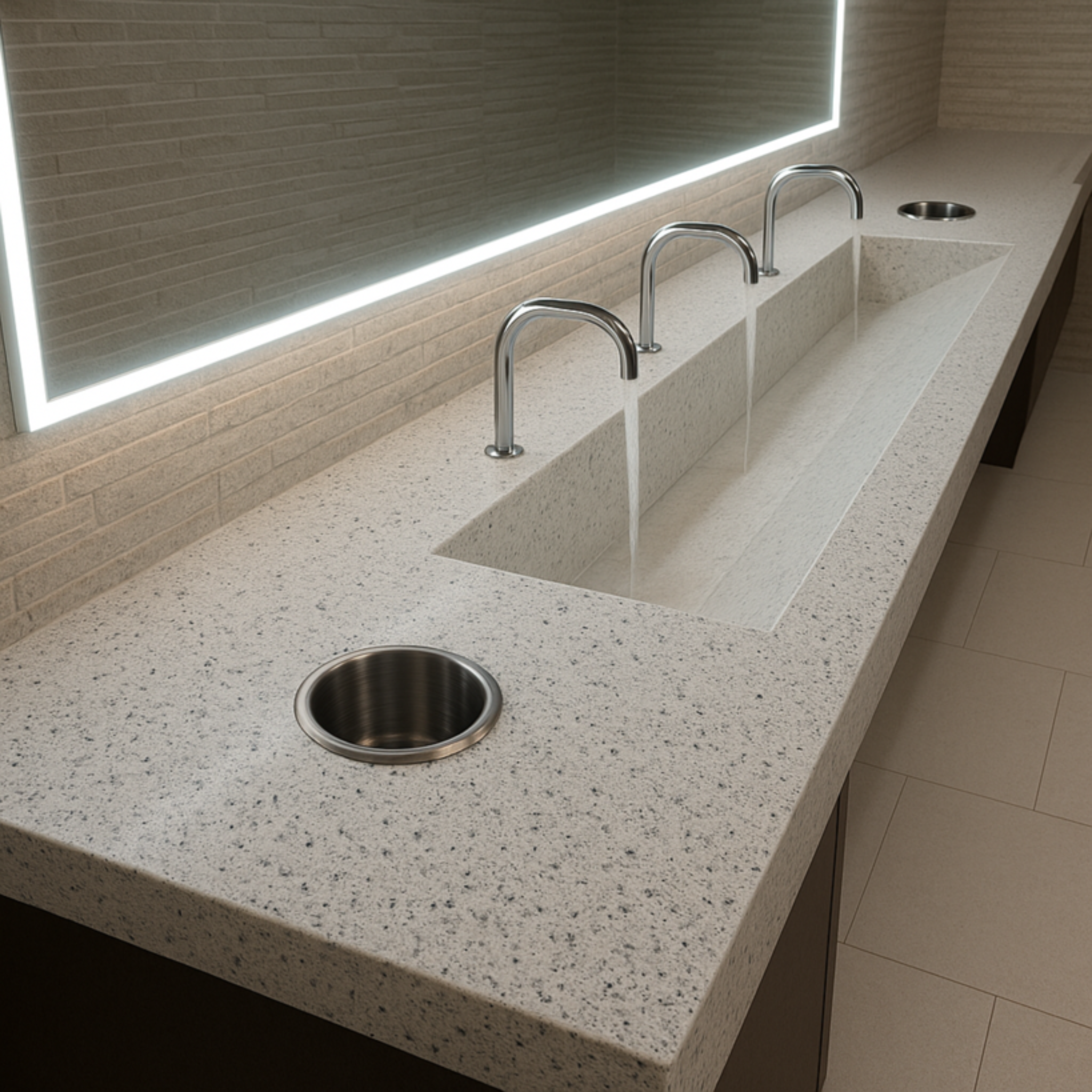
Water efficient large bathroom sinks are designed to reduce water consumption while maintaining performance and user comfort. By combining low-flow faucets, aerators, and sensor technology, modern bathroom systems can significantly reduce water waste in both residential and commercial environments. This guide provides essential information for architects and designers.
Architects, designers, and contractors must consider water efficiency when specifying fixtures for commercial projects, hotels, healthcare facilities, and sustainable buildings. This comprehensive guide covers low-flow technology, sensor faucets, LEED certification, and water-saving strategies. Browse our collection of water efficient large bathroom sinks designed for modern sustainable projects.
Reduce water usage by 30%+
Lower utility costs
LEED certification points
Touchless hygiene
Sustainable design
📚 Related Resources from FontanaShowers
💧
Why Water Efficiency Matters
💧
Reduce Water Consumption
Water-efficient fixtures can reduce bathroom water usage by 30% or more, contributing to global conservation efforts.
💰
Reduce Costs
Lower water consumption means reduced utility bills for building owners and operators, especially in high-traffic facilities.
🌱
Support Sustainability
Water-efficient design aligns with green building standards and demonstrates environmental responsibility.
How Do Water Efficient Bathroom Sinks Work?
Water-efficient sinks use technologies such as low-flow faucets, aerators, and automatic shut-off systems to reduce water usage without affecting performance. These features help control water flow and prevent unnecessary waste. Combined with proper installation guide practices and appropriate sink dimensions, these systems maximize efficiency.
1
Low-Flow Faucets
Limit water flow to 1.5 GPM or less while maintaining pressure
2
Aerators
Mix air with water to maintain steady flow with less water
3
Sensor Technology
Automatic shut-off prevents water waste from running faucets
Water Efficiency and LEED Certification
Water-efficient fixtures contribute to green building certifications such as LEED by reducing overall water consumption and supporting sustainable design strategies. Projects can earn credits in the Water Efficiency category by specifying low-flow faucets, sensor-operated fixtures, and WaterSense labeled products.
Our large bathroom sinks are designed to meet these requirements and help projects achieve certification goals.
LEED Water Efficiency Credits
- Indoor Water Use Reduction
- Building-Level Water Metering
- Outdoor Water Use Reduction
- Cooling Tower Water Use
Water Efficiency Technologies Comparison
| Technology |
Water Saving Benefit |
Best Application |
| Low-Flow Faucet |
Reduces water usage by up to 30% |
Residential and commercial bathrooms |
| Sensor Faucet |
Eliminates unnecessary water flow |
High-traffic commercial restrooms |
| Aerators |
Maintains pressure while reducing flow |
All faucet types |
| Automatic Shut-off |
Prevents water waste |
Public restrooms, schools |
| Flow Restrictors |
Limits maximum flow rate |
Commercial applications |
Low-Flow Faucet Technology
How Low-Flow Faucets Work
Low-flow faucets use aerators and flow restrictors to reduce water flow from standard 2.2 GPM (gallons per minute) to 1.5 GPM or less, while maintaining strong water pressure through air infusion. This technology can reduce water usage by up to 30% without compromising user experience. Low-flow faucets can reduce water consumption by 30% or more.
✓ Standard flow: 2.2 GPM → Low-flow: 1.5 GPM or less
Benefits
- Reduces water consumption by 30%+
- Maintains strong water pressure
- Easy to install on existing faucets
- Meets EPA WaterSense standards
- Qualifies for LEED points
Sensor-Operated Faucets
Touchless Technology
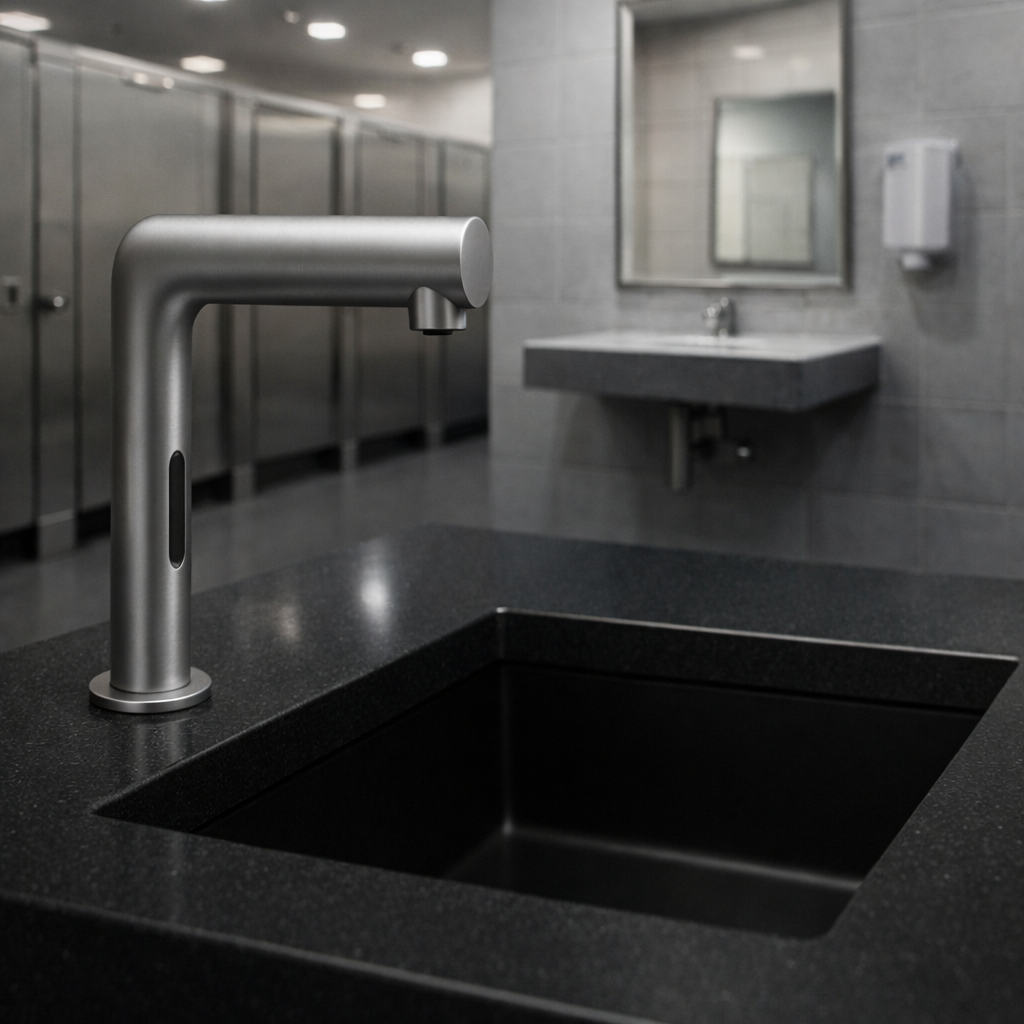
Sensor faucets use infrared technology to detect hand movement, activating water flow only when needed. This eliminates water waste from faucets left running and improves hygiene by reducing touch points in high-traffic commercial restrooms. Some systems can reduce consumption by up to 50% in certain applications.
✓ Reduces water waste by up to 70% compared to manual faucets
Key Advantages
- Eliminates unnecessary water flow
- Improves hygiene (no touch)
- ADA compliant operation
- Ideal for healthcare facilities
- Reduces maintenance costs
Water Saving Tips for Commercial Bathrooms
1️⃣ Choose the Right Fixtures
Select WaterSense labeled faucets and water efficient sinks that meet flow rate requirements for commercial applications. WaterSense labeled products require at least 20% less water than standard fixtures.
2️⃣ Regular Maintenance
Check for leaks and repair promptly. A single dripping faucet can waste thousands of gallons annually. Follow our installation guide for proper maintenance procedures.
3️⃣ Install Sensor Faucets
Touchless faucets prevent water waste from users leaving faucets running. Ideal for airports, schools, and public restrooms. Technologies such as aerators maintain pressure while reducing water flow.
4️⃣ Flow Control
Install flow restrictors and aerators to reduce water usage without affecting user experience. Verify appropriate sink dimensions for optimal performance.
❓ Water Efficiency FAQ
Frequently Asked Questions About Water Efficient Sinks
How do low-flow faucets save water?
They reduce water flow while maintaining pressure through aerators and flow restrictors, cutting usage by up to 30% without compromising performance. Browse our low-flow options.
Are sensor faucets more efficient?
Yes, sensor faucets prevent unnecessary water flow by activating only when hands are detected, reducing waste by up to 70% compared to manual faucets.
What is a water-efficient sink?
A water-efficient sink is paired with low-flow or automatic faucet systems that reduce water consumption while maintaining functionality. Our collection includes many efficient options.
Do water-saving fixtures affect performance?
No, modern low-flow and sensor faucets are engineered to maintain strong water pressure and user comfort while reducing consumption. Advanced aerators mix air with water for optimal performance.
Summary: Water Efficiency in Large Bathroom Sinks
Water efficiency is essential for modern sustainable bathroom design. Low-flow faucets, sensor technology, and water-efficient fixtures help reduce consumption, lower costs, and support green building certification.
Reduce water 30%+
Low-flow faucets
Sensor technology
LEED points
WaterSense labeled
|
|
Water efficiency has become a critical factor in modern bathroom design, especially in commercial and high-traffic environments where water usage is significantly higher. Large bathroom sinks, when paired with advanced water-saving technologies, can help reduce overall water consumption without compromising performance or user experience.
Low-flow faucets are one of the most effective ways to improve water efficiency. These fixtures limit water flow while maintaining adequate pressure, helping to reduce unnecessary water usage in daily operations. Many commercial bathrooms also incorporate aerators, which mix air with water to maintain a steady flow while using less water.
Standard flow:
2.2 GPM
Low-flow:
1.5 GPM or less
Water savings:
Up to 30%
🖐️
Sensor-Operated Faucets
Sensor-operated faucets are another key component of water-efficient bathroom systems. These touchless fixtures automatically control water flow, ensuring that water runs only when needed. This not only reduces waste but also improves hygiene by minimizing physical contact, making them ideal for hospitals, hotels, airports, and public restrooms.
- Reduces water waste by up to 70%
- Touchless operation improves hygiene
- Ideal for high-traffic facilities
🌱
Sustainable Bathroom Design
Sustainable bathroom design is often guided by green building standards such as LEED and WELL, which emphasize water conservation and environmental responsibility. Incorporating water-efficient sinks and fixtures can contribute to certification requirements while reducing long-term operational costs.
Green Building Benefits
- LEED certification points
- WELL building standards
- EPA WaterSense labeled
- Reduced operational costs
Long-Term Impact
Commercial buildings with water-efficient fixtures typically see 20-30% reduction in water bills, with payback periods of 1-3 years on investment.
📋 Proper Planning Factors
Proper planning also plays an important role in water efficiency. Factors such as faucet placement, sink depth, and user behavior all impact how efficiently water is used. By selecting the right combination of sink design and water-saving technology, architects and designers can create bathrooms that are both functional and environmentally responsible.
Key Planning Considerations
- Faucet placement and reach
- Sink depth and bowl size
- User traffic patterns
- Integration with building systems
📊 Water Savings Potential
| Technology |
Savings |
| Low-flow faucets |
30% |
| Sensor faucets |
70% |
| Aerators |
20-30% |
| Automatic shut-off |
40% |
To explore solutions designed for modern sustainability standards, browse our full range of large bathroom sinks built for commercial and residential applications.
FontanaShowers offers innovative bathroom fixtures that combine water efficiency, modern design, and long-term durability to meet the needs of today's architectural projects.
|
|
|