AEC-Grade · ADA · Water-Efficient Bathroom Faucet Collections: AEC-Grade Guide to Design, Specification & Performance
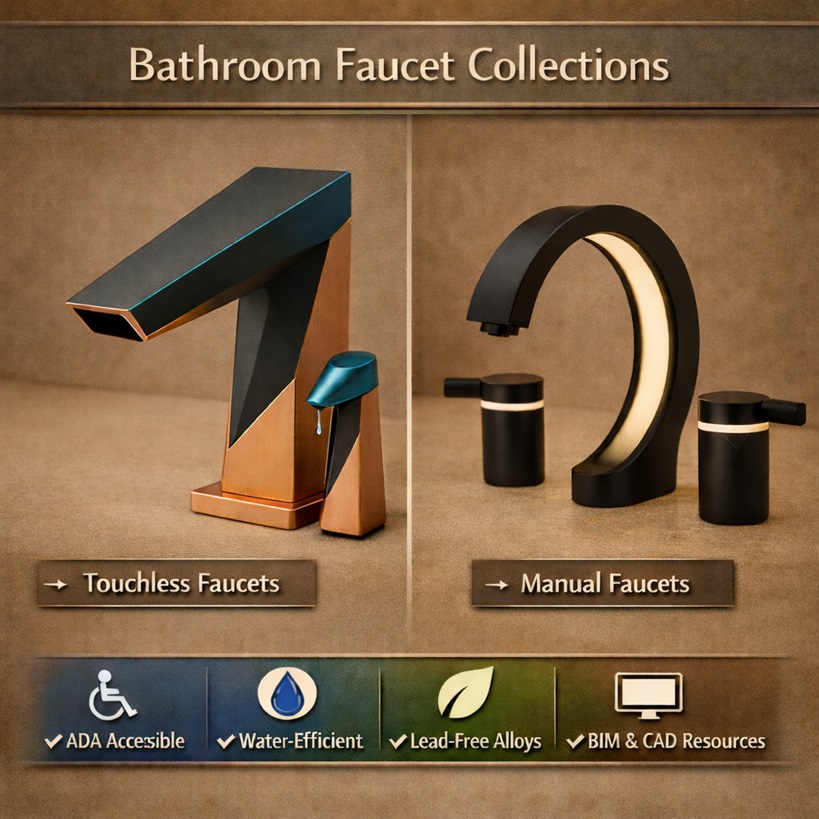
Bathroom faucets are functional components that influence water efficiency, accessibility compliance, durability, and the visual identity of a space. For hospitality, healthcare, corporate workplaces, and high-end residential projects, selecting the right faucet collection is a technical decision with long-term implications. FontanaShowers offers a comprehensive bathroom faucet collection designed to support AEC workflows, performance standards, and modern design expectations.
Water Efficiency · ADA / ICC A117.1 · BIM Coordination · Material & Finish Specs · Lifecycle Serviceability
|
|
FAQ Bathroom Faucet Collections
Strategic selection beyond aesthetics
Why do faucet collections matter in AEC specifications?
Faucet collections are not just finish choices. They influence water efficiency targets, accessibility compliance, maintenance workload, durability expectations, and how a space reads architecturally across multiple rooms and floors.
What should be defined first when selecting a faucet collection?
Start with use case and constraints: traffic volume, hygiene expectations, maintenance access, sink geometry, and plumbing rough-in coordination. These project realities determine whether a collection should prioritize serviceability, vandal resistance, touchless operation, or minimal form factors.
Which faucet categories are commonly specified in commercial projects?
Commonly specified categories include single-lever mixer faucets for simple operation, wall-mounted faucets for minimalist architecture and easier deck cleaning, and touchless sensor faucets for hygiene-critical or high-traffic environments.
Why are sensor faucets increasingly used in institutional buildings?
Touchless activation reduces cross-contamination and helps control run time, which supports water-efficiency goals and reduces unnecessary usage in busy restrooms.
Material and finish considerations
Which materials are typical for AEC-grade faucet collections?
Many AEC-grade collections use solid brass, stainless steel, or certified low-lead alloys to meet plumbing code expectations and to hold up under daily commercial use.
Which finishes are commonly specified and why?
Brushed nickel, polished chrome, matte black, and PVD-coated finishes are commonly specified because they support cohesive design language and can resist corrosion and abrasion in higher-use settings.
How should spec teams address material compliance in submittals?
Require clear documentation for base material, finish process, and any compliance notes needed for project approvals. This reduces substitution risk and helps standardize across a portfolio.
Water efficiency and performance metrics
What is the primary water-efficiency driver for faucet selection?
Many projects target reduced flow while maintaining user comfort and consistent pressure. The goal is reliable wash performance without excessive run time or waste.
How do sensor faucets help conservation in the field?
Sensor faucets reduce unnecessary run time by limiting flow to the actual handwashing event. In high-traffic restrooms, this can materially reduce water usage across many fixtures.
What performance data should be verified during specification?
Confirm published flow performance, operating requirements (power, batteries where applicable), and any notes that affect user experience such as shutoff behavior and stability under varying conditions.
Accessibility and user ergonomics
What accessibility standards influence faucet selection in public restrooms?
ADA and ICC A117.1 considerations commonly guide operability expectations, including one-hand use and practical reach and approach coordination with the basin.
Which features support users with limited dexterity?
Lever handles that operate with one hand and sensor activation for touchless models support a wider range of users, particularly where grip strength and fine motor control are limited.
Why must faucet choice be coordinated with sink geometry?
Spout reach, sink depth, and mounting method influence usable clearance and the effective wash zone. Coordinating these early helps prevent noncompliant clearances and awkward ergonomics.
BIM coordination, documentation, and lifecycle planning
Why does BIM content matter for faucet collections?
Accurate Revit families, CAD blocks, and spec sheets reduce coordination errors and help teams build reliable fixture schedules and MEP coordination sets.
What should be included in construction documentation?
Verified performance data, connection details, mounting notes, and any coordination constraints should be established early to avoid field modifications and approval delays.
Which lifecycle factors should facility teams care about?
Cartridge replaceability, finish durability, access to calibration where applicable, and availability of replacement components reduce downtime and long-term operating cost.
Explore Bathroom Faucet Collections & Design Solutions
Explore coordinated bathroom faucet collections developed for residential, hospitality, healthcare, commercial, and multifamily bathroom projects. Compare contemporary, wall-mounted, vessel sink, commercial, and finish-specific faucet solutions selected to support reliable water delivery, sink compatibility, visual coordination, accessibility planning, finish durability, and long-term serviceability.
Bathroom Faucet Collection Resources
Architecture, Plumbing Engineering, Facility Management & Water-Efficiency Authority References
-
American Institute of Architects
— professional architectural authority supporting coordinated bathroom design, material specification, accessible fixture planning, and long-term building performance.
-
American Society of Plumbing Engineers
— professional authority supporting faucet specification, plumbing-system design, sink and spout coordination, and reliable water delivery.
-
IFMA
— internationally recognized authority for facility operations, preventive maintenance, lifecycle management, and dependable fixture performance.
-
EPA WaterSense
— trusted U.S. water-efficiency program promoting efficient lavatory faucets, controlled water consumption, and sustainable plumbing performance.
|
|
|