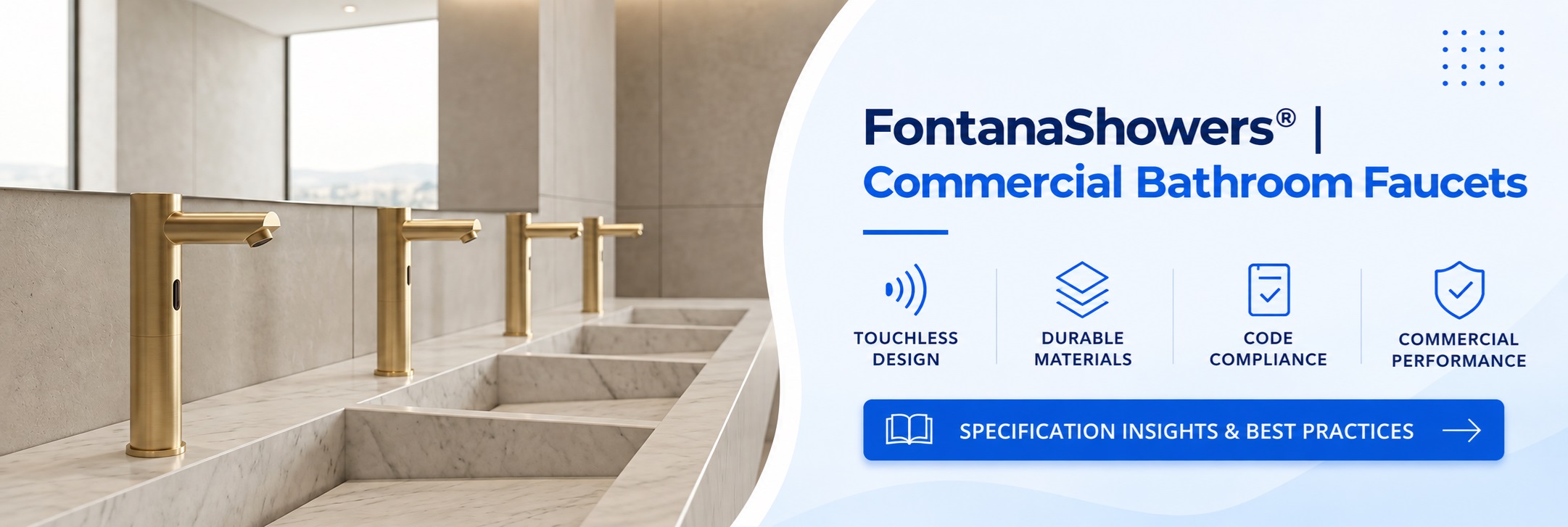
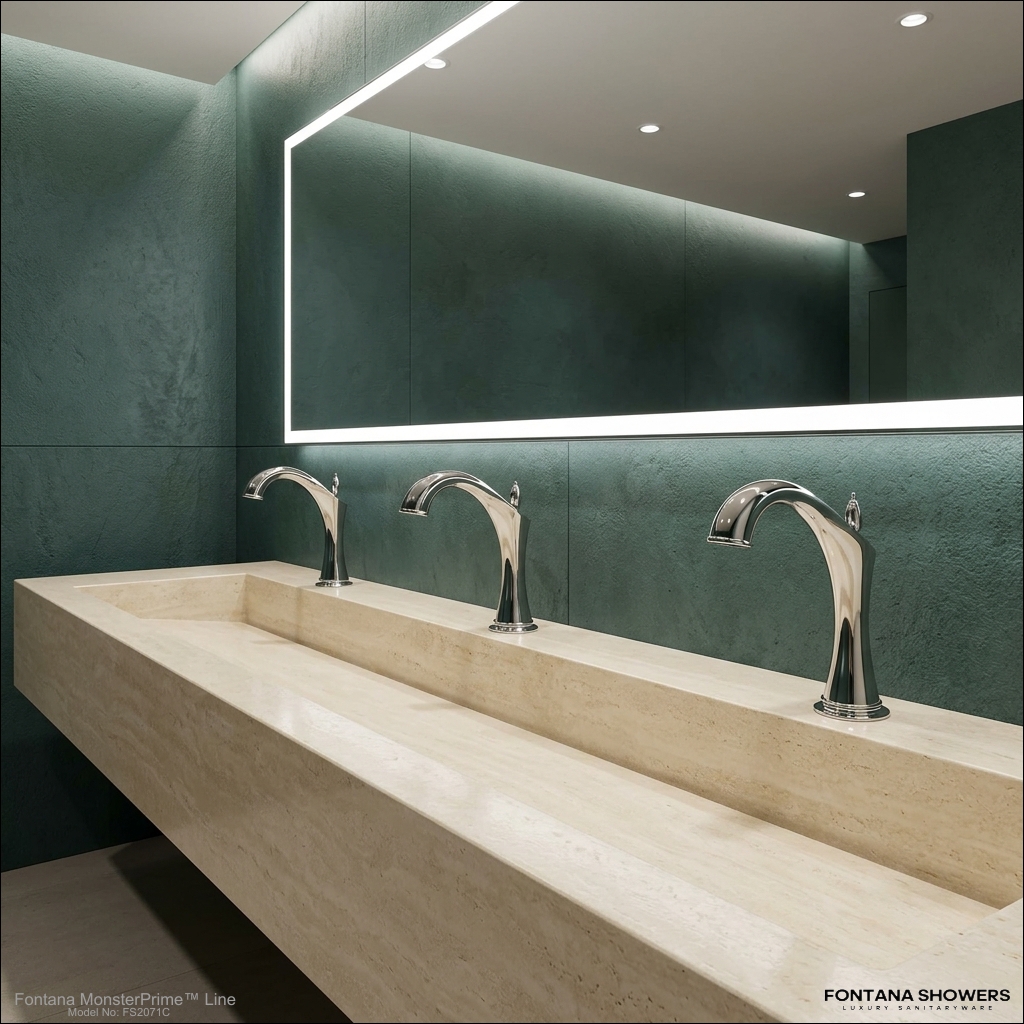
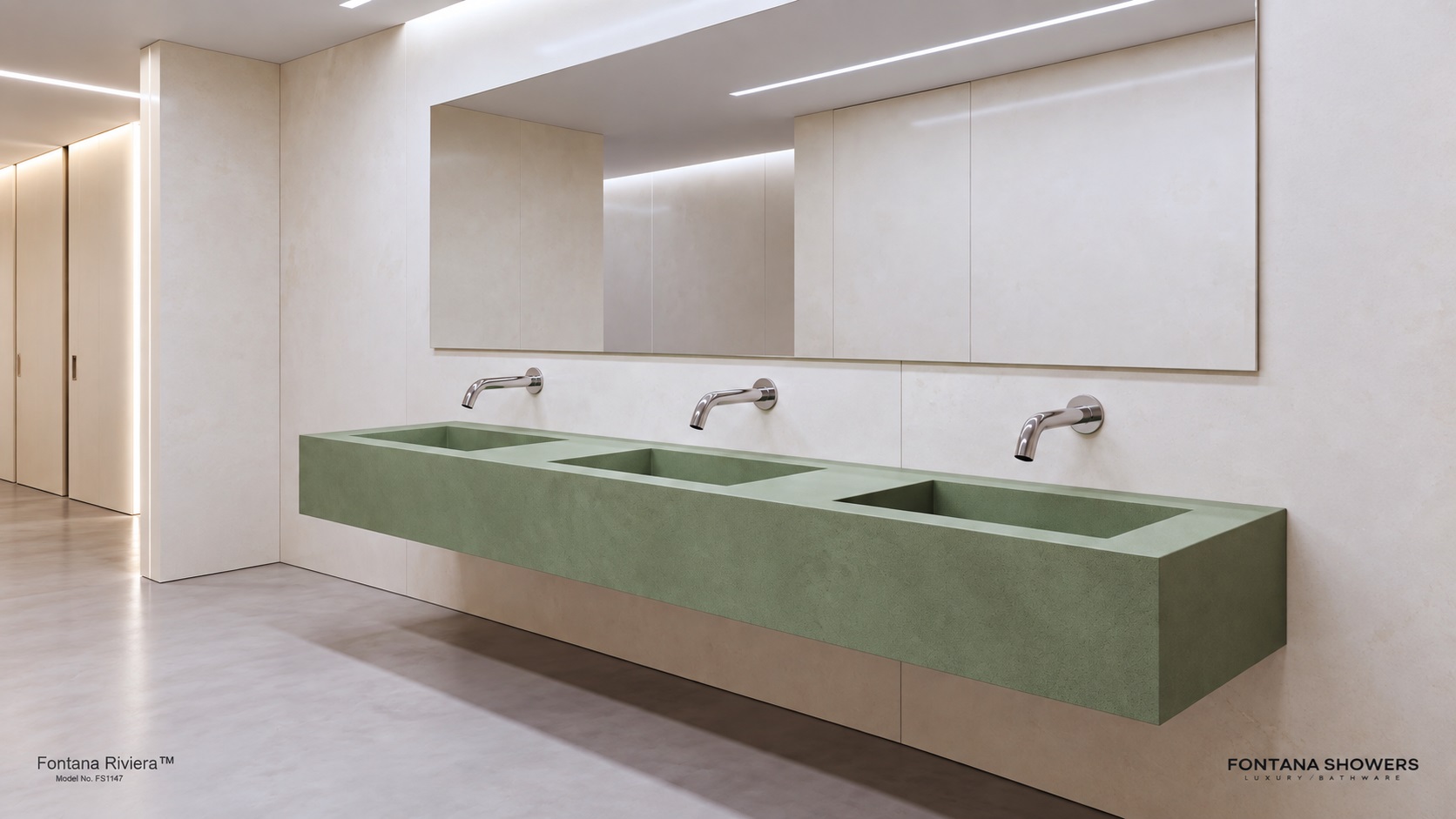
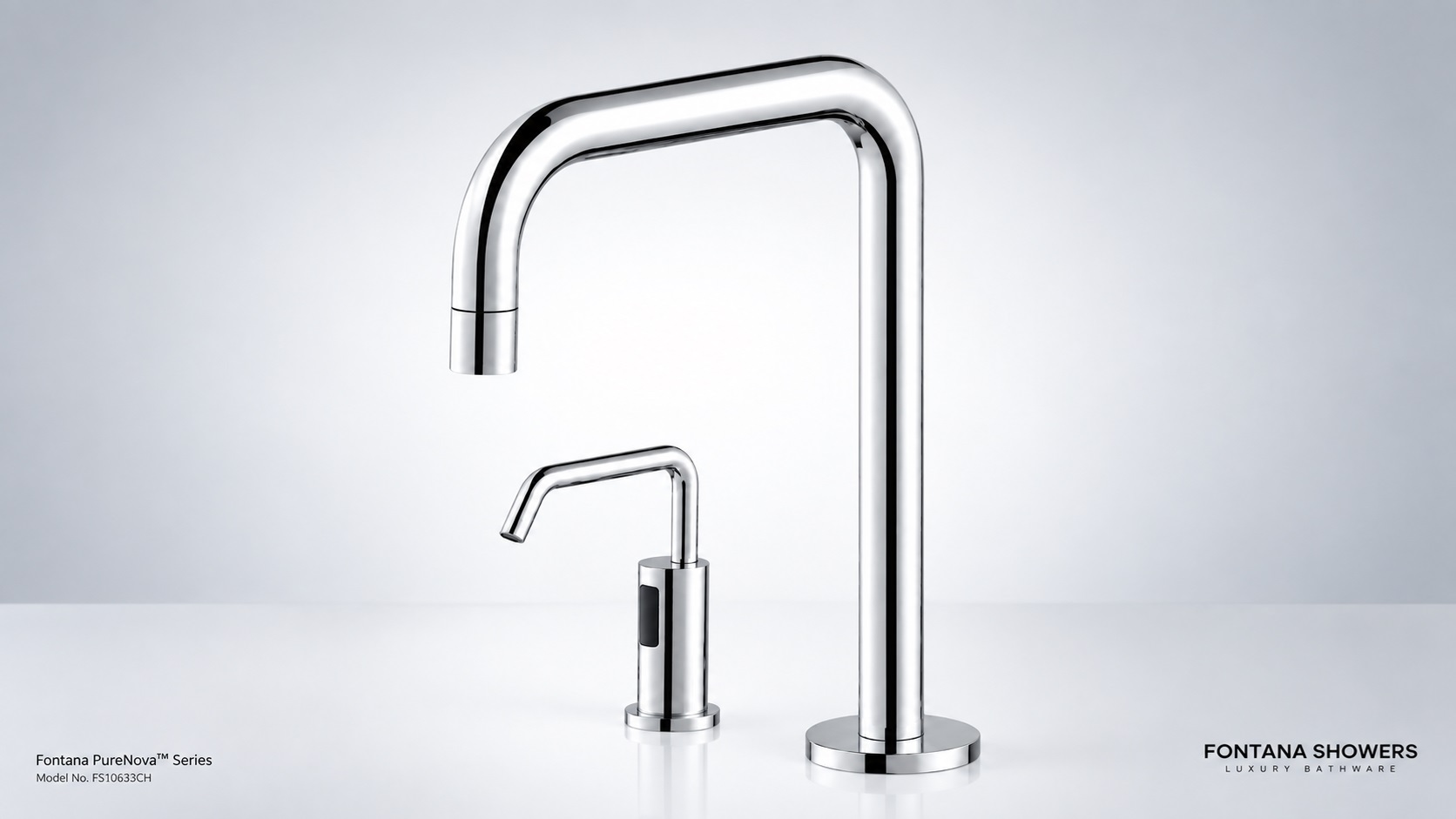
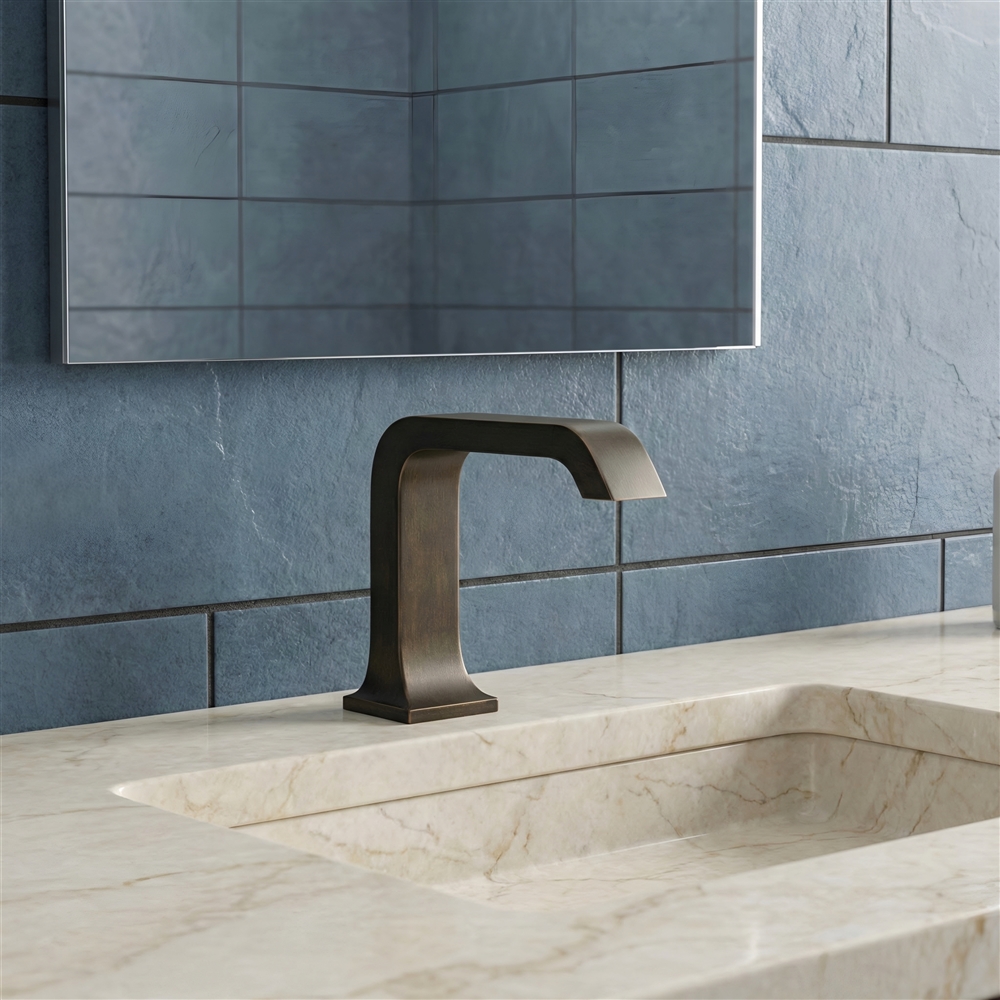
Commercial bathroom faucets are functional plumbing components
that influence water use, accessibility, hygiene, maintenance,
and long-term restroom performance. Their selection should be
coordinated with the lavatory, plumbing system, controls, and
service requirements rather than treated solely as a finish choice.
This guide outlines the primary considerations for specifying
manual, metering, electronic, and touchless faucets in commercial,
institutional, hospitality, healthcare, and public facilities.
High-use facilities require faucet bodies capable of withstanding
repeated operation, cleaning, and exposure to municipal water.
Material selection should account for mechanical strength,
corrosion resistance, and the expected service environment.
Cartridges and Internal Components
Cartridges, valves, seals, and other wear components should be
serviceable and supported by replacement-part availability.
Specifications should consider anticipated operating cycles and
compatibility with the project's water conditions.
Under-Sink Access
Supply stops, flexible connections, mixing devices, strainers,
solenoids, transformers, and control modules should remain accessible
after installation without requiring removal of the basin or
countertop.
Electronic Component Access
Touchless faucet installations should provide sufficient clearance
for battery replacement, control-box inspection, wiring, sensor
adjustment, and solenoid servicing throughout the fixture lifecycle.
Product Standardization
Using consistent power systems, cartridges, control modules, and
service parts across multiple restrooms can simplify inventory,
technician training, repairs, and preventive maintenance.
Lifecycle Considerations
Fixture evaluation should account for more than initial purchase
price. Replacement parts, service accessibility, maintenance
frequency, expected traffic, and downtime can all affect long-term
operating cost.
Water Efficiency and Sustainability
WaterSense Performance Framework
EPA WaterSense is frequently referenced when establishing efficiency
requirements for bathroom faucets. Where WaterSense criteria are part
of the project, product documentation should be reviewed to confirm
that the selected faucet meets the applicable requirements.
Confirm the specified faucet category.
Verify the rated flow performance.
Review applicable certification documentation.
Coordinate fixture requirements with project sustainability goals.
Low-Flow Fixture Coordination
Flow rate should be considered together with outlet height, spout
reach, basin dimensions, drain location, and flow pattern. A lower
nominal flow rate alone does not ensure satisfactory performance if
the faucet and basin are poorly coordinated.
Water-conservation objectives should also be reviewed alongside the
building's hot-water distribution and recirculation strategy.
Code, Accessibility, and Project Coordination
CALGreen Requirements
Projects subject to CALGreen should verify the adopted code edition,
applicable nonresidential provisions, and any local amendments before
faucet flow requirements are finalized.
Fixture Schedule Coordination
Flow rate, mounting configuration, control type, and other compliance
requirements should appear consistently across fixture schedules,
plumbing specifications, submittals, and procurement documents.
Hot-Water System Efficiency
Water-efficient faucets should be considered as part of the overall
domestic hot-water system. Distribution length, pipe sizing,
recirculation controls, and operating schedules can influence both
water and energy performance.
ADA Operability
Faucet controls at accessible lavatories should support required
operation without tight grasping, pinching, or twisting of the wrist
and should be located within applicable reach requirements.
Touchless Accessibility
Sensor-operated faucets can reduce the need for manual control
movement, but detection range, activation response, timeout, and
automatic shutoff behavior should be adjusted for the installed
condition.
Complete Lavatory Review
Accessibility should be evaluated using the complete assembly,
including counter depth, basin placement, faucet position, knee
clearance, controls, mirrors, and adjacent accessories.
Coordinate faucet controls and operable parts with the 2010 ADA
Standards for Accessible Design and applicable local accessibility
requirements.
Control Operation
Manual controls should support compliant operation. Sensor faucets
should be commissioned for suitable activation range, response
time, and automatic shutoff behavior.
Plumbing Supply Fittings
ASME A112.18.1 and CSA B125.1 are commonly referenced for plumbing
supply fittings, including many lavatory faucet configurations,
and provide a basis for evaluating mechanical performance.
Water Efficiency
Where required, verify faucet flow performance against applicable
WaterSense criteria, adopted plumbing codes, CALGreen provisions,
and project-specific sustainability requirements.
Temperature Strategy
Coordinate the faucet with the project's tempered-water approach,
including central mixing, point-of-use mixing, or another approved
temperature-control strategy.
Electronic Systems
Sensor faucet specifications should identify the power source,
controller location, solenoid access, battery replacement
requirements, wiring provisions, and expected behavior during
power interruption.
Specification Documentation
Referenced standards should be supported by explicit performance
criteria in fixture schedules and specifications rather than
relying only on general compliance statements.
System Integration Considerations
Temperature ControlElectronic ControlsPower SupplyService AccessCommissioning
Coordinate Faucets With the Complete Restroom System
Faucets should not normally be treated as the primary
temperature-regulating device in multi-user restrooms unless the selected
product is specifically designed for that function.
Central tempered-water systems, point-of-use mixing valves, or hybrid
strategies should be coordinated with project requirements for
temperature control and commissioning.
Electronic faucets introduce additional requirements for power supply,
sensor calibration, control modules, solenoid location, battery access,
and service clearances.
Final commissioning should verify activation, water flow, shutoff timing,
temperature, splash behavior, leaks, and accessibility to serviceable
components.
Confirm spout projection and outlet height against the actual basin
dimensions. Proper alignment helps direct the water stream into the
intended wash zone and reduces unnecessary splash.
Below-Deck Clearances
Verify adequate space for supply stops, hoses, strainers, mixing
equipment, electronic controls, solenoids, and power components while
maintaining required clearances around the lavatory.
Sensor Environment
For touchless faucets, review nearby mirrors, lighting, reflective
surfaces, basin finishes, and adjacent fixtures that could influence
sensor detection or create unintended activation.
Startup Verification
At commissioning, verify water pressure, flow, temperature, sensor
response, automatic shutoff, leakage, and the relationship between
the water stream and basin.
Maintenance Documentation
Facility teams should receive installation instructions, parts
lists, troubleshooting guidance, maintenance procedures, and
information for batteries, power supplies, sensors, and valves.
Long-Term Performance
A coordinated faucet installation supports reliable operation,
accessible use, efficient water delivery, simplified maintenance,
and more predictable restroom performance over the fixture lifecycle.
Select the faucet type according to building use, traffic level,
lavatory geometry, accessibility requirements, water-efficiency
targets, maintenance strategy, available power, and applicable
project standards.
Defining these requirements during design development helps
coordinate the faucet, basin, plumbing rough-in, electronic
components, and service access before construction.
Customer Field Review
FontanaOrion FlowSense Hammered Bronze Touchless Faucet Field Review
A specification-focused evaluation of same-series hammered bronze customer and contractor records
covering motion performance, installation experience, finish appeal, durability expectations,
service coordination, and suitability for design-driven commercial projects.
✔ Same-Series Hammered Bronze Records Referenced✔ Boutique Commercial Project Context✔ Motion and Finish Performance Focus2026 Review Records
Same-Series Field ReviewTouchless Motion FaucetModel FS6155HB
ApexNova Contractors — Nottingham, United Kingdom
Boutique Commercial Project Evaluation
Review record date: February 26, 2026 • Rating: 4 out of 5
Customer Review
The supplied review workbook contains no exact FS6155HB-coded entry, so the evaluation is based on
closely related same-series hammered bronze models used in boutique and upscale commercial work.
Read More
The four same-series records consistently describe durable construction, dependable operation,
straightforward installation, and a premium finish that clients notice immediately. The strongest
record, from ApexNova Contractors, emphasizes stable functionality and strong structural integrity in
a boutique commercial project.
Installation
Same-series reviews repeatedly describe efficient installation, clear guidance during setup, and clean
coordination with project teams delivering specialized, design-focused restroom packages.
Read More
IronGate Construction Services and NextGrid Builders both report that installation crews experienced
no unusual coordination problems. For specification teams, that makes commissioning documentation,
access clearance, power planning, and sink compatibility the next areas to confirm before final approval.
Sensor Response
Review language across the hammered bronze series points to reliable motion performance and smooth daily
use rather than frequent nuisance activation or inconsistent triggering.
Read More
While the available records are more contractor- and project-focused than instrumentation-heavy, they
still support the faucet family as a dependable touchless option for spaces where predictable activation,
controlled use, and reduced manual contact are important. Final commissioning should still verify basin
geometry, sensing distance, shutoff timing, and nearby reflective surfaces.
Finish and Design
The hammered bronze finish is a recurring strength in the evidence set, with multiple reviewers noting
its distinctive, premium look and strong fit for upscale or design-forward environments.
Read More
This finish positioning matters most in boutique hospitality, specialty retail, executive restrooms,
and other projects where fixture appearance carries design value in addition to functional touchless use.
Teams should still align cleaning chemistry and maintenance routines with the finish requirements.
Operating Function
Same-series records consistently describe smooth functionality, dependable operation, and adequate support
during delivery and post-purchase coordination.
Read More
The reviews do not present deep measured flow or calibration logs, but they do show a repeatable pattern:
commercial users received a faucet that functioned reliably, arrived on time, and integrated cleanly into
higher-end projects. That makes the family suitable for specs where operational confidence and appearance
both matter.
Recommended Use
The review evidence is strongest for boutique commercial interiors, upscale developments, specialty
restroom packages, and design-led projects that need a touchless faucet with a more distinctive finish.
Read More
Before specification, confirm sink pairing, user traffic level, access for servicing, cleaning protocol,
and whether the decorative finish will be a visible design feature. If the project has unusually high
traffic or more demanding compliance needs, document commissioning settings and maintenance expectations
as part of the handover package.
Review Summary
Primary RatingFour out of five in the selected same-series 2026 field record.
Operating ContextEvidence comes from boutique and upscale project records across four related hammered bronze models.
Reviewer Context
Evidence combines four same-series hammered bronze records from contractors and builders
working on boutique, upscale, and specialized commercial projects.
Commissioning Priorities
Confirm sensor behavior at the basin, installation access, finish-care requirements,
and service expectations before turnover.
Same-Series Evidence
Four hammered bronze series records support the page, covering contractor and builder use in boutique and upscale projects.
Design-Led Application Fit
The strongest pattern is premium finish appeal combined with reliable touchless operation for higher-end environments.
Product-Specific Positioning
The page is grounded in the FS6155HB product identity, link, and image supplied for this request.
Transparent Attribution
Customer and contractor observations are clearly separated from specification recommendations and product-page identity.
Find Out First
Get FontanaShowers emails of inspiration, new product releases, and more!