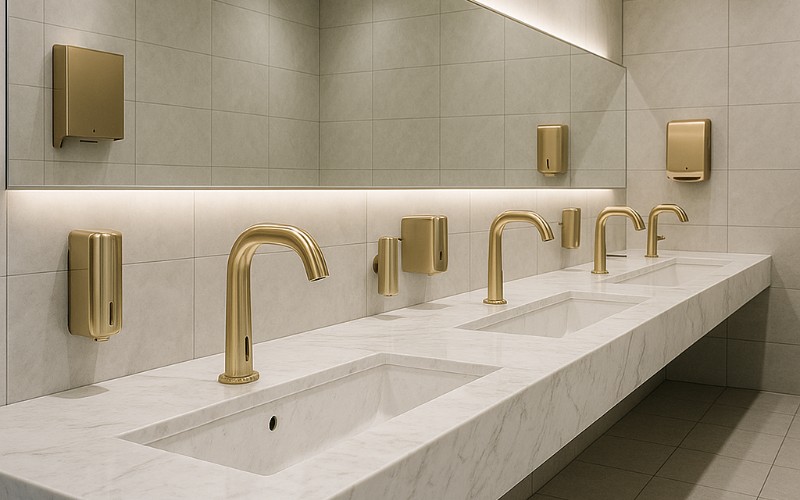
Bathroom fixtures in commercial and institutional projects are not isolated products but an end device in a hydraulic, thermal, electrical, and maintenance system that has to perform under high duty cycles, varied inlet conditions, and with strict code constraints. This paper outlines a specification-oriented approach for choosing and integrating showers, lavatory faucets, and associated controls with emphasis on durability, water performance, accessibility, sustainability, and maintainability.
Knowing the use profile first because it enables nearly all downstream decisions. Occupancy and peak throughput drive demand patterns. Variability of water supply dictates whether the fixtures are subjected to consistent pressure and temperature or changing frequently. Cleaning protocols impact finish selection and seal life. Maintenance staffing models dictate whether more complex electronics or proprietary components are acceptable.
A fixture that performs well in a low-use tenant restroom can fail early in a high-traffic environment if its materials, seals, and electronics are not matched to the duty cycle.
Submittal Requirements That Reduce Risk
For commercial fixtures require submittals of flow and pressure performance data as applicable, material declarations including alloy type and plating method, installation rough-in constraints and service access clearances, replacement parts lists with lead times, and warranty terms tied to professional installation and code compliant configuration. These documents are not administrative formalities. They form the basis of risk management over the service life of the building.
Relevant FontanaShowers reference categories for catalog context-not as a substitute for project specific engineering
In public and institutional restrooms, ADA constraints commonly drive the fixture mounting heights, clear floor space, reach ranges, and control operability. Current ADA Standards should be considered minimum, coordinated with local amendments and owner specific requirements.
WaterSense for Water Efficiency Without Performance Loss
Water efficiency should be validated against recognized performance criteria, not just advertised flow rates. EPA WaterSense provides product specifications and guidance that are helpful for performance-based selection and portfolio-level water reduction strategies.
EPA's WaterSense at Work guidance explains how faucet technologies interact with real world usage patterns and maintenance conditions for commercial and public use lavatories.
CALGreen is usually the code that governs projects for California and is increasingly being referenced outside of California as a benchmark for water efficiency and rigor of documentation.
ICC-hosted CALGreen text is often referred to during the plan review and construction administration process for code language that is enforceable and context of compliance.
The greater the durability, the greater the weight or, at least, a more rugged appearance. Durability is driven by corrosion behavior, galvanic compatibility, seal life, and finish stability under repeated cleaning cycles. For commercial washrooms, specifications should address corrosion resistance appropriate to chlorides and disinfectants, replaceable wear components such as aerators and solenoids, serviceable electronics for sensor fixtures, and tamper resistance where vandalism risk exists.
Time for Maintenance Access - Replacement
A fixture requiring demolition to the wall to service it undermines lifecycle performance goals. Specifications should ensure cartridge and solenoid access from the occupied side when possible, adequate access panels for valves of concealed mixers, access with standard tools, and labeling of isolation stops and power supplies.
Installation guidance documents are helpful at design coordination to explore typical rough-in and access assumptions.
Installing Rainfall Shower Panel System w/ Tub Spout Here is one of my recent installations. Note how we had to add a diverter for the rainfall shower panel system in order to control the tub spout and handheld rainfall showerhead.
Sustainability and Water Performance
Sustainability and Water Performance
Flow rate is not the only variable.
Low flow targets can create poor user experience if pressure, spray pattern, and outlet geometry are not coordinated with actual inlet conditions. Verify minimum operating pressure for lavatory faucets and shower systems to determine flow control performance under pressure fluctuation and for temperature stability at low flow and partial open conditions.
Documents from EPA WaterSense make it clear that performance testing is intrinsically connected with water efficiency claims; that becomes a critical thing when owners demand conservation without increased maintenance and complaints.
Hot Water System Impacts Reduced flow fixtures can increase time to reach setpoint at the point of use, particularly in buildings with long distribution runs.
Selection of fixtures should be coordinated with recirculation strategies, pipe insulation requirements, and mixing valve setpoints in managing both energy use and scald risk.
System Integration in Commercial and Institutional Buildings
Sensor faucets, coordination of power, and controls
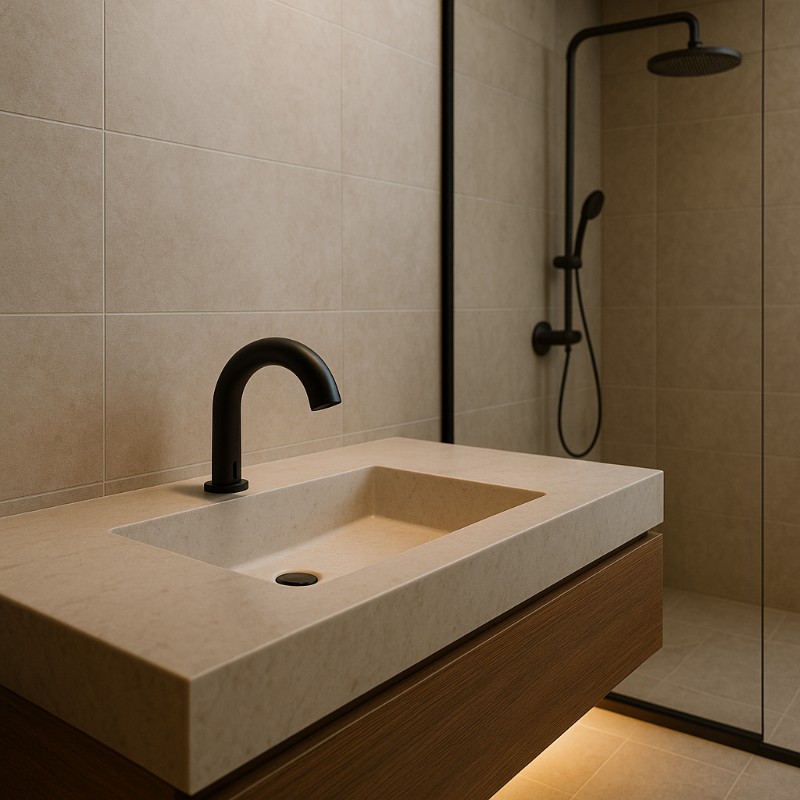
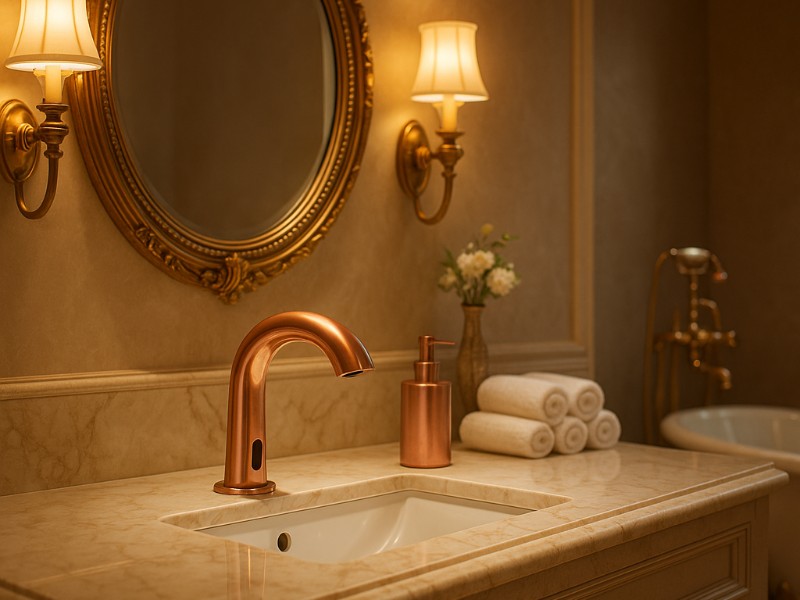
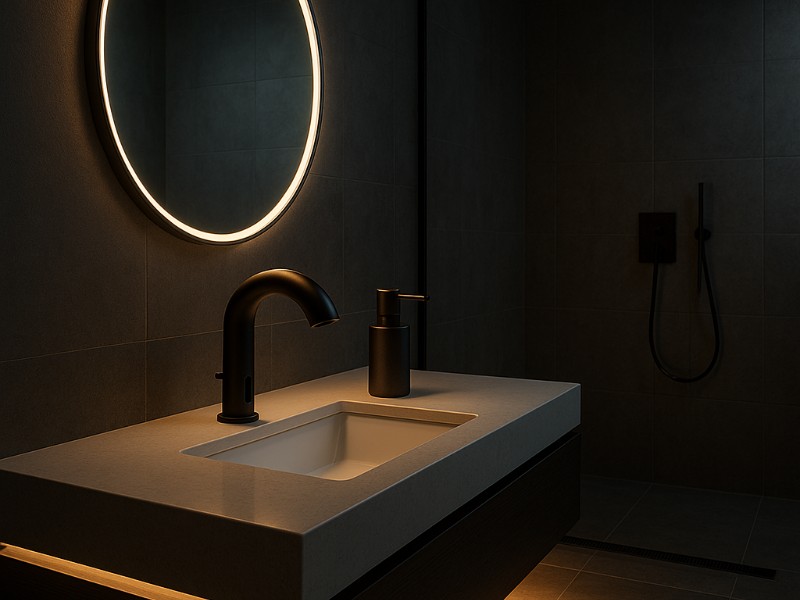
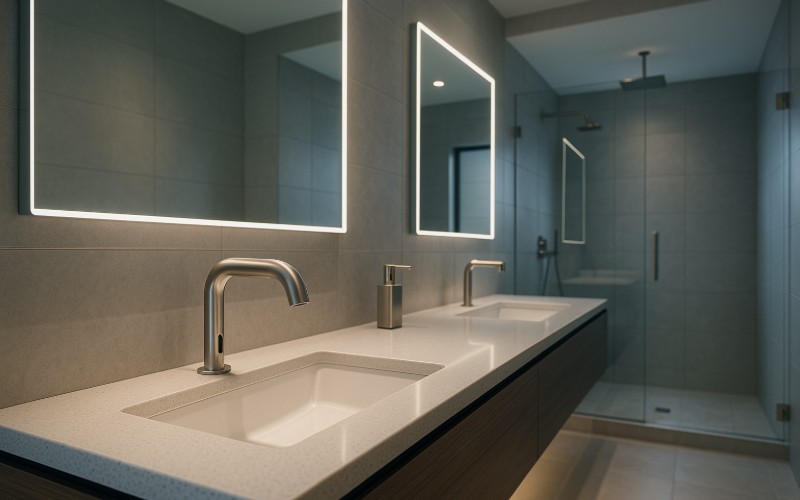
Touchless faucets can reduce contact points and control runtime but introduce electrical coordination and service planning requirements. Specifications should define power strategy, access requirements for calibration and service, default detection ranges, and commissioning procedures.
Relevant commercial and sensor faucet categories for the system coordination context:
For dormitories, athletics, hospitality, and healthcare, temperature stability is also a safety/liability issue. Specify the explicit control approach for either pressure balancing, thermostatic mixing, or master mixing for multi-outlet systems consistent with the applicable governing codes and risk tolerance.
Groupings that are usually referred to when performing fixture scheduling for shower systems include:
A schedule for Division 22 fixtures should include flow rate targets and testing basis, ADA operability requirements, applicable ASME and valve safety standards, material and finish expectations, notes on service access, power coordination for sensor fixtures, and closeout documentation including O&M manuals and spare parts.
Commissioning and Turnover
Issues with bathroom fixtures frequently arise after occupancy as actual use patterns stress the system. Commissioning should verify dynamic pressure under simultaneous demand, temperature stability at showers and low flow lavatories, sensor faucet behavior, and accessible clearances after partitions and accessories are installed.
Bathroom fixtures in commercial and institutional projects are not isolated products but an end device in a hydraulic, thermal, electrical, and maintenance system that has to perform under high duty cycles, varied inlet conditions, and with strict code constraints.
Performance Framework for AEC Specifications
This paper outlines a specification-oriented approach for choosing and integrating showers, lavatory faucets, and associated controls with emphasis on durability, water performance, accessibility, sustainability, and maintainability.
Codes and Standards That Drive Fixture Decisions
ADA and CALGreen establish the regulatory framework, WaterSense informs performance based efficiency, and ASME standards anchor safety and reliability expectations across commercial and institutional environments.
Durability for High-Use Environments
Durability is driven by corrosion behavior, galvanic compatibility, seal life, and finish stability under repeated cleaning cycles.
System Integration in Commercial and Institutional Buildings
Touchless faucets can reduce contact points and control runtime but introduce electrical coordination and service planning requirements.
Commissioning and Turnover
Commissioning should verify dynamic pressure under simultaneous demand, temperature stability at showers and low flow lavatories, sensor faucet behavior, and accessible clearances after partitions and accessories are installed.
Closing Remarks
An AEC grade bathroom fixture specification is a systems document. Successful outcomes align fixture selection with real inlet conditions, hot water design, accessibility requirements, sustainability targets, and maintenance capacity.
Relevant FontanaShowers reference categories for catalog context-not as a substitute for project specific engineering
An AEC grade bathroom fixture specification is a systems document. Successful outcomes align fixture selection with real inlet conditions, hot water design, accessibility requirements, sustainability targets, and maintenance capacity.
ADA and CALGreen establish the regulatory framework, WaterSense informs performance based efficiency, and ASME standards anchor safety and reliability expectations across commercial and institutional environments.
System Integration in Commercial and Institutional Buildings
Sensor faucets, coordination of power, and controls
Touchless faucets can reduce contact points and control runtime but introduce electrical coordination and service planning requirements. Specifications should define power strategy, access requirements for calibration and service, default detection ranges, and commissioning procedures.
Shower Systems and Temperature Control
For dormitories, athletics, hospitality, and healthcare, temperature stability is also a safety/liability issue. Specify the explicit control approach for either pressure balancing, thermostatic mixing, or master mixing for multi-outlet systems consistent with the applicable governing codes and risk tolerance.
Commissioning and Turnover
Issues with bathroom fixtures frequently arise after occupancy as actual use patterns stress the system. Commissioning should verify dynamic pressure under simultaneous demand, temperature stability at showers and low flow lavatories, sensor faucet behavior, and accessible clearances after partitions and accessories are installed.
Architects and Engineers Specification Checklist
A schedule for Division 22 fixtures should include flow rate targets and testing basis, ADA operability requirements, applicable ASME and valve safety standards, material and finish expectations, notes on service access, power coordination for sensor fixtures, and closeout documentation including O&M manuals and spare parts.
Durability for High-Use Environments
For commercial washrooms, specifications should address corrosion resistance appropriate to chlorides and disinfectants, replaceable wear components such as aerators and solenoids, serviceable electronics for sensor fixtures, and tamper resistance where vandalism risk exists.
Time for Maintenance Access - Replacement
Specifications should ensure cartridge and solenoid access from the occupied side when possible, adequate access panels for valves of concealed mixers, access with standard tools, and labeling of isolation stops and power supplies.
Request the Architect Kit
Included
Cut Sheet (PDF) & Rough-In / Mounting Guides
Editable Submittal & Fixture Schedule Templates
BIM / CAD Families for Key Fixture Types
Accessibility, Water-Efficiency, and Standards Notes
An AEC grade bathroom fixture specification is a systems document. Successful outcomes align fixture selection with real inlet conditions, hot water design, accessibility requirements, sustainability targets, and maintenance capacity. ADA and CALGreen establish the regulatory framework, WaterSense informs performance based efficiency, and ASME standards anchor safety and reliability expectations across commercial and institutional environments.
Explore Bathroom Fixture Categories
Explore bathroom fixtures developed for residential, hospitality, commercial, and institutional projects. Compare coordinated faucets, shower systems, touchless fixtures, flush systems, and specification-ready washroom solutions selected for durability, accessibility, water efficiency, and long-term performance.
ADA Design Standards
— federal accessibility standards covering restroom fixture reach ranges, clearances, mounting requirements, and accessible user operation.
EPA WaterSense Product Specifications
— trusted U.S. guidance supporting water-efficient plumbing fixture selection without compromising expected performance.
ASME Plumbing Supply Fittings
— recognized technical reference for plumbing fittings, fixture performance, safety, materials, and commercial installation requirements.
CALGreen
— California green building standards supporting water conservation, sustainable fixture selection, and documented building performance.
Find Out First
Get FontanaShowers emails of inspiration, new product releases, and more!