Frequently Asked Questions Urinals & Auto Toilet Flush
Toilet Rooms & Commercial Restroom Layout — Q&A
How should AEC teams coordinate sensor urinal and toilet flush valves within toilet room layouts to reduce service risk?
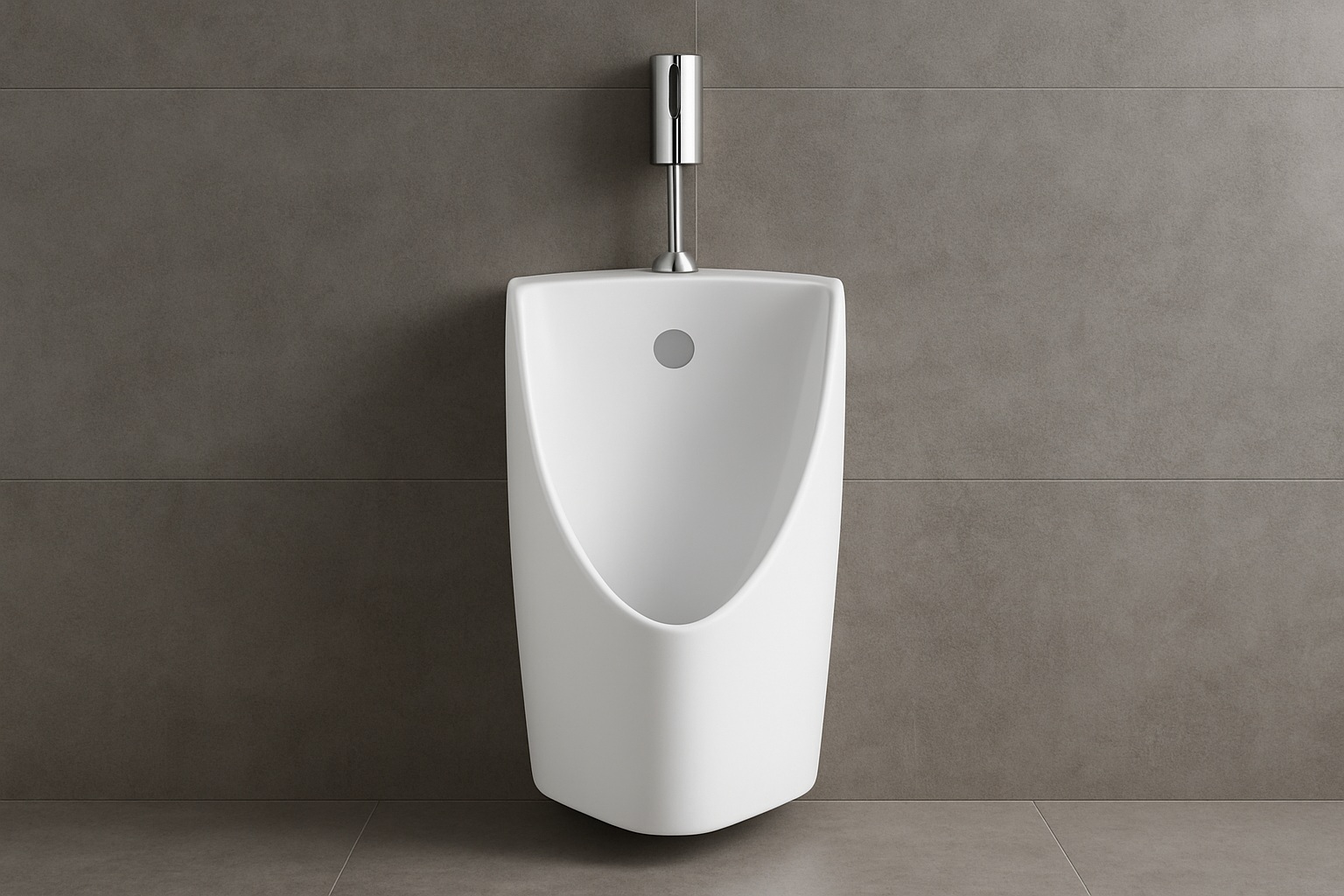
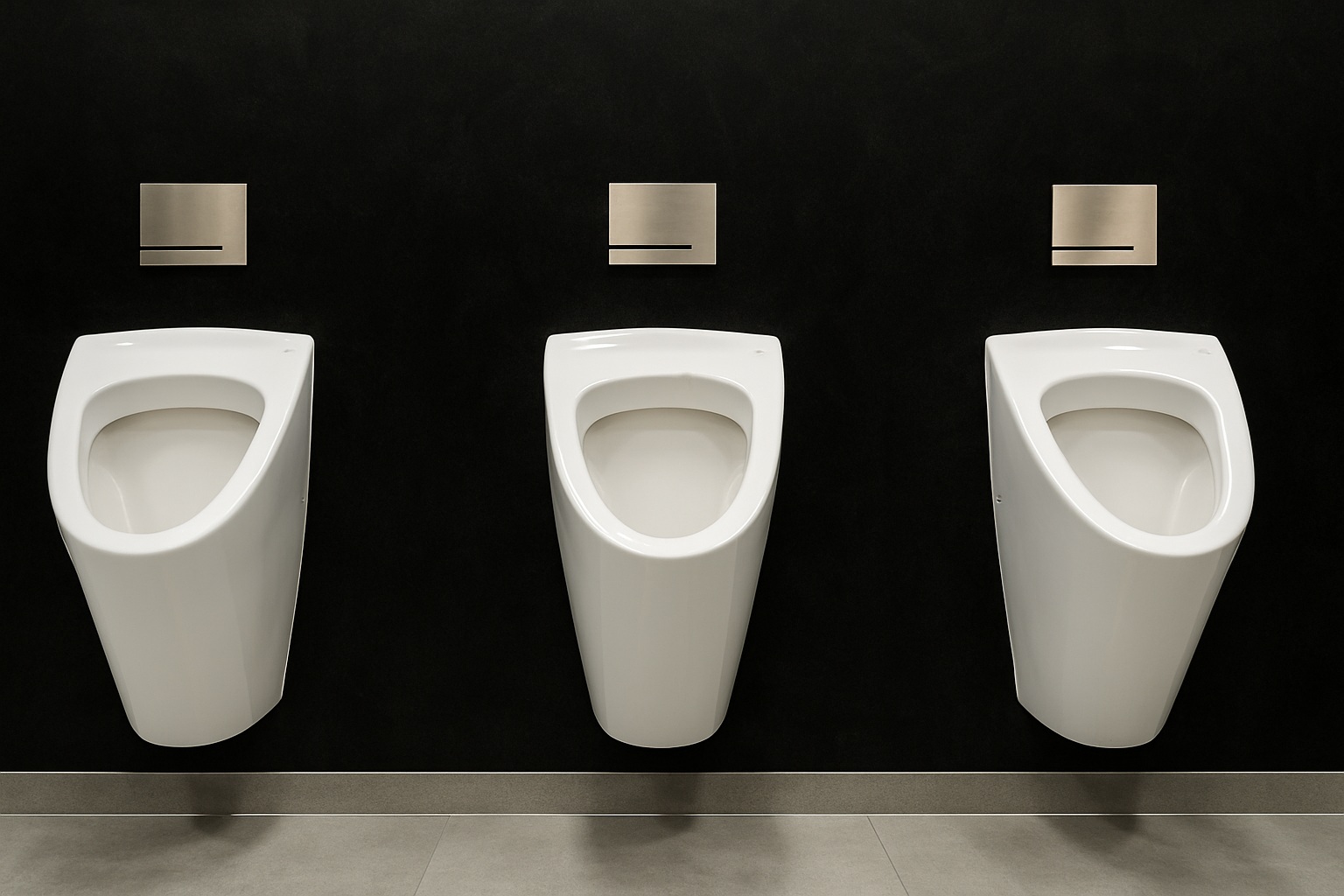
Coordinate flush valve locations with partition layouts, chase depths, and access clearances so solenoids, diaphragms, and filters can be serviced without removing walls. Define carrier locations, rough-in heights, and sensor sightlines early. For recessed or high-security installs, document access panel strategy and ensure maintenance staff can reach the control stop, vacuum breaker, and electronics compartment without obstructing ADA clearances.
What are the critical dimensional controls for urinal rough-ins when specifying sensor flush valves in commercial work?
Key controls include centerline to finished floor, fixture outlet and spud alignment, vacuum breaker tube length, and flushometer body projection from the wall. On retrofit projects, verify existing rough-ins before committing to a valve family. In new work, coordinate wall build-up thickness and chase construction so the flush valve does not clash with partition brackets or concealed carrier hardware.
How should spec writers address water supply conditions that impact flushometer stability and noise?
Flushometers are sensitive to dynamic pressure and pressure transients. Specify operating pressure range at the valve under flow, require properly sized branch piping, and define whether pressure regulating devices are needed. Address water hammer control by requiring secure piping supports and, where appropriate, engineered arrestors. Document commissioning steps that include dynamic pressure verification and leak checks at the control stop and vacuum breaker connections.
How do FontanaShowers touchless flush valve selections fit into commercial restroom modernization programs?
FontanaShowers sensor-driven flush solutions can be specified as a hygiene and operational upgrade where facilities want reduced touch points and standardized maintenance. For procurement clarity, list the intended fixture type (urinal or toilet), power strategy (battery, hardwired, or hybrid where offered), and required interface features (manual override, range adjust, delay, courtesy flush behavior) so submittals match the owner’s standard.
Toilets (Commercial) — Q&A
Flushometer toilets vs tank-type toilets: what are the engineering implications for auto-flush retrofits?
Flushometer toilets use supply pressure and a valve assembly to deliver a controlled volume quickly, which aligns well with sensor valve retrofits. Tank-type toilets rely on a gravity tank and typically use a different actuation method. For auto-flush, confirm the fixture interface and whether the actuation is flushometer based. In a flushometer retrofit, verify spud size, valve connection standards, and the available wall space for sensor housing.
How do low-flow and high-efficiency requirements change flush valve selection and tuning?
Reduced flush volumes require matching the valve’s metering and diaphragm or piston characteristics to the fixture’s trapway design. Overpowered flush can cause splash and wasted water; underpowered flush can cause carry issues and repeat flushes. Specify the intended flush volume and require that the flush valve is matched to the fixture rating. Include commissioning requirements for range, delay, and flush volume configuration if the valve supports field tuning.
What failure modes should be anticipated in commercial auto-flush toilet valves and how can specs reduce them?
Common issues include diaphragm wear, debris clogging bypass orifices, solenoid sticking due to scale, battery depletion, and improper sensor range settings that cause phantom flushes. Specs can reduce problems by requiring upstream strainers where recommended, line flushing before installation, accessible control stops, standardized battery types, and documented sensor setup procedures. Include spare parts strategy for diaphragms and solenoids to reduce downtime.
How should FontanaShowers auto-flush valve submittals be reviewed for toilets?
Require valve and sensor cut sheets, operating pressure range, flush volume compatibility, power requirements, wiring routing if hardwired, and maintenance instructions. Confirm that the approved SKU aligns with the project’s fixture schedule and that accessories like vacuum breakers and control stops are included or separately specified.
Urinals & Auto-Flush Systems — Q&A
What are the key design choices between flushing urinals and waterless urinals from an engineering and maintenance standpoint?
Flushing urinals rely on a flush valve and water to transport waste, manage odor, and rinse surfaces. Waterless urinals eliminate flush water but require cartridge or trap seal maintenance and careful cleaning protocols. For AEC teams, the decision should include water savings, maintenance labor, chemical compatibility, and how the owner will manage cartridge replacement and odor control. If waterless fixtures are used, document acceptable cleaners and maintenance intervals in closeout manuals.
How does an auto-flush urinal valve determine a valid use event and what parameters should be specified?
Most sensor flush valves detect presence and then flush on departure with a programmable delay. Critical parameters include sensing range, dwell time threshold, flush delay, courtesy flush behavior, and lockout periods that prevent multiple flushes during continuous presence. In specifications, define acceptable phantom flush tolerance, required adjustment method, and whether the sensor window must be vandal-resistant or recessed.
What are the engineering pros and cons of dual-sensor logic for urinal auto-flush applications?
Dual-sensor approaches can reduce false triggers by validating presence and departure more reliably, especially in high-traffic restrooms with complex sightlines. The tradeoff is higher complexity and potentially higher power draw. If specifying dual-sensor logic, require clear documentation of how the sensors cooperate, how they are calibrated, and how the valve behaves during sensor fault conditions.
How should AEC teams document power strategies for FontanaShowers urinal auto-flush valves?
Document whether the valve is battery powered, hardwired, or hybrid where available, and specify access requirements for battery replacement. For hardwired applications, define transformer location, low voltage routing, and separation from line voltage. Include requirements for commissioning indicators, low battery alerts, and failsafe behavior during power interruption.
What installation details most often cause performance issues in sensor urinal flush valves?
Frequent issues include debris left in supply lines, incorrect vacuum breaker orientation, misaligned spud coupling, and sensor range set too long causing corridor or stall triggers. Require line flushing, installation per manufacturer torque guidance, and post-install range tuning under actual lighting and partition conditions. Include acceptance testing that verifies a valid flush cycle and confirms no phantom flush in typical traffic patterns.
Auto-Flush Toilet Valves — Q&A
What is the functional architecture of a sensor flushometer valve and which parts should be considered wear items?
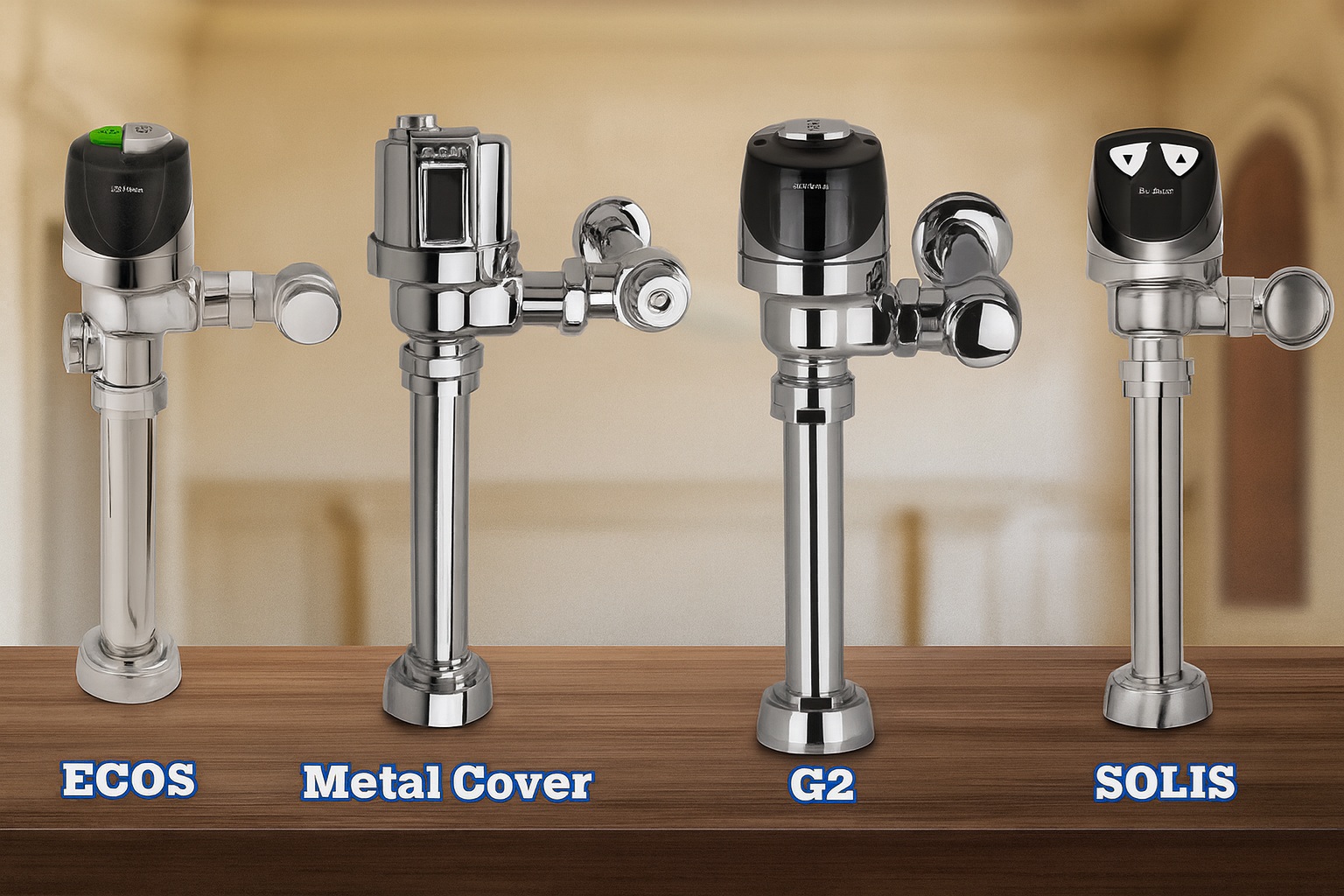
A sensor flushometer typically includes a valve body, control stop, diaphragm or piston assembly that meters the flush, solenoid operator, sensor module, and a vacuum breaker. Wear items commonly include diaphragms, seals, and occasionally solenoids in hard water environments. Specify that the maintenance team receives a parts schedule and that service access is maintained for the internal kit and electronics.
Top-mount vs side-mount sensor modules: what drives the choice in commercial toilet applications?
The choice is often driven by existing valve geometry, obstruction risk, and access. Top-mount modules may be more exposed to damage in tight stalls, while side-mount can conflict with partitions or grab bars depending on layout. For new builds, coordinate the sensor module position with partitions and ADA clearances. For retrofits, survey existing conditions and select the configuration that minimizes rework.
How should specs address courtesy flush, delay settings, and lockout periods to balance hygiene and water use?
Courtesy flush can reduce odor and improve bowl cleanliness but increases water use. Delay and lockout reduce nuisance flushes and protect batteries. For AEC documents, define default settings aligned with the owner’s operational goals and require that settings are documented at turnover. For education and airport projects, lockout periods often reduce repeated flush behavior caused by traffic movement.
How should FontanaShowers auto-flush toilet valves be described in basis of design language?
Describe them as touchless flushometer retrofits or new-install valves with adjustable sensing and flush parameters, documented power strategy, and serviceable internal kits. Require that the approved SKU matches the fixture’s flush volume rating and include closeout documentation for settings, battery type, and recommended preventive maintenance.
System Water Quality & Maintenance — Q&A
How do debris and water quality issues affect auto-flush valve reliability and what mitigation belongs in design documents?
Flushometers use small metering ports that are sensitive to grit and scale. Debris can cause running valves, weak flushes, or stuck solenoids. Mitigation includes line flushing procedures, upstream strainers where recommended, and periodic maintenance intervals in O and M manuals. For hard water areas, include descaling guidance and ensure the owner’s cleaning chemistry does not degrade seals.
What should be included in a preventive maintenance plan for FontanaShowers sensor flush valves in high-traffic facilities?
Include scheduled inspection for leaks, sensor window cleaning, battery replacement schedule, diaphragm kit replacement intervals based on usage, and functional testing for valid detection and flush cycle. Define a troubleshooting flow for phantom flush, no flush, weak flush, and running conditions. Require spare parts stock for diaphragm kits and batteries so restrooms can be returned to service quickly.
How can owners reduce phantom flush events in sensor-driven toilet rooms?
Use correct range settings, aim sensors away from reflective surfaces, coordinate stall geometry so passersby are out of the sensor cone, and define lockout logic that prevents repeated flush triggers. In busy corridors, consider recessed sensor placement or narrower detection zones. Require commissioning to include a traffic simulation test, not just a single user test.
Hygiene, Safety & ADA Compliance — Q&A
How do touchless flush valves improve hygiene and what should be stated to keep claims technical?
Touchless flush valves reduce direct hand contact with flush surfaces, which can reduce cross-contact pathways. Keep claims grounded by focusing on contact reduction and operational consistency, not medical outcomes. In specs, define that manual override remains available for servicing, and require that sensor windows and housings are compatible with the facility’s cleaning protocols.
What ADA and accessibility coordination items intersect with flush valves and urinals?
Coordination includes clear floor space, fixture mounting heights, grab bar placement, and ensuring that valve projections do not create hazards or conflicts. If manual override buttons exist, confirm operability and reach range where required. In multi-stall rooms, coordinate layouts so flush valve placement does not reduce required clearances at accessible fixtures.
What safety and operational behaviors should be documented for sensor valves during power loss or low battery states?
Define expected behavior such as disabling auto-flush while preserving manual flush capability, or providing a low battery indicator before failure. Include battery replacement access requirements and specify that settings persist through power cycles where the product supports it. For hardwired valves, define transformer accessibility and fault isolation so a failed power supply does not disable multiple fixtures unexpectedly.
Commercial Restroom Trends & Advanced Features — Q&A
What does a “fully touchless restroom” include when the scope is limited to urinals and toilet flushing?
Within the flushing scope, it includes sensor-driven urinal flush valves, sensor-driven toilet flush valves, and a commissioning plan that tunes range and delay settings to the built environment. For performance outcomes, define acceptance tests that verify no phantom flush, correct flush volume delivery, and clear maintenance access for battery or power modules.
How should AEC teams treat “smart restroom” claims for flush valves without overpromising IoT integration?
Treat smart features as optional and model-specific. If telemetry is required, define the actual outputs needed such as event counts, battery status, fault flags, and how data is accessed. Otherwise, keep the narrative focused on durable sensor operation and maintainability. For FontanaShowers selections, require product documentation that confirms any monitoring features before including them in design deliverables.
How can water-use analytics be approximated for sensor flush valves when direct metering is not provided?
Analytics can be estimated by counting flush events and multiplying by the rated flush volume, but that assumes correct tuning and no repeat flush behavior. If analytics is needed for sustainability reporting, define acceptable estimation methods and require periodic validation. Where direct metering is required, specify a separate meter strategy at the branch or restroom group level.
|
|
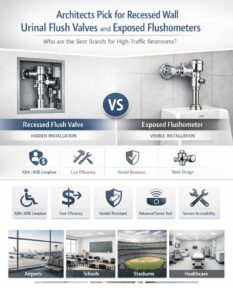
Recessed Wall Urinal Flush Valves vs Exposed Flushometers
High-traffic restroom spec decisions made simple: compare recessed vs exposed architectures by vandal resistance, service access, sensing logic, compliance readiness (ADA / ASSE), and 10-year lifecycle cost.
• Anti-vandal protection + concealed components
• Retrofit speed + field service access
• Battery vs hardwired power planning
Explore Categories
Auto Flush Systems
Touchless urinal flush platforms engineered for high-traffic performance.
Browse Auto Flush
Commercial Flush Systems Hub
Series navigation for commercial flush solutions and architecture options.
Open Hub
ADA & ASSE Compliance Guide
Specifier-focused guidance for compliance readiness and plan review.
View Compliance
Installation & Field Service
Installation, troubleshooting, and downtime-reduction resources.
Install Recessed
Recessed vs Exposed • High-Traffic Spec Decisions
ADA / ASSE Guidance • Submittals
Sensor Logic • Power Modes • Service Access
10-Year Lifecycle Cost • Downtime Reduction
|
|
|