Vandal-Resistant Automatic Faucet; Secure solution for public environments featuring reinforced construction, controlled flow output, and hands-free activation. Transform the bathroom with a Fontana Busto touchless wall-mount faucet. This elegant solution from FontanaShowers combines beauty with usability.
Its operation is launched by advanced movement technology, yielding complete hands-free operation, low contact, and ease of sanitation. Equipped with a supremely polished chrome finish, sophisticated good looks that find application in today's interior. Ideal for home and business use, it comfortably supports multiple design configurations without compromising counter space with the added advantage of wall mounting. Thoughtfully designed, the model supports hot and cold mixing, offering multi-purpose temperature control features to users. Whether a homeowner is renovating his or her bathroom or a public restroom is being equipped, the Busto is the ideal combination of design, durability, and performance. For installations that whisper luxury and advanced engineering, opt for FontanaShowers.
Fontana Busto Chrome Touchless Wall Mounted Faucet FAQ
Concealed Rough-In Coordination, Spout Projection & Mixed-Water Commissioning
The Fontana Busto Chrome Touchless Faucet combines wall-mounted sensor activation, hot and cold water capability, and vandal-resistant construction for commercial washroom applications.
How should the concealed rough-in be coordinated before the finished wall is installed?
The concealed supply connections, sensor components, valve assembly, finished-wall thickness, and spout centerline should be coordinated before tile or wall panels are completed. Installers should also confirm the relationship between the outlet and basin centerline. Accurate rough-in positioning prevents trim misalignment, maintains service access to concealed components, and ensures the water stream enters the intended washing zone rather than striking the basin perimeter.
How should the 7.09-inch and 8.66-inch spout options be selected for different lavatory configurations?
Spout projection should be selected according to basin setback, bowl depth, drain position, finished-wall thickness, and required hand clearance. A projection that is too short can direct water toward the rear of the basin, while excessive projection may move the discharge too close to the front edge. Final specification should therefore coordinate the selected spout length with the architectural basin geometry to control splash and maintain an ergonomic hand-washing position.
What commissioning procedure should be used for the hot and cold mixed-water supply?
Both supply lines should be thoroughly flushed before connection to remove construction sediment that could affect the concealed valve or outlet. Technicians should then confirm balanced supply conditions, inspect concealed joints for leakage, establish the required mixed-water temperature, and perform repeated sensor activation cycles. Temperature stability should also be checked under representative building demand to verify that changes in adjacent fixture use do not produce unacceptable fluctuations at the faucet.
How should sensor performance be validated after mirrors and reflective finishes are installed?
Final sensor testing should occur only after the basin, backsplash, mirrors, countertops, and nearby accessories are in their permanent positions. Polished stone, chrome surfaces, mirrors, and other reflective materials can influence infrared behavior. Technicians should test several normal hand-entry angles and idle conditions to confirm dependable intentional activation, prompt automatic shutoff, and freedom from false triggering caused by surrounding architectural surfaces.
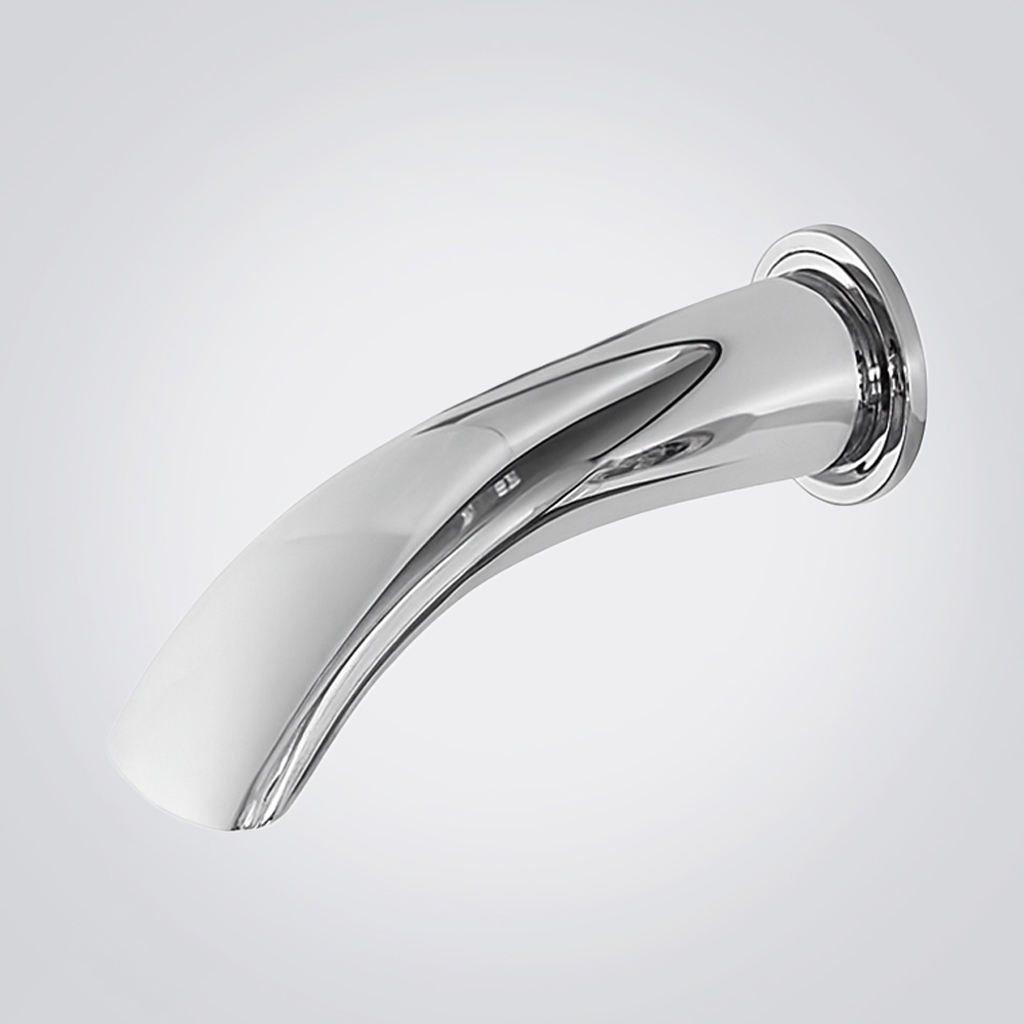


 Projection Offers Choice