Home > Sloan vs Modern Recessed Flush Systems

Sloan vs Modern Recessed Flush Systems

Competitive Spec Comparison • Recessed vs Exposed Architecture • Service Access Strategy • High-Traffic Reliability
FontanaShowers® | Commercial Flush Systems

Competitive Comparison Guide

Spec teams often compare legacy Sloan-style flushometer layouts with newer recessed auto flush architectures. Traditional exposed systems remain common due to replacement cycles and familiarity, but recessed sensor systems emphasize concealed durability, reduced exposed hardware, and cleaner wall-plane hygiene. The correct decision is determined by operational behavior: uptime, service speed, false-flush control, and protection against damage in high-traffic restrooms—not brand familiarity alone.

Recessed Architecture High-Traffic Uptime Service Access Lifecycle Cost
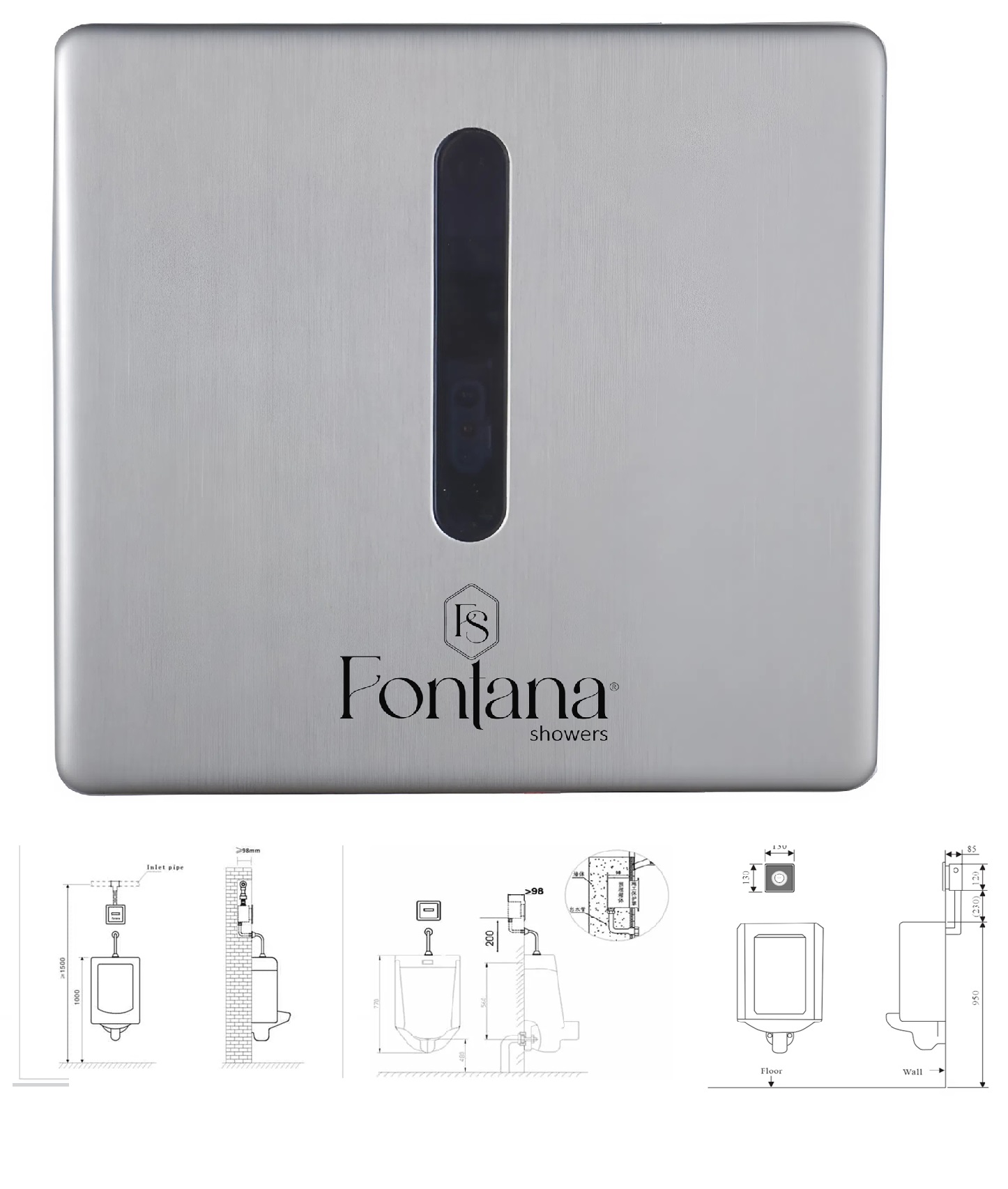
Comparison of recessed commercial urinal flush systems versus traditional exposed flushometer installations for high-traffic restrooms

The strongest comparison metric is operational behavior: uptime, serviceability, false-flush reduction, and durability under peak traffic.

Design & Technical Visuals
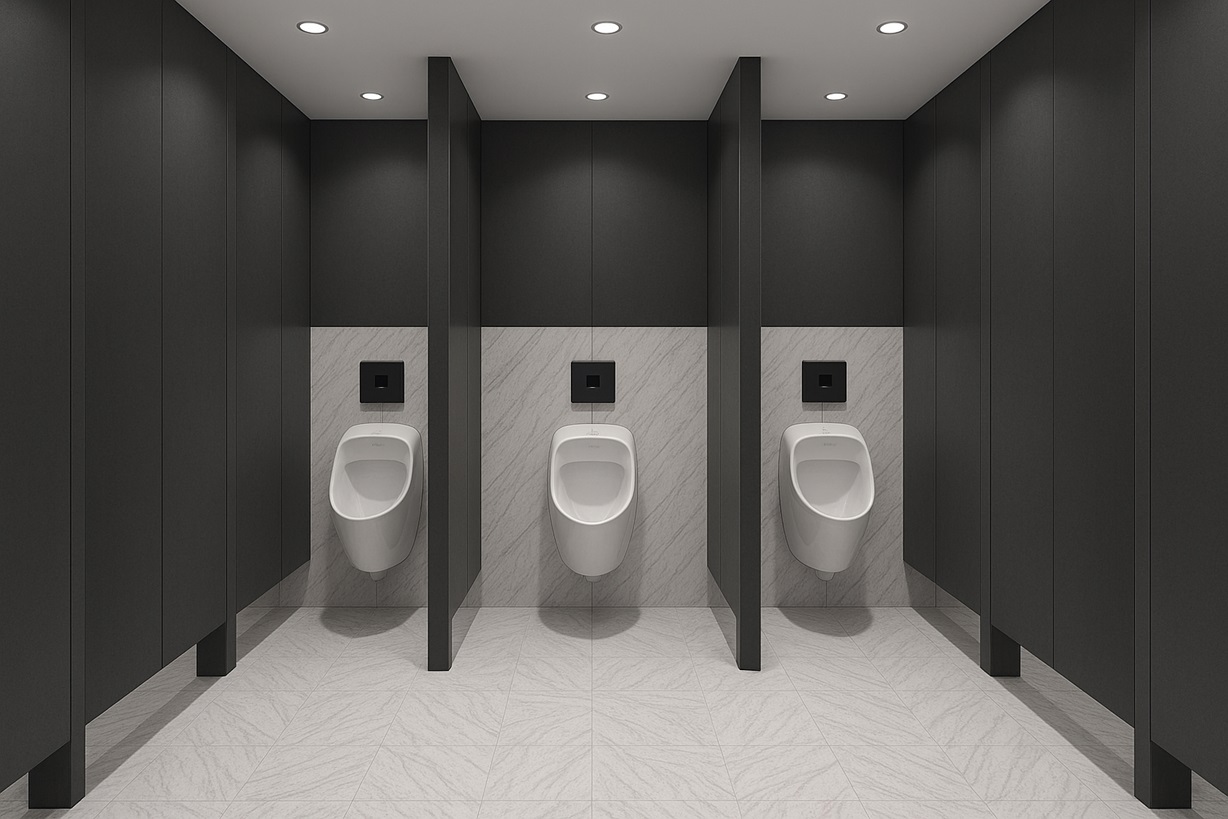
High-traffic restroom bank showing recessed sensor flush system wall-plane cleanliness compared with exposed flushometer layouts
Wall-plane difference — recessed systems reduce exposed hardware and improve cleanability
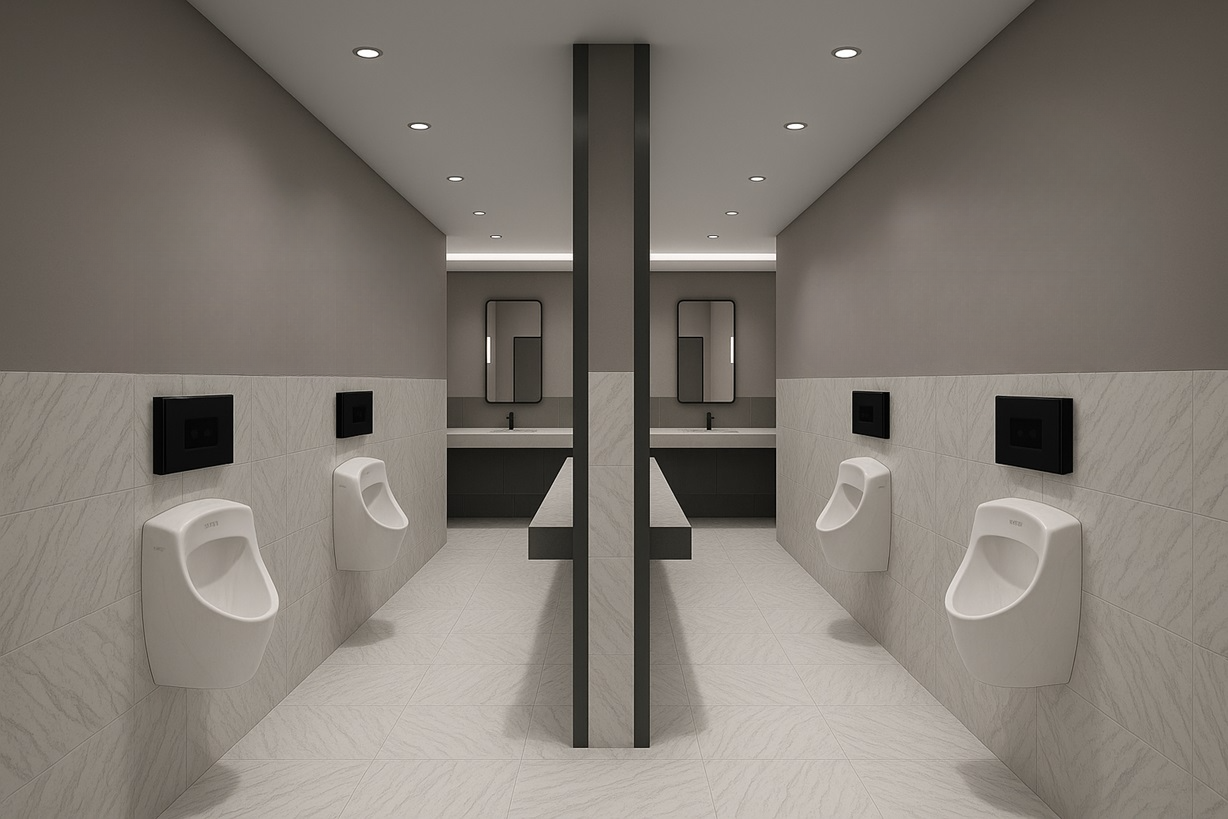
Recessed vs exposed flushometer architecture comparison for commercial restroom specification
Architecture comparison — concealed body + protected face vs exposed valve + piping
Office building facility decision comparing legacy exposed flushometers to modern recessed auto flush systems based on lifecycle cost
Office environments — lifecycle cost often favors predictable service access and stable sensor behavior
Public restroom durability comparison between recessed urinal flush systems and exposed flushometers under high misuse conditions
Public environments — concealed architecture reduces damage risk and improves operational continuity