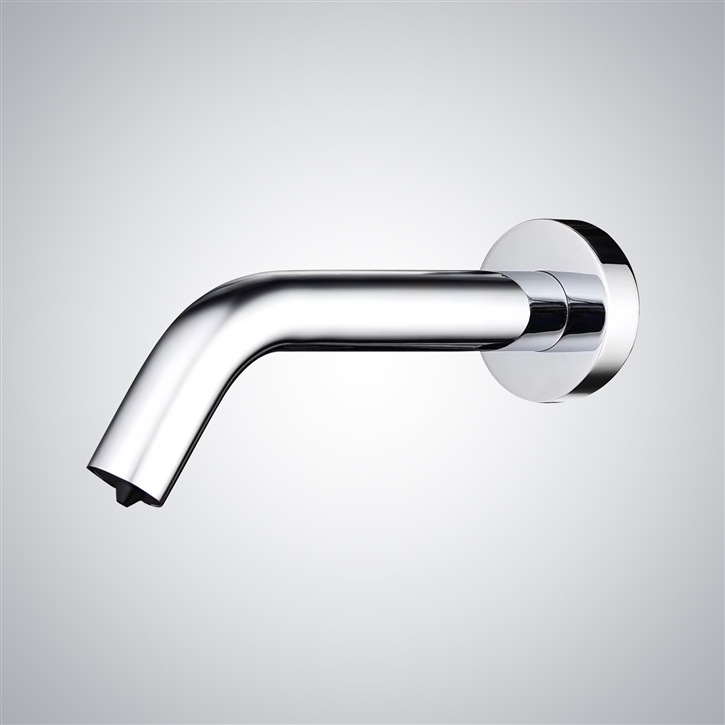
Fontana Automatic Soap Dispenser FAQ
Architectural Planning, Sensor Logic, Service Access & Commercial Installation FAQs
These expert FAQs help architects, designers, contractors, and facility teams specify, install,
service, and coordinate the Fontana FS9818 wall-mounted automatic soap dispenser in commercial washrooms.
FS9818
Commercial Wall-Mounted Automatic Soap Dispenser
Compact reference for specification, sensor placement, installation coordination, maintenance, and commercial restroom planning.
POWERAC110-220V
CAPACITY1500ML
SENSOR RANGE2.4-3.9 in
MOUNTINGWall-Mount
Technical Reference
Wall Conditions & Installation Coordination
01
Planning & Coordination
How should architects coordinate dispenser height during restroom planning?
+
The dispenser should be positioned where users can comfortably access soap before reaching the lavatory bowl, while maintaining clearance from backsplashes, mirrors, grab bars, and faucet spray zones.
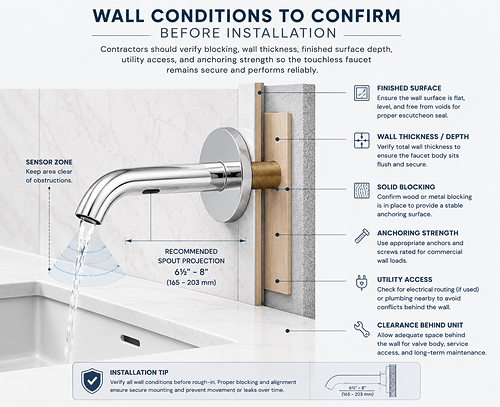
What wall conditions should contractors confirm before installation?
+
Contractors should verify blocking, wall thickness, finished surface depth, utility access, and anchoring strength so the dispenser remains stable under repeated commercial use.
Why is rough-in coordination important for wall-mounted soap dispensers?
+
Proper rough-in planning helps prevent conflicts with plumbing lines, electrical routing, mirror edges, tile joints, wall panels, and lavatory fixture placement.
Can this dispenser be specified for high-traffic public restrooms?
+
Yes. Wall-mounted automatic dispensers are suitable for airports, office buildings, schools, hospitals, malls, hotels, and other high-use commercial environments requiring touch-free hygiene.
How does wall mounting improve countertop design flexibility?
+
Wall mounting frees countertop space, supports cleaner vanity layouts, reduces drilled deck openings, and allows designers to create more minimal commercial lavatory surfaces.
What should designers consider when matching the dispenser with faucets?
+
Designers should coordinate finish, mounting height, spout projection, sensor location, user reach, and visual alignment so the faucet and dispenser read as a planned fixture system.
How far should the dispenser be placed from the faucet?
+
The dispenser should be close enough for intuitive handwashing flow but separated enough to avoid water splash, sensor interference, and soap discharge into the wrong area.
Does the dispenser need access space behind the wall?
+
Access requirements depend on the installation method and soap supply configuration. Contractors should plan service access before closing walls, especially in commercial projects.
What makes this type of dispenser useful for facility maintenance teams?
+
A wall-mounted automatic unit reduces surface clutter, simplifies cleaning around lavatories, limits hand contact, and supports faster visual inspection during restroom maintenance rounds.
How does the infrared sensor support touch-free operation?
+
The sensor detects hand presence in the activation zone and triggers dispensing without requiring users to press a button, handle, or manual pump.
Can strong restroom lighting affect sensor performance?
+
Extremely reflective surfaces or intense direct lighting may influence sensor behavior. Installers should avoid placing the sensor directly opposite highly reflective metal or glass surfaces.
Why should contractors test the sensor before final handover?
+
Final testing confirms activation distance, dispense consistency, soap delivery, anti-drip performance, power connection, and user approach alignment before the restroom opens.
What is the benefit of anti-drip control in commercial washrooms?
+
Anti-drip control helps reduce soap residue on counters, floors, and wall surfaces, lowering cleanup frequency and improving the appearance of public restroom areas.
How should the dispenser be coordinated with tile layout?
+
Installers should avoid placing mounting holes directly on fragile tile edges, decorative grooves, or narrow grout transitions that may weaken support or affect alignment.
Why should designers avoid placing the dispenser too close to mirror edges?
+
Adequate spacing prevents visual crowding, splash buildup, cleaning difficulty, and accidental contact between the dispenser body and mirror surface.
Can this dispenser help support ADA-conscious restroom layouts?
+
It can support accessible planning when mounted within proper reach ranges and coordinated with lavatory clearances, approach space, and user operation requirements.
What should be checked before specifying multiple dispensers in a row?
+
Designers should confirm equal spacing, fixture centerlines, mirror rhythm, backsplash height, plumbing zones, sensor reach, and maintenance access for each lavatory station.
How can contractors reduce installation errors on multi-station projects?
+
Use a consistent mounting template, verify centerlines from finished surfaces, confirm power or supply routing, and test each unit before final wall protection is removed.
Why is dispenser placement important for restroom traffic flow?
+
Correct placement lets users receive soap naturally before rinsing, reducing hesitation, cross-reaching, and unnecessary movement in busy commercial washroom environments.
What soap type should be considered during specification?
+
Specifiers should confirm compatibility with the intended liquid soap viscosity and avoid formulas that are overly thick, abrasive, or likely to clog internal dispensing components.
How does soap viscosity affect dispenser performance?
+
Soap that is too thick may slow pump response or reduce dispense consistency, while properly matched soap helps maintain smooth activation and reliable delivery.
What should facility managers inspect during routine maintenance?
+
Maintenance teams should inspect the outlet, sensor window, soap level, tubing, pump response, mounting stability, finish condition, and any signs of residue buildup.
Why should the sensor window remain clean?
+
A clean sensor window allows accurate hand detection and helps prevent delayed activation, false triggering, or inconsistent dispensing during daily use.
Can the dispenser be used in hospitality restroom design?
+
Yes. Its wall-mounted touchless operation suits hotel lobbies, restaurant restrooms, spa facilities, conference centers, and other hospitality spaces requiring a clean modern presentation.
04
Applications & Operations
How should designers balance hygiene and aesthetics?
+
Designers can align the dispenser with faucets, mirrors, wall panels, and lavatory centerlines so hygiene equipment becomes part of the overall architectural composition.
What should be included in the contractor closeout checklist?
+
The checklist should include mounting verification, sensor test, dispense volume check, leak inspection, soap compatibility confirmation, cleaning instructions, and owner maintenance guidance.
Why is this dispenser useful for specification-driven commercial projects?
+
It provides a defined wall-mounted touchless soap solution that can be coordinated with restroom drawings, fixture schedules, finish selections, and maintenance planning.
How does this dispenser support cleaner restroom operations?
+
Touch-free activation reduces shared contact points, while wall placement helps keep counters clearer for cleaning staff and improves the overall hygiene workflow.
Product Reference
FS9818 Technical Specifications
- Brand Name: FontanaShowers®
- Model Number: FS9818
- Feature: Foam Soap
- Main Material: Brass With Chroming
- Dispenser Type: Automatic
- Type: Wall-Mount
- Working power: AC110-220V
- Sensor distance: 2.4-3.9 inches (6-10cm)
- Soap Capacity: 1500ML
- Sensor lifetime: 300,000 times on/off
- Pump lifetime: 80,000 times on/off
- Ideal for commercial use applications in public restrooms, restaurants, office buildings, public facilities, and hospitals. Fits all US Standard plumbing.
|
|
|