FontanaShowers® | Commercial Latrine & Public Washroom Systems
Latrine Accessories for Commercial Restrooms: Flush Valves, Urinals & Soap Systems
Contractors and engineers treat latrine accessories as the technical backbone of commercial washrooms — tying together automatic flush valves, urinals, toilets, and touchless soap systems into a coordinated, code-aligned package.
Correct selection affects water use, durability, vandal resistance, and maintenance cycles across airports, hospitals, schools, and mixed-use towers. FontanaShowers latrine accessories offer spec-grade
automatic toilet and urinal flush valves, ceramic urinals, and public toilet soap dispensers that integrate with
plumbing design, rough-in constraints, and hygiene policies.
Paired with BIM, CAD, and comprehensive specification data, these systems help design teams standardize performance across entire portfolios.
Auto Flush ValvesUrinals & CarriersPublic Toilet SoapTouchless HygieneBIM & Spec Support
Performance Criteria: Flush Volumes, Hygiene & Control
Flush Volumes & Hydraulic Behavior
Automatic flush valves for toilets and urinals must deliver code-compliant flush volumes while matching the building’s pressure profile.
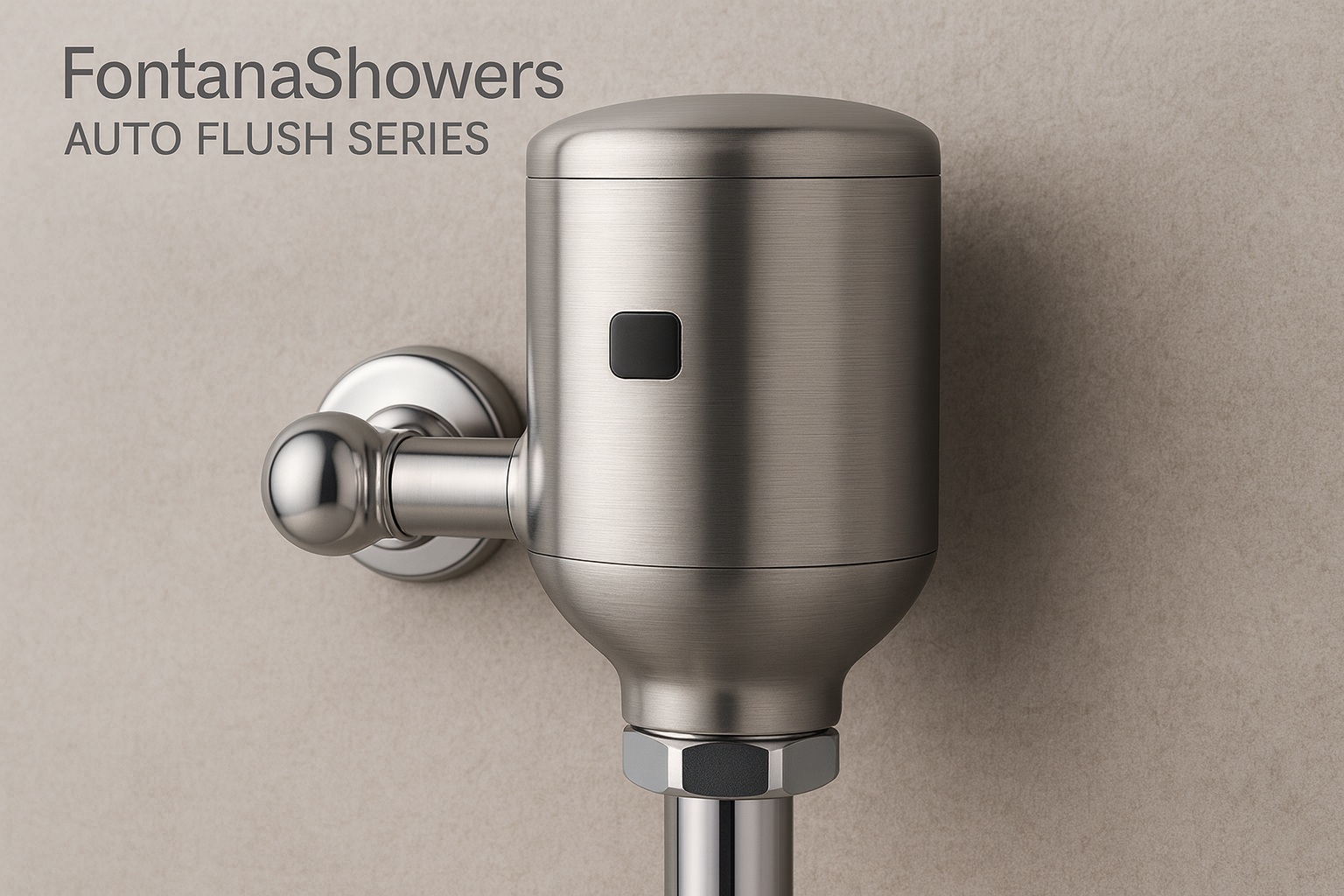
FontanaShowers auto flush systems are defined by gpf ratings, operating pressure, and cycle timing to support water efficiency and trap seal integrity without nuisance activations.
Sensor Logic & Detection Zones
Each sensor module requires a defined detection zone, response time, and time-out to prevent over-flushing and ghost activations.
Contractors and engineers should document default settings and adjustment ranges in the submittal and commissioning notes for every latrine bank.
Public Toilet Soap & Hand Hygiene
Touchless public toilet soap dispensers complement flush valves to reduce touchpoints across the entire wash sequence.
Shot volume, reservoir capacity, and power strategy (battery, AC, or hybrid) should match traffic levels and cleaning regimes.
Vandal Resistance & Misuse Mitigation
Exposed components in public washrooms require reinforced housings and tamper-resistant fixings.
Latrine accessories should be selected with impact-resistant covers, secure mounting hardware, and protected sensor windows for transit, education, and stadium environments.
Water Efficiency Targets
Low-flow urinals and high-efficiency toilet valves help meet building and campus water reduction targets.
Where flush volumes are reduced, engineers should review waste line sizing, slope, and fixture group diversity to maintain reliable conveyance.
System-Level Integration
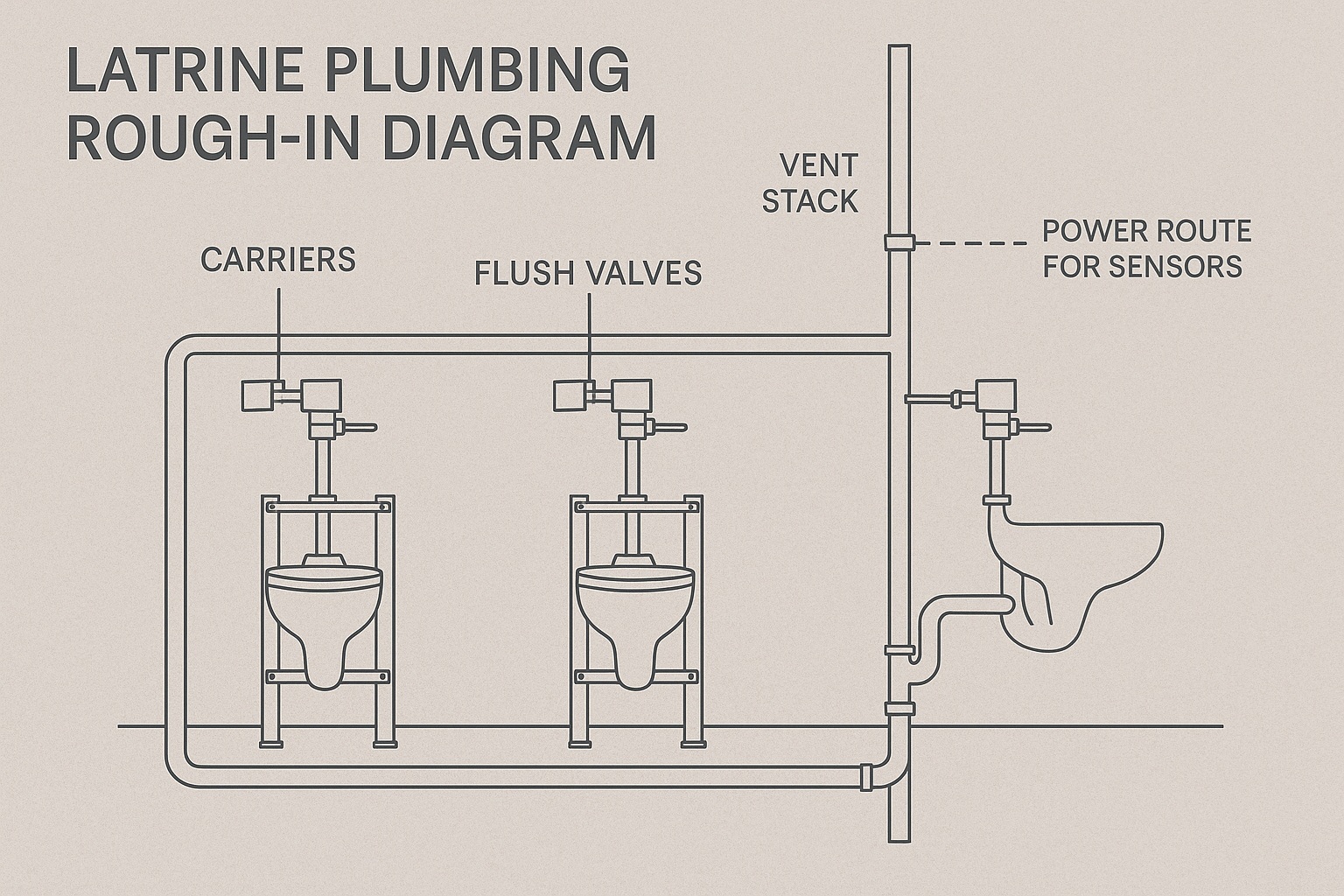
Latrine accessory selections must be validated within the broader drainage and vent system, carrier layout, and partition design.
BIM-based modeling allows design teams to confirm access panels, cleanout locations, and power routing for sensor arrays.
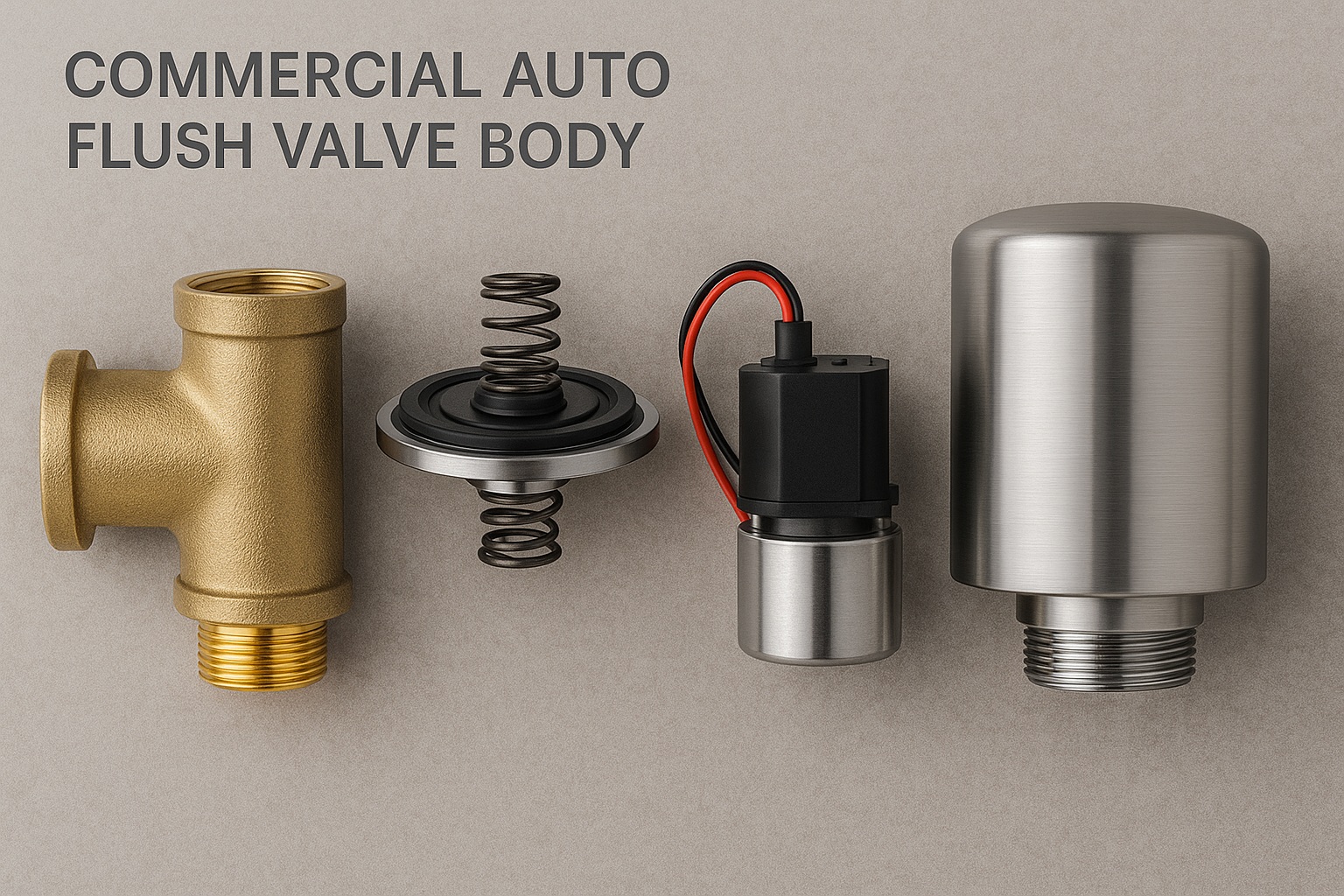
Flush valves use cast brass or stainless bodies with serviceable diaphragms and solenoids designed for high cycle counts in institutional restrooms.
Ceramic urinals and bowls incorporate easy-clean glazes and geometries that reduce splash while maintaining effective scouring and drainage.
Carrier frames, waste arms, and hangers must coordinate with partitions and access requirements to allow future valve and sensor replacement.
Finishes, Plates & Accessory Families
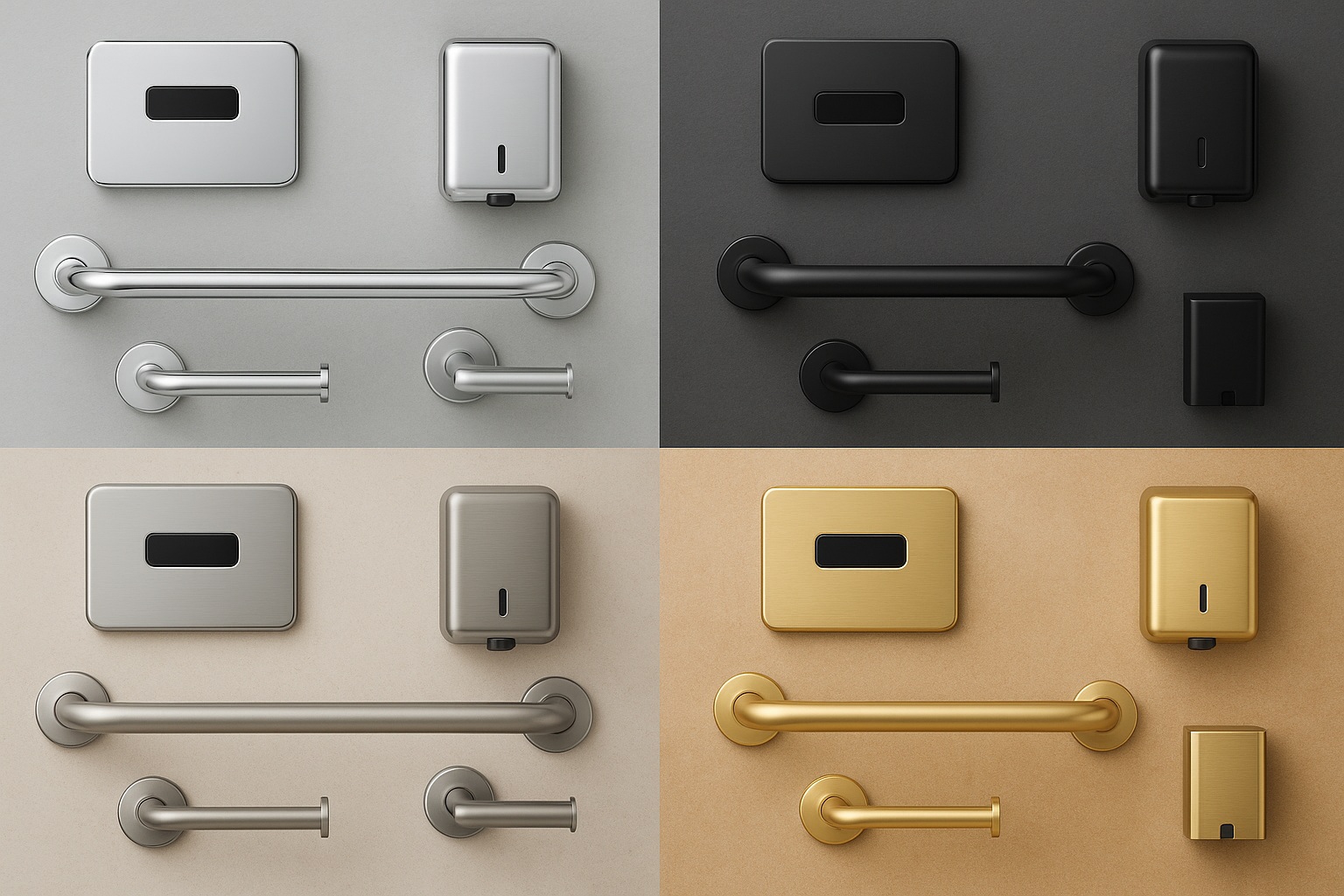
Flush plates, push buttons, and exposed valve bodies commonly use chrome, brushed stainless, or matte black finishes aligned with other restroom hardware.
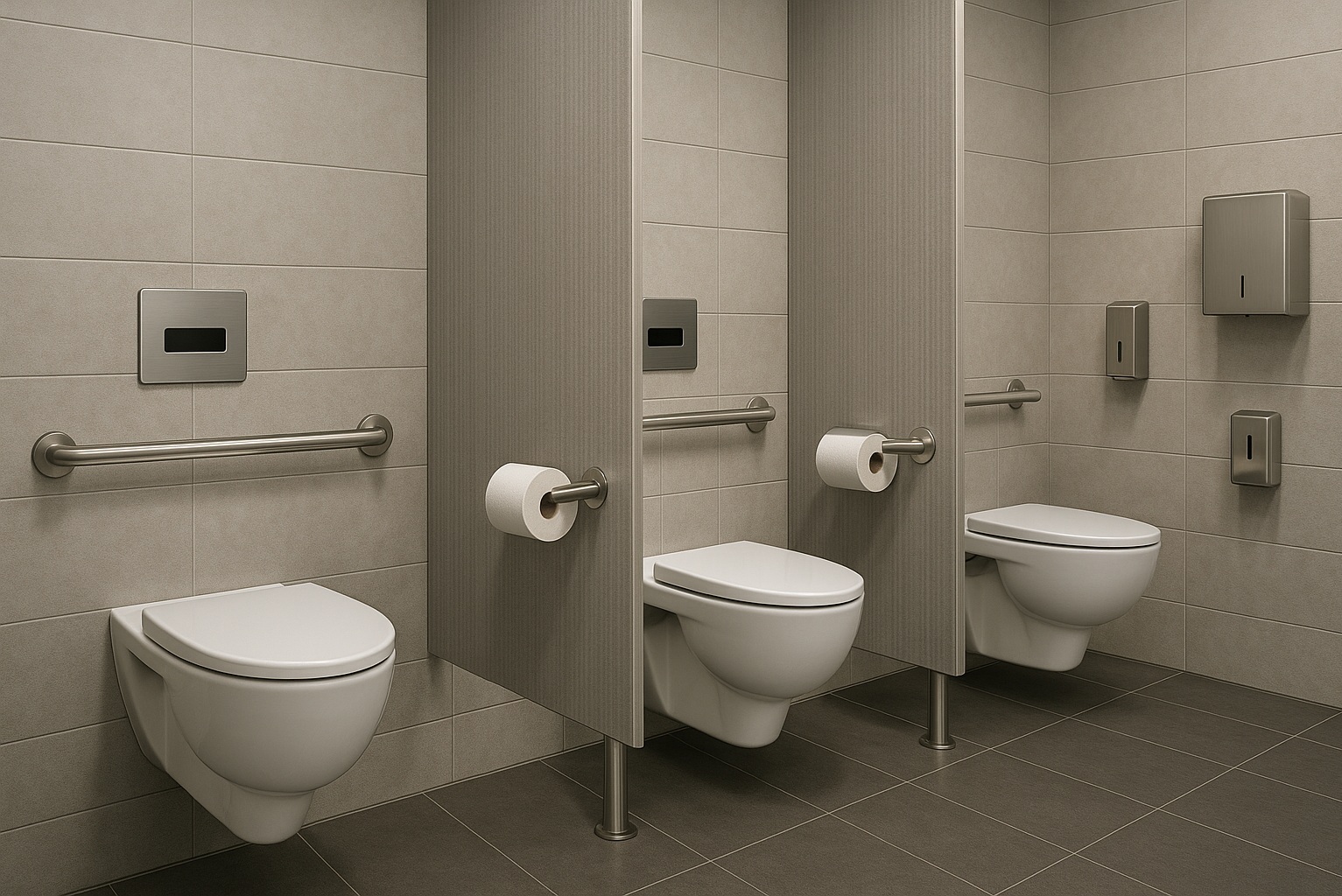
Coordinating grab bars, toilet paper holders, coat hooks, and soap dispensers within the same finish family simplifies specification and long-term maintenance.
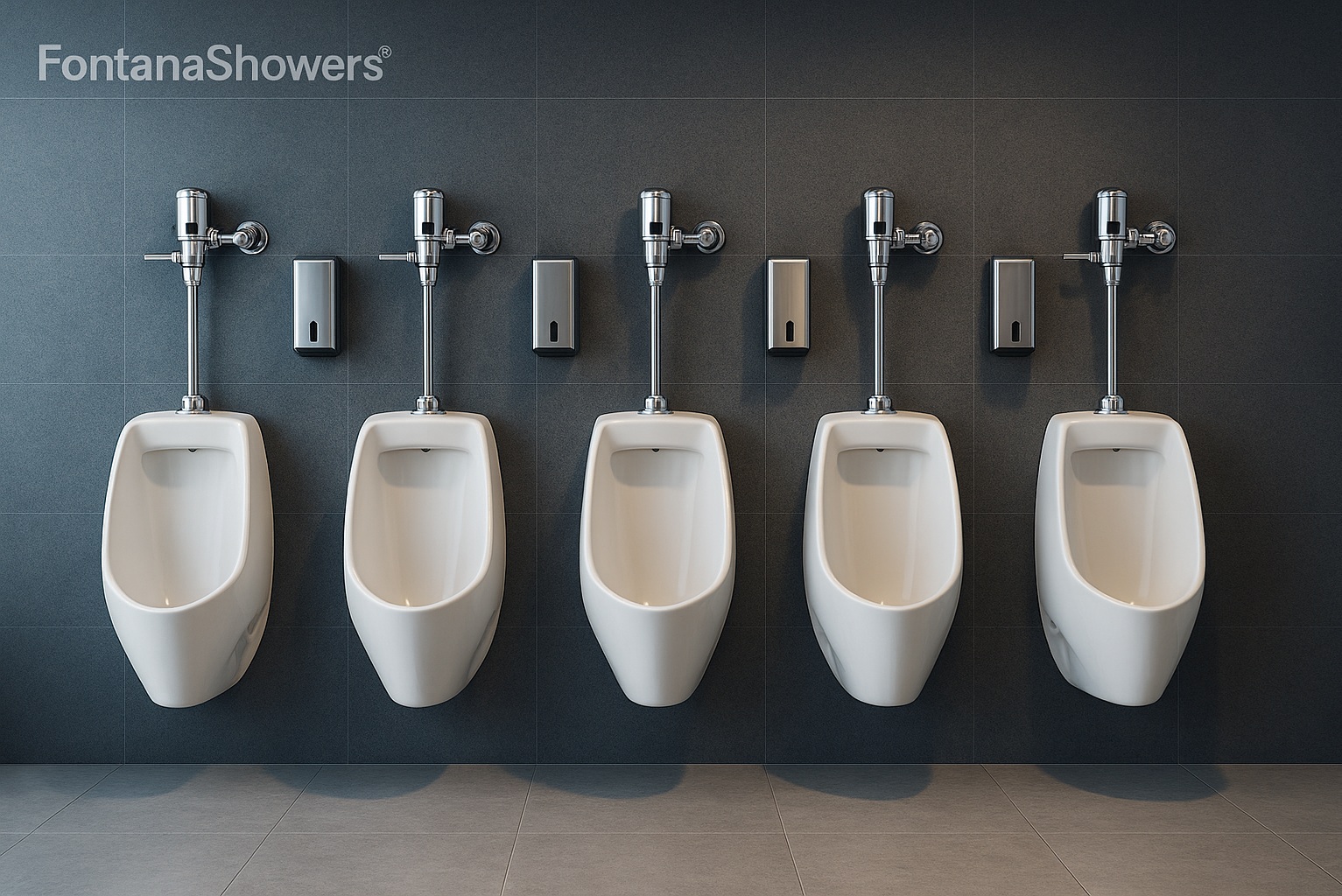
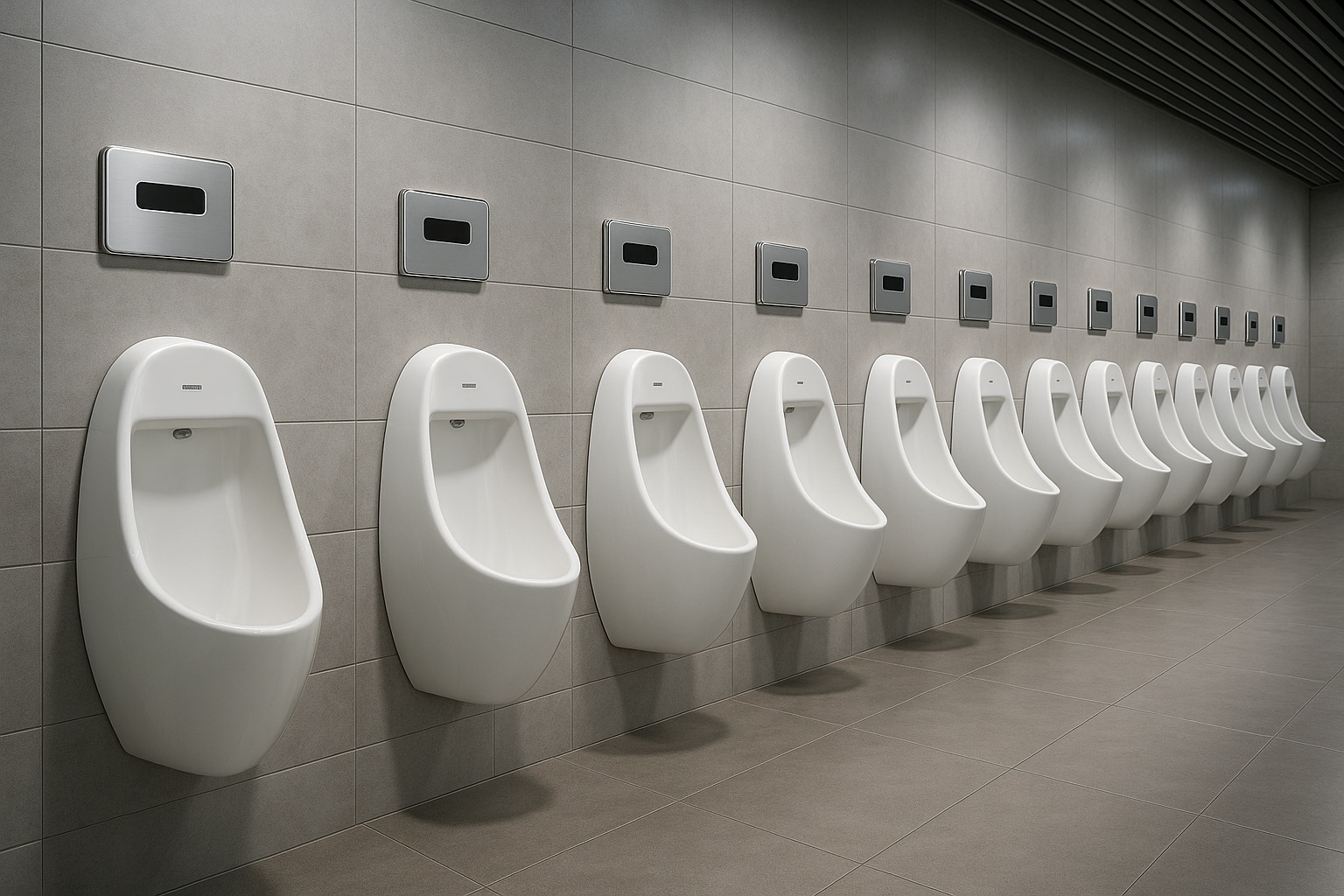
Sensor-activated urinal flush valves eliminate manual handles and support hygiene in high-use restrooms.
Options include exposed and concealed bodies, different flush volumes, and finishes suitable for airports, stadiums, and transit hubs.
Automatic Toilet Flush Valves
Automatic toilet valves serve individual stalls and accessible compartments.
Coordinated carrier spacing, partition layout, and access doors provide serviceability without disturbing finishes or disrupting operations.
Public Toilet Soap Dispensers
Deck- or wall-mount touchless soap dispensers complete the wash cycle around latrine zones.
Large reservoirs and multi-voltage power options support heavy traffic in malls, universities, and transport hubs.
Ceramic Urinals & Screens
Architect-grade ceramic urinals and optional privacy screens must integrate with water supply, drainage, and partition systems.
Selection should balance cleaning protocols, privacy expectations, and spatial constraints in male and all-gender restrooms.
Grab Bars & Sanitary Accessories
Grab bars, sanitary napkin disposal, toilet paper holders, and coat hooks are part of the same accessory family.
Consistent reach ranges, fixing strengths, and finishes contribute to accessibility and long-term robustness.
Branding & Multi-Site Portfolios
Ownership groups benefit from repeating the same latrine accessory families across multiple sites.
Standardized spare parts, documented finishes, and shared commissioning procedures help reduce operating cost and risk.
Automatic and manual latrine accessories, including sensor-activated toilet and urinal flush valves, public toilet soap dispensers, and associated fittings.
Defined by flush volumes, detection zones, time-outs, shot volumes, and hygiene requirements in line with project performance criteria and applicable codes.
Installation
Wall- or ceiling-mounted flush valves coordinated with carriers, partitions, and access panels.
Trap, vent, and waste connections laid out in accordance with the adopted edition of the International Plumbing Code (IPC) and local amendments.
Valve Bodies & Actuators
Commercial-grade bodies in cast brass or stainless steel with integral solenoids, diaphragms, and strainers.
Components are replaceable in situ without disturbing finish walls or carriers, supporting long-term service.
Ceramic Fixtures
Urinals and bowls with high-density ceramics and easy-clean glazes.
Shapes are optimized for splash reduction, effective scouring, and compatibility with auto-flush patterns.
Power & Controls
Battery-only, AC, or hybrid power options (model dependent) with documented transformer locations and access.
Where required, controls can be grouped in accessible ceiling or wall zones for simplified maintenance.
Sensor Logic & Hygiene
Adjustable sensing ranges, run times, hygiene flush modes, and lockout periods.
Factory defaults are tuned for commercial traffic, with field-adjustable parameters to match occupancy patterns and water policies.
Vandal & Misuse Mitigation
Reinforced housings, impact-resistant covers, and tamper-resistant fasteners suited to public and institutional settings.
Concealed valve options reduce exposed hardware and protect critical components from abuse.
Maintenance Access
Service points for diaphragms, solenoids, filters, and power components should be reachable through removable plates or access doors.
BIM content and coordinated details clarify clearances and access paths during design and review.
Coordinate latrine accessory selections with BIM content from manufacturers to validate clearances, power access, and maintenance zones.
Submittals should include flush volumes, operating pressure ranges, wiring diagrams, power loads, and finish schedules for all flush valves, urinals, and soap dispensers.
Commissioning tasks include verifying flush timing and volume, sensor detection zones, hygiene flush intervals, and integration with building water conservation and hygiene policies.
Latrine SystemsAuto FlushPublic Toilet SoapVandal ResistanceLifecycle Value
Latrine accessories may appear to be small line items on a fixture schedule, yet they determine how commercial restrooms perform under real-world use.
By approaching automatic flush valves, urinals, toilets, and public toilet soap dispensers as integrated systems — tied to plumbing design, codes, hygiene policies, and brand standards — contractors and engineers can deliver washrooms that are robust, easy to maintain, and comfortable for end users.
FontanaShowers provides the accessory depth, technical data, and digital tools needed to standardize latrine performance across high-traffic portfolios.
Fontana Touchless Restroom Ecosystem
Coordinate Urinal and Soap Systems
Build a unified restroom specification across flushing, urinals, toilets, touchless components, finishes and project resources.