Sensor Latency, Accuracy, and Environmental Interference in Automatic Touchless Faucet Systems: Field Commissioning Guide | FontanaShowersSkip to content
Highlighting / Sensor Latency, Accuracy, and Environmental Interference: Field Commissioning Guide
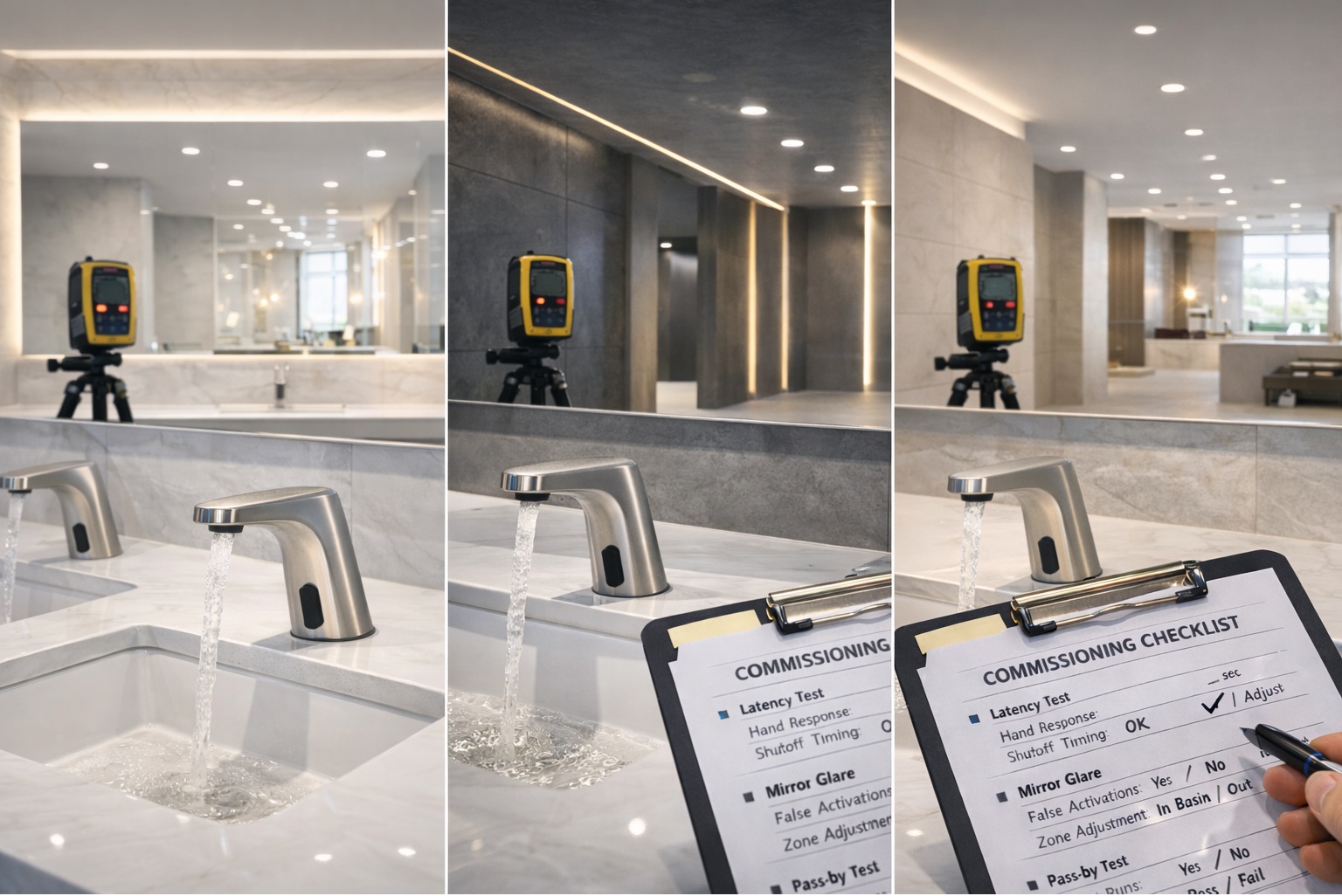
Commission in the finished room with real mirrors, final lighting, and reflective stone to reduce false triggers and lock consistent performance across floors.
Use this like a Gulf closeout commissioning playbookRun the test matrix in a finished restroom with final mirrors and reflective stone, lock one setting per typical stack, then standardize SKUs so performance stays consistent after turnover.
Sensor Latency, Accuracy, and Environmental Interference in Automatic Touchless Faucet Systems
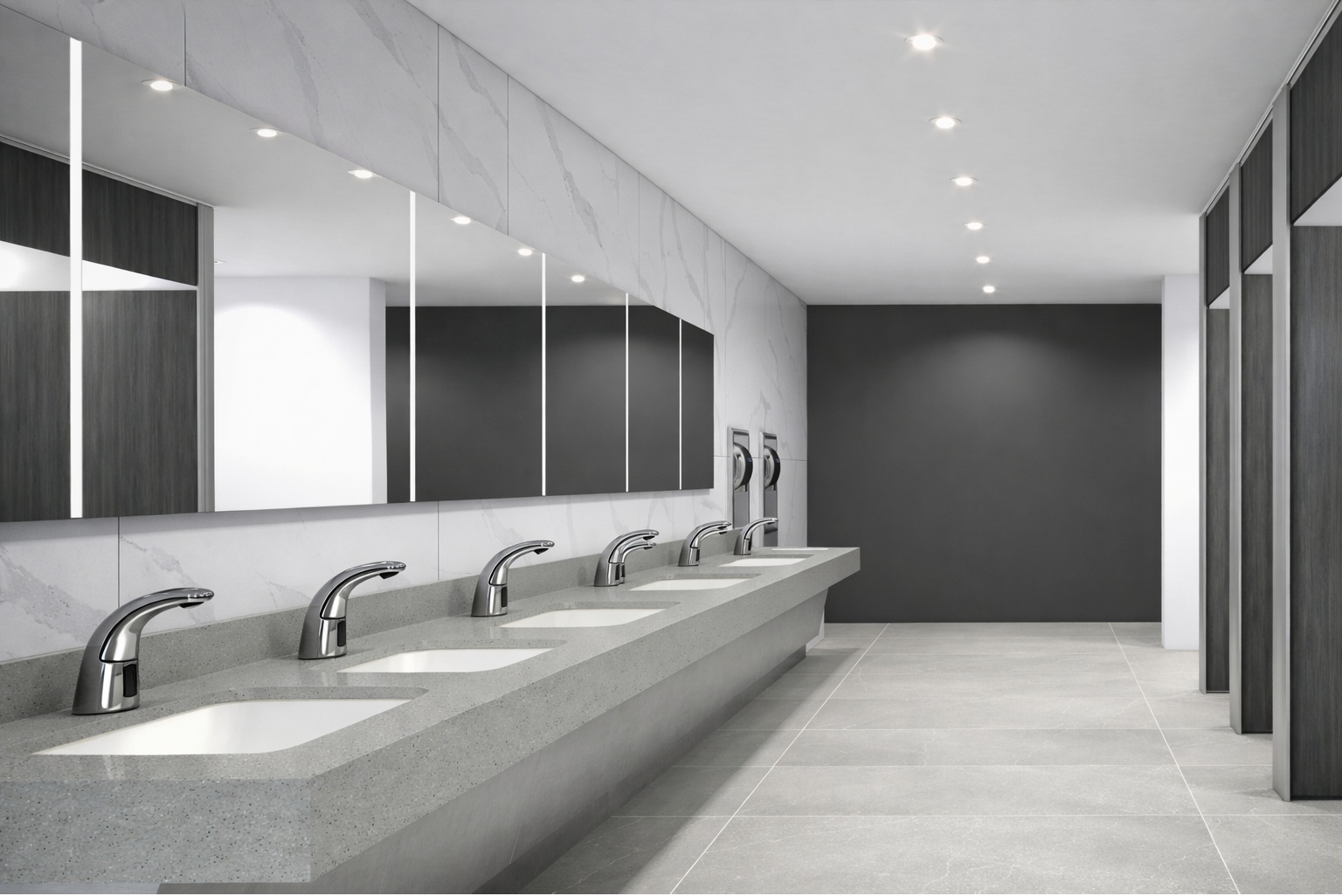
In Gulf high-traffic restrooms (malls, airports, hotels), most “sensor faucet problems” are not failures. They are commissioning mismatches created by strong LED lighting, daylight angles, mirror glare, and reflective stone countertops that push the sensing zone outside the basin.
Use this field workflow alongside the
installation steps
and the
BIM and spec resources
to validate start behavior, reduce false triggers (including pass-by “ghost runs”), and document one approved setting per typical stack so every floor feels the same.
Touchless faucet commissioningLatency and start stabilityGlare on mirrors and stonePass-by false trigger testingCloseout checklist for contractorsMalls, airports, hotels
Quick access to your high-quality image and catalog hubs so teams can pull consistent visuals across touchless, bathroom, kitchen, projects, and retail pages.
If a touchless faucet feels inconsistent, users do not blame lighting or reflections. They blame the fixture. These are the field symptoms that create callbacks, RFIs, and post-turnover complaints.
Slow start that triggers user wavingLatency feels like a failure, especially in premium restrooms and high traffic facilities.
False activation and ghost runsMirror glare, daylight, reflective stone, or pass-by movement turns a good installation into a daily nuisance.
Different behavior across floorsMixed SKUs or mixed settings make the building feel unbalanced and harder to maintain.
Field setup: the three conditions that explain most sensor issues
Start here. If you validate these three variables, you eliminate most false triggers and most “it feels slow” complaints.
1) Lighting: LED patterns, daylight, and mirror glare
Commission in the same lighting state the restroom will operate in. Daylight angles change by time of day, and mirror glare can push the sensing zone outside the basin. Test stable activation with hands in the basin and typical hand positions near the spout.
2) Temperature and moisture on surfaces
Condensation, splashing, and residue near the sensor face can change behavior over time. Confirm that sensor faces are reachable for cleaning, and document a basic routine in O&M so the tuned behavior stays stable.
3) User movement: speed, angle, and crowd behavior
Real users move fast. They enter at different angles, and pass-by traffic is common in busy restrooms. Good commissioning reduces false triggers without forcing users to wave or hunt for the sensing spot.
Test matrix and spec notes
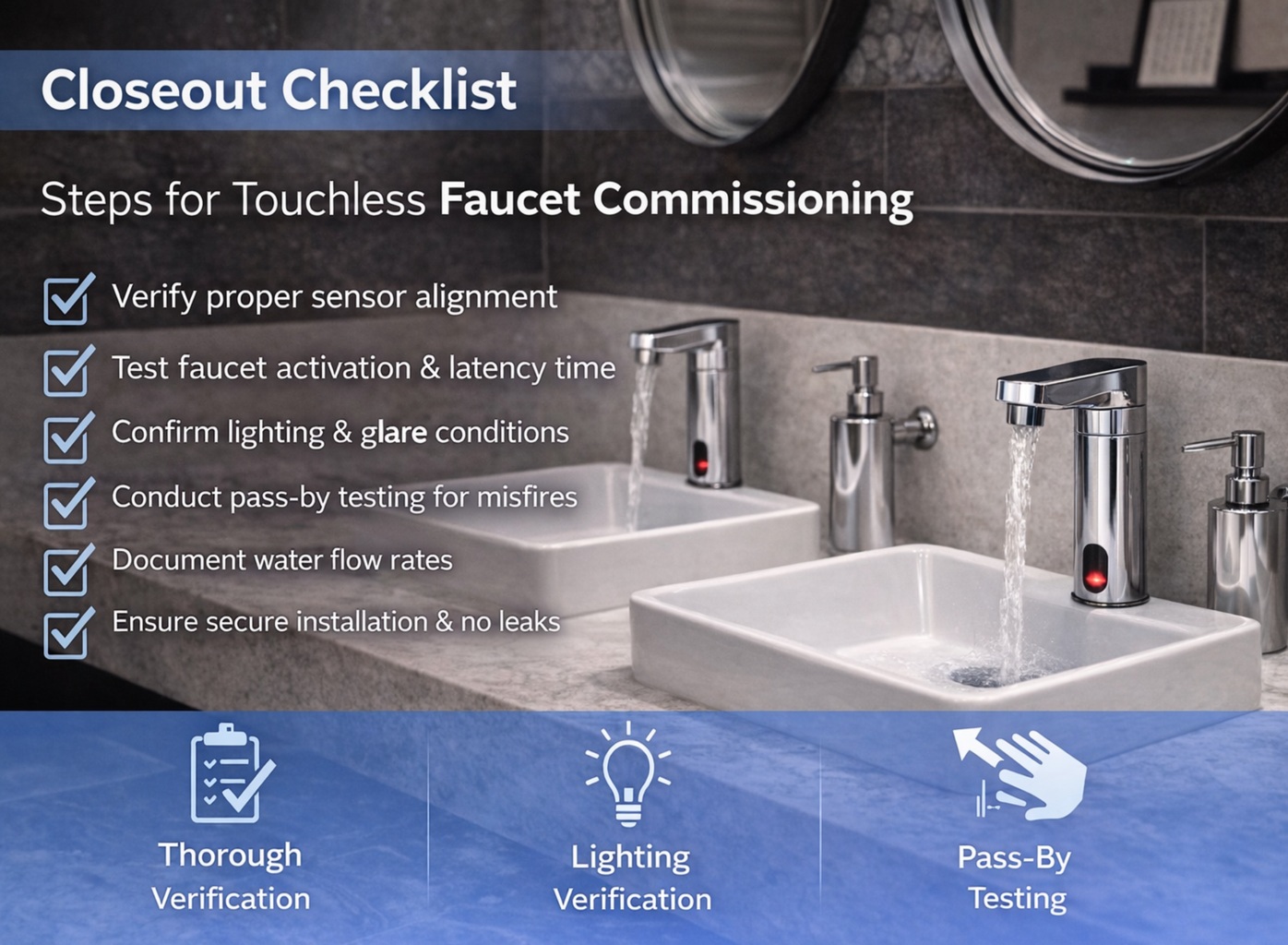
Use these blocks as owner standards, submittal acceptance criteria, or a closeout testing checklist.
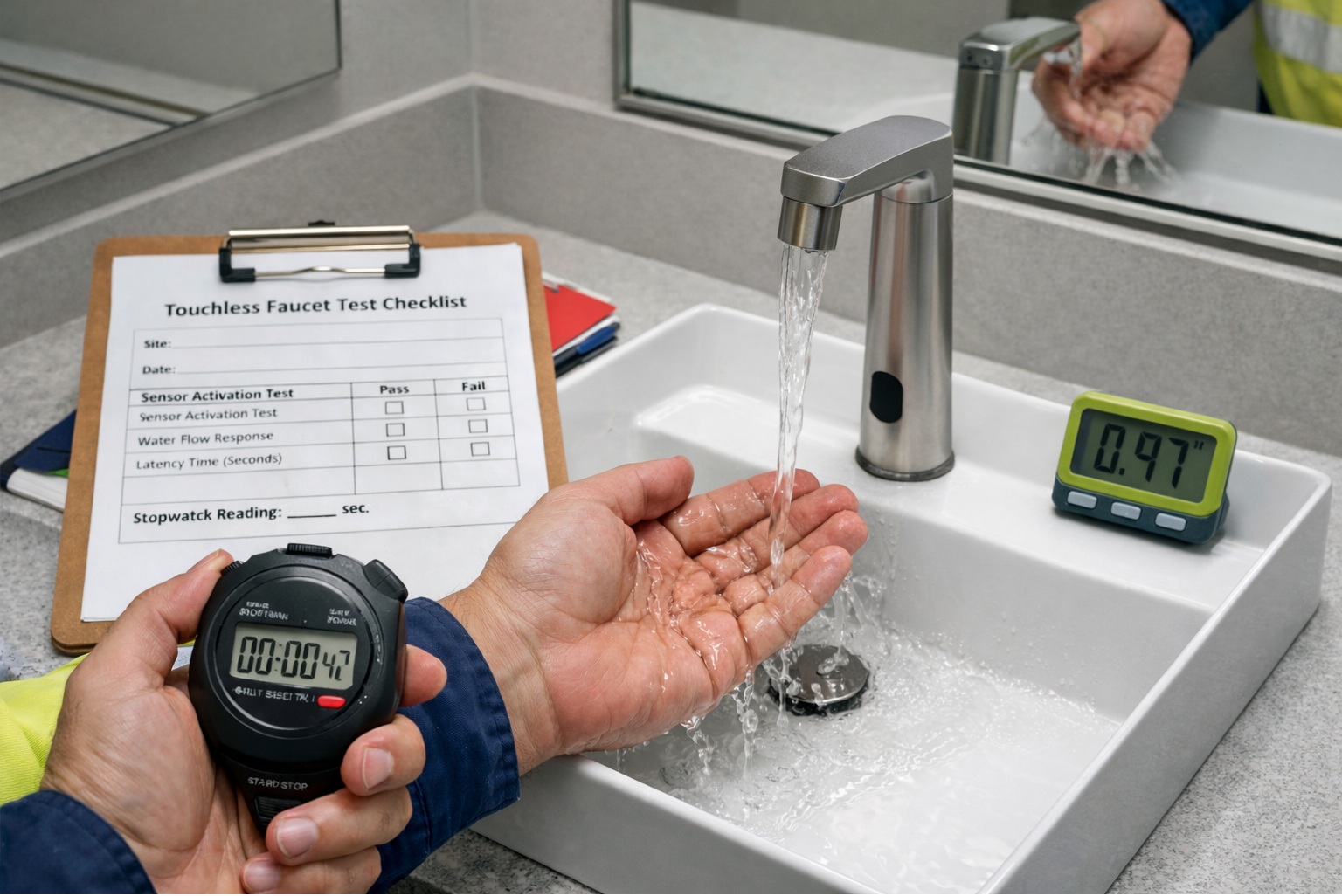
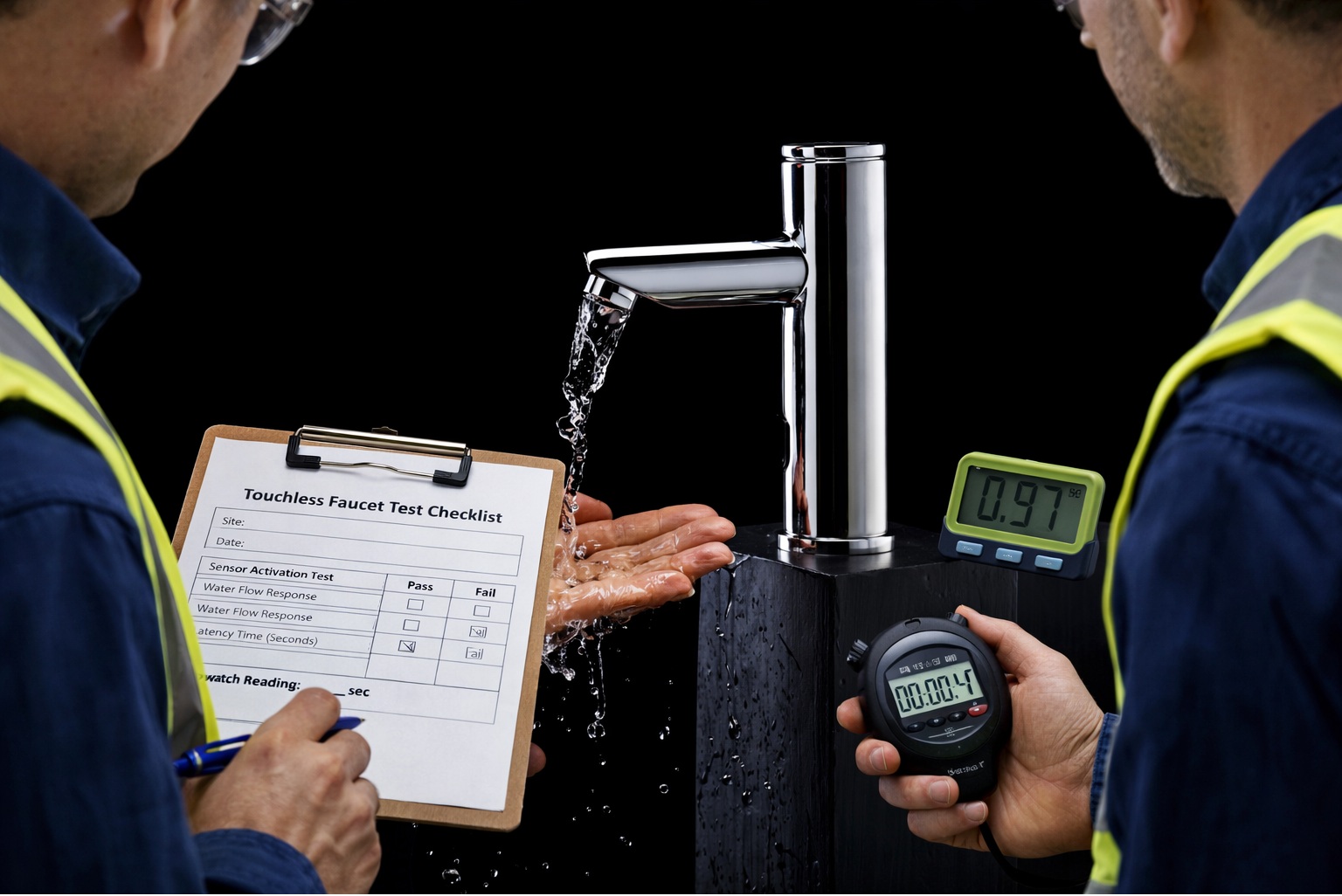
Latency and start behavior criteria
Make start behavior measurable so acceptance is consistent across floors and trades.
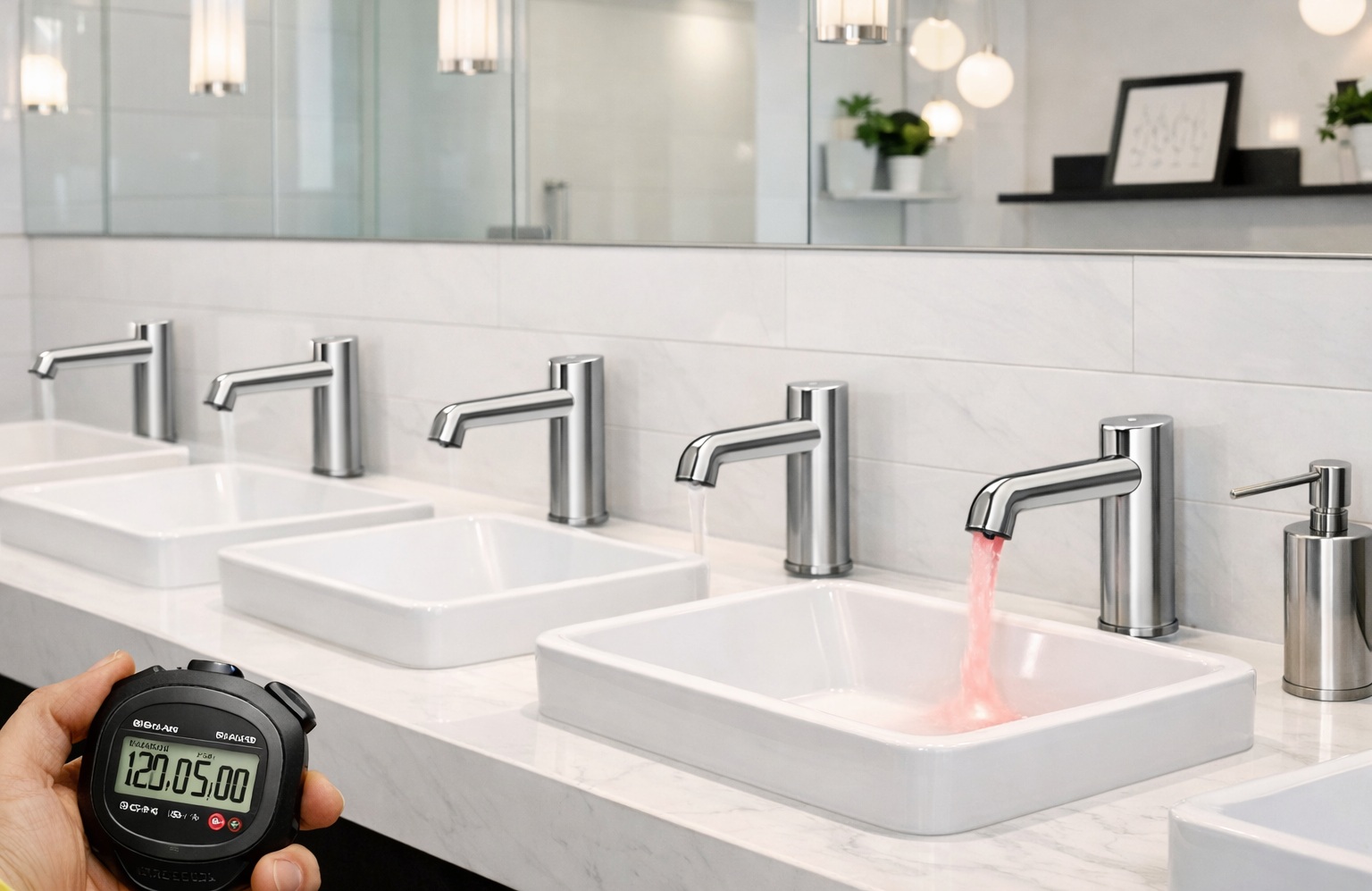
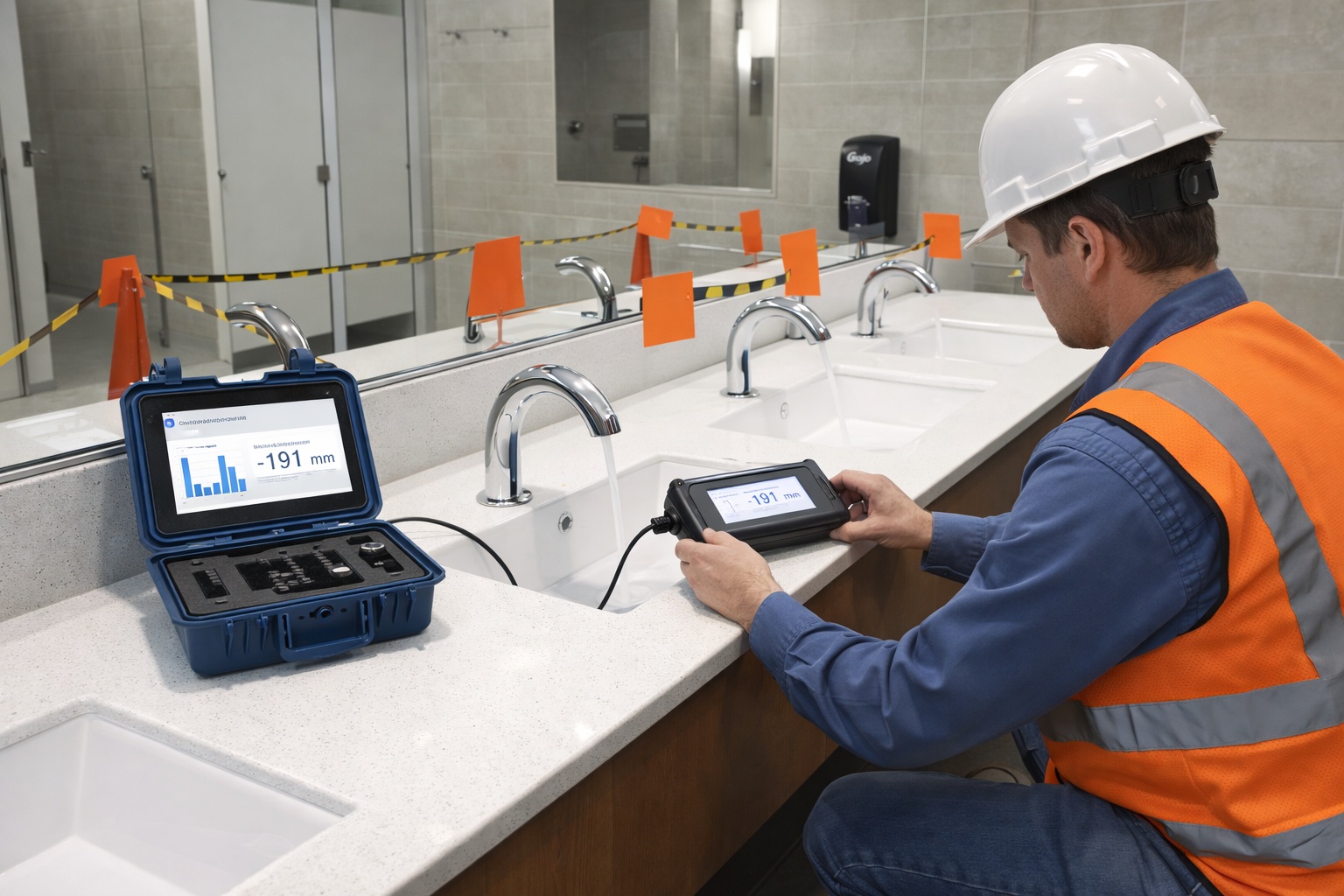
Record start behavior with a short phone video if needed.
Confirm first activation works without waving for typical users.
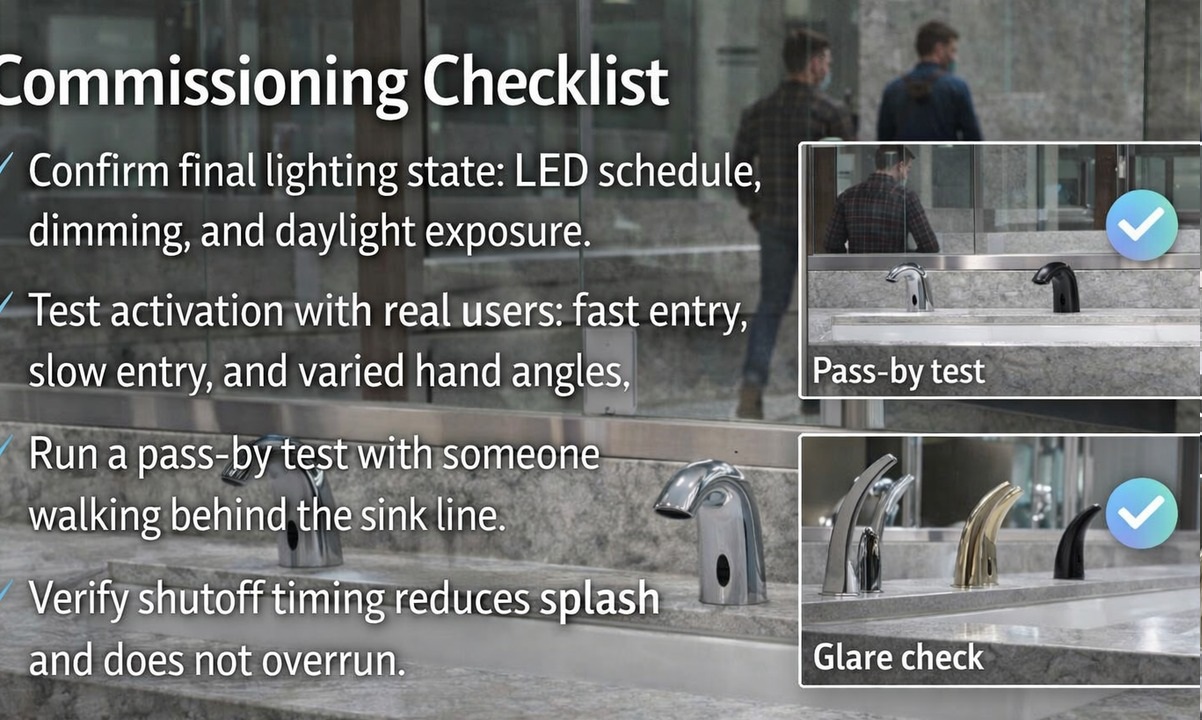
Verify shutoff timing avoids splash and reduces overrun.
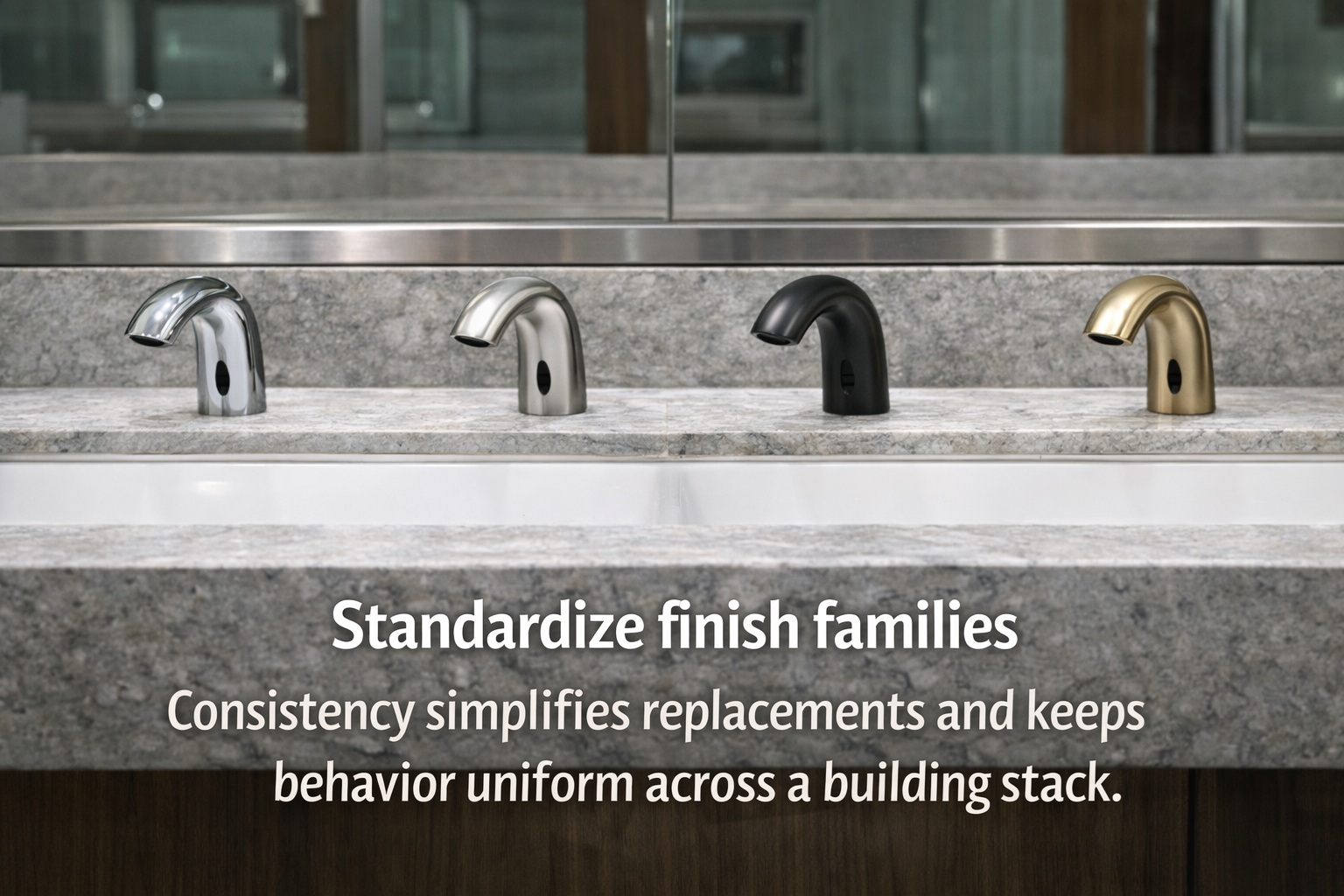
Standardize sink lines by restroom type and by stack. Keep one faucet form, one soap approach, and one finish family where possible. Then vary only what the project truly needs such as mounting method, power strategy, and required flow rate. This reduces part substitutions, simplifies maintenance, and keeps user experience consistent.
Closeout notes: what to document so maintenance stays simple
These are the details facility teams rely on later when something feels inconsistent.
What to record during commissioning
Final sensor setting: range, timeout, and any mode changes applied.
Room variables: mirror placement, counter reflectivity, and daylight exposure.
Pass-by result: confirm no activation from circulation behind the sink line.
Start behavior: confirm no wave-to-start habit is required.
Shutoff behavior: stable shutoff without pulsing or overrun.
What prevents future downtime
Keep shutoffs reachable and document service access points in as-builts.
Standardize SKUs per stack so replacements do not change performance.
Include sensor face cleaning as a defined janitorial step.
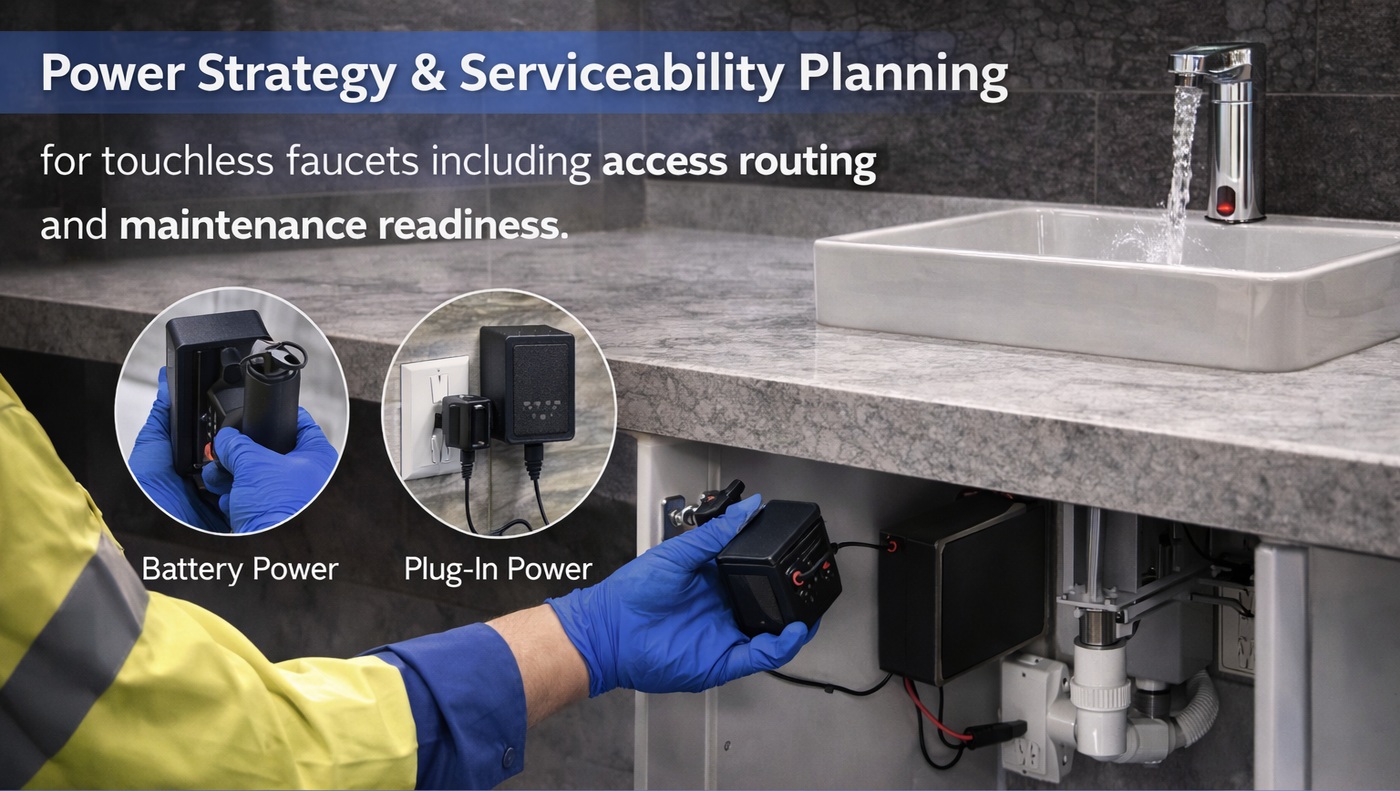
Choose power strategy based on real access and staffing patterns.
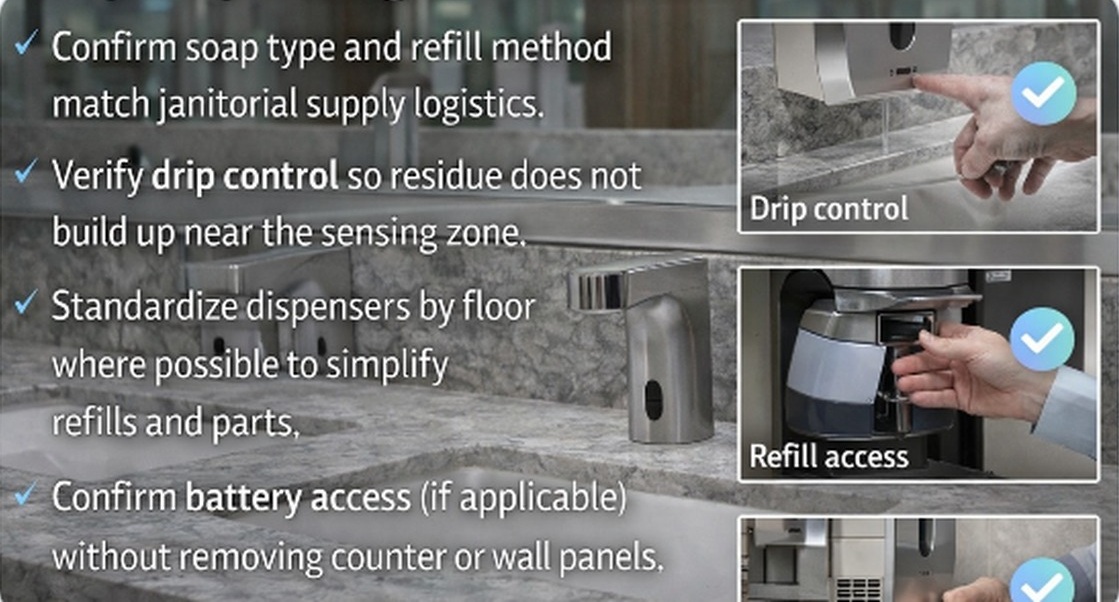
Coordinate soap strategy so residue does not build up near the sensing zone.
Power strategy note
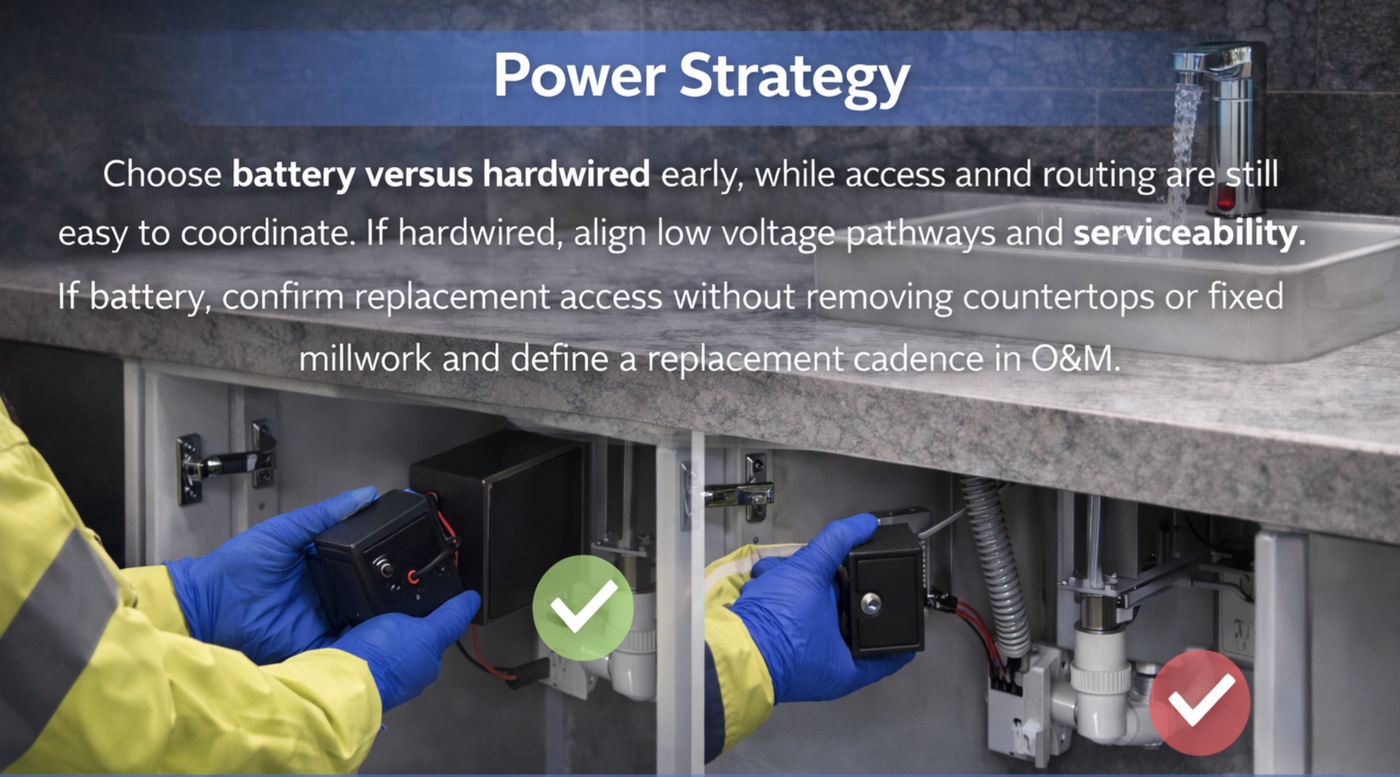
Choose battery versus hardwired early, while access and routing are still easy to coordinate. If hardwired, align low voltage pathways and serviceability. If battery, confirm replacement access without removing countertops or fixed millwork and define a replacement cadence in O&M.
Interference patterns: what to test, what to adjust
A spec-friendly table crews can use during punch, commissioning, and closeout.
Condition
What it looks like in the field
Commissioning adjustment
Mirror glare
Starts when hands are nearby but not in basin, or pulses on and off.
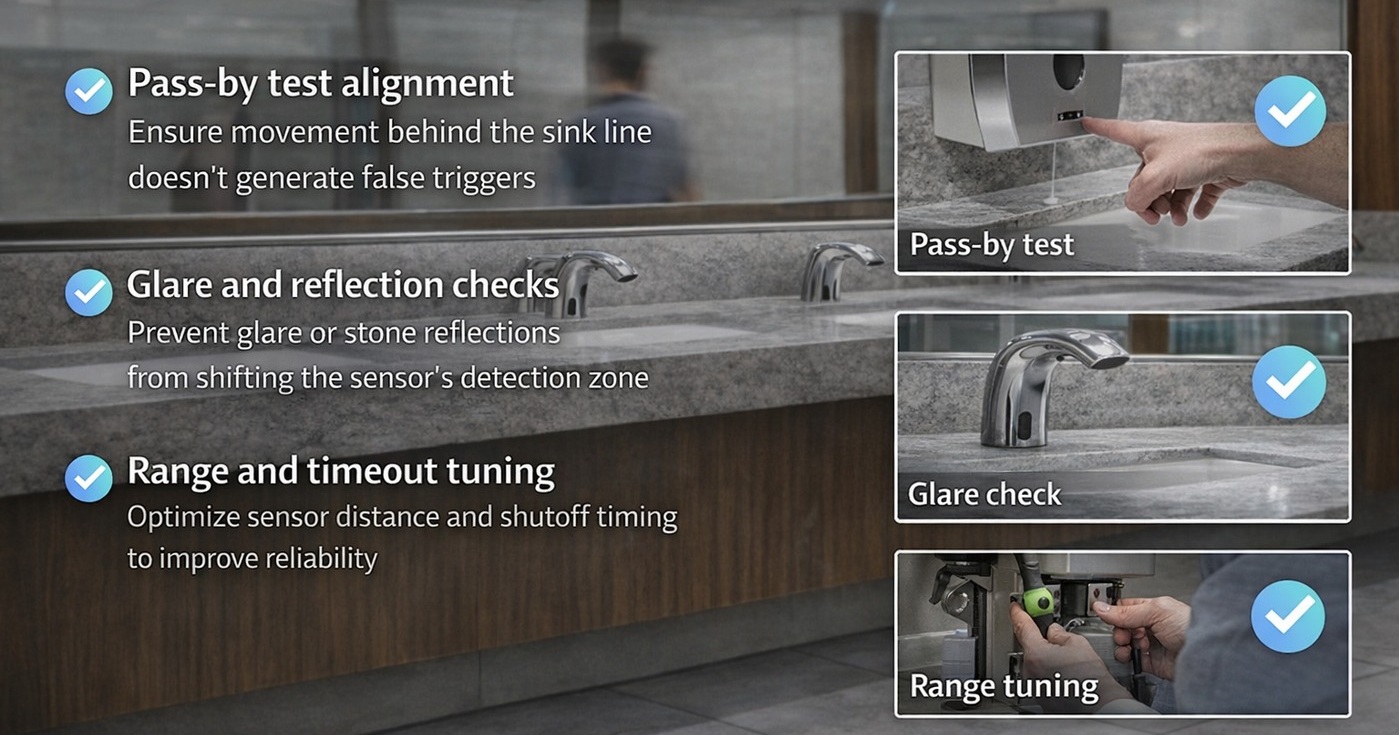
Reduce range, aim sensing zone into basin, and re-test under final lighting.
Strong daylight / skylight
Inconsistent detection at certain times of day, or unexpected activations.
Test at peak daylight, lock a stable setting, and standardize by stack.
Reflective countertop
False triggers from reflections or water sheen near the sensor face.
Tighten range and timeout, confirm cleaning routine, and control splash zones.
Fast pass-by traffic
Ghost runs when people move behind the sink line.
Tighten sensing zone, confirm mounting alignment, re-test during peak traffic.
Humidity / condensation
More misreads when moist, plus residue near sensor face.
Confirm access for wipe-down and document cleaning in O&M.
Kids / low reach users
Activation only when hands are too close or awkwardly placed.
Validate detection across heights and avoid settings that require perfect placement.
Spec language starter (copy ready)
Copy this into Division 22 notes or a commissioning checklist, then tune it to your mounting method, power strategy, and flow target.
Automatic touchless faucet sensor performance (field-validated)
- Provide touchless sensor-operated lavatory faucets with stable start and automatic shutoff.
- Commission sensor range and timeout with the final lighting, mirrors, and countertop finishes installed.
- Verify no false triggering from pass-by traffic, mirror glare, or peak daylight conditions.
- Lock a standard setting by typical restroom stack after validation and record it in O&M turnover.
- Coordinate power strategy (battery or hardwired) and confirm service access for future maintenance.
- Keep shutoff valves reachable and avoid burying service points behind fixed millwork.

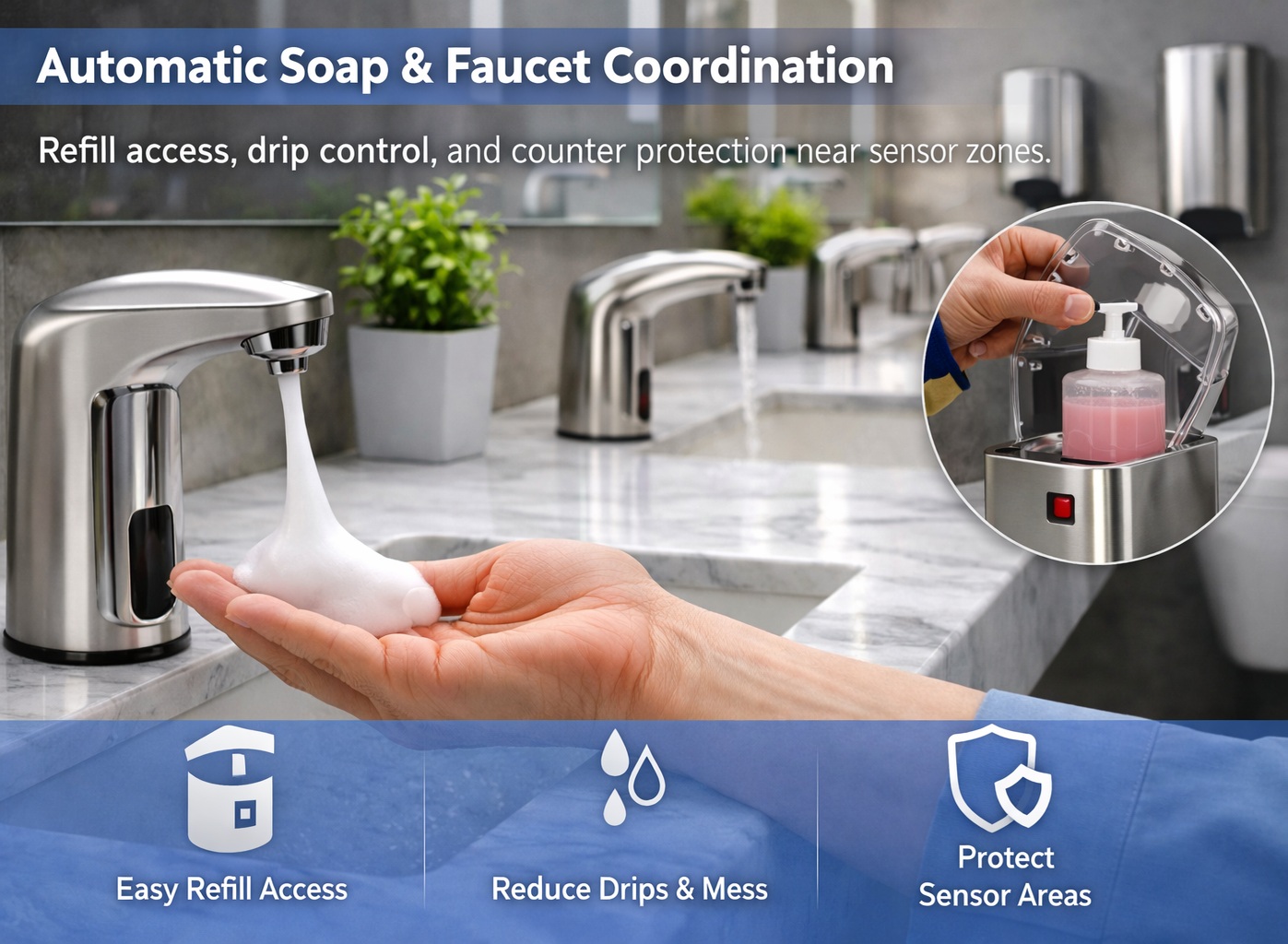
Automatic soap dispensing coordination
- Provide touchless soap dispensing aligned with janitorial refill logistics and drip control.
- Confirm refill access, battery access (if applicable), and countertop protection details.
- Standardize dispenser SKUs where possible and record refill and battery cadence in O&M.
Visual references for field testing and coordination
Use these images to align teams on glare sources, circulation risks, and what serviceable access looks like.
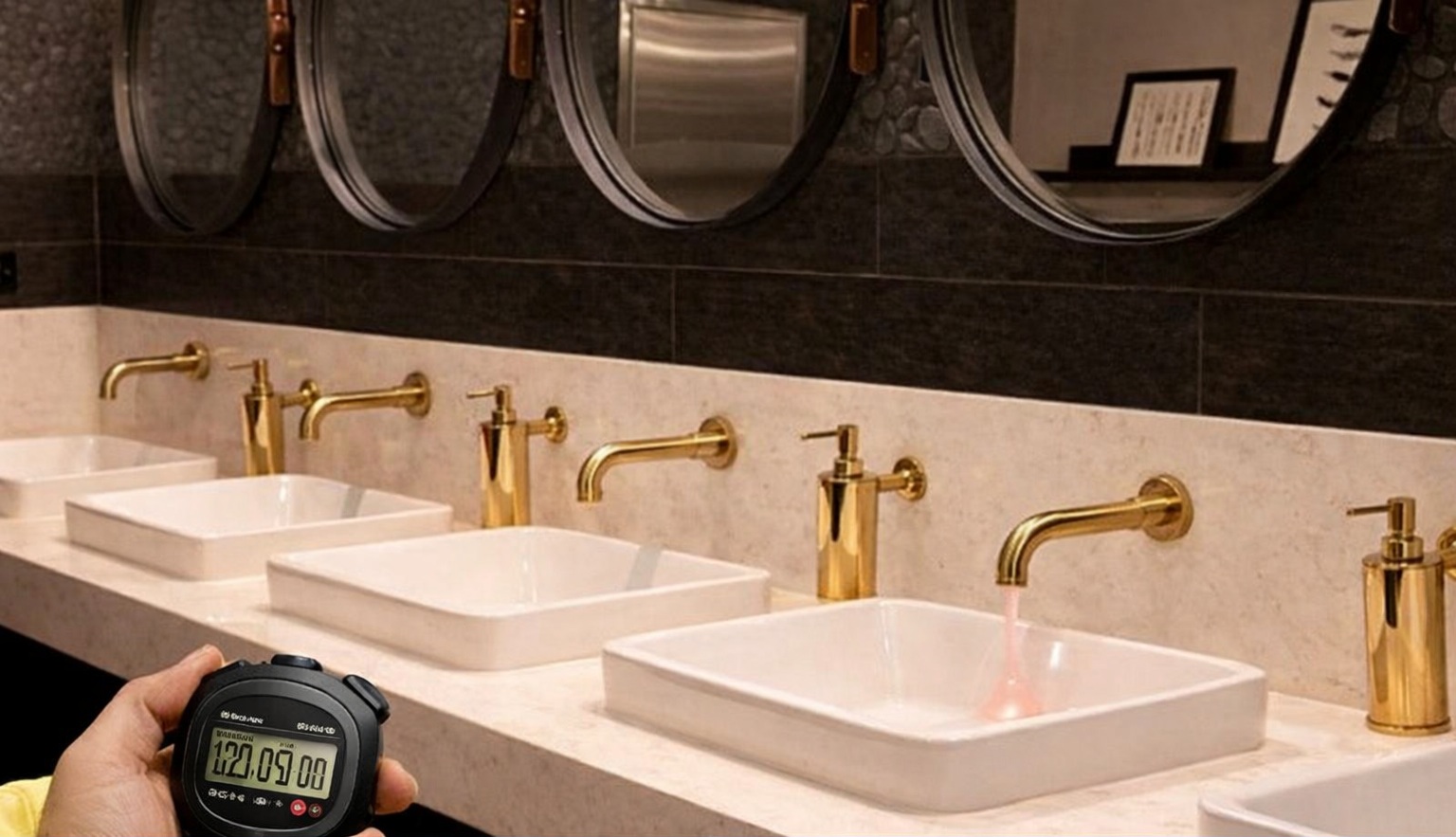
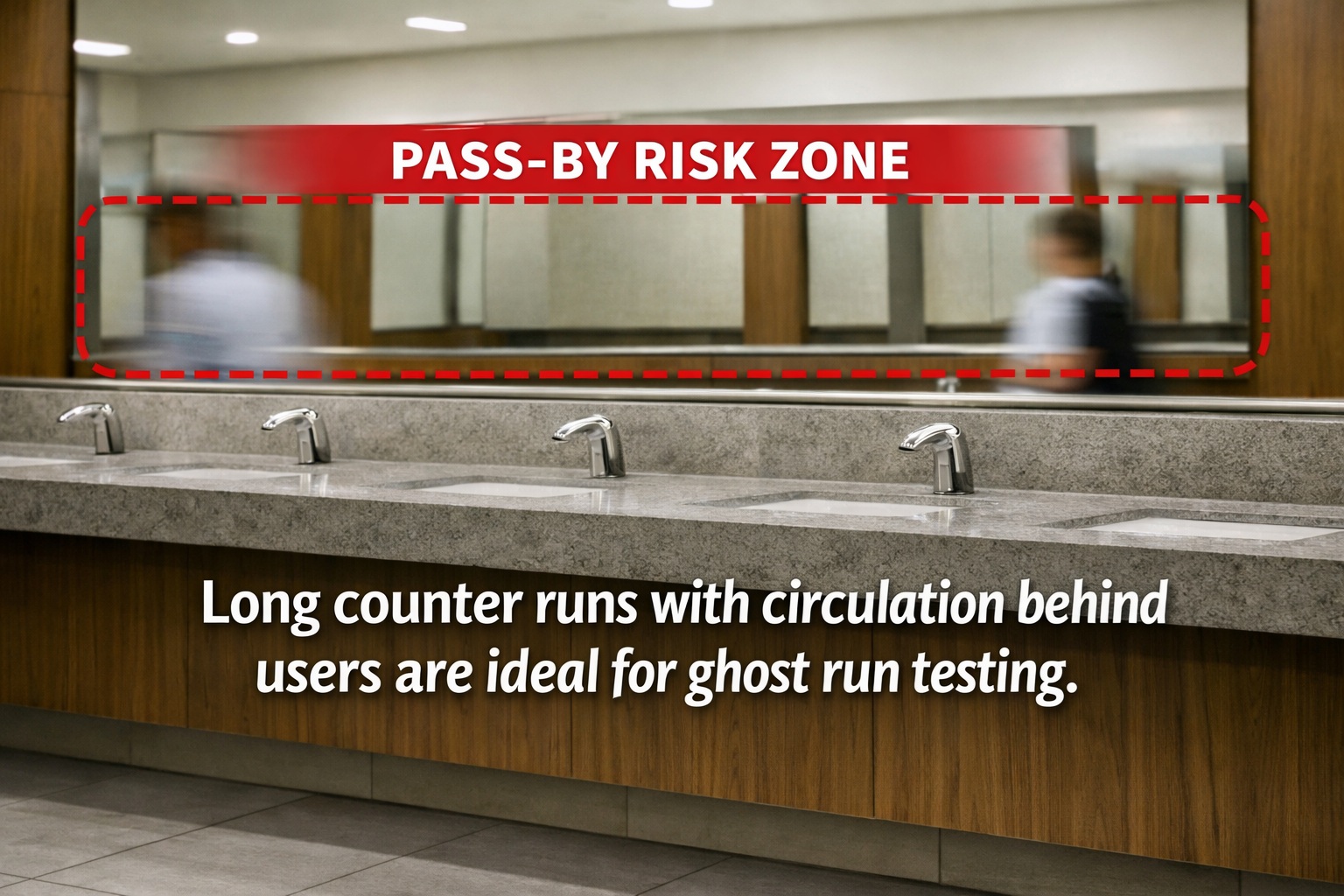
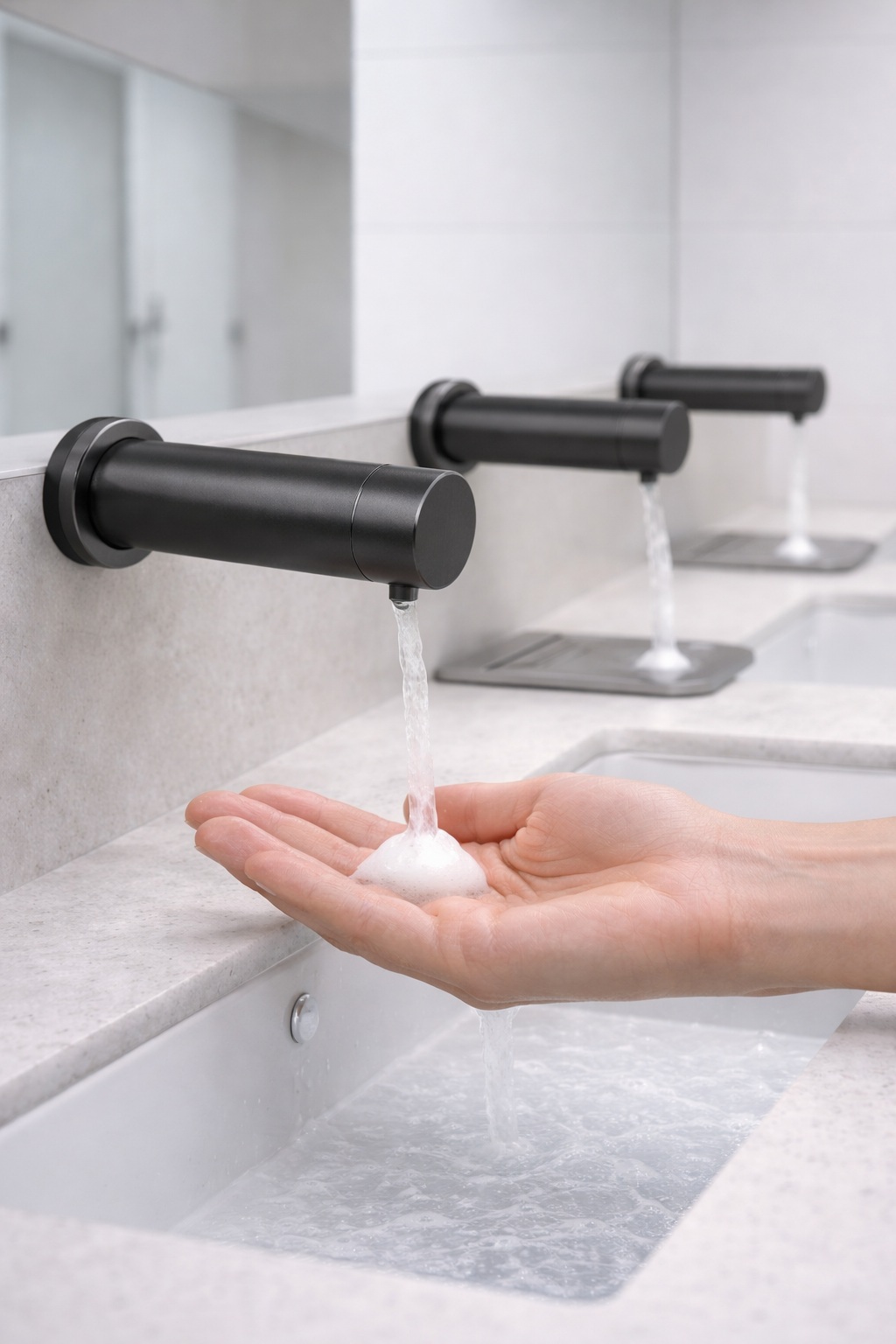
Pass-by risk zoneLong counter runs with circulation behind users are ideal for ghost run testing.
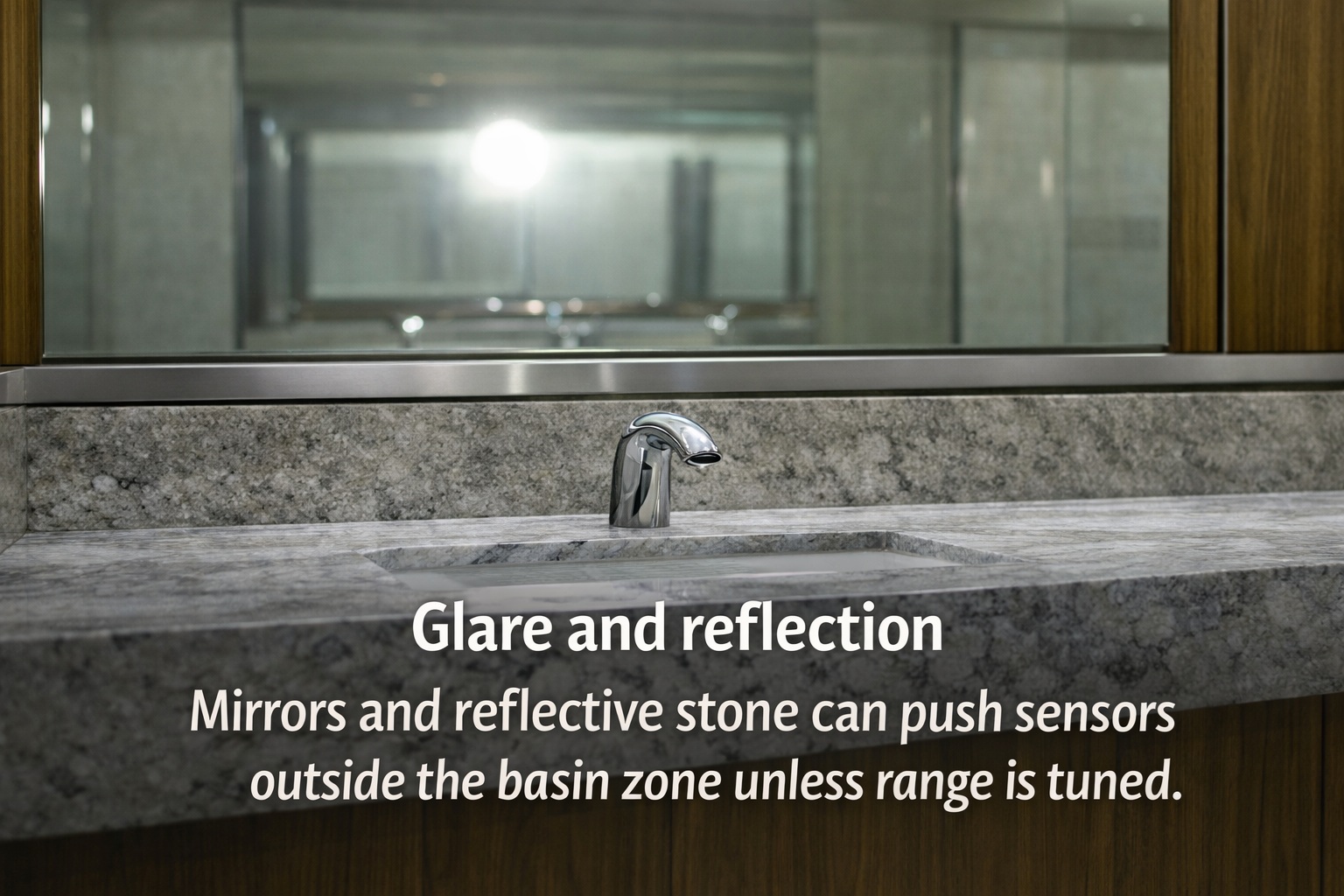
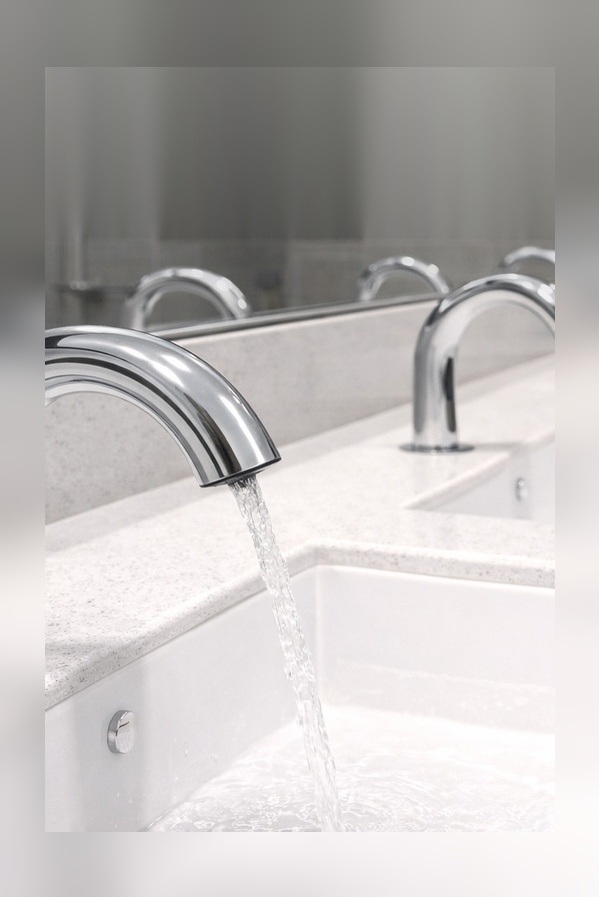
Glare and reflectionMirrors and reflective stone can push sensors outside the basin zone unless range is tuned.
Standardize finish familiesConsistency simplifies replacements and keeps behavior uniform across a building stack.
Most issues come from glare, reflectivity, and settings that change from floor to floor. Test in real conditions, lock one setting per typical stack, and keep SKUs consistent. That is what prevents post-turnover surprises.
Spec pack for architects and contractors
Use this section as the handoff zone. It shortens submittals and makes field verification faster.
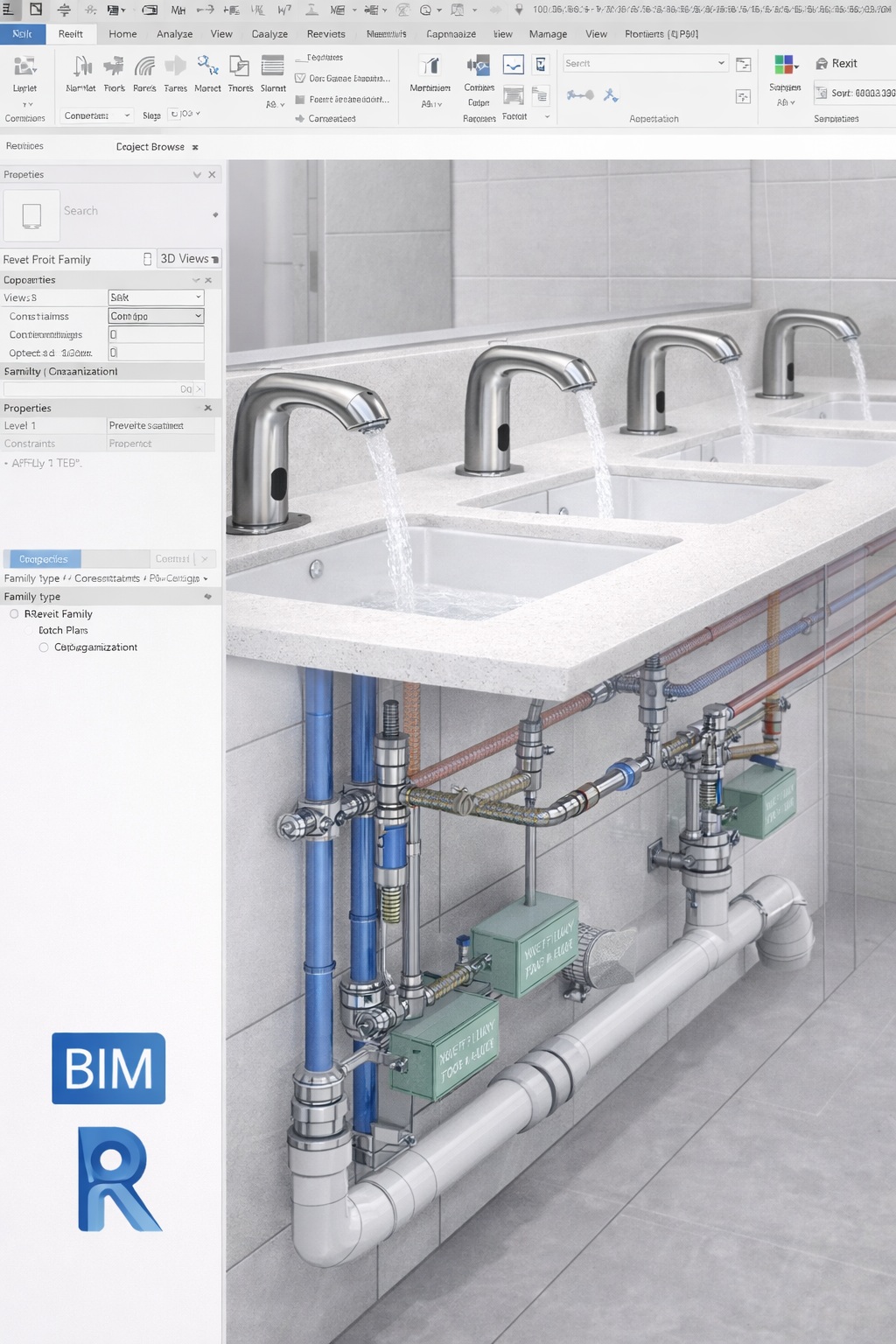
BIM and Revit files
Use for coordination, clearance checks, and documenting access and mounting assumptions.
Note: If your on-page editor requires relative URLs for assets, you can revert the hero images back to the original relative paths. The filenames are unchanged here, only normalized to absolute + URL-safe encoding.
FAQ
Common field questions, written in the same language crews use during punch and closeout.
What does sensor latency mean for a touchless faucet during commissioning?
Sensor latency is the time between a valid hand presentation and water start. Slow starts feel broken and push users to wave and re-trigger. Fast starts without filtering can increase false activations. Define a target behavior and validate it in the finished room.
What causes false triggering in automatic touchless faucets?
Common drivers are strong daylight, mirror glare, reflective stone countertops, and fast pass-by movement. Commissioning should confirm range and timeout with the actual mirrors, finishes, and lighting conditions in place.
How should teams plan field testing during closeout?
Test a representative restroom for each daylight orientation and finish package, then lock a standard sensor setting for that stack. Document the final setting in O&M and keep SKUs consistent so replacements do not change performance later.
Battery or hardwired: which is better for reliability?
Power choice does not eliminate optical interference, but it changes service strategy. Hardwired reduces battery-driven downtime and helps keep performance consistent. Battery models need defined access and a replacement cadence.
power strategy, and finish families consistent so replacements do not introduce mixed SKUs, mixed response times, or new false-trigger patterns. Pair the faucet with a coordinated soap dispenser plan to control drips and residue, and document the final settings in O&M so performance stays stable after turnover.
Find Out First
Get FontanaShowers emails of inspiration, new product releases, and more!