Fontana Large Rain Shower Systems™ | Architectural and Engineering Resource
Fontana Large Rain Shower Head System:
Commissioning & Performance Verification Guide
This commissioning and performance-verification resource is intended to support
architects, plumbing engineers, contractors, installers, commissioning personnel
and facility managers evaluating a Fontana large rain shower system after
installation. The drawing package communicates the recommended sequence for
supply flushing, leak testing, pressure verification, flow balancing,
thermostatic temperature calibration, spray-function testing, drainage
verification, final adjustment and commissioning sign-off.
Fontana Large Rain Shower System — Commissioning & Final Verification
The installed system should be commissioned only after the shower head,
thermostatic or pressure-balance valve, supply connections, controls,
optional hand shower and drainage system have been fully installed and
made accessible for inspection. Commissioning verifies that the system
is leak-free, hydraulically balanced, correctly temperature-calibrated,
uniform in spray performance and capable of positive drainage.
- Supply flushing: Approximately 2 minutes minimum per hot and cold line
- Operating pressure range: Approximately 2.0–5.0 bar (29–72 PSI)
- Recommended test pressure: Approximately 6.0 bar (87 PSI)
- Typical outlet temperature: 38°C (100.4°F)
- Maximum safety-stop reference: 49°C (120°F)
- Drainage slope: Approximately 1–2% (10–20 mm per meter)
- Drainage clearance: Approximately 60 seconds after shutoff
- Typical rain-head elevation: 2100 mm (82-11/16 in.) AFF
- Illustrated clear shower width: Approximately 1200 mm (47-1/4 in.) minimum
- Acceptance: No visible leaks, balanced flow and stable temperature
- Documentation: Record final settings, observations and sign-off
Required Commissioning and Performance Drawing Package
Each commissioning drawing should use a consistent test-point notation,
pressure unit, temperature reference and finished-floor datum. The package
should clearly identify the flushing sequence, pressure and leak-test points,
thermostatic calibration, spray-coverage checks, drainage path, acceptance
criteria and final record requirements. Measurements should be taken under
realistic operating conditions and documented before final handover.
Commissioning & Performance Verification Guide
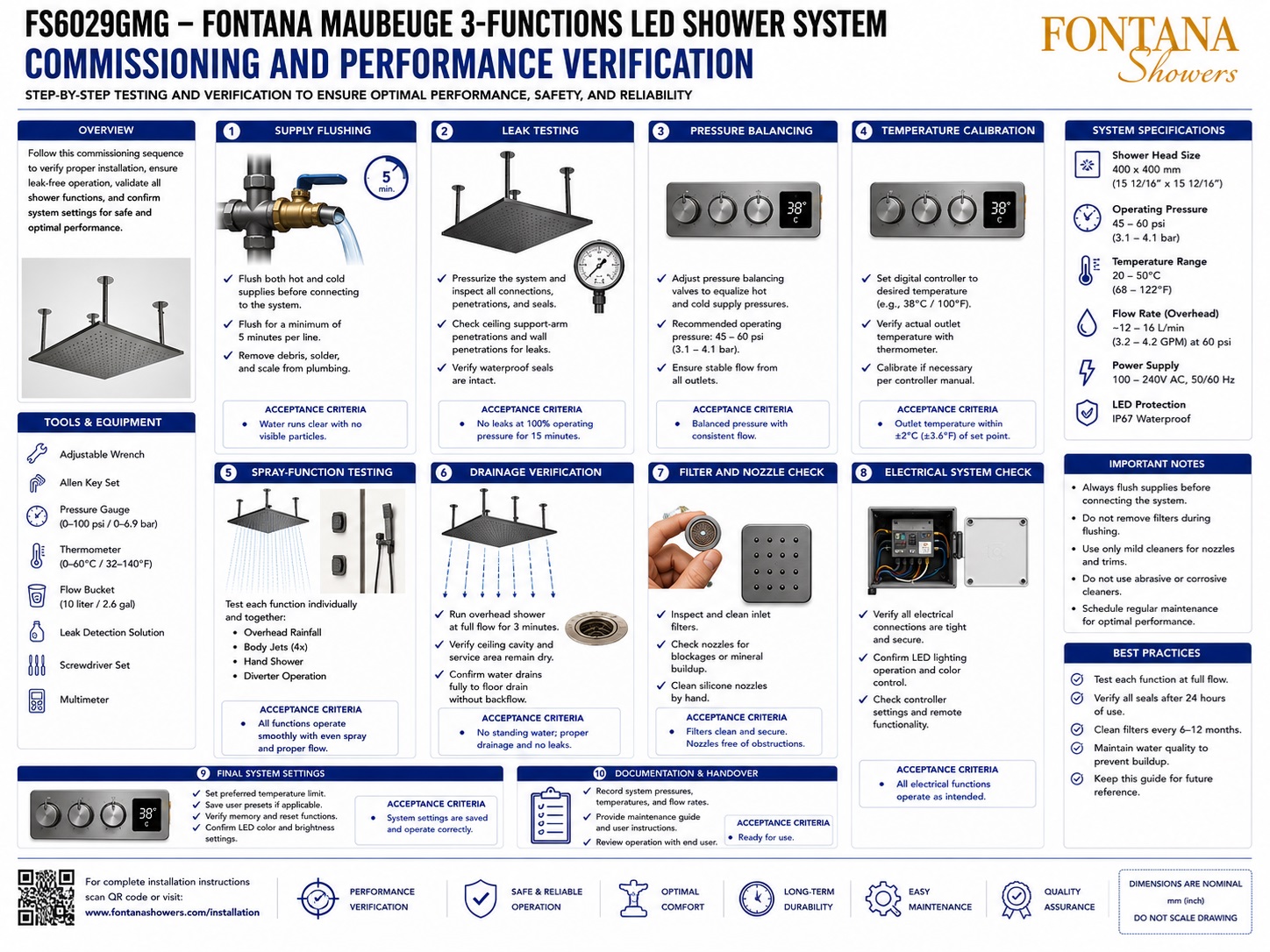
Shows the complete commissioning sequence for the large rain shower system, including supply flushing, leak testing, operating-pressure verification, flow balancing, thermostatic calibration, spray-function testing, drainage verification and final project sign-off. This drawing provides the primary reference for system acceptance.
Supply Flushing
Requires the hot- and cold-water lines to be flushed before normal operation so construction debris is removed before it can enter valves, filters, check valves or shower nozzles. The guide indicates approximately 2 minutes minimum per supply line, or until the discharge runs clear.
Leak Testing
Calls for inspection of all visible and accessible concealed connections while the system is under pressure, including shower-arm fittings, valve joints, supply connections and serviceable unions. No visible leakage should remain before commissioning proceeds.
Pressure Verification & Balancing
Identifies a typical operating pressure range of approximately 2.0–5.0 bar (29–72 PSI) and a recommended test pressure of approximately 6.0 bar (87 PSI). Hot- and cold-water supplies should remain stable and balanced under operating flow.
Temperature Calibration
Sets the thermostatic outlet to a typical target of approximately 38°C (100.4°F) and verifies the maximum safety-stop reference of 49°C (120°F). Actual outlet temperature should be measured with a thermometer rather than relying only on control markings.
Rain-Head Spray Test
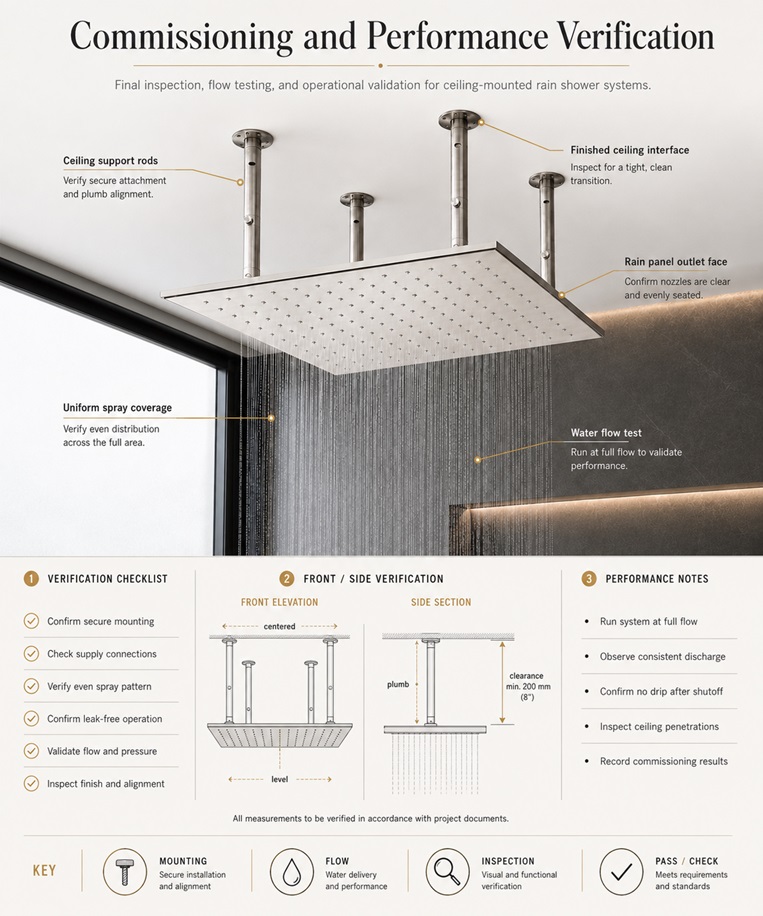
Operates the large rain head at normal flow and confirms full spray coverage, even water distribution, stable operation and proper nozzle performance across the complete shower zone. Restricted or uneven nozzles should be cleaned before final acceptance.
Additional Spray Functions
Where a hand shower or other functions are installed, each outlet should be tested individually and in the intended operating combinations. The commissioning check should confirm balanced flow, smooth control operation and absence of abnormal noise or vibration.
Drainage Verification
Operates the shower at full flow and checks positive drainage toward the floor outlet. The guide shows a nominal 1–2% slope, approximately 10–20 mm per meter, with residual water expected to clear within about 60 seconds after shutoff.
Final Record & Sign-Off
Documents final pressure, temperature, control settings, observations, adjustments, technician information, date and acceptance status. Completed commissioning records should be retained with the project operation and maintenance documentation.
Engineering note:
The values shown are nominal commissioning references. Final test pressure,
operating pressure, outlet temperature, drainage time, spray coverage,
balancing procedure and acceptance criteria should be verified against the
actual installed Fontana system, approved project specifications and current
installation documentation before regular service.
Plumbing, Commissioning and Performance Coordination Considerations
Dynamic Pressure Testing
Take pressure readings while the system is operating under realistic flow conditions rather than relying only on static line pressure.
Temperature Stability
Confirm that mixed-water temperature remains stable during normal use and that the thermostatic safety-stop mechanism functions correctly.
Full Spray Coverage
Check the entire rain-head surface and shower zone for even distribution, restricted nozzles, pulsing, vibration or other abnormal performance.
Drainage Capacity
Verify that the floor slope and drain can accept full shower flow without persistent ponding, back-up or slow clearance after shutoff.
Final Adjustment
Fine-tune temperature and flow balance where required, verify smooth control movement and repeat affected tests after any correction.
Commissioning Records
Record final settings, test values and corrections so facility personnel have a baseline for future inspection, maintenance and troubleshooting.
FontanaShowers Installation and Specification Resources
FontanaShowers Product Catalog
Product information and technical resources for Fontana large rain shower systems, valves, controls, hand showers and related components.
FontanaShowers Installation Resources
General installation and commissioning information for shower systems, concealed valves, controls and related fixtures.
Large Rain Shower Systems
Explore related multi-function shower configurations and coordinated components for commercial and residential installations.
BIM and Design Resources
Architectural coordination resources supporting project documentation and multidisciplinary shower, plumbing and commissioning development.
Shower Valves and Controls
Reference thermostatic valves, pressure-balance controls, diverters and serviceable concealed components used in multi-function showers.
Shower Accessories and Service Parts
Review rain heads, hand showers, filters, check valves, cartridges and related components relevant to commissioning and maintenance.
Professional Engineering and Commissioning References
-
International Code Council – Plumbing Codes
Provides code context for shower installations, water-supply systems, drainage and fixture-performance requirements.
-
IAPMO – Plumbing Standards and Codes
Provides plumbing-code and product-standard resources relevant to valves, water distribution, testing and shower-system safety.
-
ASPE – Plumbing Engineering Resources
Professional engineering reference for plumbing-system design, pressure, flow, balancing and commissioning practices.
-
ASHRAE – Building Water Systems
Provides technical resources relevant to building water systems, temperature control, energy performance and commissioning practice.
-
OSHA – Workplace Safety Resources
Provides workplace-safety guidance relevant to testing, commissioning and maintenance activities.
Project verification:
Commissioning and performance-verification drawings are coordination tools and do
not replace approved project submittals, manufacturer instructions or
project-specific test procedures. The architect, plumbing engineer, contractor,
commissioning provider and qualified installer should verify flushing, leak
testing, operating pressure, temperature calibration, flow balance, spray
performance, drainage, safety-stop operation, final settings and locally adopted
plumbing requirements before project handover.
|
|
|