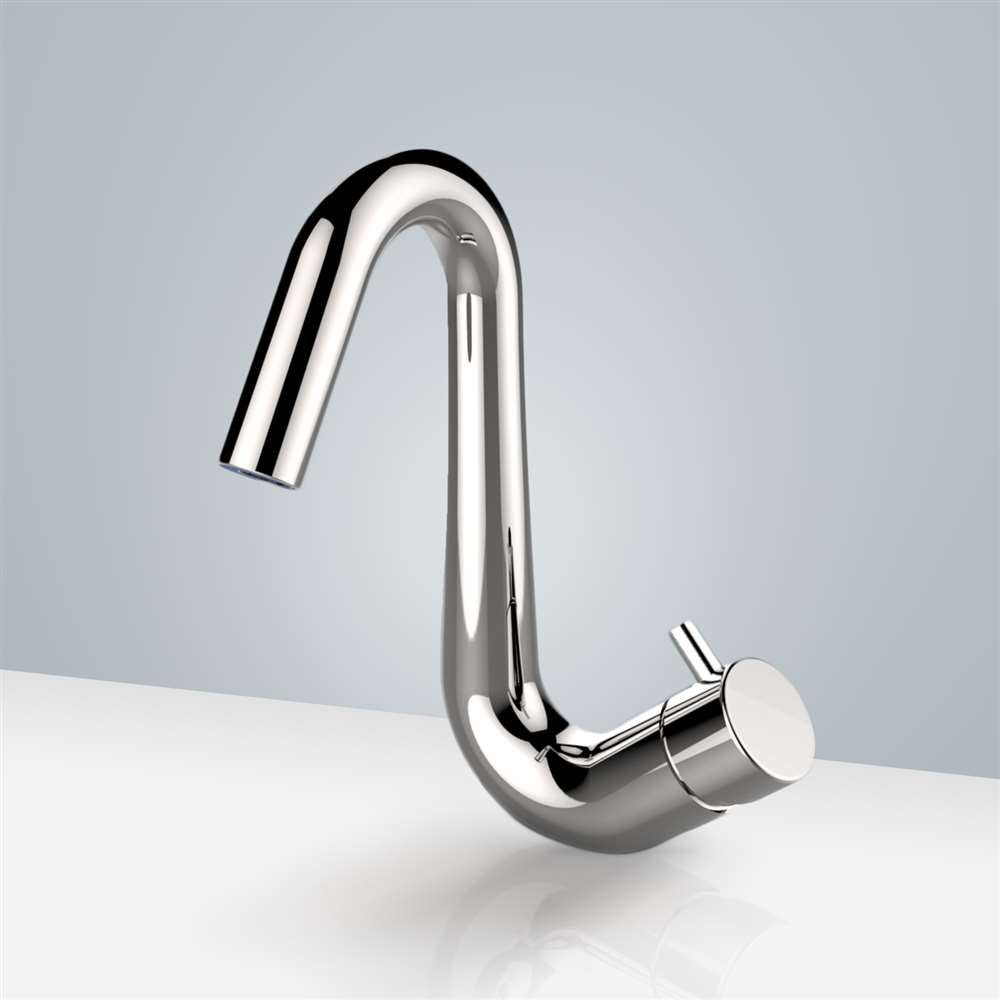
Fontana Napoli Automatic Sensor and Manual Temperature Control Faucet with two waterways design, infra-red sensor, and manual dual activation. Its geometric design and curves will make this piece a statement in any bathroom. Made from solid brass construction, the Napoli sensor and manual dual activation faucet with temperature control are designed with both geometric style and functionality in mind. Automatic temperature control makes the faucet easy to use.
Functionally and visually exceptional, this faucet's crisp square angles punctuate the air in which it stands. The epitome of class, this faucet's silhouette is timeless. The spout is made of brass so that the product can maintain a long-term fresh color finish, and enhance durability and resistance to marks and scratches. This faucet can be used for commercial use. Touchless operation is ideal for commercial use applications in public restrooms, restaurants, office buildings, public facilities, and hospitals. Fits all standard US plumbing. Sensor Faucet with Manual Override; Hybrid system with automatic sensing, manual control option, and consistent water delivery performance.
Fontana Napoli Commercial Automatic Sensor and Manual Temperature Control Faucet
Dual-Mode Activation, Manual Override & Automatic Temperature Control Engineering
Engineered for commercial washrooms, the Napoli integrates infrared sensing, manual override, automatic temperature control, and durable brass construction.
How does the sensor-and-manual dual-activation architecture improve operational redundancy?
The Napoli incorporates two operating methods within one faucet: infrared touchless activation and manual control. This hybrid architecture provides an alternative means of controlling water delivery when manual operation is preferred, while retaining hands-free functionality for routine use—an important operational advantage in commercial facilities requiring greater fixture-control flexibility.
How should the automatic temperature-control system be coordinated during hydraulic commissioning?
The hot- and cold-water supplies should be commissioned with stable inlet conditions so the temperature-control system can deliver consistent mixed water. Engineers should evaluate supply temperatures, dynamic pressure balance, branch-line losses, and upstream isolation provisions, particularly where several fixtures may operate simultaneously on the same commercial distribution system.
What engineering role does the ceramic valve core perform in the hybrid control system?
The ceramic valve core provides the mechanical control interface required by the faucet's manual operating mode while complementing its electronically triggered sensor function. Ceramic sealing surfaces are well suited to repeated actuation, supporting controlled water regulation and helping maintain dependable shutoff performance throughout frequent commercial operating cycles.
What rough-in considerations apply to the single-hole dual-control faucet configuration?
The single-hole deck arrangement concentrates the faucet body, mounting hardware, water connections, and associated control requirements within a compact installation zone. During MEP coordination, adequate below-deck clearance should therefore be maintained for supply routing, fastening hardware, sensor components, and future service access without interference from the basin or surrounding casework.


 Flexibility Beats Simplicity


 Manual Override Issues Prevented