The Fontana Reno Commercial Temperature Control Chrome Plated Automatic Infra-Red Sensor Sink Faucet is a commercial faucet that eliminates the need to touch or turn handles. Preset the temperature and flow rate to ensure consistency. Through the use of sensor beams, the automatic faucet determines when an object is in front of it and automatically turns on the faucet.
The automatic motion sensor faucet provides water only when needed to reduce water waste. Unlike regular faucets where sometimes we turn the water on and then walk away, this faucet is preset to shut off after approximately 30 seconds. And, because they are hands-free faucets, they help reduce the spread of germs and keep the vanity area clean. Touchless operation is ideal for commercial use applications in public restrooms, restaurants, office buildings, public facilities, and hospitals. Fits all standard US plumbing. Commercial Automatic Sensor Faucet; Engineered for reliable activation, controlled flow output, and efficient operation in high-use environments.
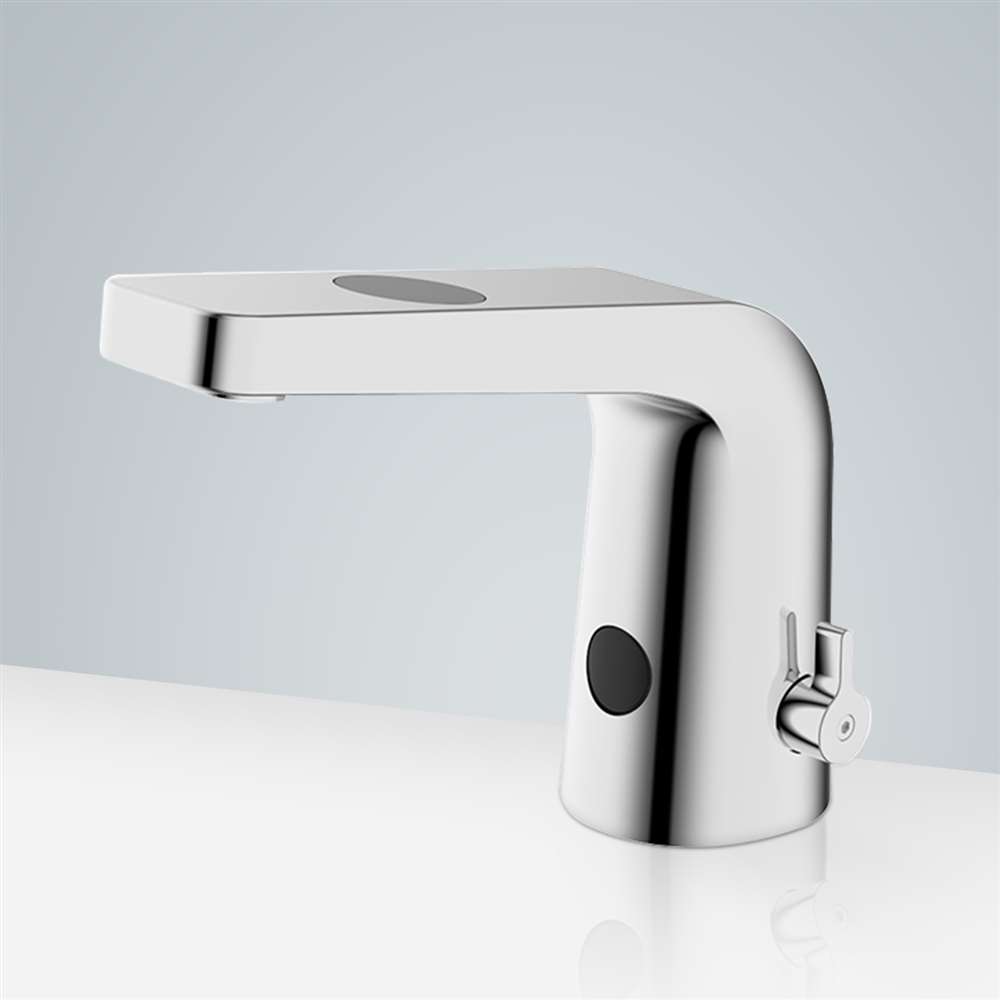
Fontana Reno Commercial Temperature Control Chrome Plated Automatic Infra-Red Sensor Sink Faucet
6.2–12.5" Sensor Calibration, 30-Second Safety Shutoff & Multi-Power Commercial Control
Engineered for commercial washrooms, the Reno combines adjustable infrared sensing, preset flow control, ceramic valving, and flexible AC/DC power architecture.
How does the 6.2–12.5 inch sensing range support basin-specific sensor calibration?
The adjustable 6.2–12.5 inch detection range enables commissioning around the actual faucet setback and basin geometry rather than relying on a single fixed activation distance. This allows installers to position the infrared detection envelope where hands are naturally presented while reducing unintended triggering from reflective basin surfaces or nearby objects.
What engineering function does the approximately 30-second automatic shutoff provide?
The faucet is preset to terminate water delivery after approximately 30 seconds, providing a secondary control against extended unattended discharge. This timeout complements normal presence-based sensor operation and is particularly valuable in high-traffic facilities where limiting abnormal run time can reduce unnecessary water consumption and operational demand.
How should the 0.05–0.6 MPa pressure range be evaluated during hydraulic design?
The specified 0.05–0.6 MPa operating range establishes the pressure envelope available to the automatic valve assembly. MEP designers should verify dynamic pressure at the fixture under simultaneous demand, accounting for branch-line friction, elevation losses, isolation valves, and upstream restrictions so sensor-triggered discharge remains stable during peak restroom use.
What coordination advantage is provided by DC, AC, and combined DC+AC power options?
Multiple power configurations allow the Reno to be integrated into different electrical and maintenance strategies. AC can support permanently powered new construction, DC can accommodate installations without convenient mains wiring, and a combined configuration provides additional design flexibility where continuous sensor availability and service planning are important project considerations.


 Pressure Imbalances Removed


 Impressive Build for Businesses