WELL Certified Guest Experience in Hospitality Bathroom Fixtures | FontanaShowers
Hospitality bathroom design is increasingly being considered as part of the overall guest wellness experience. The bathroom is no longer a set of decorative plumbing fixtures for architects, plumbing engineers, interior designers, sustainability consultants, developers, and hotel facility teams. It’s an operational environment where hygiene, water efficiency, accessibility, thermal comfort, maintainability and user confidence come together.
This distinction is particularly important for projects that follow the WELL Building Standard. The term FontanaShowers WELL Certified Hospitality Bathroom Fixtures should be understood as a WELL-aligned specification strategy, not as an indication that any one tap, soap dispenser or shower is “WELL Certified” on its own. WELL certification is available for qualifying buildings, interiors and projects. But the selection of plumbing fixtures can enable the strategies by which a hospitality project attains its WELL goals.
Read MoreShow Less
Hospitality bathroom fixture solutions from FontanaShowers can thus be evaluated by hospitality AEC teams as components of a more comprehensive wellness-centric plumbing system.


Hospitality Bathroom and WELL v2
W08 Hygiene Support is part of the WELL v2 Water concept and aims to exceed basic handwashing. According to WELL, the feature promotes hygienic handwashing and toilet-use practices and provides bathroom accommodations for a variety of users. Its methodology takes sinks, soap availability, hand drying and touch point reduction into account as part of an integrated hygiene environment.
Read MoreShow Less
That systems approach makes a difference in hotels.
You can't really judge a tap until you see what's coming out of the basin. When evaluating the basin, drainage, splash behaviour and accessible clearances must be considered. Sensor faucets need power and a solenoid valve, supply isolation, sensor calibration and service access. Soap dispensing should occur within an intuitive handwashing sequence.
A WELL-aligned design for a hospitality bathroom should coordinate the entire handwashing station, not specify isolated products.
FontanaShowers’ architect and designer bathroom specification resources help AEC teams coordinate fixture selection with drawings, BIM information, installation requirements and project documentation.


Touchless Fixtures: Hospitality Infrastructure
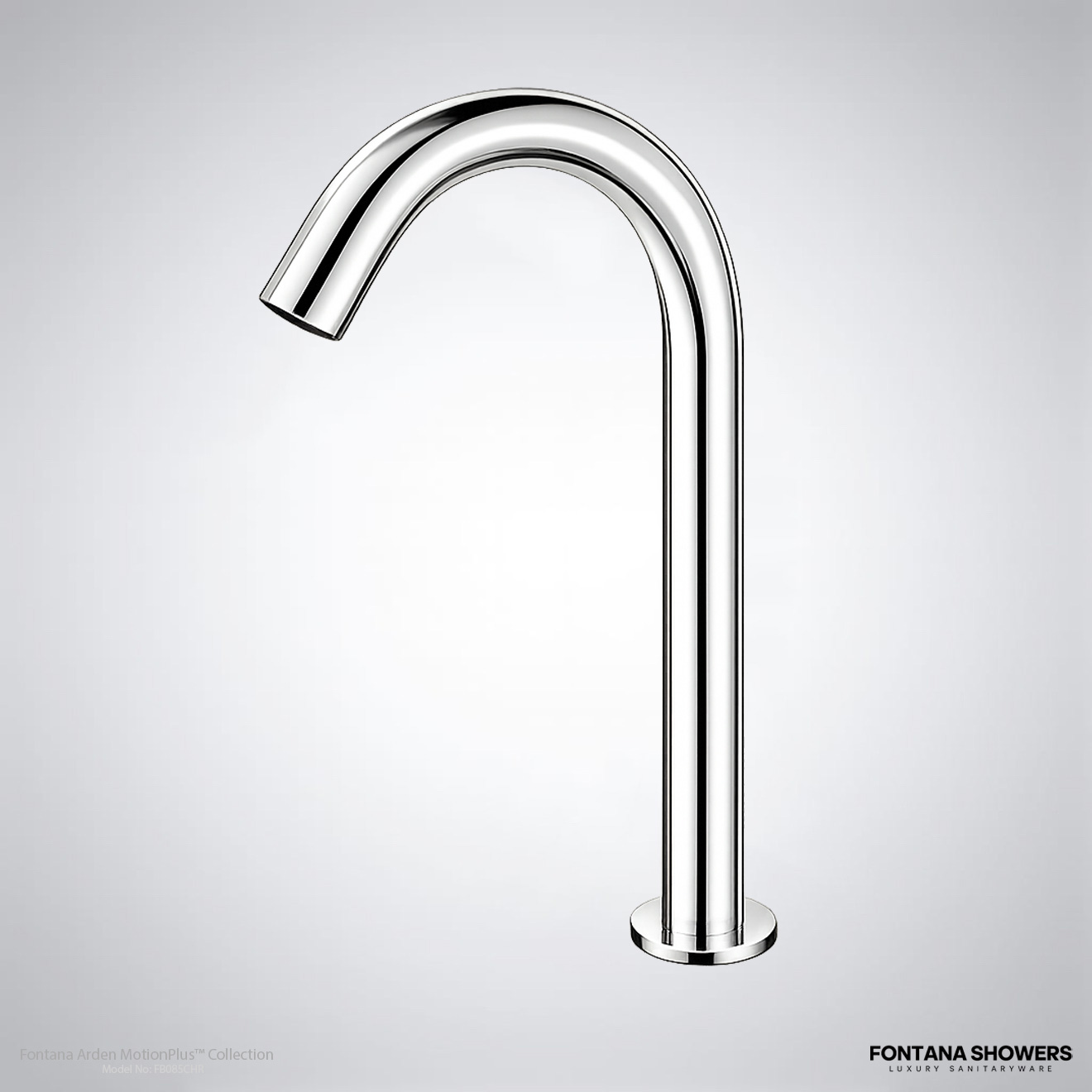
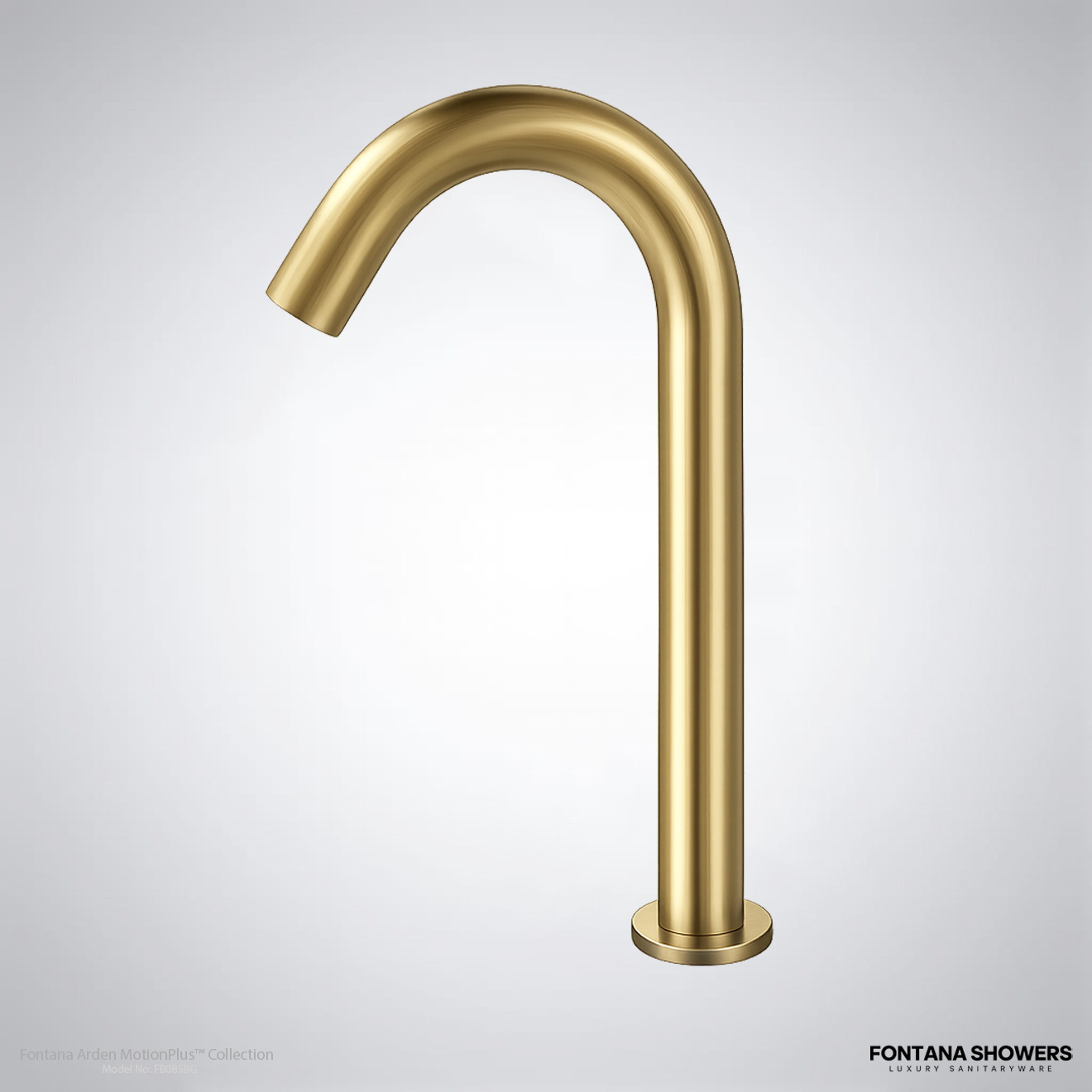
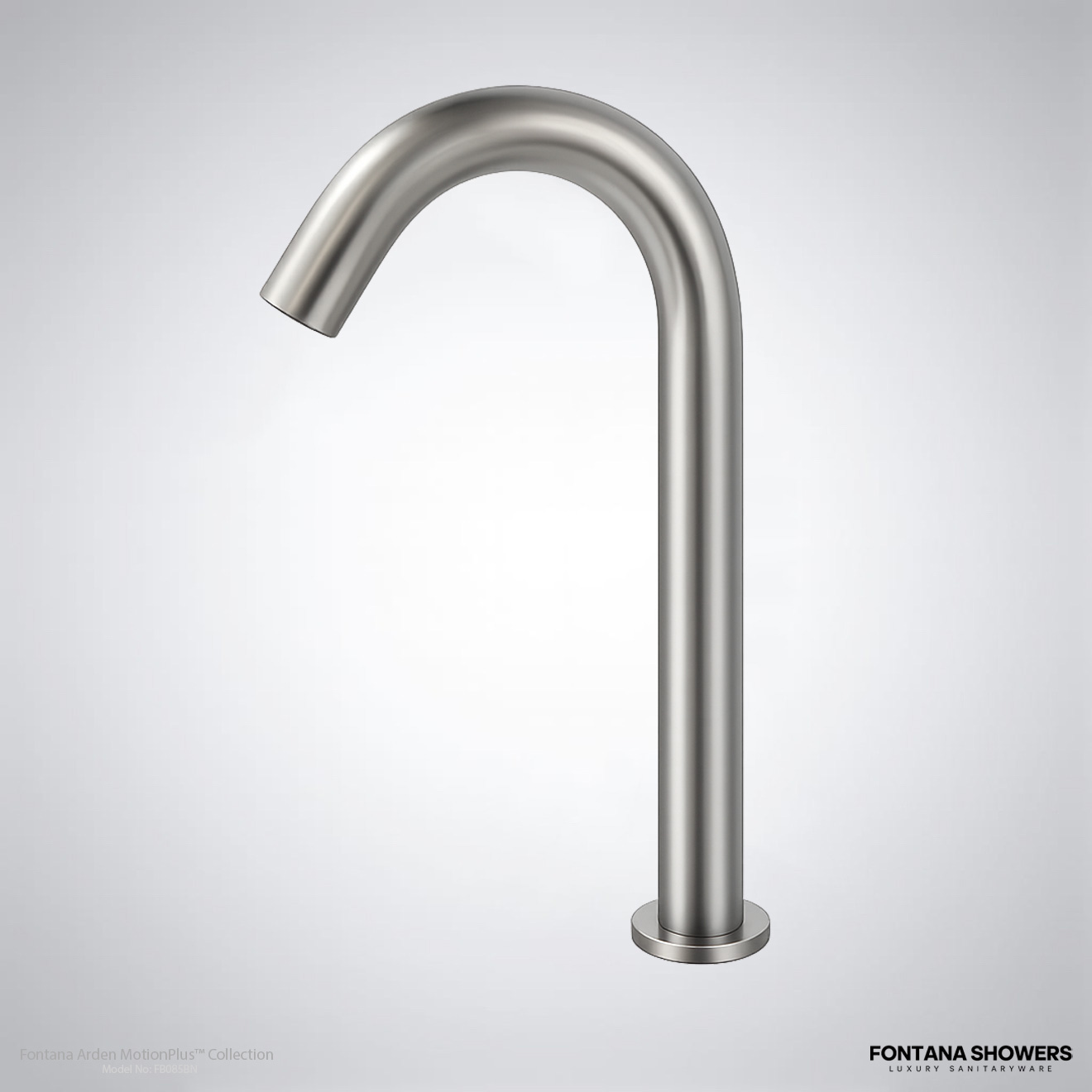
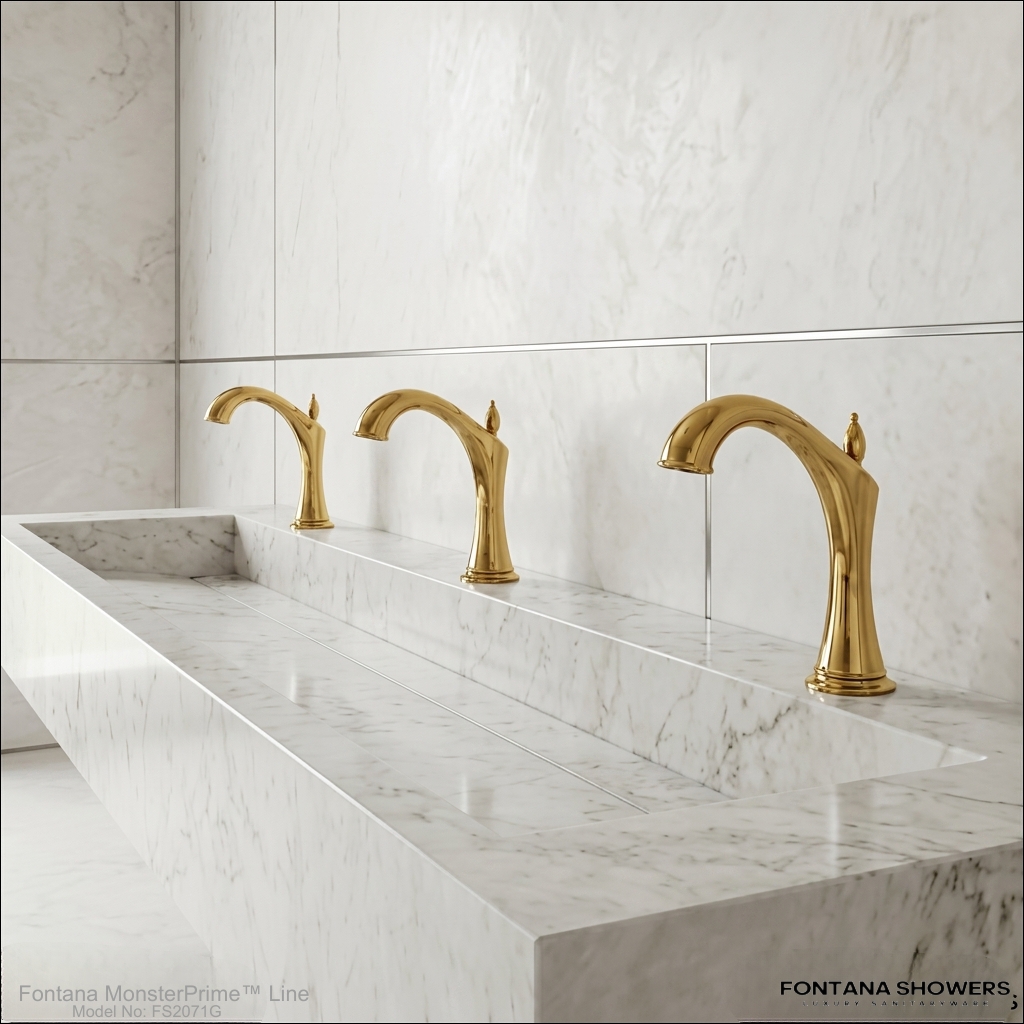
Touchless technology can be especially beneficial in high-cycle hotel environments such as lobby bathrooms, conference centers, restaurants, spas, fitness clubs, ballrooms and common amenity areas.
Well-designed commercial touchless bathroom faucets do not require users to manipulate faucet handles. The automatic shutoff also allows the plumbing engineer to have more control over how long the water continues to flow after it is activated.
Read MoreShow Less
But the sensor is just half the equation.
A professional specification should assess:
sensor detection range and false-trigger immunity; • tap projection and water column landing point; • supply pressure and flow control device; • solenoid valve accessibility; • AC, DC or backup power scheme where applicable; • hot/cold mixing scheme; • shutoff and isolation accessibility; • countertop and basin shape; • maintenance clearances; and • replacement component availability.
Matching automatic touchless soap dispensers can make the hands-free concept complete for the entire handwashing process. The location of the dispenser, the sensor zone, dosing volume, refill access and reservoir strategy should be coordinated with the same care as the tap.
This is where guest wellness is an engineering issue, not a marketing statement.
Water Efficiency: Public Restroom Versus Guestroom
Hospitality plumbing schedules must differentiate between hotel lavatories for public use and bathrooms for private guestroom use.
According to EPA guidance, to be considered efficient and meet the expectations of the applicable plumbing code, faucets in public lavatories generally found in non-private toilet rooms must have a flow rate of 0.5 gallons per minute or less. It’s different for private lavatory faucets, where WaterSense-labeled bathroom sink faucets have been limited to 1.5 gpm while still meeting performance criteria.
Read MoreShow Less
This distinction avoids a common specification error that is becoming increasingly prevalent, namely, applying a single nominal flow requirement to all hotel lavatories regardless of occupancy and use.
.jpg)
.jpg)
.jpg)
.jpg)
AEC Fixture Reference Drawing for Hospitality
Wellness / Performance Hospitality Area AEC Coordination ImportanceDesign Reference :
| Lobby / looHygiene + controlled use of waterBasin design, sensor calibration, access for servicePublic Restroom Target ≤ 0.5 gpm |
| Guestroom bathroom Comfort + efficiencyFlow performance Finish durability AcousticsReview eligible WaterSense product/model data |
| High cycle reliability Conference/restroom corePower redundancy, solenoid access, isolationTouchless commercial fixture approach |
| Spa & Wellness SuiteThermal comfort Mixing valve, pressure, spray selectionThermostatic control where applicable |
| Disability friendly toilet Non-discriminating businessReach, Clearances, Faucet Controls ADA Sections 606 & 309 |
| Restaurant/public W.C.Support for handwashing Coordination of tap, soap and basin WELL W08 strategy |
The U.S. Access Board also requires accessible tap controls to meet applicable operable-parts provisions. Touch free faucets and dispensers allow a wide range of users to operate them as they do away with many of the manual operational needs.
Guest Shower Experience Wellness Beyond the Bathroom
Thermal comfort, controllability and bathing experience quality are replacing high-cycle handwashing as the focus of wellness in guestrooms, spas and premium suites.
So, as it pertains to the specifiers of the hospitality luxury shower system on AEC teams, don’t judge a book by its showerhead.
Read MoreShow Less
Full shower specification may include incoming pressure conditions, thermostatic or pressure-balancing control, maximum delivery temperature, flow requirements, diverter architecture, rainfall coverage, handheld-shower integration, body-spray sequencing, waterproofing interfaces and service access.
The goal is uniformity of performance.
If pressure losses make it impossible for outlets to work properly simultaneously, if temperature controls are unstable or if concealed components cannot be serviced without damage to finished surfaces, a multi-function shower that makes a visual impression is of little value to guests.
Wellness and maintainability must therefore be designed together for hotels.
Hotels for health-conscious people, 250 rooms
Imagine a typical 250-room urban hotel with private guest bathrooms, lobby restrooms, meeting rooms, restaurants, a fitness center and spa features.
Instead of creating one plumbing-fixture schedule, the project team divides the property into operating zones.
Read MoreShow Less
Lobby and conference restrooms feature commercial faucets with sensors and coordinated soap systems for frequent use. Guestroom lavatories are assessed separately according to washing behaviour, perceived comfort and private use efficiency criteria. Additional review is provided for thermal regulation, pressure availability and service access for spa shower systems.
For example, assume a single public lavatory group has 50,000 tap activations per year with an average of 15 seconds per activation.
1.5 gpm:
1.5 x.25 minutes x 50,000 = 18,750 gallons/year
At 0.5 gpm:
0.5 x 0.25 minutes x 50,000 = 6250 gal/year
That activation profile is about 12,500 gallons per year difference modelled.
This is an example engineering calculation and not measured project performance. Actual consumption is pressure, activation time, sensor behaviour, user demand and fixture configuration dependent. But it highlights why flow rate and automatic shutoff need to be considered in conjunction, not as independent spec attributes.

.jpg)
Design for Operational and Lifecycle Performance
A hospitality bathroom is a design project that does not end with construction.
Post-occupancy, engineering and facility teams inherit all hidden valves, sensors, batteries, power supplies, aerators, cartridges, hoses and access panels chosen during design.
Read MoreShow Less
That makes serviceability a part of guest wellbeing.
Good specifications will identify isolation points, replacement components, access requirements, cleaning compatibility and commissioning procedures prior to procurement. Test acceptance of sensor fixtures should include behaviour upon activation, nuisance triggering, shutoff response, and detection performance under actual lighting, countertop and basin conditions.
FontanaShowers’ broader touchless tap specification resources for commercial projects support this shift from product selection to system coordination.
From luxury bathroom to wellness infrastructure_
The finest hospitality bathrooms marry design quality with measurable performance.
A well-planned bathroom can combine reduced touch points, effective handwashing, accessible operation, responsible water use, temperature stability and serviceable plumbing infrastructure without compromising the visual identity demanded of luxury hospitality interiors.
So the specification question should go beyond architects and engineers:
“Which fixture appears suitable?”
The more useful question is:
“How is this fixture going to work within the guest wellness, plumbing and facility-management system?”
When FontanaShowers hospitality bathroom fixtures, commercial touchless faucets, automatic soap dispensers, accessible lavatory design and hotel shower systems are grouped as integrated assemblies, project teams can deliver bathrooms that support wellness objectives but are practical to install, commission, maintain and operate.
This is the real opportunity behind WELL-aligned hospitality bathroom fixtures: to move guest wellness from an abstract design aspiration to coordinated, documentable, maintainable building performance.
Related WELL, Hospitality & AEC Resources
Selected references below are directly relevant to WELL-aligned hospitality bathrooms, touchless handwashing, water efficiency, accessible operation, plumbing-system coordination, hotel design and facility lifecycle planning.
Source and related-resource links are provided for project research and specification coordination. Inclusion does not imply that an individual FontanaShowers fixture is WELL Certified, WaterSense labeled, code approved or otherwise certified unless the exact model is supported by applicable documentation.