FontanaShowers WELL Water Quality Fixture Solutions
For architects, plumbing engineers, sustainability consultants, facility teams, and specification writers, water quality is no longer treated solely as a utility-side issue. Modern high-performance buildings increasingly evaluate water from the point of entry through distribution, treatment, temperature management, commissioning, maintenance, and finally the fixture where occupants interact with it.
Read More Show Less
The WELL Building Standard's Water concept places particular emphasis on safe water, appropriate filtration and treatment, performance testing, and ongoing water-quality management. WELL requirements and strategies address issues ranging from sediment and microorganisms to chemical contaminants and water-treatment maintenance.
For AEC teams, this makes the plumbing fixture an important point-of-use interface within the larger building water system. The fixture cannot independently make a project WELL compliant, but fixture selection, flow characteristics, materials, temperature control, sensor operation, serviceability, and commissioning can support a broader WELL-oriented water strategy.

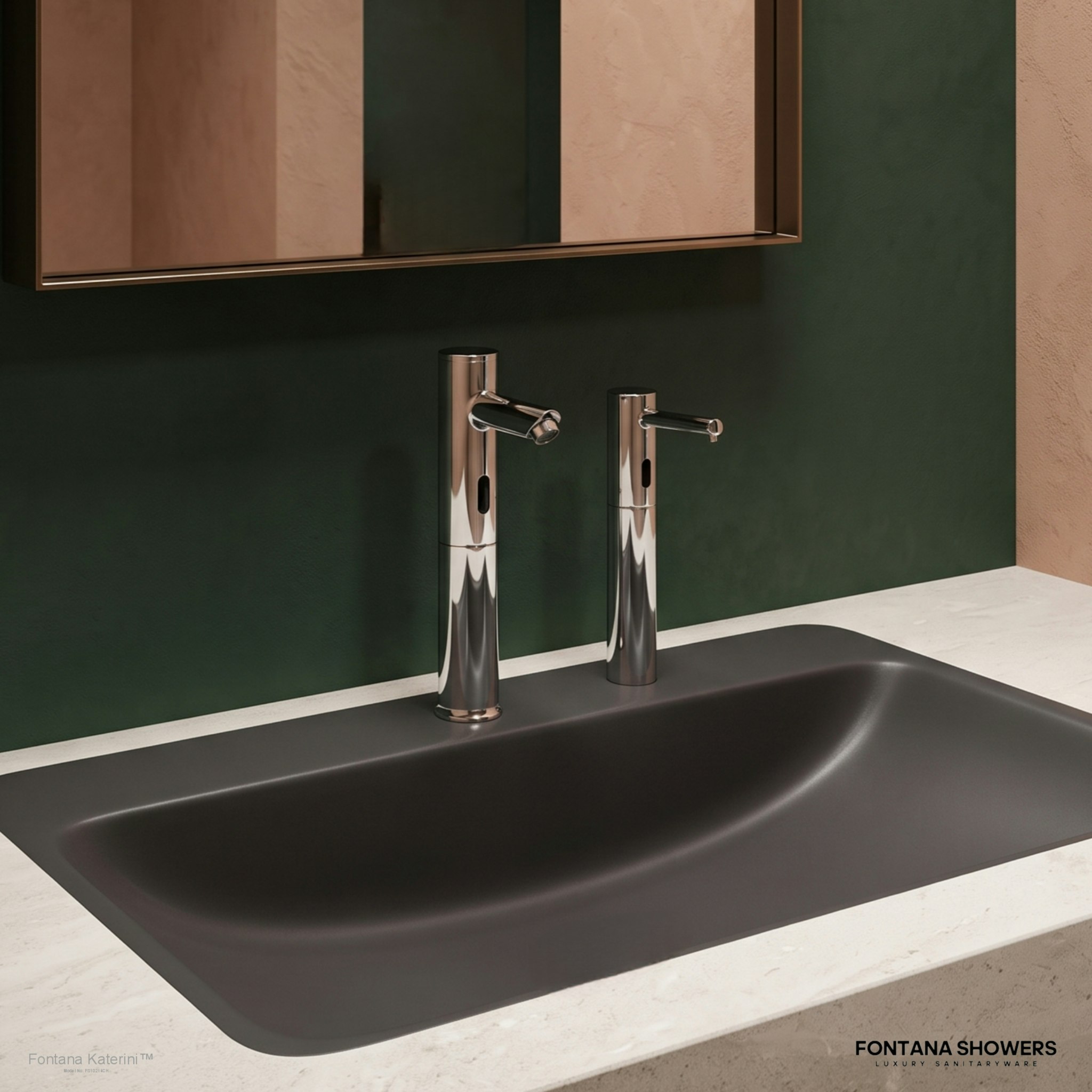
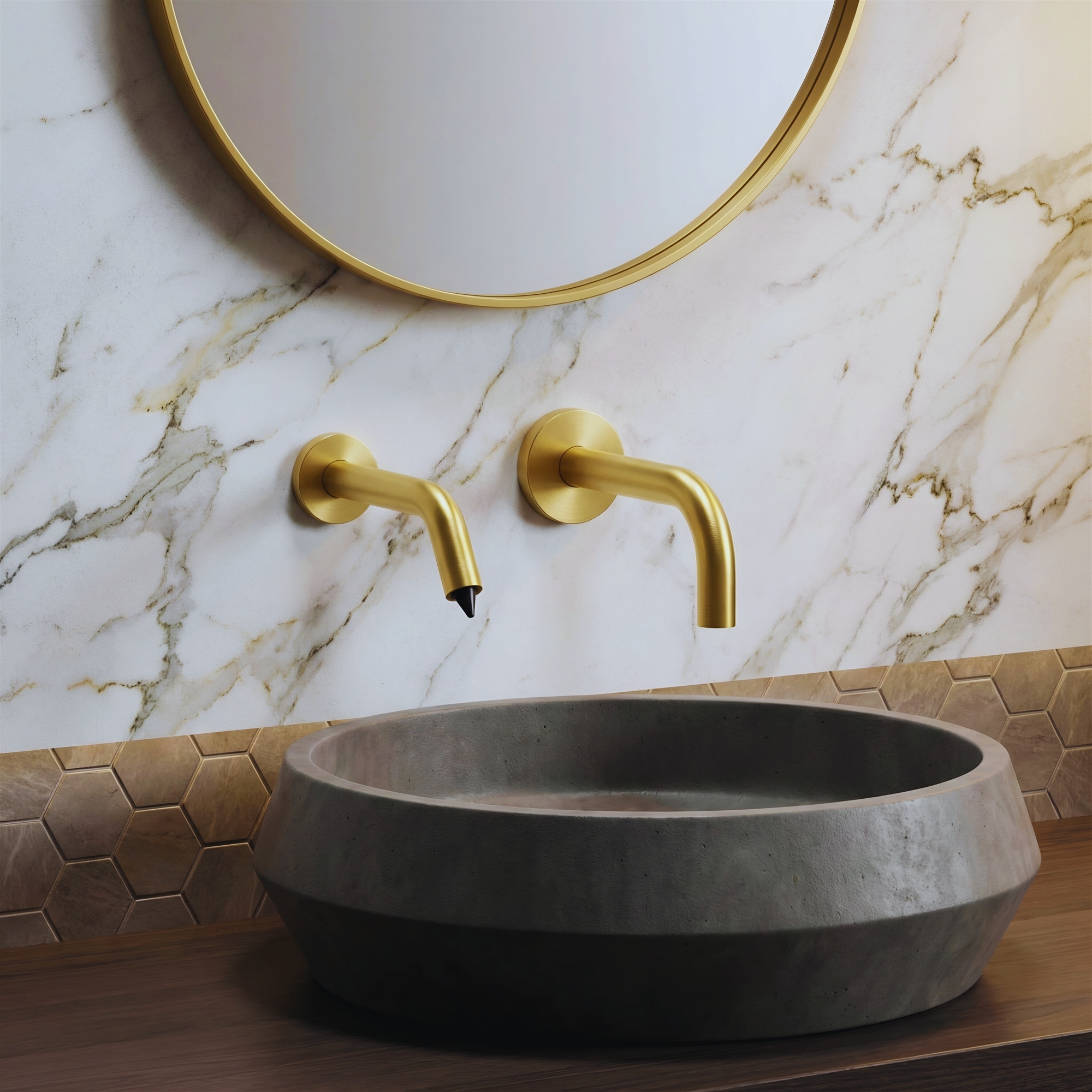
From Water Source to Point of Use
A WELL-focused plumbing strategy should not end at the mechanical-room treatment equipment. Building water quality must be considered throughout the complete distribution path.
WELL performance verification can involve water sampling at locations where occupants actually encounter water, including sinks and showers. That makes fixture endpoints relevant to design coordination even when treatment occurs farther upstream.
Read More Show Less
For this reason, architects and engineers evaluating commercial touchless faucets for high-traffic facilities should consider more than appearance or sensor technology. The specification should address water-contact materials, flow rate, supply pressure, mixing strategy, shutoff behavior, aerator or laminar-flow configuration, power requirements, service access, sensor range and commissioning procedures.
This is particularly important in healthcare, hospitality, aviation, education, corporate and institutional projects where fixtures may operate hundreds or thousands of times between service intervals.


Fixture Materials and Potable-Water Integrity
Water quality at the outlet can be influenced by every wetted component between the building supply and discharge point.
For projects with stringent potable-water requirements, design teams should evaluate applicable documentation for standards such as NSF/ANSI/CAN 61 and NSF/ANSI/CAN 372 on a model-by-model basis.
Read More Show Less
NSF/ANSI/CAN 61 addresses health effects associated with materials and components used in drinking-water systems, including plumbing devices such as faucets. NSF/ANSI/CAN 372 provides a methodology for verifying lead-content compliance and establishes a maximum weighted lead content of 0.25% for most covered components.
These standards should never be assumed from a product category alone. AEC teams should request current certification, specification sheets and product documentation for the exact model scheduled.
FontanaShowers supports this documentation-driven workflow through its automatic sensor faucet BIM and Revit resource library , where architects and engineers can coordinate fixture geometry with plumbing, architectural and MEP documentation.
Touchless Operation: Water Control Rather Than Water Treatment
Touchless faucet technology should be understood correctly within a WELL water-quality strategy.
A sensor faucet does not filter or disinfect incoming water. Its value is instead associated with controlled point-of-use operation: automatic activation, automatic shutoff, reduced dependence on manual faucet controls and predictable operating cycles.
Read More Show Less
Fontana's touchless bathroom faucet systems for AEC projects include configurations intended for commercial environments where sensor range, basin geometry, power supply, valve architecture and maintenance access can be incorporated into the overall restroom specification.
Flow rate also matters. EPA guidance identifies 0.5 gpm or less as an efficient flow level for public lavatory faucets in non-private commercial restrooms.
However, reducing flow should not be approached as an isolated sustainability metric. Plumbing engineers must also consider handwashing effectiveness, hot-water delivery time, pressure, fixture-use pattern and the facility's water-management strategy.


Thermostatic Control and Water-System Coordination
Temperature is another critical interface between fixture design and building-water management.
Thermostatic or pre-mixed commercial faucet assemblies can help stabilize outlet temperature while centralized domestic hot-water strategies address storage, recirculation and system-level temperature control.
Read More Show Less
FontanaShowers' touchless and thermostatic commercial faucet solutions provide AEC teams with options for integrating hands-free operation with mixing and temperature-management strategies.
This coordination becomes particularly important when Legionella risk management is part of the owner's operational plan.
ANSI/ASHRAE Standard 188 establishes minimum legionellosis risk-management requirements for building water systems, while CDC guidance emphasizes maintaining appropriate temperatures, managing disinfectant levels, preventing stagnation, controlling sediment and biofilm, and continuously reviewing the building water-management program.
A faucet cannot substitute for these measures. Instead, fixture selection should complement them by providing accessible service points, predictable operation and appropriate compatibility with the project's hot- and cold-water strategy.
AEC Water-Quality Fixture Coordination Chart
| Design Issue | WELL / Building-Water Objective | Fixture-Level Coordination | Recommended Submittal Evidence |
|---|---|---|---|
| Potable-water materials | Limit contaminant exposure | Review all wetted materials | NSF 61/372 documentation where applicable |
| Public lavatory efficiency | Reduce unnecessary water use | Evaluate approximately 0.5 gpm applications | Certified flow data and pressure conditions |
| Temperature control | User safety and system stability | Coordinate mixing or thermostatic control | Valve diagram and temperature range |
| Touchless activation | Controlled point-of-use operation | Coordinate sensing envelope with basin geometry | Sensor range and commissioning data |
| Stagnation management | Support building water-management plan | Avoid poorly coordinated dead legs and inaccessible components | Plumbing schematic and maintenance plan |
| Accessibility | Usable fixture operation | Coordinate faucet, basin and clearances | ADA drawings and mounting dimensions |
| Lifecycle maintenance | Maintain intended performance | Provide accessible filters, solenoids and shutoffs | O&M manuals and service-clearance drawings |
| Digital coordination | Reduce field conflicts | Model faucet, control box, piping and power | BIM/Revit files and coordinated shop drawings |
The chart demonstrates why a WELL-oriented plumbing specification should connect architectural fixture selection with mechanical design, plumbing engineering, electrical coordination, commissioning and facility operations rather than treating faucets as isolated finish selections.
Case Reference: WELL-Oriented Commercial Restroom
Consider an illustrative Class A office project incorporating public restrooms, executive amenities and tenant common areas.
Instead of selecting one faucet solely on appearance, the design team begins with the building water-management strategy. Incoming water quality and treatment requirements are reviewed first. Plumbing engineers then establish flow, pressure, hot-water distribution and mixing requirements.
Read More Show Less
At the restroom level, sensor faucets are coordinated with basin depth and spout reach so the activation zone corresponds to the expected handwashing position. Power supplies and solenoid assemblies remain accessible for maintenance. Fixture-flow characteristics are documented, while materials and applicable certifications are checked at the model level.
The architect coordinates accessible lavatory geometry; ADA Standards require faucet controls at accessible lavatories to comply with the applicable operable-parts provisions.
Finally, facilities personnel receive fixture schedules, maintenance procedures and water-management documentation rather than only product cut sheets.
This creates a continuous information chain:
Water source → treatment → distribution → temperature management → fixture → commissioning → testing → maintenance.
That chain is considerably more valuable to a WELL-oriented building than simply specifying a product described as a "wellness fixture."


Specifying FontanaShowers for WELL-Oriented Projects
FontanaShowers can support WELL-focused AEC design when fixtures are evaluated as components within a complete building water system.
Suitable specification considerations include commercial touchless activation, controlled flow, thermostatic mixing options, serviceable valve architecture, ADA coordination, BIM resources and documentation for project review. The FontanaShowers commercial fixture and architectural bathroom portfolio allows design professionals to evaluate these requirements across commercial and high-performance bathroom applications.
Read More Show Less
The essential distinction is important: WELL certification applies to projects and building performance—not automatically to an individual faucet or shower fixture. Product-level claims should always be verified against the exact model's technical and certification documentation. FontanaShowers' own WELL-oriented resources make the same distinction.
For architects and MEP engineers, the strongest specification therefore combines fixture performance with water-quality testing, verified materials, flow management, temperature control, accessibility, commissioning and long-term maintenance.


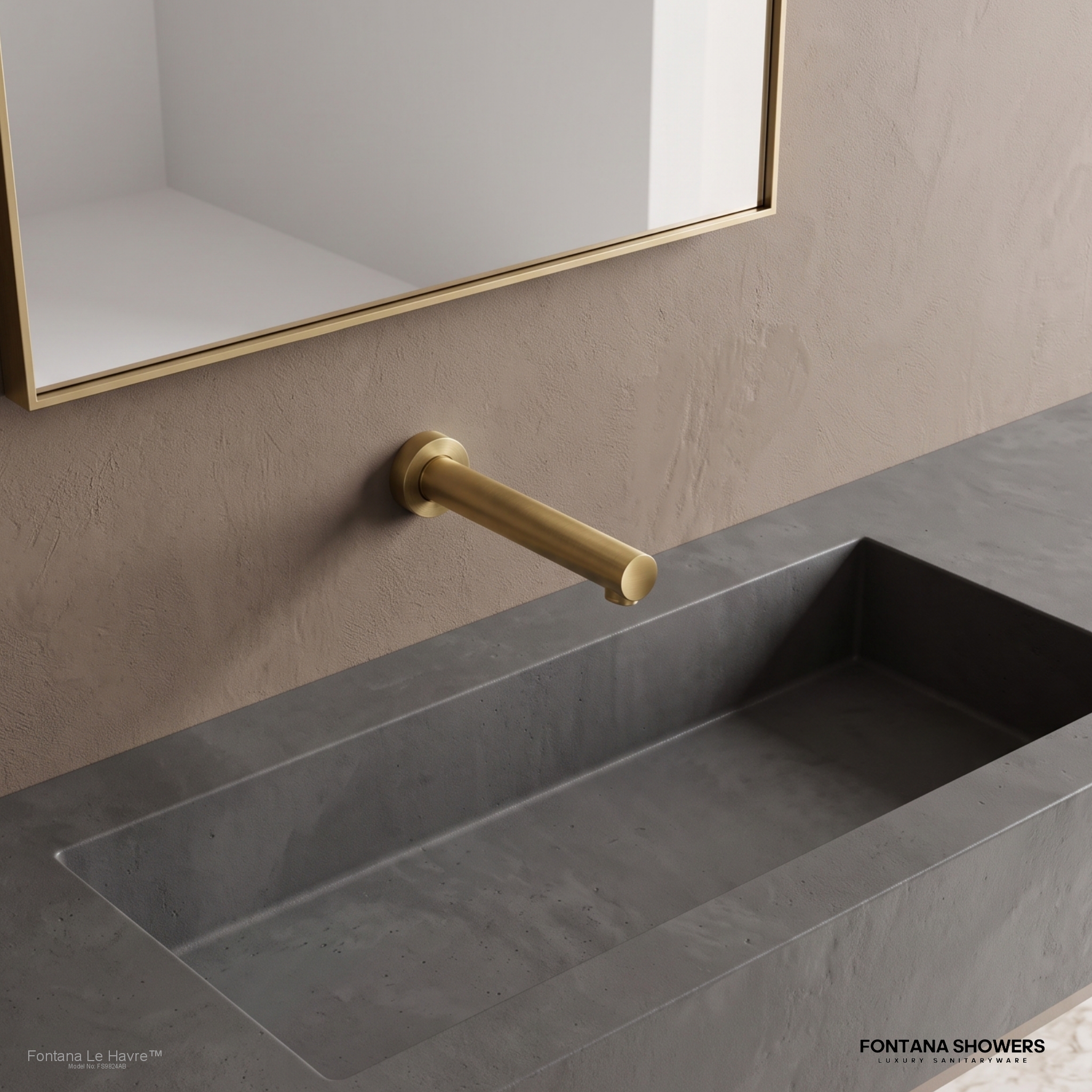
That is where WELL water-quality design becomes more than a sustainability statement. It becomes a coordinated plumbing strategy capable of supporting occupant health, operational reliability and measurable building performance.
Related WELL, Water Quality, Plumbing & AEC Resources
Use these related FontanaShowers references and independent authority sources for WELL-oriented water-quality planning, potable-water material review, plumbing engineering, water efficiency, building-water management, accessibility, BIM coordination, commissioning and long-term facility operations.
Reference links are provided for AEC research and specification coordination. Inclusion does not imply that any individual FontanaShowers fixture is WELL Certified, WaterSense labeled, code approved or certified to a referenced standard unless the exact scheduled model is supported by applicable current documentation.