FontanaShowers | WELL Water Quality Fixture Solutions
Water quality in a high-performance building is not determined at a single point. It is the result of coordinated decisions involving the incoming water supply, treatment equipment, piping materials, hot-water distribution, temperature management, fixture selection, commissioning, testing, and facility operations.
Read More Show Less
For architects, MEP engineers, plumbing consultants, sustainability professionals, contractors, and facility managers, this systems approach is particularly relevant to projects applying the WELL Building Standard Water concept. WELL addresses measurable water-quality conditions rather than simply prescribing a particular faucet or shower fixture. Its Water framework includes fundamental water quality, inorganic and organic contaminants, periodic testing, and treatment strategies. Fundamental Water Quality includes performance testing related to indicators such as turbidity and total coliform bacteria.
Within that framework, FontanaShowers fixtures can function as the final engineered interface between a building water system and its occupants.
The correct AEC objective is therefore not to ask whether a faucet alone makes a building “WELL compliant,” but whether its materials, hydraulic characteristics, controls, installation, accessibility, commissioning, and maintainability support the project's larger water-quality strategy.
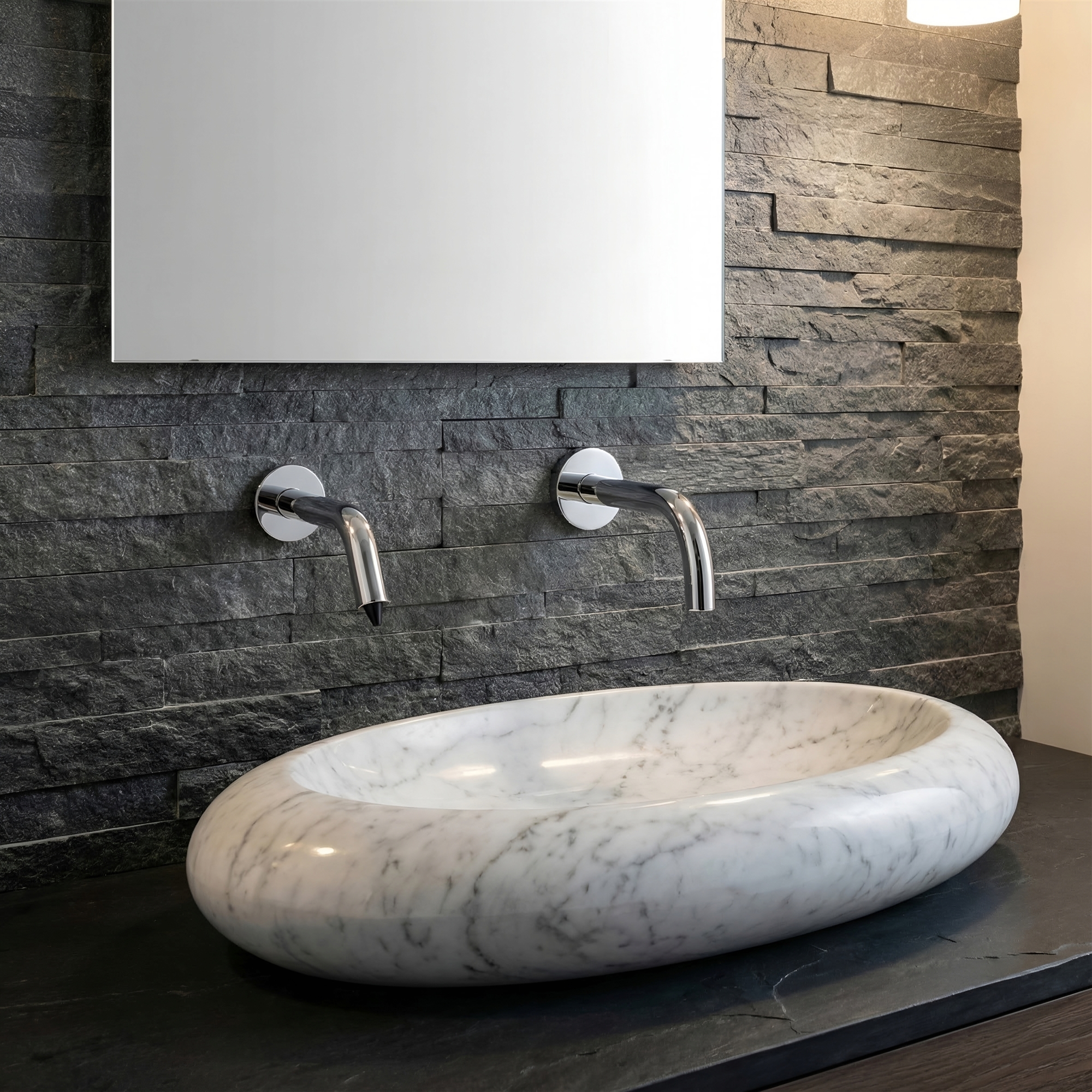


Water Quality Starts Upstream—but Ends at the Fixture
A simplified potable-water path can be expressed as:
Read More Show Less
Source → Treatment → Distribution → Temperature Control → Branch Piping → Fixture → Occupant
Each stage presents design variables.
WELL's water-treatment framework recognizes that contaminants can arise from pathogens, metals, pesticides, supply disruptions, construction activity, and infrastructure conditions. Appropriate treatment may therefore involve filtration or other treatment methods based on the project's actual water-quality conditions.
At the fixture level, the AEC team must translate that building-level strategy into practical specification questions:
- What materials are in contact with potable water?
- What is the required fixture flow at design pressure?
- How is mixed-water temperature controlled?
- Does the fixture create an accessible service point?
- How will strainers, valves, solenoids, cartridges, and power components be maintained?
- Does the spout discharge align correctly with the basin?
- Is the sensor envelope coordinated with basin geometry?
- How will the installed fixture be commissioned and documented?
FontanaShowers provides an AEC BIM and technical resource library for architects and engineers with BIM/Revit pathways, dimensional information, installation guidance, and technical submittal resources intended for specification-driven projects.


Water-Contact Materials and Specification Due Diligence
Healthy-building fixture selection should include a review of wetted materials.
Read More Show Less
NSF/ANSI/CAN 61 establishes health-effects requirements addressing contaminants or impurities that may be imparted to drinking water by products and materials. Its scope includes plumbing devices such as faucets.
For an AEC specification, certification should be confirmed against the exact scheduled model rather than assumed across an entire product family.
That distinction matters because fixture schedules often contain variations in:
body material • cartridges • mixing components • aerators • hoses • valves • sensor systems • flow controls • finishes
A professional submittal workflow should therefore connect product selection with current manufacturer documentation, certification evidence where required, installation instructions, and commissioning criteria.
The FontanaShowers automatic sensor faucet BIM and Revit library provides architects and specifiers with a centralized pathway for BIM files, specification sheets, and installation information.
Touchless Operation as Controlled Water Delivery
Touchless faucets should be positioned correctly within a WELL-oriented strategy.
Read More Show Less
They are not water-treatment devices. Instead, they provide controlled point-of-use operation through automatic activation and shutoff.
For busy commercial washrooms, this can support predictable faucet run time while reducing the need to operate handles manually. Design teams evaluating commercial touchless sensor faucets for high-traffic restrooms should coordinate sensor technology, activation distance, power source, valve architecture, flow characteristics, basin configuration, and maintenance access rather than specifying solely by appearance.
This is particularly relevant to:
airports • healthcare buildings • hotels • universities • corporate campuses • civic facilities • institutional washrooms
In these applications, small fixture-coordination errors can become significant lifecycle issues when repeated across dozens or hundreds of lavatories.


Water Efficiency: Flow Rate Is Only One Variable
EPA guidance states that public-lavatory faucets typically installed in non-private commercial toilet facilities should operate at 0.5 gpm or less to be considered efficient. EPA also makes an important distinction: public lavatory faucets are not currently an eligible WaterSense-label category, so a blanket “WaterSense certified” claim for this product class should not be assumed.
Read More Show Less
For engineering purposes, however, flow rate should not be considered in isolation.
A useful conceptual relationship is:
Fixture Performance = Flow + Pressure + Runtime + Temperature Delivery + Usage Pattern
Reducing flow without considering hot-water distribution can extend temperature-delivery time. Plumbing engineers must therefore coordinate low-flow fixtures with branch length, pipe sizing, recirculation strategy, static and dynamic pressure, mixing requirements, and expected use frequency.
EPA's commercial guidance recommends 0.5 gpm (1.9 L/min) fixtures, aerators, or laminar-flow devices for public restrooms.
Temperature and Building Water Management
Temperature control becomes especially important in buildings that maintain formal water-management programs.
Read More Show Less
ANSI/ASHRAE Standard 188 establishes minimum Legionellosis risk-management requirements for building water systems and addresses design, construction, commissioning, operation, maintenance, repair, replacement, and expansion.
A faucet cannot substitute for a building water-management program.
Instead, fixture selection should support it through appropriate hot/cold-water coordination, accessible components, controlled outlet conditions, serviceability, and commissioning.
Where the design requires automatic operation combined with temperature management, project teams can evaluate touchless thermostatic commercial faucet configurations while confirming temperature range, valve configuration, certifications, connections, pressure requirements, and other data for the exact scheduled model.
AEC Water Quality Fixture Coordination Chart
| Design Parameter | Healthy-Building Objective | AEC Coordination Requirement | Recommended Documentation |
|---|---|---|---|
| Wetted materials | Protect potable-water integrity | Verify model-specific materials and certifications | Product data and certification records |
| Flow rate | Control water consumption | Match fixture flow to application and code | Flow data at stated pressure |
| Water pressure | Stable fixture performance | Confirm available dynamic pressure | Plumbing calculations |
| Temperature | Safe, predictable delivery | Coordinate mixing and DHW strategy | Valve/mixing schematic |
| Sensor operation | Controlled activation | Coordinate detection zone with basin | Sensor commissioning data |
| Spout reach | Limit splash and improve usability | Coordinate outlet with basin landing zone | Plan/section details |
| Service access | Preserve lifecycle performance | Maintain access to valves and controls | Service-clearance drawing |
| Accessibility | Support inclusive use | Coordinate faucet and lavatory geometry | ADA drawing review |
| BIM coordination | Reduce construction conflicts | Coordinate water, power and mounting | Revit/BIM family |
| Commissioning | Confirm installed performance | Test flow, sensing, shutoff and temperature | Commissioning report |


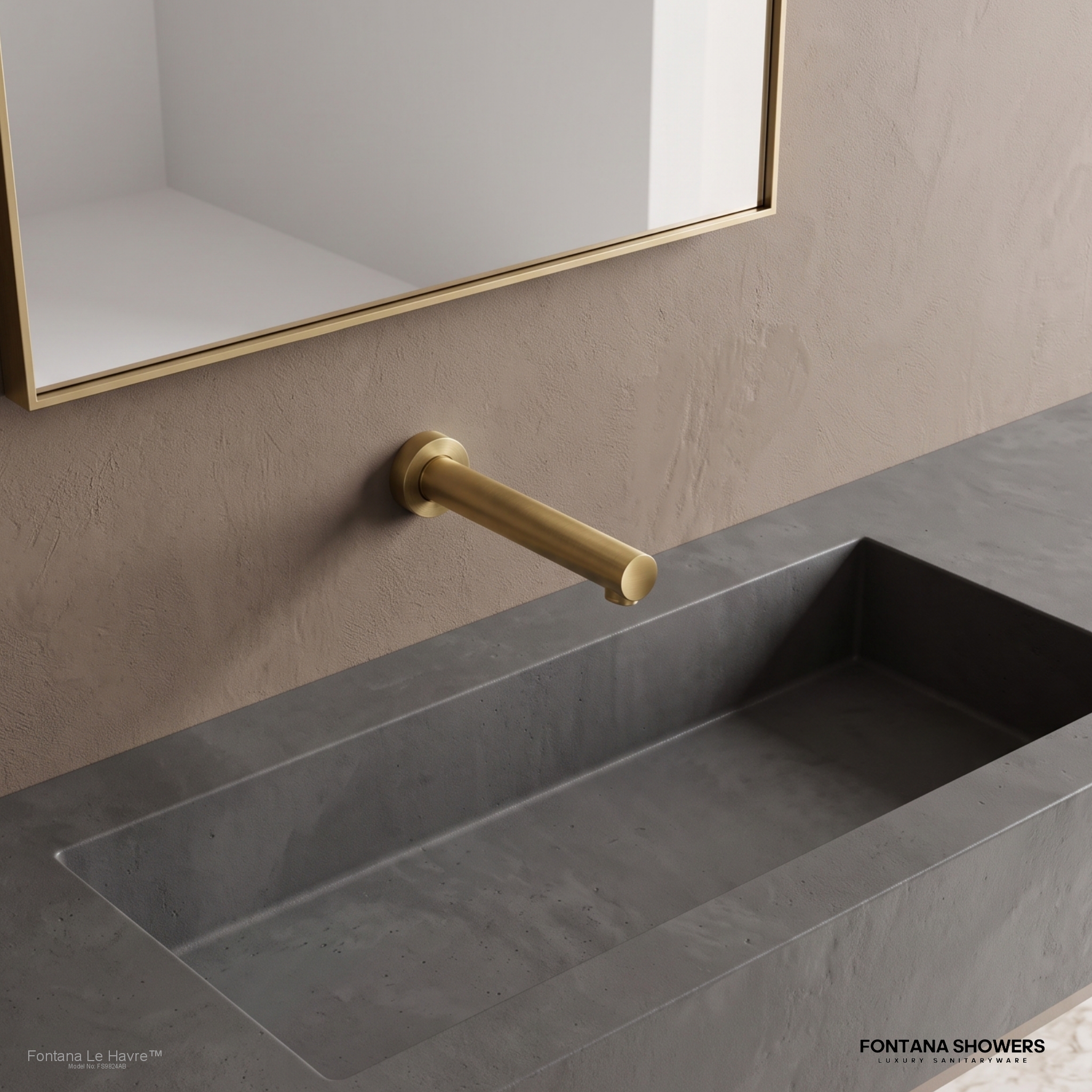
Illustrative Case: WELL-Oriented Office Restroom
Consider an illustrative Class A office building pursuing a healthy-building strategy.
Read More Show Less
The plumbing engineer first evaluates incoming water conditions, treatment requirements, domestic hot-water distribution, pressure, and recirculation. The architect then coordinates accessible lavatory geometry and finish requirements with the restroom design.
Automatic commercial faucets are modeled in BIM. Spout reach is checked against basin depth so the water stream lands within the intended washing zone. Sensor positioning is reviewed to minimize nuisance activation. Controls, strainers, power supplies, and solenoid assemblies remain accessible for maintenance.
Accessibility is considered simultaneously. The 2010 ADA Standards require accessible lavatories to comply with Section 606; faucet controls must comply with the applicable operable-parts provisions of Section 309.
At commissioning, the project team verifies:
Activation → Flow → Temperature → Stream Alignment → Automatic Shutoff → Service Access
The facility team receives product schedules, installation documentation, commissioning records, and maintenance requirements.
The resulting specification connects the fixture to the entire building-water lifecycle rather than treating it as a decorative plumbing selection.
From BIM to Division 22
A strong WELL-oriented fixture specification also requires disciplined documentation.
Read More Show Less
FontanaShowers maintains a CSI Division 22 commercial electronic lavatory faucet specification resource structured around Section 22 42 16.13. The resource addresses electronic lavatory faucets, product requirements, submittals, installation, testing, commissioning, and closeout while explicitly directing teams to coordinate model-specific flow, power, pressure, sensor, finish, and certification information.
This establishes a logical AEC workflow:
Basis of Design → BIM Coordination → Division 22 Specification → Product Submittal → Installation → Commissioning → Facility Operations
A Systems Approach to WELL Water Quality
The strongest water-quality strategy does not depend on a single fixture claim.
WELL evaluates water through measurable performance and management criteria—including fundamental water quality, contaminant control, testing, and treatment.
For FontanaShowers projects, the appropriate approach is therefore to integrate specification-grade commercial fixtures into a broader engineered system incorporating verified materials, suitable flow rates, pressure coordination, temperature management, accessibility, BIM coordination, commissioning, testing, and maintenance.
When these elements work together, the faucet becomes more than the last component in a plumbing run.
It becomes the controlled point where water-quality engineering, architectural design, occupant interaction, and facility operations converge.
Related WELL, Water Quality, Plumbing & AEC Resources
Selected references below are matched to the article's core AEC topics: WELL Water, potable-water quality, fixture materials, public-lavatory efficiency, plumbing codes and standards, temperature and water-management coordination, accessibility, BIM, commissioning and facility operations.
Reference links are provided for AEC research and specification coordination. Inclusion does not imply that any individual FontanaShowers fixture is WELL Certified, WaterSense labeled, code approved or certified to a referenced standard unless the exact scheduled model is supported by applicable current documentation.