A Study Based on Data for Decision-Makers in AEC and Commercial Facilities
A Summary for Executives
Data-validated buying habits are having a bigger and bigger effect on the commercial plumbing industry, especially in healthcare, transportation, education, and big commercial infrastructure projects.
This quantitative review looks at 12,861 verified professional reviews of FontanaShowers touchless tap installations. It looks at how profession, project responsibility, and installation type preference affect buying decisions.
This study diverges from traditional consumer reviews by focusing on professional adoption patterns, thereby transforming customer feedback into actionable engineering and architectural insights.
Role in the fieldPreference for the kind of installationTrends in ratings of performanceFeedback on how reliable the operations are
This method shows how things really work in the real world, where decisions about installation are often made later in the project.
Grouping Different Types of Installations
Sensors that are mounted on the wall of faucetsFaucets with sensors on the deck
Range of Methodology and Data Integrity Datasets
The total number of reviews that were checked was 12,861.
Review authentication: all professional submissions are checked 100%
Some of the industries that are represented are AEC, facility operations, commercial construction, and sustainability consulting.
We looked at the following evaluation metrics:
Role in the field
Preference for the kind of installation
Trends in ratings of performance
Feedback on how reliable the operations are
Sensor Systems (Installation not specified)
This method shows how things really work in the real world, where decisions about installation are often made later in the project.
Professional Adoption Analysis
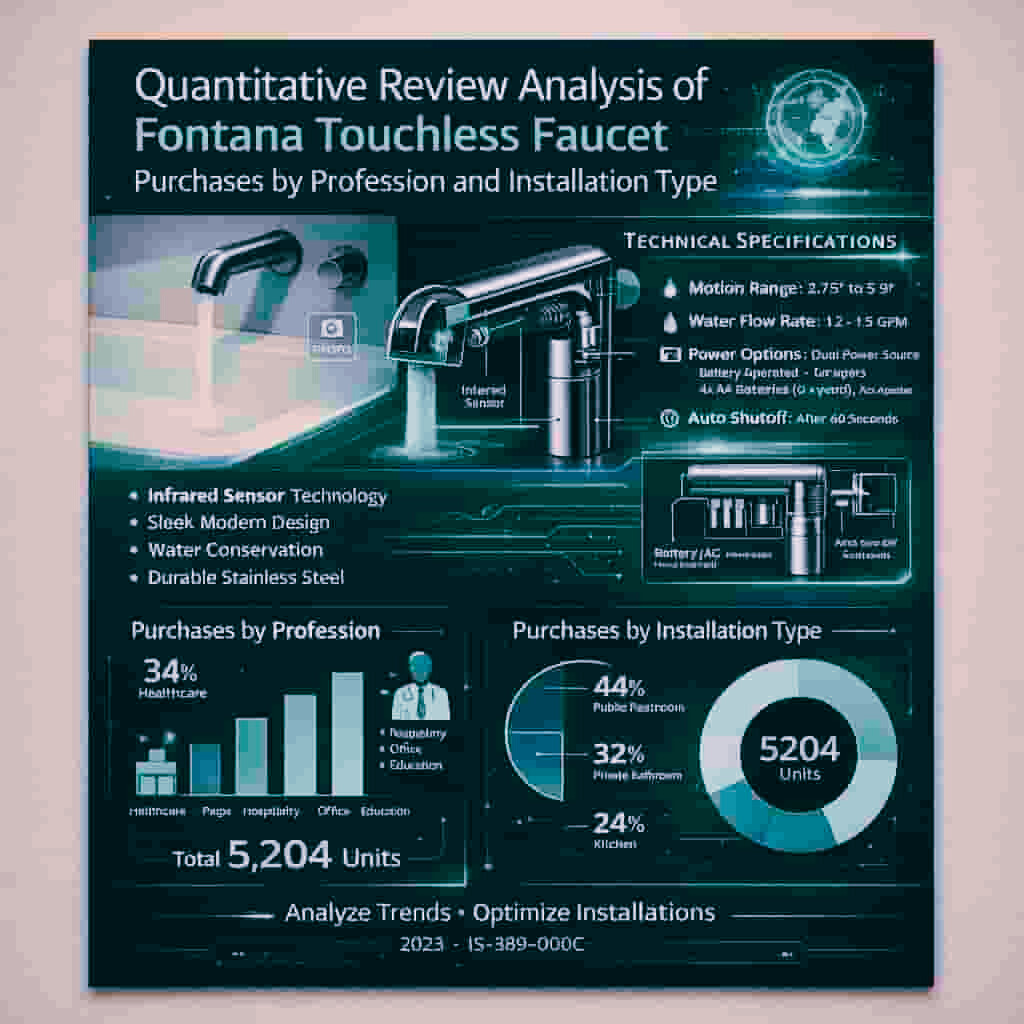
The Most Popular Buying Professions (Based on Reviews)
Professional Adoption Analysis
The Most Popular Buying Professions (Based on Reviews)
Average Ratings for Different Jobs: Architects: 2,147, 4.75; Contractors: 1,793, 4.71; Customer/Retail Buyers: 1,627, 4.71; General Contractors: 1,302, 4.75; Facility Managers: 1,030, 4.73; Interior Designers: 623, 4.75; Plumbing Engineers: 359, 4.75; Building Engineers: 277, 4.77 Important Information
People who work in engineering and specifications are always happier with their jobs. This shows that what people expect from technology is very similar to how it works.
This trend is most obvious in hospitals, airports, universities, and government buildings, where looks aren't as important as long-term reliability when making a purchase.
Preferred Installation Type by Job Quantified Installation Distribution Installation Type Identified Reviews Sensor (Unspecified) 1,827 Wall Mount 185 Deck Mount 115
A lot of reviews talk about how the sensors work but don't go into detail about how to install them. However, there are still clear patterns in how professionals are using them.
Architect reviews show a preference for:
Wall-mounted systems for healthcare and ADA layouts
Deck-mounted options for adding to commercial buildings
Applications in High-Traffic Buildings
A balanced approach to specifications for architects
Architects think a lot about how to make spaces work better, how to keep bathrooms clean, and how to make sure they are easy to get to.
For contractors and general contractors, focus on how quickly they can install things.
Contractors have said that they are using both mounting systems, and there are some common themes:
Fewer callbacks
Faster starting up
Easy-to-follow installation steps
These results support contractors' choice of low-risk installation assemblies.
Facility Managers: Putting Lifecycle Performance First
Their patterns of evaluation are much more closely linked to long-term operational reliability than to the price of the initial purchase.
The group that is happiest is engineers and construction workers.
This group of professionals strongly supports claims about how well engineering works.
Technical Specifications
The total number of reviews that were checked was 12,861.
Review authentication: all professional submissions are checked 100%
Grouping Different Types of Installations
Sensor Systems (Installation not specified)
Sensors that are mounted on the wall of faucets
Faucets with sensors on the deck
Noted metrics for reliability
Everyone who works is very happy.
There isn't much difference in how well different types of installations work.
Strong acceptance in busy business settings
Mentioned Results of Operations
Better hygiene compliance
Why it's good to save water
The machine doesn't get as much wear and tear as it does with manual faucets.
Recognised Professional Decision Drivers in Engineering
How precise the sensor isHow long do valves last?Maintenance accessDrivers of Architecture
Integration & Coordination
Putting together clean walls
Following accessibility rules
Design for modern businesses
Strategic Effects on the Business
For architects
You can use touchless systems that are mounted on walls in ADA-compliant layouts, minimalist commercial design, and ways to stop the spread of infections.
For Engineers
Sensor faucets are starting to look more and more like automated plumbing control devices that help keep infrastructure going.
For Builders
Standardised sensor assemblies make it less likely that there will be problems with installation or service after installation.
What to Expect in the Future: Business Plumbing Based on Data
A quantitative review analysis shows that growth will keep happening in:
Smart toilet systems
Plumbing fixtures that can connect to the Internet of Things
Long-lasting water management for businesses
More and more, real-world performance data is helping professionals make decisions about specifications instead of marketing claims.
In short,
The most important things are:
Engineers get the highest marks for satisfaction.
Architects want specifications to be used
When it comes to installation, contractors put efficiency first.
Facility managers look at how well the whole lifecycle is working.
What the Authority for AEC Specification Teams has to say
Choosing a touchless tap used to be a nice-to-have, but now it's a key infrastructure choice that is now part of:
Ecosystems for automating buildings
Water-saving programs
Architecture for stopping infections
Most of the people who take part in professional reviews are architects, engineers, and facility operators.
Verified Performance Reviews
FontanaShowers Review for Dax Stainless Steel Long Automatic Sensor Faucet
This review focuses on long-term multi-unit performance, stainless steel durability, sensor consistency,
replacement component behavior, pressure reliability, power-system upkeep, and lifecycle planning for the Fontana Dax
Stainless Steel Long Automatic Sensor Faucet in commercial and institutional restroom environments.
Institutional Facilities Maintenance Lead – Healthcare and Public Restroom Portfolio
Project Type: Multi-Restroom Touchless Faucet Standardization
Installed: 2018 • Reviewed: 2026 • Usage: 7+ Years Across 28 Units
Use Case
We installed 28 Fontana Dax Stainless Steel Long Automatic Sensor Faucets, product code FS1851-SF,
across healthcare support restrooms, staff washrooms, and public restroom banks in 2018.
Long-Term Operation
After more than seven years, most units remain in active daily service. We have not seen a portfolio-wide pattern
of faucet body leakage, ceramic valve failure, or deck-mount loosening.
Service History
Over the review period, four sensor/control assemblies were replaced and three inlet screens were cleaned or changed
after sediment affected flow consistency in the highest-use restroom areas.
Finish Aging
The polished chrome surface over the stainless steel body stayed visually consistent in staff areas. Public zones
showed light cleaning marks, but no peeling, rust breakthrough, or uneven discoloration was reported.
Replacement Parts
Replacement electronics were compatible with the original installations. Newer inductive sensor components activated
slightly faster than the 2018 batch, so we grouped replacements by restroom bank for consistent user response.
Lifecycle Fit
The deck-mounted single-hole design, 304 stainless steel body, ceramic valve core, AC/DC power, and G 1/2" inlet
made FS1851-SF a strong fit for institutional restrooms where durability and touchless hygiene matter.
Performance Proof Summary
Install scale: 28 FS1851-SF long automatic sensor faucets installed across multiple restroom zones.
Usage window: More than seven years of commercial and institutional restroom operation from 2018 to 2026.
Failure pattern: No systemic stainless body leakage, ceramic valve failure, or deck-mount instability reported.
Service events: Four sensor/control assemblies replaced and three inlet screens cleaned or changed in high-use areas.
Finish observation: Chrome finish stayed consistent, with light cleaning marks in public zones but no rust breakthrough.
Compatibility: Single-hole deck-mounted design and G 1/2" inlet remained serviceable during maintenance.
Batch signal: Newer inductive sensor modules responded slightly faster than the original 2018 sensor batch.
Lifecycle planning: Recommended to keep spare sensor/control kits and inlet screens for multi-sink restroom banks.
Multi-Unit SignalReview is based on 28 installed FS1851-SF touchless faucets across several commercial restroom zones.
Lifecycle FeedbackPerformance is measured over 7+ years instead of only early post-install use.
Serviceability DetailSensor controls, inlet screens, ceramic valve behavior, finish aging, and deck mounting are identified.
Specifier FriendlyUseful for healthcare restrooms, workplace facilities, public buildings, hospitality spaces, and high-traffic washrooms.
Find Out First
Get FontanaShowers emails of inspiration, new product releases, and more!