Sink Fixtures — Technical Considerations for Architectural Specification
FontanaShowers® | Commercial Sink Fixtures
Sink Fixture — Technical Considerations for Architectural Specification
A sink fixture is a lavatory basin combined with a faucet and associated plumbing—an engineered plumbing assembly for
commercial, institutional, and public-use environments. Beyond appearance, proper specification must address
accessibility, durability, water efficiency, code compliance, and building-systems integration. The guidance below supports architects, mechanical engineers, and specifiers who require engineering-grade detail for coordinated AEC design.
ADA / Barrier-Free Geometry
Low-Flow ≤ 1.2–1.5 GPM
Solid Brass & PVD Finishes
Commercial Duty Cycles
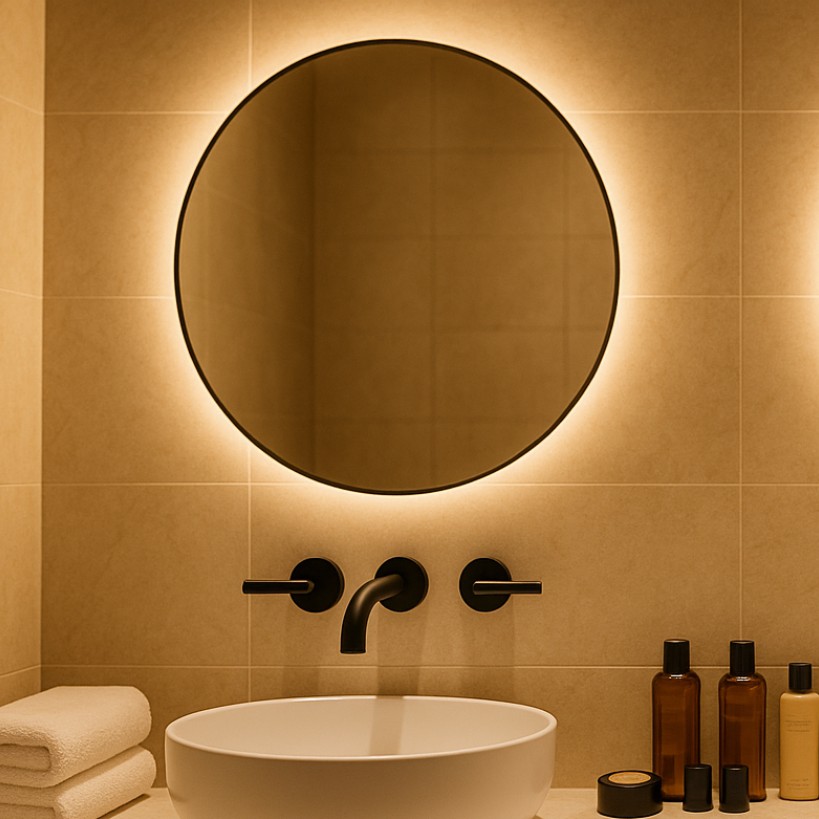
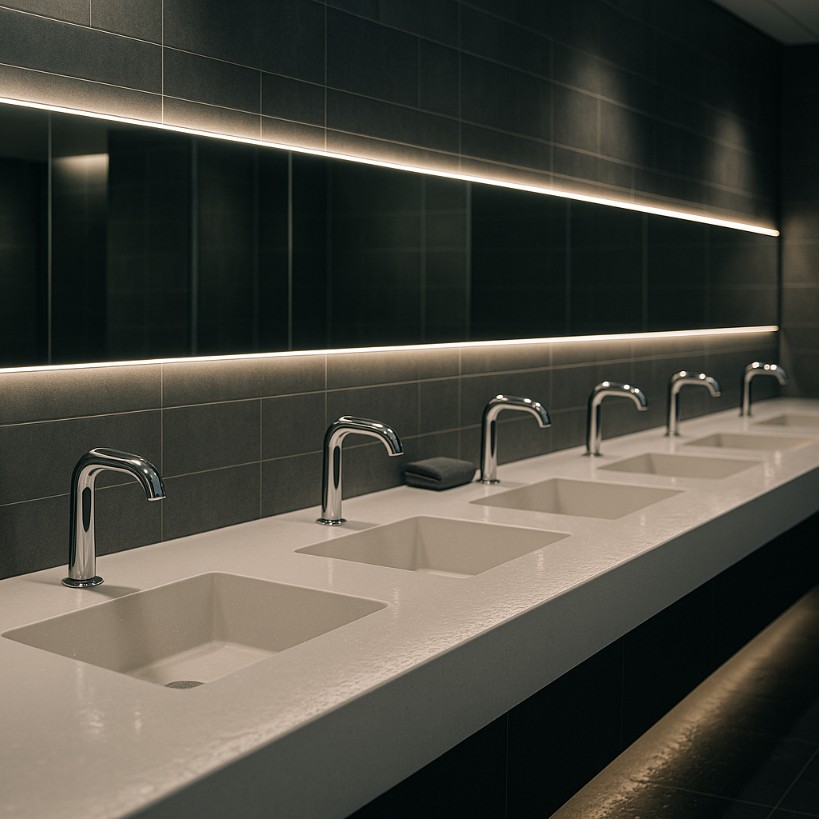
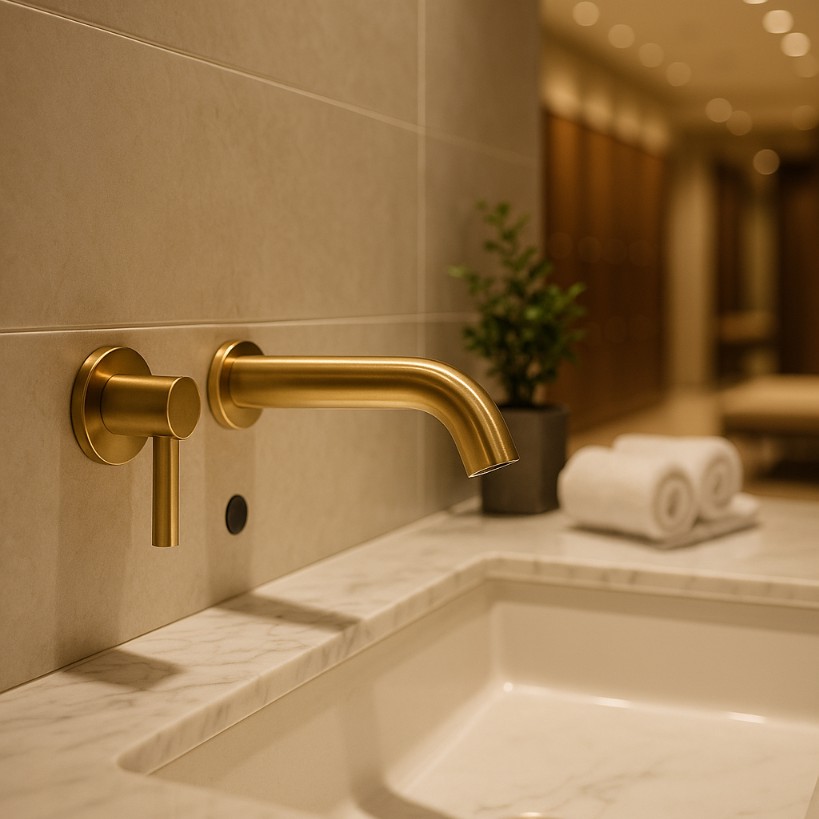
Representative fixtures shown for finish and form factor; always verify model-specific documentation for dimensions, flow rates, and ADA-compliant installation details.
Design & Technical Visuals
Architect-Focused Advantages
ADA / Barrier-Free Compliance
Sink fixtures can be detailed to comply with ADA and U.S. Access Board guidance, including maximum 34 in (865 mm) rim height,
27 in minimum knee clearance, protected supply and drain piping, and 30" × 48" clear floor space for forward approach.
Accessible Operable Parts
Operable parts must be usable with one hand and require no more than 5 lb of operating force. Touchless faucets typically satisfy
this requirement when installed at the correct height and with appropriate sensor range and timing settings.
Water Efficiency & Standards
Low-flow lavatory faucets (≤ 1.2 GPM and ≤ 1.5 GPM options) support CALGreen, LEED, and jurisdictional water-reduction goals.
Where WaterSense certification is not present, specifiers should confirm published flow curves and performance documentation.
Durability Under High Duty Cycles
Commercial sink fixtures must tolerate chemical cleaning, hard-water exposure, and mechanical abuse. Solid brass bodies,
commercial-grade cartridges, and robust mounting hardware extend service life and reduce lifecycle cost.
System Integration
Correct rough-in dimensions, pressure and flow balancing, and trap alignment are essential. For sensor faucets, coordinate
power supplies, junction boxes, and access panels early with MEP and casework teams.
Maintainability & Spares
Commercial fixtures should permit cartridge, aerator, solenoid, and sensor-module replacement using standard tools.
Standardized fittings (e.g., G connections) and long-term parts availability are critical for institutional portfolios.
Material & Finish Rationale for Sink Fixtures
Preferred Construction for Institutional Use
- Solid Brass Bodies: Provide corrosion resistance, structural integrity, and stable mounting interfaces over time.
- Commercial-Grade Cartridges: Ceramic or heavy-duty valves engineered for frequent operation in public restrooms.
- Robust Flow Controls: Accessible aerators and flow limiters enable tuning to project water-use targets.
Finish Performance & Cleanability
- PVD and commercial-grade plating improve abrasion resistance and longevity under repeated cleaning cycles.
- Finishes should tolerate mineral deposits, chemical cleaning agents, and high humidity without premature wear.
- Smooth, low-crevice geometries support hygiene and simplify daily janitorial protocols.
Applications in High-Traffic Buildings
Airports & Transit
Sink fixtures must withstand continuous use, cleaning shifts around the clock, and variable water quality while preserving appearance.
Healthcare
Low-porosity finishes, smooth surfaces, and touchless operation support infection-control objectives and disinfection protocols.
Hospitality
Architectural finishes and refined geometry align with brand standards while maintaining the durability required in guest and public areas.
Retail & Mixed-Use
Reliable valves and solid construction maintain operation and finish quality in high-traffic public restrooms and food-court areas.
Education & Civic
Fixtures must balance vandal resistance, long service intervals, and compatibility with institutional maintenance practices.
Corporate Campuses
Consistent fixture families, flow rates, and finishes simplify maintenance and standardization across multi-building programs.
Technical Specifications
|
Material
|
Solid brass faucet body with commercial-grade internal components and cartridges
|
|
Surface
|
PVD, electroplated, or powder-coated finishes engineered for stain, corrosion, and abrasion resistance
|
|
Mounting
|
Deck-mounted or wall-mounted lavatory installation — single-hole, centerset, or widespread, model dependent
|
|
Flow Rate / Water Use
|
Low-flow configurations typically ≤ 1.2 GPM or ≤ 1.5 GPM at rated pressure; select models suitable for CALGreen, LEED, and local mandates
|
|
Cleanability
|
Compatible with common commercial janitorial chemicals; smooth, easy-wipe surfaces to support hygiene and maintenance
|
|
Colors / Finishes
|
Brushed Gold, Matte Black, Brushed Nickel, Chrome, and additional architectural finishes on select models
|
|
Accessories
|
Coordinated drains, mixing valves, supply kits, rough-in templates, and compatible touchless sensor/solenoid assemblies
|
Finish Directions (Model-Dependent)
Brushed Gold
Matte Black
Brushed Nickel
Polished Chrome
Integration & Coordination
- Confirm ADA requirements for rim height, knee and toe clearance, pipe protection, and clear floor space based on occupancy and location.
- Select low-flow configurations where CALGreen, LEED, or local water restrictions apply and verify published performance data.
- Reference ASME A112.18.1/CSA B125.1 for faucets and ASME A112.18.2/CSA B125.2 for waste fittings as applicable.
- Coordinate rough-ins, casework, countertop cutouts, and MEP routing using BIM/Revit models and manufacturer templates.
What Makes Fontana Unique for Sink Fixtures
Material Engineering
Fontana specifies solid brass bodies, heavy-duty cartridges, and engineered flow controls that support long-term performance in public and institutional restrooms.
High-Use Validation
Commercial fixtures are designed for intensive duty cycles, hard-water exposure, and repeated cleaning, with stable performance at joints, seals, and mounting interfaces.
System Cohesion
Sink fixtures coordinate with Fontana touchless faucets, soap dispensers, and flush valves, enabling unified activation logic, finishes, and maintenance strategies across the restroom.
Specifier Toolkit
BIM/Revit models, cut sheets, and detailed installation manuals support coordination between architecture, interiors, and MEP teams, reducing field conflicts and RFIs.
Lifecycle Value
Durable construction, long-term parts availability, and service-friendly design help owners manage lifecycle costs across portfolios of commercial and institutional facilities.
Design Latitude
Multiple finish directions and form factors allow specifiers to meet brand, hospitality, or civic design goals while maintaining compliance with accessibility and plumbing codes.
Request the Architect Kit
Included
- Cut Sheets (PDF) with flow rates and connection sizes
- Editable Submittal Forms for coordinated reviews
- BIM / CAD Families for clash detection and layout
- Rough-In Templates, ADA notes, and finish schedules
Project Notes
Begin with compliance: confirm ADA sink and faucet requirements, then select low-flow configurations where CALGreen, LEED, or local water restrictions apply.
Request complete BIM and technical submittals early, and coordinate casework, countertop cutouts, and MEP rough-ins to avoid field conflicts. Well-specified sink fixtures
function as engineered components, not decorative accessories, supporting durability, maintainability, and overall restroom resilience in commercial and institutional facilities.
|
|
|