Waterfall Bath Tub Fixtures Creating a Spa Level Cascade Effect in Modern Bathrooms
FontanaShowers® | Waterfall Tub & Spa Fixture Collection
Waterfall Bath Tub Fixtures Creating a Spa Level Cascade Effect in Modern Bathrooms
In contemporary bathroom projects, waterfall bath tub fixtures are moving from a purely decorative feature to a defined element
of hydraulic, architectural, and experiential design. For architects, engineers, designers, and developers, the decision to specify
a waterfall tub filler directly affects domestic hot water sizing, supply line routing, acoustic performance, user safety, and the
perceived quality of the space. This page outlines how spa-level cascade effects can be achieved with waterfall bath tub fixtures
in ways that are consistent with plumbing codes, coordinated with structure and finishes, and repeatable across residential,
hospitality, and multifamily portfolios, with specific reference to waterfall tub solutions from FontanaShowers and aligned brands.
Waterfall Tub Fillers
Spa-Level Cascade Effects
Codes & Hydraulics
Residential & Hospitality
Use this page as a practical reference for selecting and detailing waterfall bath tub fixtures that deliver a spa-level cascade
effect while aligning with codes, hydraulic calculations, and long-term maintenance objectives. Update imagery with waterfall tub
installations and FontanaShowers / BathSelect product shots that match the project’s finish palette and typologies.
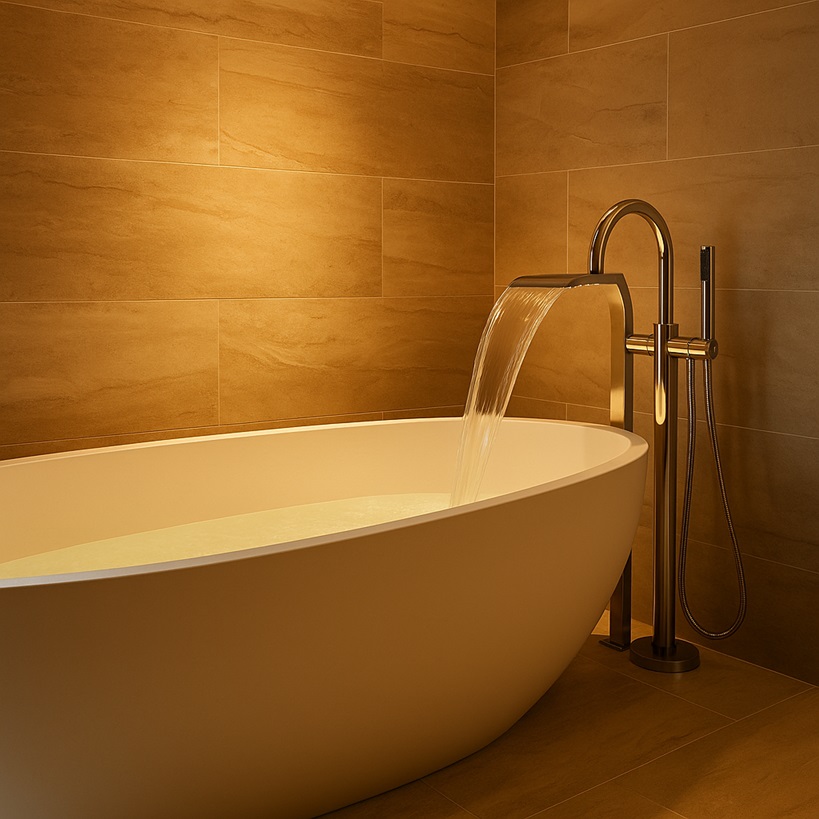
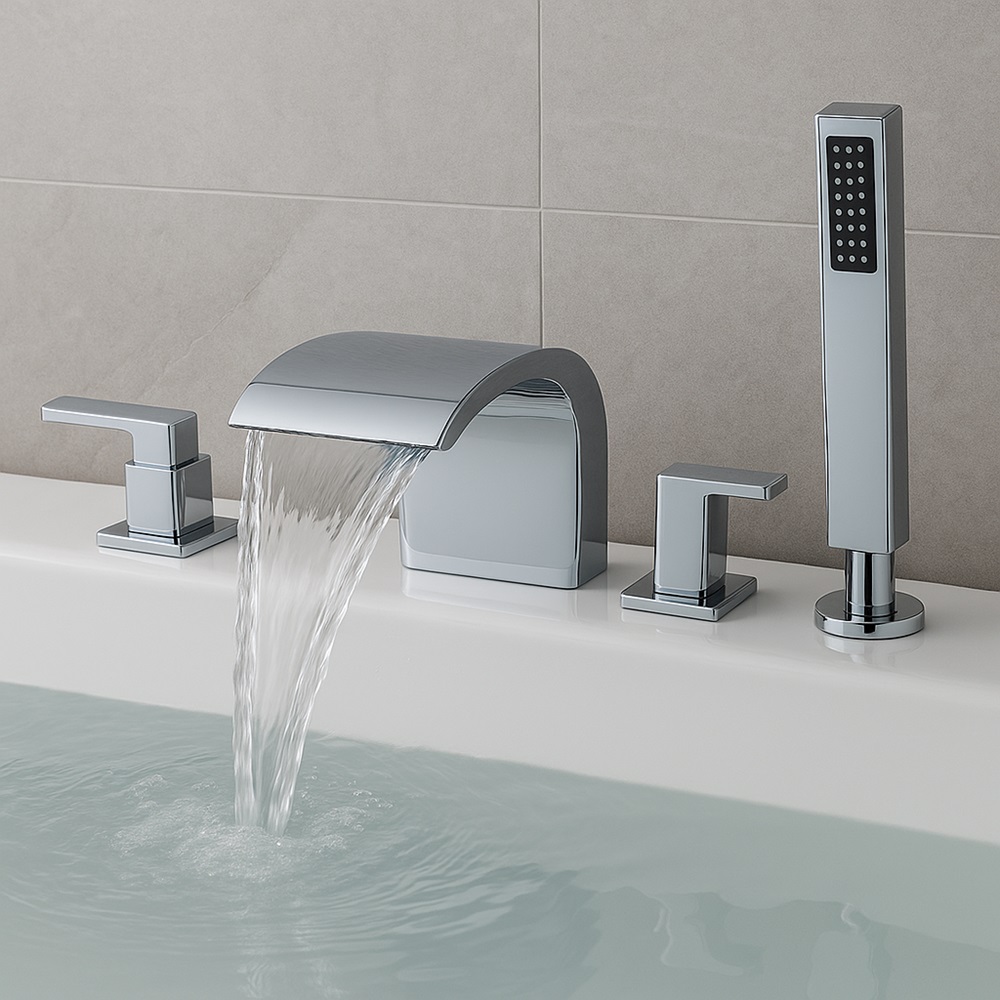
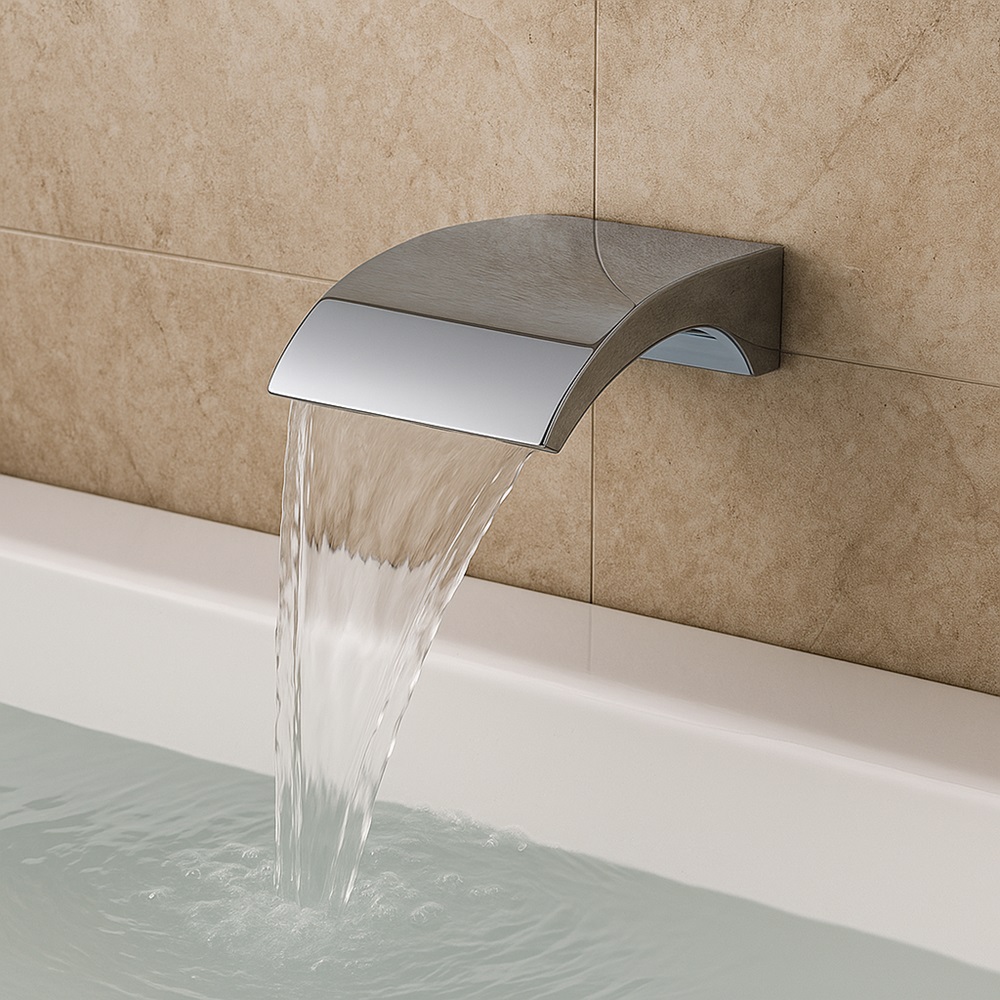
Configuration Visuals: Deck, Wall & Freestanding Waterfall Tub Fillers
Waterfall Tub Fixtures: AEC-Oriented Overview
Hydraulic Loads & Flow Performance
Waterfall tub fillers frequently operate at higher instantaneous flow rates than standard lavatory fittings. Properly selected
models are translated into fixture units, incorporated into domestic water supply calculations, and checked against heater plant
capacity so that multiple tubs can deliver a strong cascade effect without starving other fixtures.
Code Compliance & Flow Limits
Project teams must coordinate waterfall tub fillers with adopted plumbing codes, including IPC Section 604.4 and any local
amendments that cap flow rates and water consumption by fixture type. Early confirmation of allowable flows helps align the visual
intent of the cascade with regulatory limits.
Fixture Selection & Mounting Strategy
Mounting type—deck, wall, or freestanding—drives routing, backing, and finish coordination. AEC teams balance the desired
visual prominence of the cascade with structural conditions, cleaning requirements, and access to valves and connections.
Spout Geometry & Cascade Quality
Projection, lip design, and internal aeration define whether the water appears as a laminar sheet or a more aerated ribbon. The
spout must be coordinated with tub geometry so that the waterfall lands within the well, clears the overflow, and avoids
undesired splash on adjacent decks and flooring.
User Safety & Control Logic
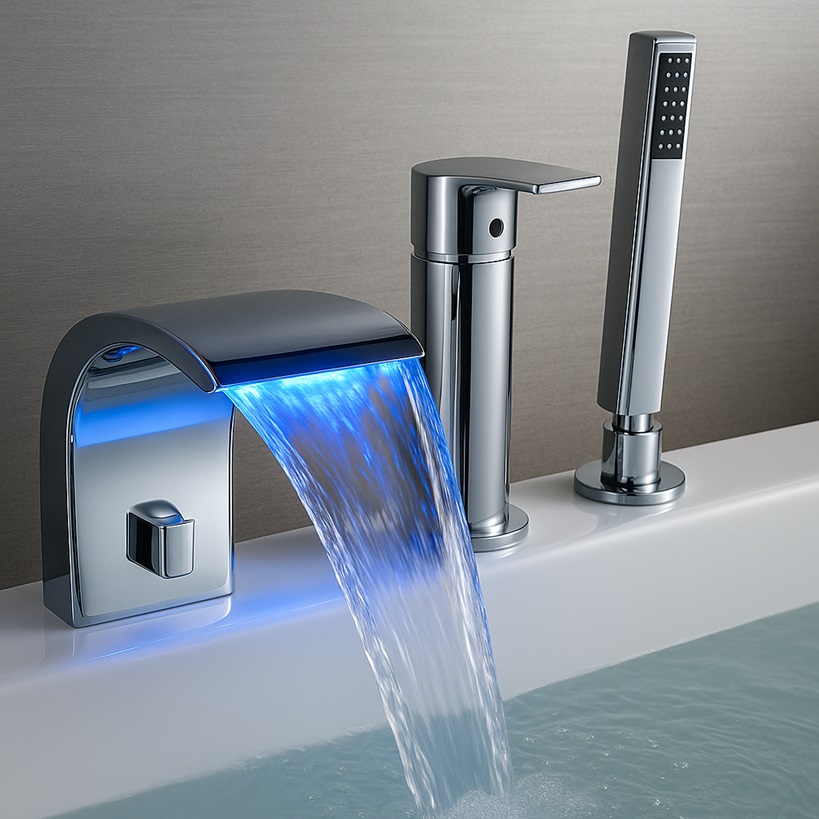
Thermostatic mixing, clear handle geometry, and optional LED or temperature feedback help maintain safe outlet temperatures and
intuitive operation. This is especially important in hospitality and multifamily environments where a wide range of users
interact with the fixtures.
Documentation, BIM & Lifecycle Planning
Waterfall tub fixtures are documented as integrated assemblies with defined flows, pressures, and materials. BIM content,
dimensional templates, and coordinated specifications help align rough-in locations, access panels, finishes, and maintenance
protocols across portfolios.
Planning Waterfall Bath Tub Fixtures Across Project Types
Codes, Flow Performance & Hydraulic Planning
- Confirm flow limits: Verify maximum allowable flow rates for tub fillers under the adopted plumbing code and any regional amendments before finalizing product selection.
- Translate to fixture units: Convert the selected waterfall tub fillers into fixture units and integrate them into domestic water supply calculations, including diversity factors and pump head.
- Check plant capacity: Confirm that the heater plant can support simultaneous operation of multiple waterfall tubs at the desired cascade effect without compromising hot water delivery elsewhere.
- Use manufacturer data: Incorporate published flow and pressure performance data from products such as the Fontana Waterfall LED bathtub faucet with handheld shower into sizing spreadsheets and BIM objects.
Fixture Selection, Rough-In & Specifications
- Align mounting with typology: Use deck-mounted waterfall fillers for tubs with generous ledges, wall-mounted solutions for feature walls and easy cleaning, and freestanding fillers for center-of-room tubs and suites.
- Coordinate spout geometry: Set projection, height, and lip geometry so the cascade lands within the tub envelope and respects overflow elevations, minimizing splash and slip risk.
- Integrate into drawings: Reference manufacturer BIM families and dimensional data when locating spouts, controls, overflows, backing, and access panels on plans and elevations.
- Define performance in specs: Create a dedicated section for waterfall tub fillers that addresses certifications, flow limits, materials, acoustic criteria, and finish requirements aligned with project standards.
Applications for Waterfall Tub Fixtures Across Portfolios
Residential Master Bathrooms
In single-family and condominium master baths, waterfall tub fillers act as focal points, pairing spa-like cascades with controlled
fill times and coordinated finishes that align with lavatory faucets and shower systems.
Hospitality Suites & Villas
Hotels and resorts often feature freestanding or wall-mounted waterfall fillers in suites and villas. Standardized valve platforms
and finishes allow operators to repeat successful details across multiple properties while preserving brand identity.
Multifamily & Mixed-Use
In multifamily and mixed-use developments, select room types may receive waterfall tubs as an upgrade. Fixture unit impacts and
acoustic performance are balanced against hot water plant capacity and building-wide comfort targets.
Spa & Wellness Facilities
Dedicated spa zones and wellness centers leverage waterfall tub fixtures for therapeutic experiences. Spout geometry, lighting, and
noise levels are tuned to align with wellness programming and privacy goals.
Boutique & Design-Forward Projects
Boutique hotels and high-design residential projects use waterfall tubs to showcase material palettes, from natural stone feature walls
to textured porcelains that interact with the water sheet and lighting.
Portfolio Standards & BOD Narratives
Developers and operators can embed specific waterfall tub families into basis-of-design documents and portfolio standards, enabling
consistent performance, finish coordination, and operations strategies across different asset types and geographies.
Technical Specifications & Code Context for Waterfall Tub Fixtures
|
Configurations
|
Deck-mounted waterfall tub fillers with integrated diverters and hand showers; wall-mounted cascades composed with tiled feature
walls; freestanding waterfall fillers serving center-of-room tubs—selected per project typology, structural conditions, and
desired visual impact.
|
|
Standards & Codes
|
Designed to align with applicable plumbing codes and flow limitations for tub fillers, including maximum flow and water consumption
per fixture. Project specifications call out required certifications, mixing strategies, and maximum outlet temperatures in
accordance with the adopted code and any local amendments.
|
|
Hydraulic & Acoustic Performance
|
Waterfall fillers are coordinated with domestic hot water system design, translating selected models into fixture units and
incorporating pressure drop and flow rate data into calculations. Acoustic criteria—particularly in hospitality and multifamily
environments—inform target flow settings and spout geometry to keep sound levels within acceptable ranges.
|
|
Mounting & Rough-In
|
Deck, wall, and freestanding installations are documented with rough-in dimensions, cavity depth, structural backing, and access
provisions. Spout projection and height are coordinated with tub geometry, overflow location, and finishes to ensure the cascade
remains inside the tub envelope in normal use.
|
|
Materials
|
Tub fillers typically use brass bodies and corrosion-resistant internal components sized for high-use environments. Specifications
define allowable materials, minimum brass content where applicable, and resistance to common cleaning chemicals and water
conditions.
|
|
Finishes
|
Finish palettes frequently include chrome, brushed nickel, brushed gold, matte black, and other architectural coatings. The
waterfall spout finish is coordinated with lavatory faucets, shower fittings, drains, and accessories so that the cascade reads
as part of a cohesive fixture suite.
|
|
Accessories & Options
|
Options can include integrated hand showers, diverters, LED or temperature-indicating features, flow regulators, and backflow
protection assemblies where required. Accessories are selected to support both the desired user experience and the hydraulic and
regulatory framework of the project.
|
|
BIM & Documentation
|
Product data sheets, BIM/CAD families, and installation instructions support coordination with tub shells, framing, waterproofing,
acoustic requirements, and MEP routing. Documentation also provides reference fill times, noise expectations, and maintenance
procedures for operations teams.
|
Configuration Focus (Model-Dependent)
Waterfall Tub Fillers
Spa-Level Cascade Effects
Deck, Wall & Freestanding
Hydraulic & Acoustic Criteria
Integration & Coordination Highlights
- Verify that selected waterfall tub fillers comply with applicable plumbing codes, including flow rate restrictions, mixing requirements, and maximum outlet temperatures.
- Coordinate spout height, projection, and relationship to tub geometry and overflow elevation early in design, carrying rough-in data through CDs, shop drawings, and BIM models.
- Align fixture unit values, heater plant capacity, and recirculation strategies with the intended cascade effect, acoustic targets, and simultaneous usage scenarios in residential, hospitality, and multifamily environments.
Why AEC Teams Specify FontanaShowers for Waterfall Tub Fixtures
Dedicated Waterfall Tub Collections
FontanaShowers offers dedicated waterfall tub faucet collections that allow specifiers to treat the waterfall effect as a defined
design and hydraulic element, rather than a decorative afterthought, with options suitable for residential and hospitality projects.
Thermostatic & Control Options
Waterfall tub fillers with thermostatic mixing, clear handle geometry, and optional LED or temperature feedback help teams meet
safety objectives while delivering a spa-level experience that is intuitive for guests and residents.
AEC-Focused Documentation & BIM
Cut sheets, BIM families, and coordination details from FontanaShowers—supported by AEC-focused guidance such as the bathtub
faucets versus taps article—simplify integration of waterfall tubs into hydraulic calculations and stacked-unit layouts.
Finish Coordination Across Fixtures
By pairing waterfall tub fillers with matching waterfall lavatory faucets and broader faucet portfolios, designers can deliver a
consistent metalwork language that extends from tubs to sinks and showers in a single project or across a brand’s portfolio.
Maintenance & Lifecycle Support
Accessible cartridges, defined cleaning protocols, and clear spare parts information help facilities teams maintain waterfall
tub fixtures over the asset’s life, with both FontanaShowers and BathSelect product pages supporting O&M documentation.
Portfolio-Wide Standardization
Embedding specific FontanaShowers waterfall tub families into basis-of-design narratives enables operators and developers to
standardize appearance, performance, and maintenance strategies across residential, hospitality, and mixed-use portfolios.
Specification, BIM & Coordination Resources
Included in a Typical Waterfall Tub Spec Package
- Product data sheets for waterfall tub fillers, including flow rates at specified pressures, recommended fill times, and maximum outlet temperature limits.
- Editable submittal forms aligned with applicable plumbing and accessibility standards, describing mounting type, control strategy, and required certifications.
- BIM / CAD families with accurate spout projection, mounting heights, connection points, and clearance zones for coordination with tubs, partitions, and risers.
- Rough-in templates illustrating backing requirements, access panel locations, and relationships between spout, overflow, and controls for standard and premium room types.
- Maintenance and cleaning guidance, including descaling intervals, approved cleaners by finish, and cartridge replacement procedures for engineering and housekeeping teams.
Project Notes
When documenting waterfall bath tub fixtures, describe each assembly as an integrated system: identify mounting type, valve and
control strategy, flow rate at design pressure, expected fill time, and maximum outlet temperature. Coordinate spout geometry
with tub volumes, overflow locations, and adjacent finishes so that the cascade remains inside the tub envelope and splash is
minimized. Reference waterfall-focused collections and AEC guidance from FontanaShowers when developing basis-of-design
narratives, and capture maintenance requirements—including descaling intervals and cartridge replacement procedures—within the
project’s O&M manuals so that the spa-level cascade effect is preserved over the life of the asset.
|
|
|