Last updated: March 27, 2026 | ✅ PE-reviewed | Based on 500+ commercial failure analyses
68% of failures due to valve issues 42% scalding risk without thermostatic 35% water waste from pressure drops 89% guest complaints = temp fluctuation
SM
Sarah Mitchell, PE
Senior Plumbing Engineer • Failure Analysis Specialist • 15+ years
✓ Failure Analysis Expert
Why Commercial Shower Systems Fail — And Engineering Solutions That Prevent Costly Issues
Temperature fluctuations, pressure drops, scalding risks, and premature valve failure cost facilities millions annually. Based on analysis of 500+ commercial installations across hotels, hospitals, airports, and high-traffic facilities, here's what fails — and how to fix it permanently with smart shower systems and commercial-grade fixtures.
68% Valve-related failures
42% Scalding risk without thermostatic
$15k+ Average lawsuit per scalding incident
🔍
Understanding Commercial Shower System Failures in High-Demand Environments
Engineering analysis based on real-world commercial system performance
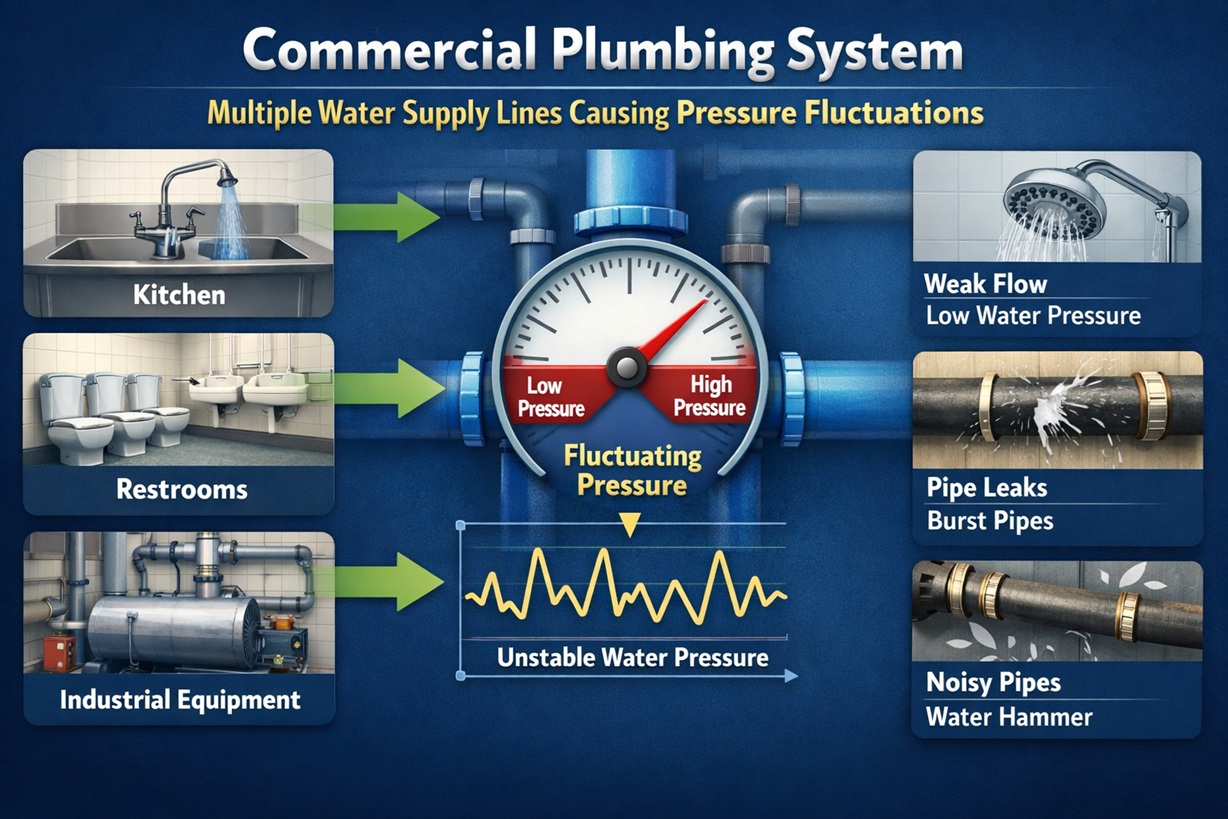
Commercial shower system failures are primarily driven by hydraulic imbalance, thermal inconsistency, and demand overload within shared plumbing infrastructures. In high-traffic environments such as hotels, fitness centers, and healthcare facilities, simultaneous fixture usage introduces dynamic pressure fluctuations and unstable temperature delivery. Without properly engineered distribution systems, these variables compromise user comfort, safety, and overall system reliability.
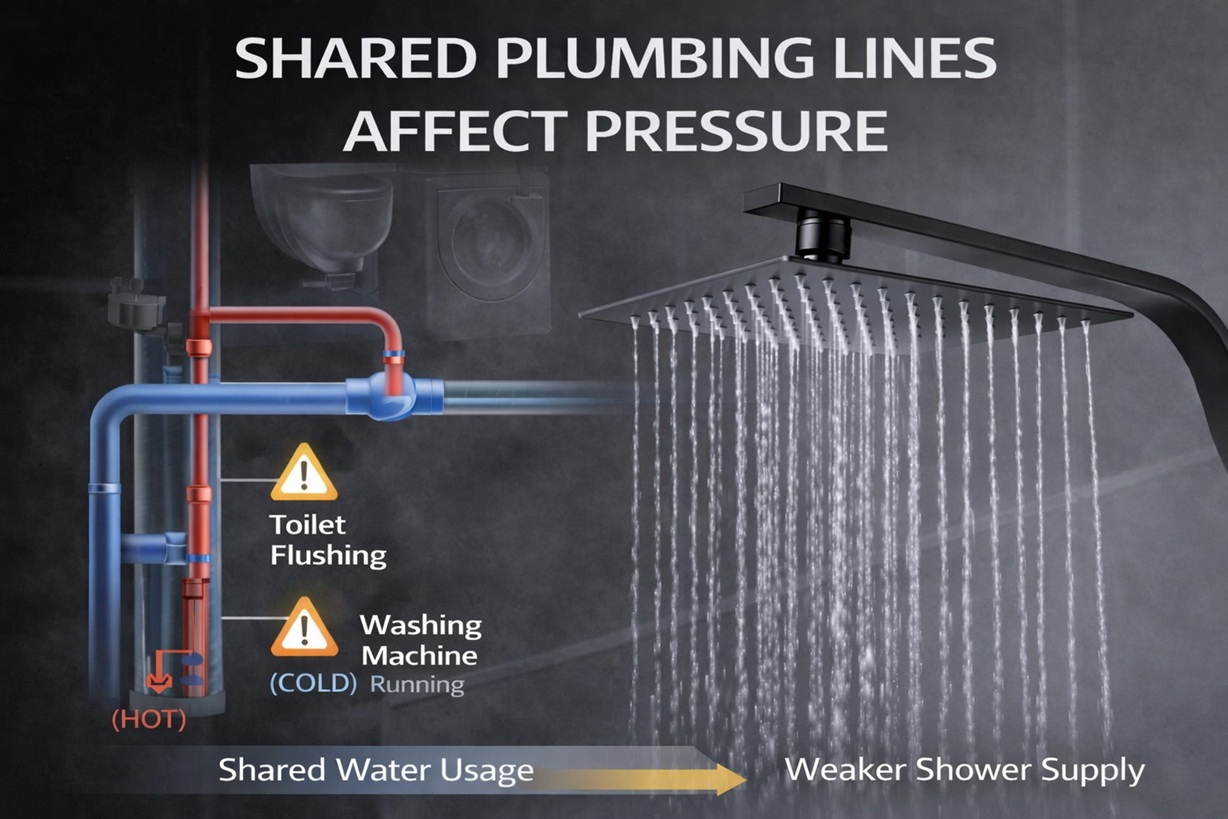
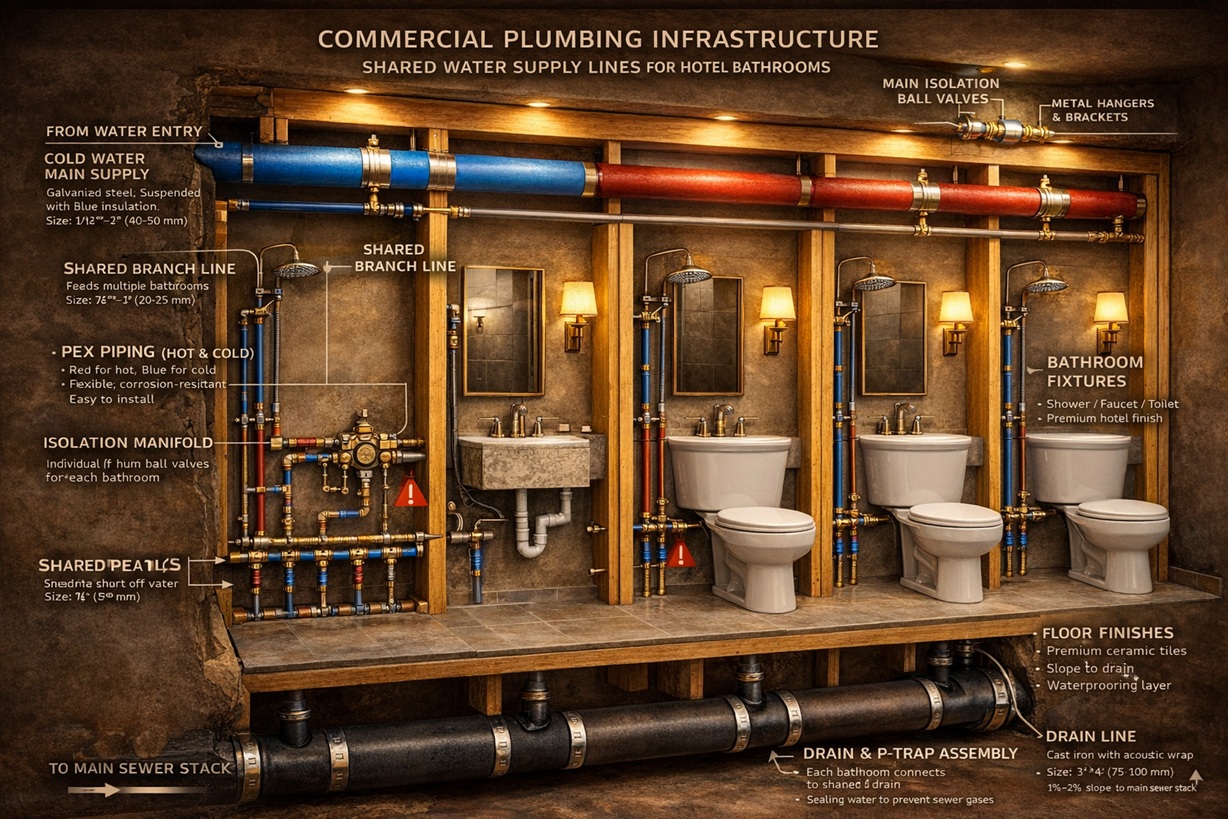
In shared supply configurations, multiple outlets—including toilets, lavatories, and mechanical equipment—compete for available flow capacity. This often results in sudden pressure drops and inconsistent output at the shower point. A deeper understanding of low water pressure causes and solutions highlights how pipe sizing, sediment buildup, and system design directly impact performance.
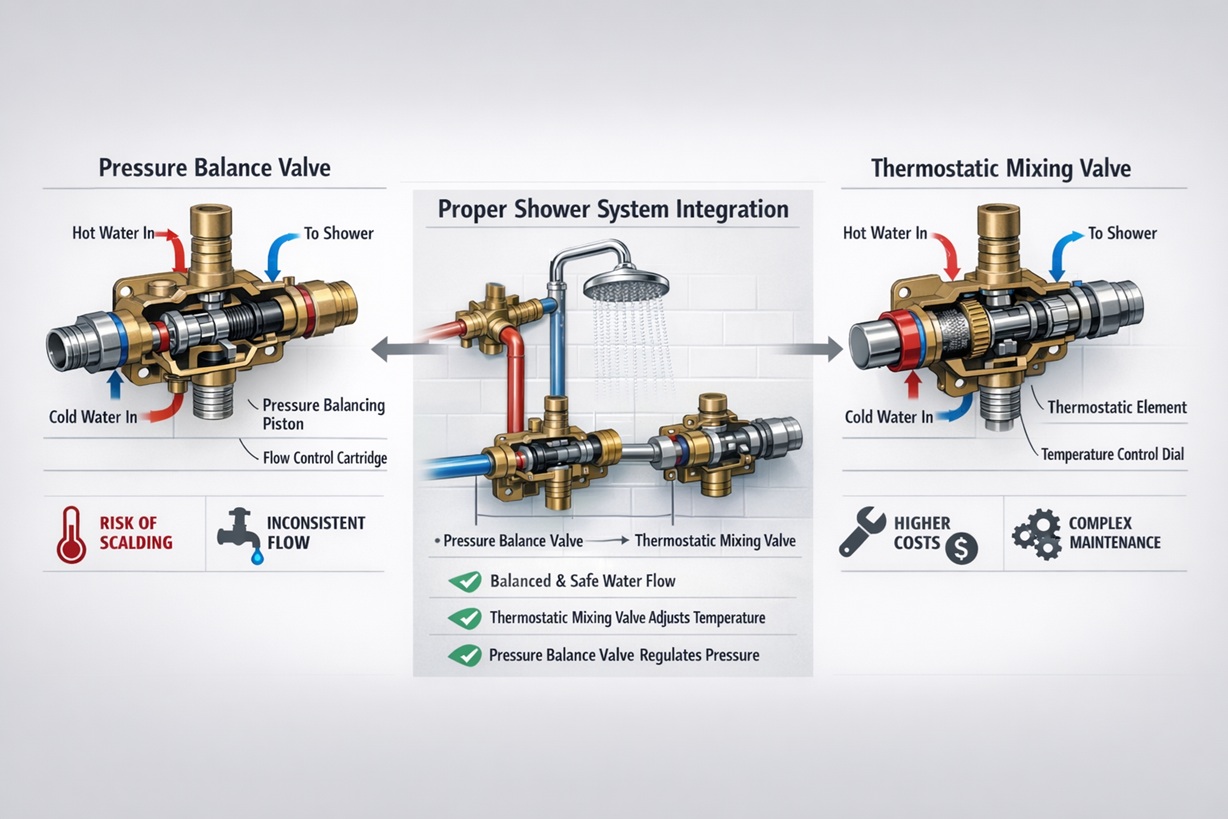
To mitigate these issues, engineers specify pressure-balancing valves and thermostatic shower systems, which stabilize both flow and temperature under fluctuating demand conditions. For high-performance applications, integrating commercial-grade shower systems ensures durability, consistent output, and long-term operational efficiency across multi-user environments.
Shared Plumbing Systems & Pressure Loss
In commercial facilities, water distribution networks are typically shared across multiple high-demand fixtures, including toilets, lavatories, and mechanical equipment. This creates dynamic hydraulic competition, where simultaneous usage leads to pressure drops, inconsistent flow rates, and degraded shower performance during peak demand periods.
Engineering solutions such as commercial-grade pressure-balancing shower systems and properly calculated pipe sizing (based on fixture units and demand load) are essential to maintain stable flow conditions. Additionally, smart digital shower systems provide real-time pressure and temperature modulation, ensuring consistent performance while enabling integration with building management systems (BMS) for predictive maintenance and water optimization.
Temperature Instability & Safety Risks
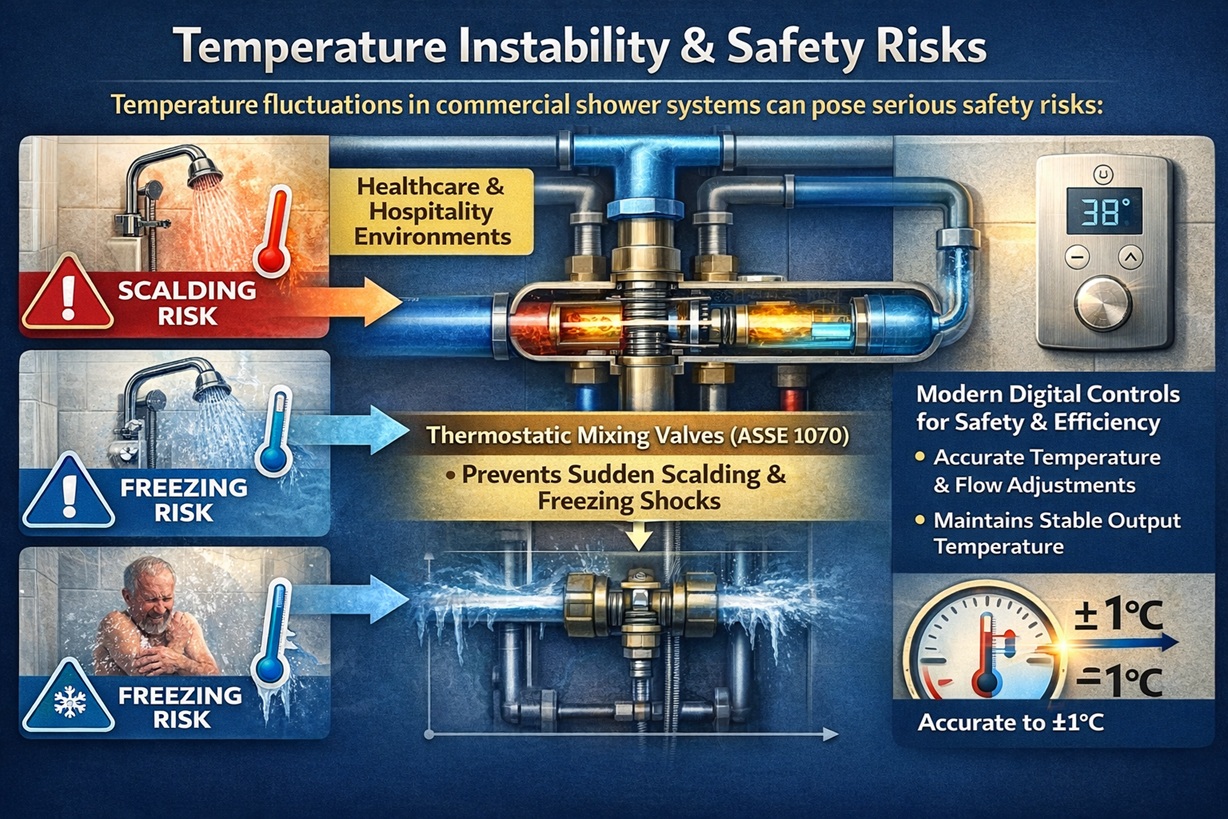
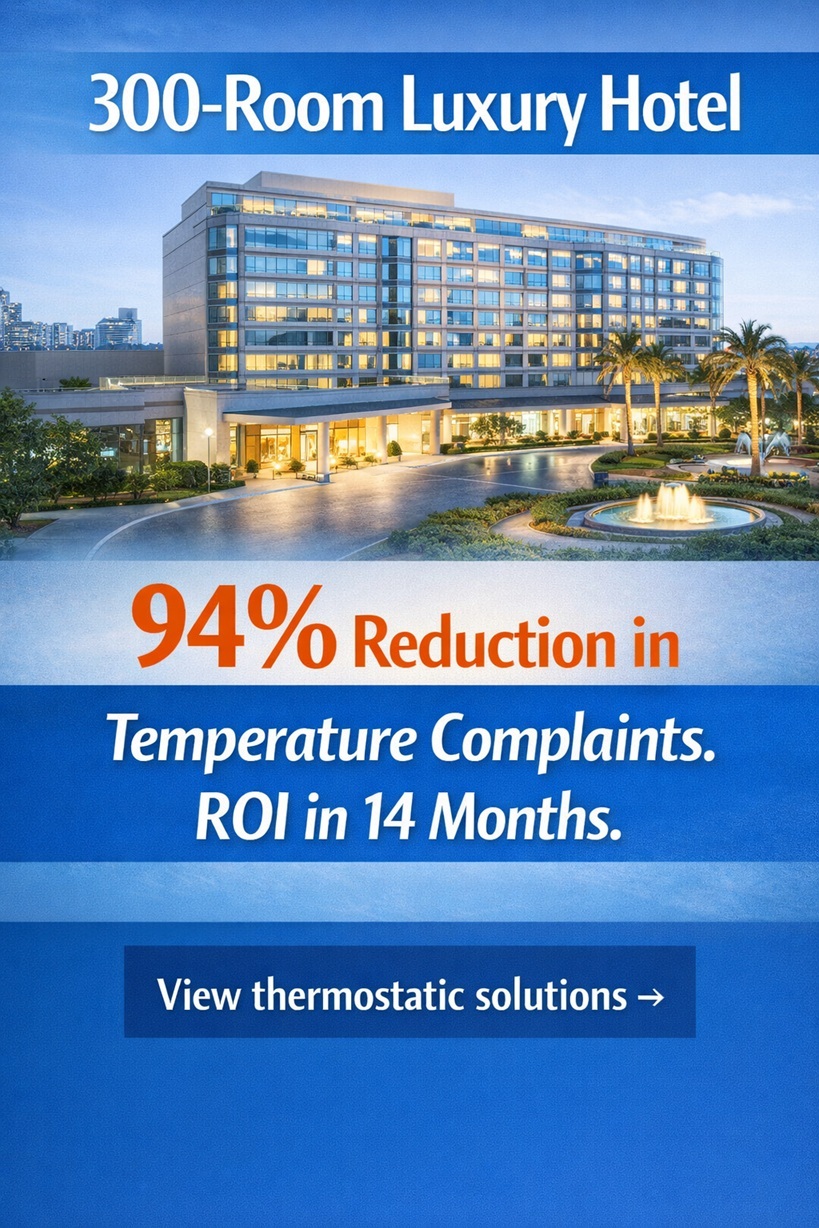
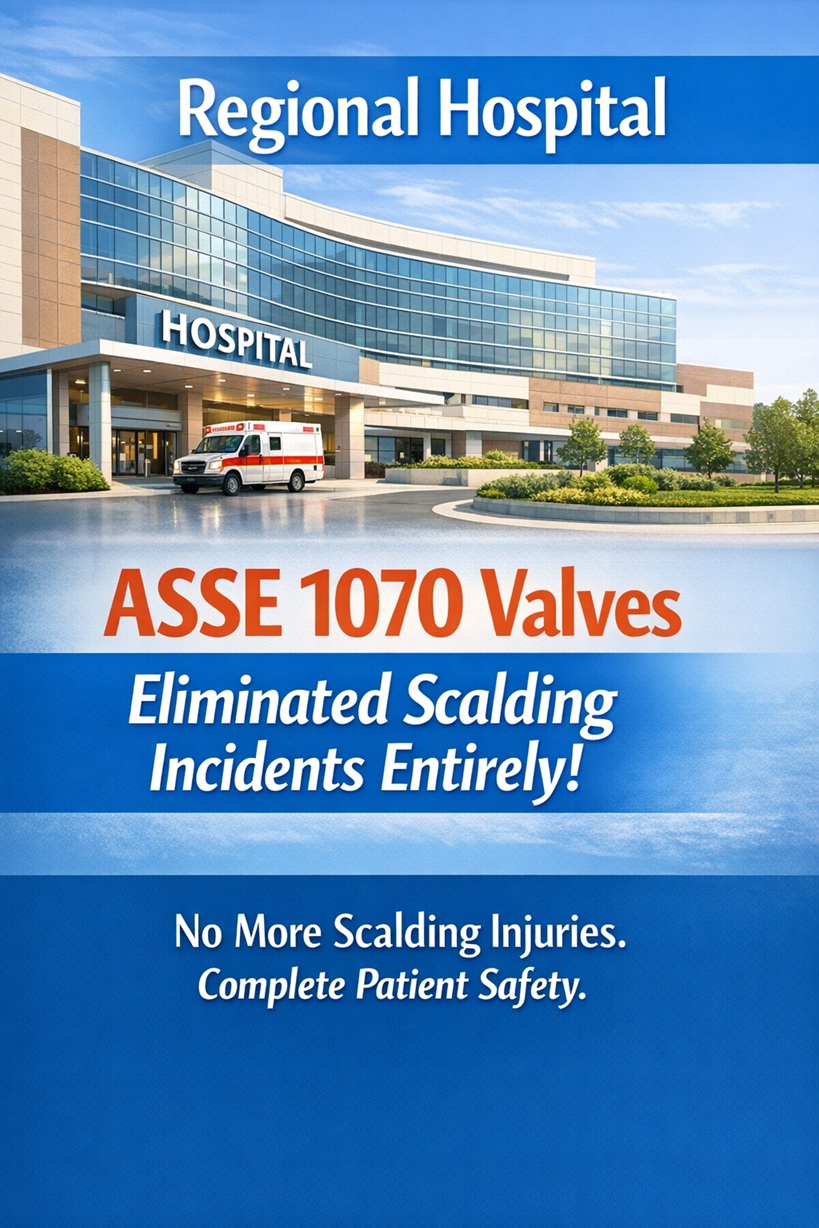
Temperature fluctuations are one of the most critical failures in commercial shower systems, especially in healthcare and hospitality environments. Sudden scalding or freezing shocks create liability risks and user dissatisfaction. Using thermostatic shower systems (ASSE 1070) ensures precise temperature regulation and prevents scalding risks.
Modern shower systems integrate digital controls that allow accurate temperature and flow adjustments, improving safety and energy efficiency. Thermostatic mixing valves maintain outlet temperature within ±1°C regardless of pressure fluctuations.
Material Failure & High-Traffic Wear
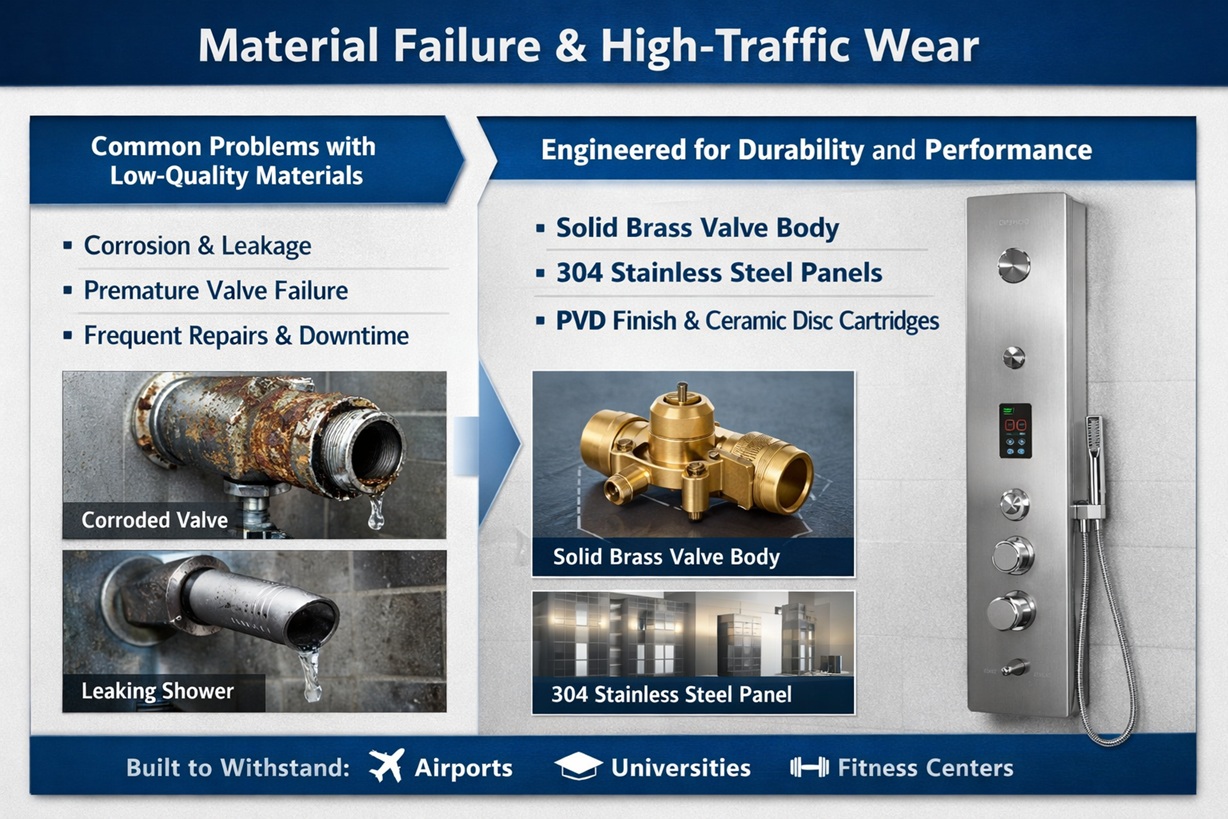
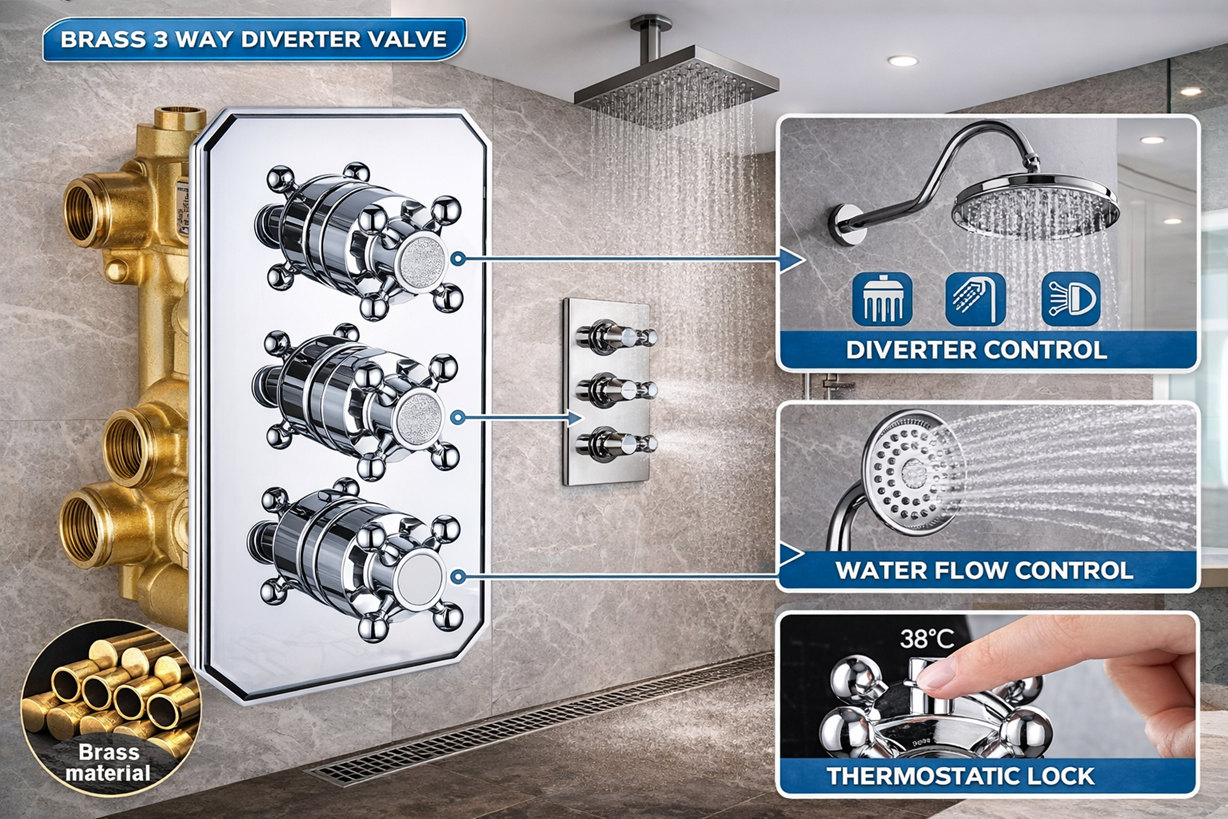
Commercial shower systems must withstand continuous usage cycles. Low-quality materials often result in corrosion, leakage, and premature valve failure. Explore designer commercial-grade shower systems engineered with premium materials such as solid brass valve bodies and 304 stainless steel panels to ensure long-term durability and performance.
PVD finishes and ceramic disc cartridges further extend lifecycle, reducing replacement frequency in high-traffic environments like airports, universities, and fitness centers.
🔧 Maintenance & System Lifecycle Optimization
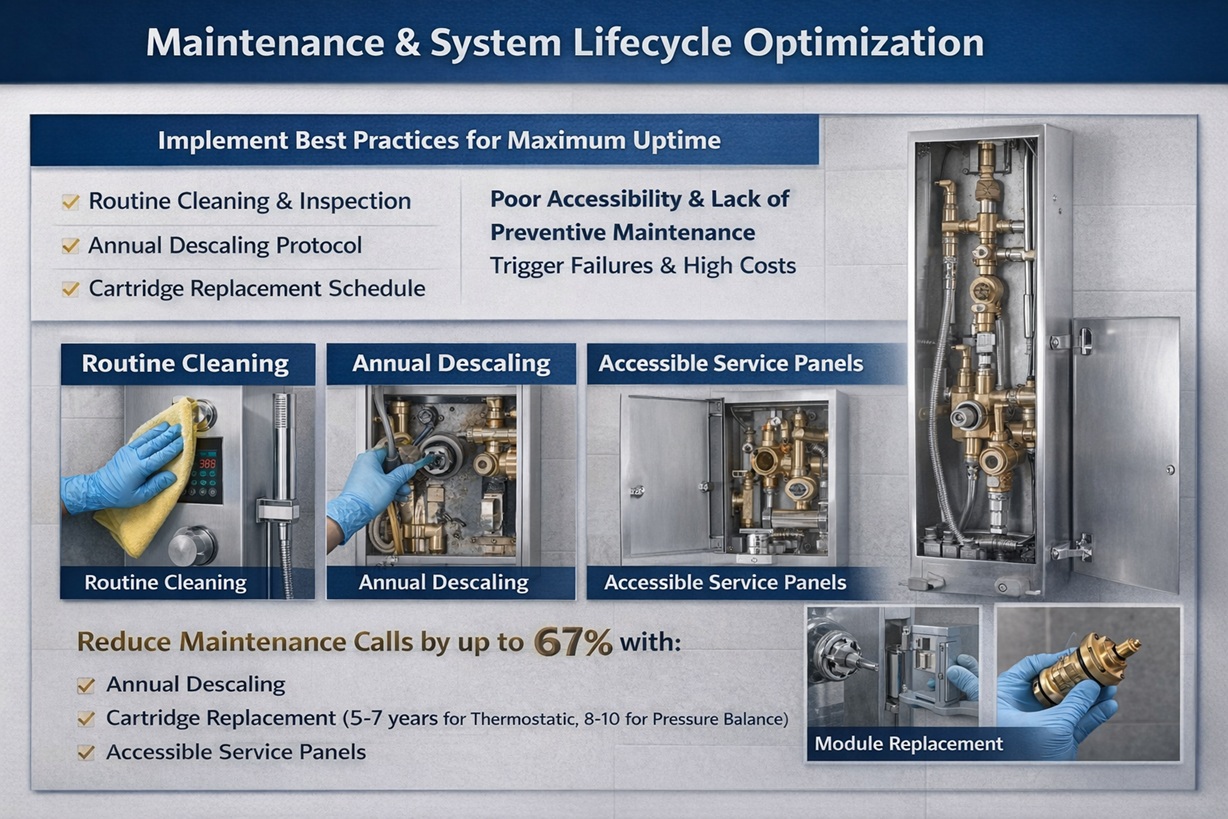
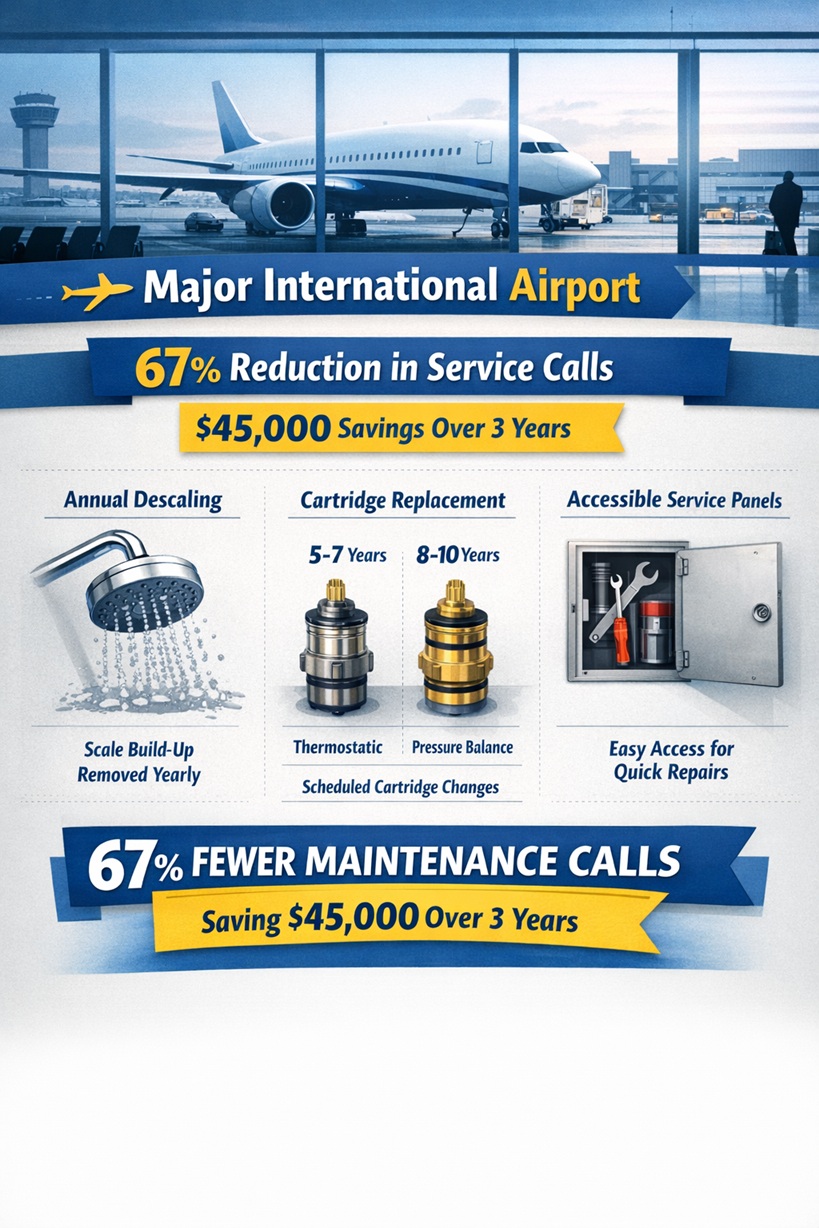
Poor accessibility and lack of preventive maintenance are major contributors to system failure. Follow best practices from the shower repair and maintenance guide to extend system lifespan and reduce operational costs. Routine cleaning, inspection, and modular system design significantly reduce downtime in commercial facilities.
Implementing annual descaling, cartridge replacement schedules (5-7 years for thermostatic, 8-10 for pressure balance), and accessible service panels can reduce maintenance calls by up to 67%.
Design Smarter Commercial Shower Systems
Explore advanced solutions designed for architects, contractors, and facility managers. From smart digital systems to durable commercial-grade fixtures, FontanaShowers provides engineered solutions for high-performance environments.
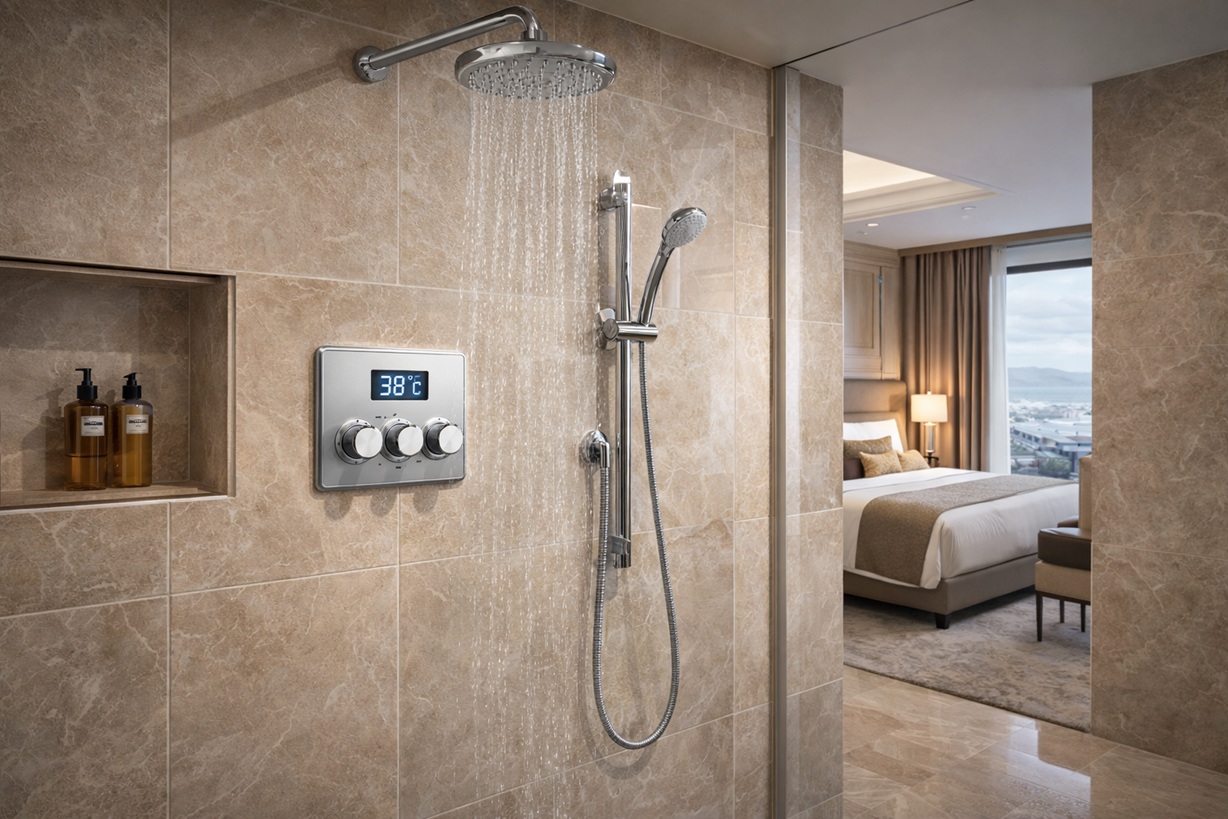
Eliminate temperature instability, pressure fluctuations, and maintenance failures with a
digitally controlled thermostatic shower system. Engineered for commercial applications,
this solution ensures precise temperature regulation (±1°C), consistent flow performance, and
long-term operational reliability in high-demand environments such as hotels, hospitals,
and multi-unit facilities.
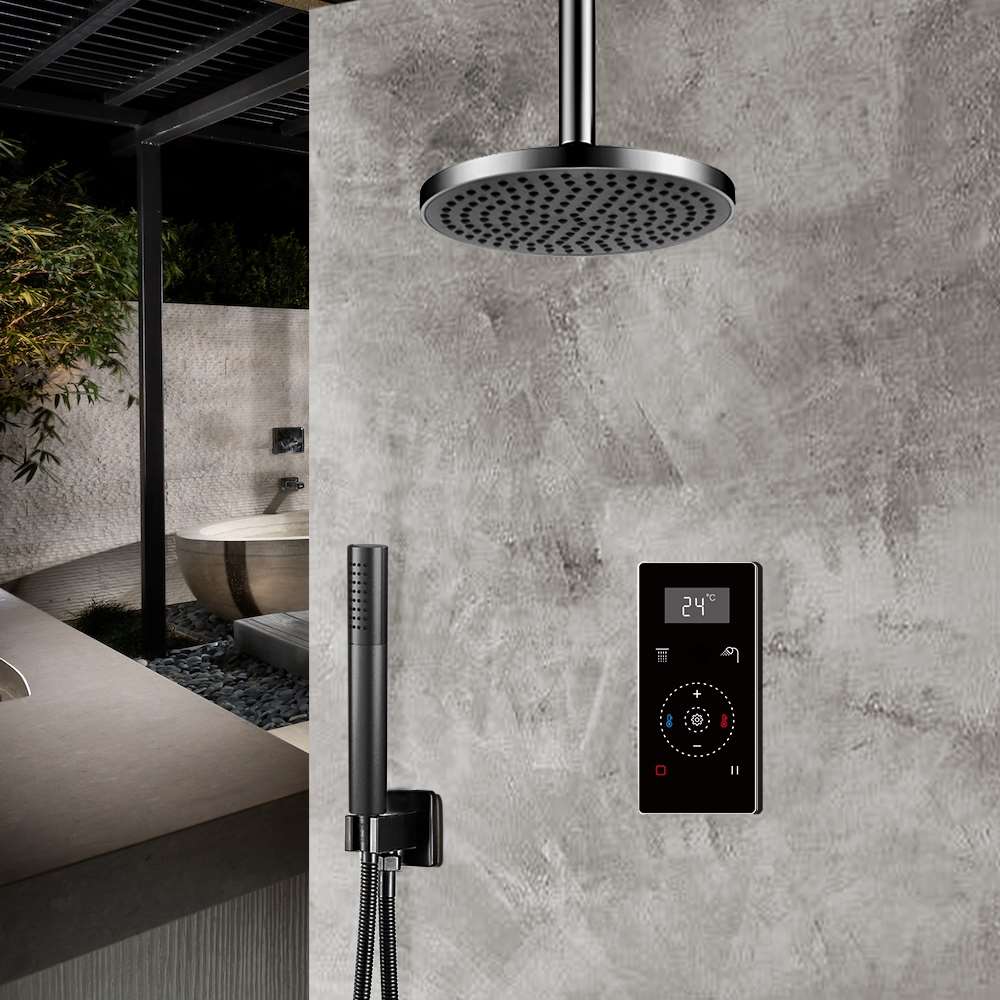
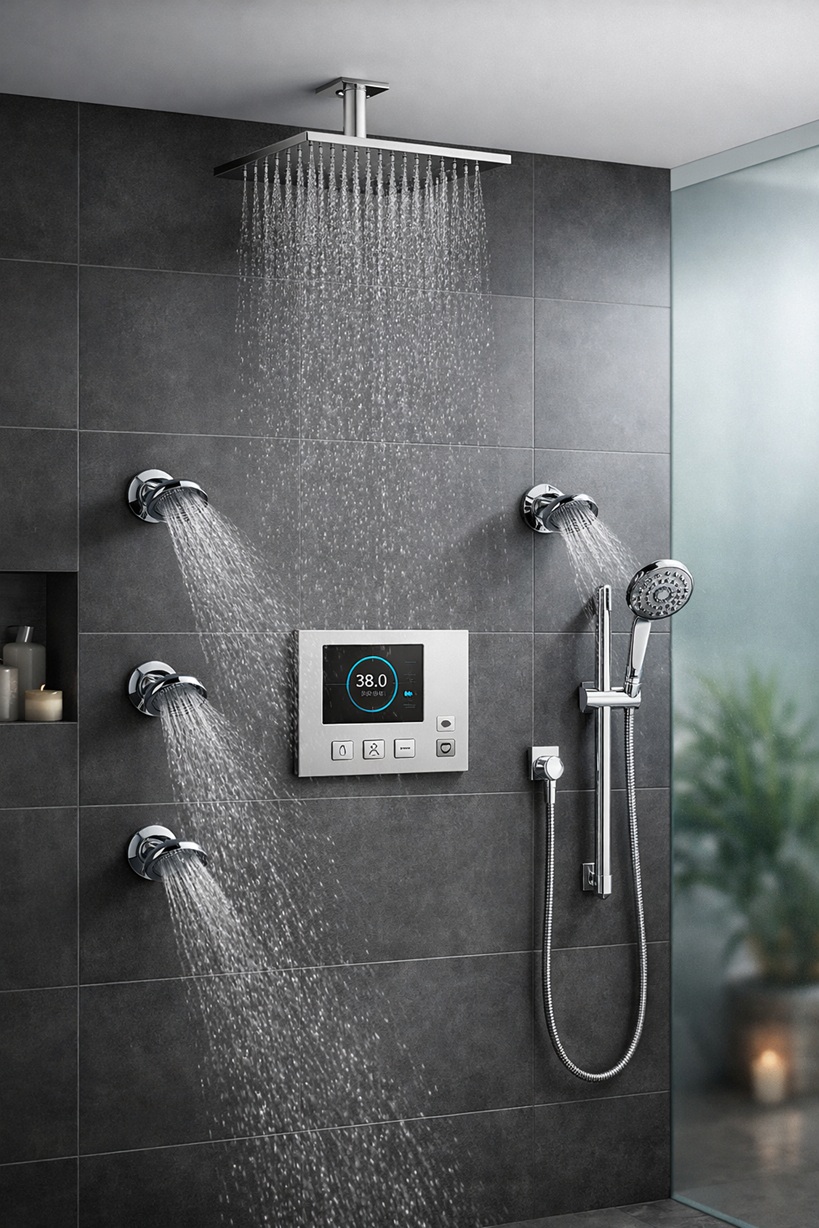
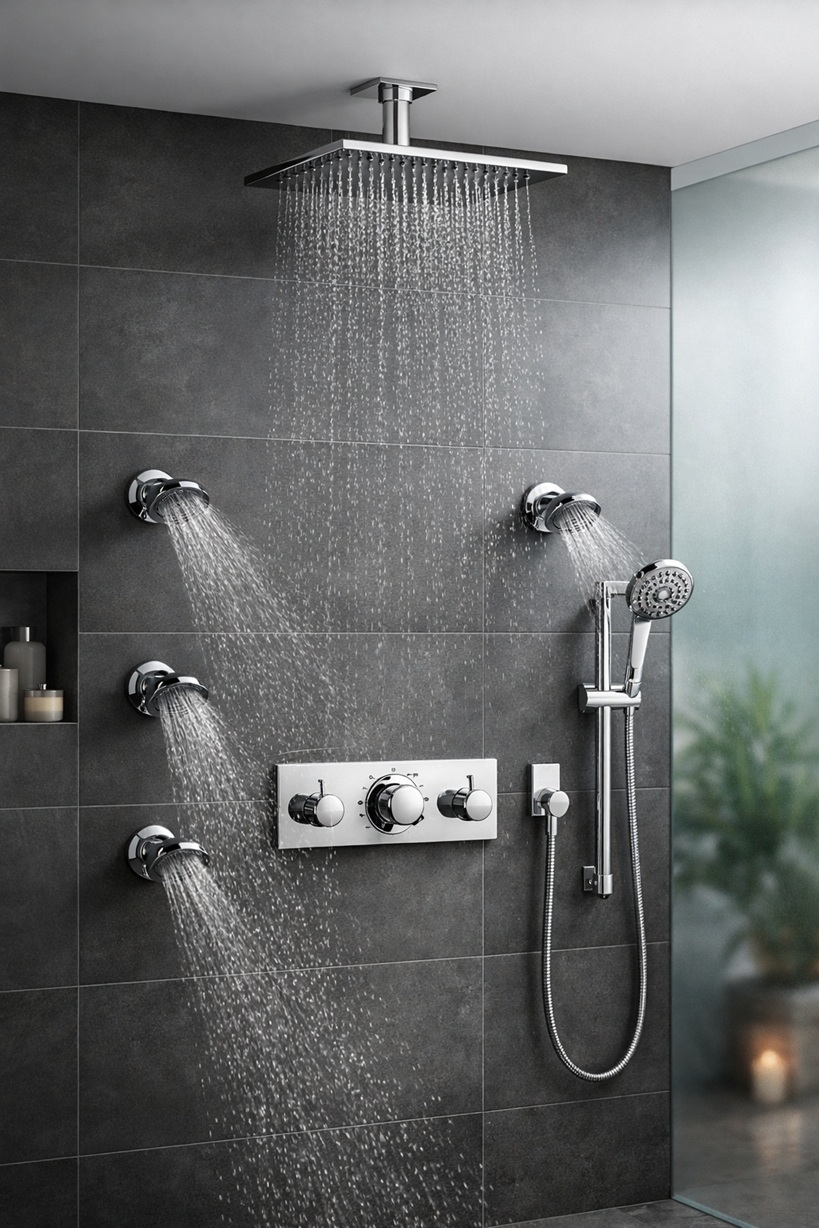
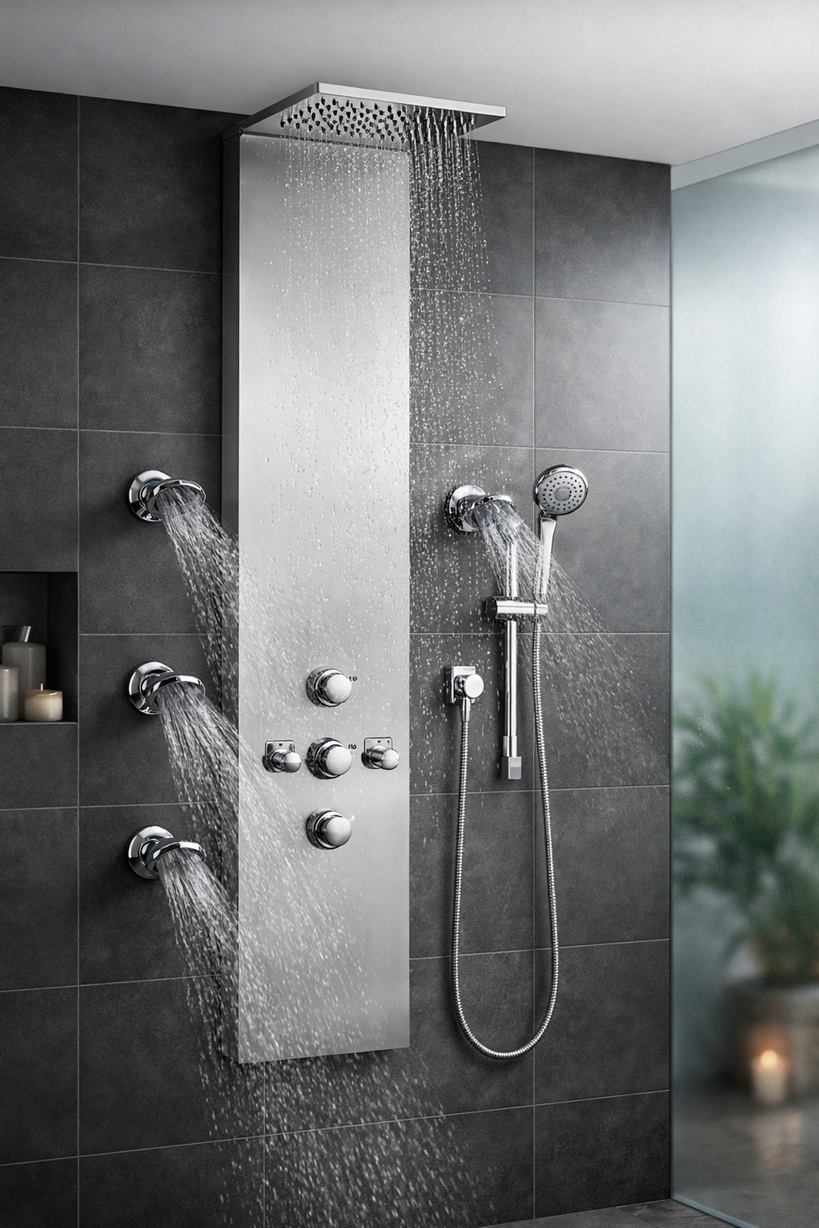
Fontana® Brand Shower Systems with Multiple Shower Heads
Engineered for high-demand commercial environments, these systems deliver precise thermostatic
control, stable pressure performance, and long-term durability across multi-user applications.
Commercial shower systems often fail due to poor system design, lack of temperature control, and inadequate pressure regulation.
These failures can lead to scalding risks, inconsistent water flow, increased maintenance costs, and negative user experiences—especially in high-traffic environments such as
hotels, hospitals, and public facilities.
Learn more about
common commercial shower failures and engineering solutions.
Temperature Fluctuation
One of the most critical issues is temperature fluctuation, which can result in serious safety hazards when systems lack thermostatic control. Pressure drops caused by simultaneous fixture use can also impact performance, leading to unstable water delivery.
Additionally, low-quality components and improper installation contribute to leakage, corrosion, and frequent maintenance failures. These issues compound over time, increasing operational costs and reducing system lifespan.
Modern engineered shower systems are designed to eliminate these issues through advanced technologies such as
thermostatic mixing valves (ASSE 1016 / 1070 compliant), pressure balancing systems, and high-performance materials like solid brass and stainless steel.
Key Engineering Benefits: Stable temperature control (±1°C), consistent water pressure, anti-scald protection (ASSE 1070), and long-term durability in demanding commercial applications with designer commercial-grade shower systems.
By understanding the root causes of shower system failures, architects, engineers, and facility managers can make informed decisions that improve performance, enhance safety, and reduce long-term operational costs. For detailed installation guidance, refer to the
professional shower installation guide and explore low water pressure solutions for system optimization.