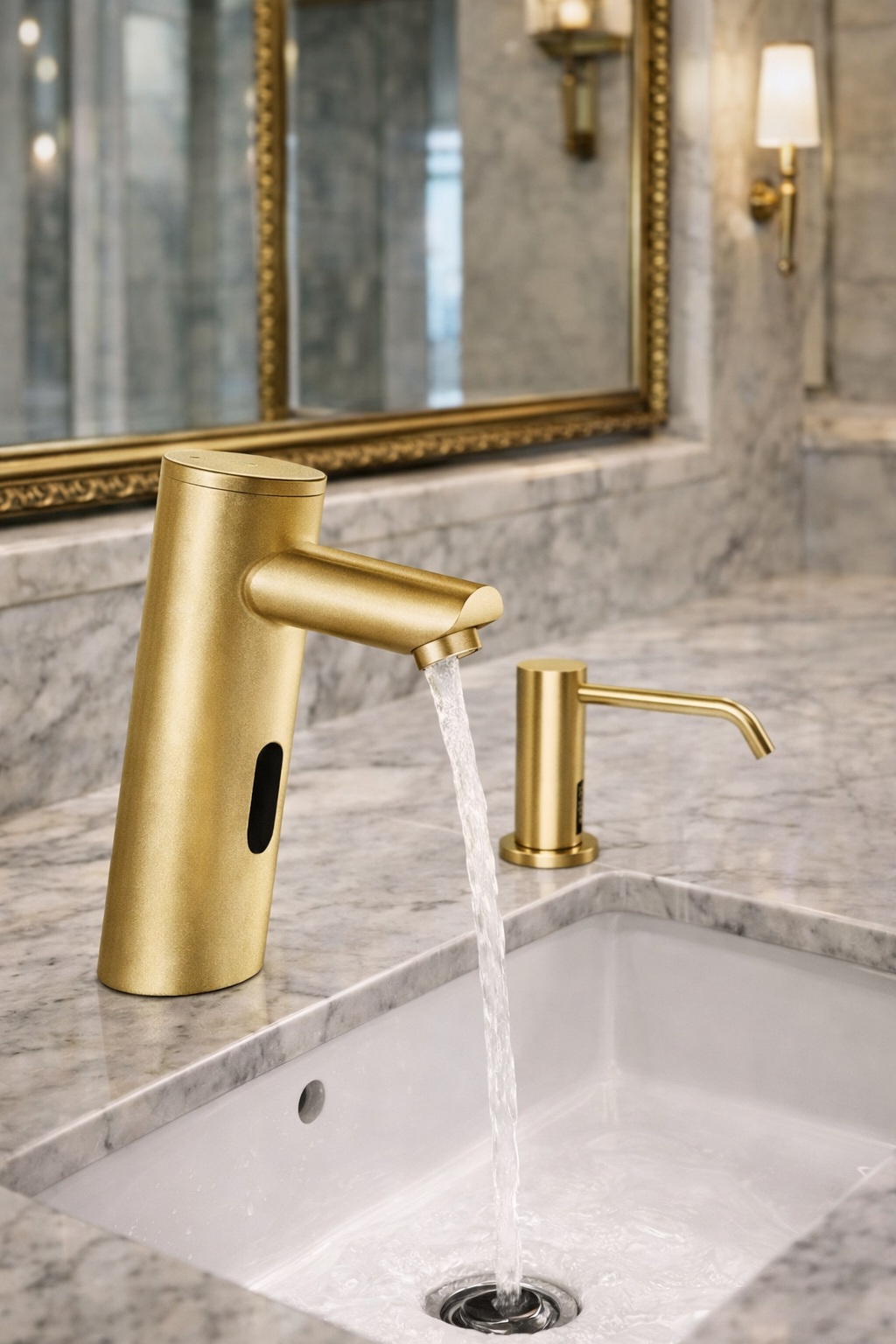
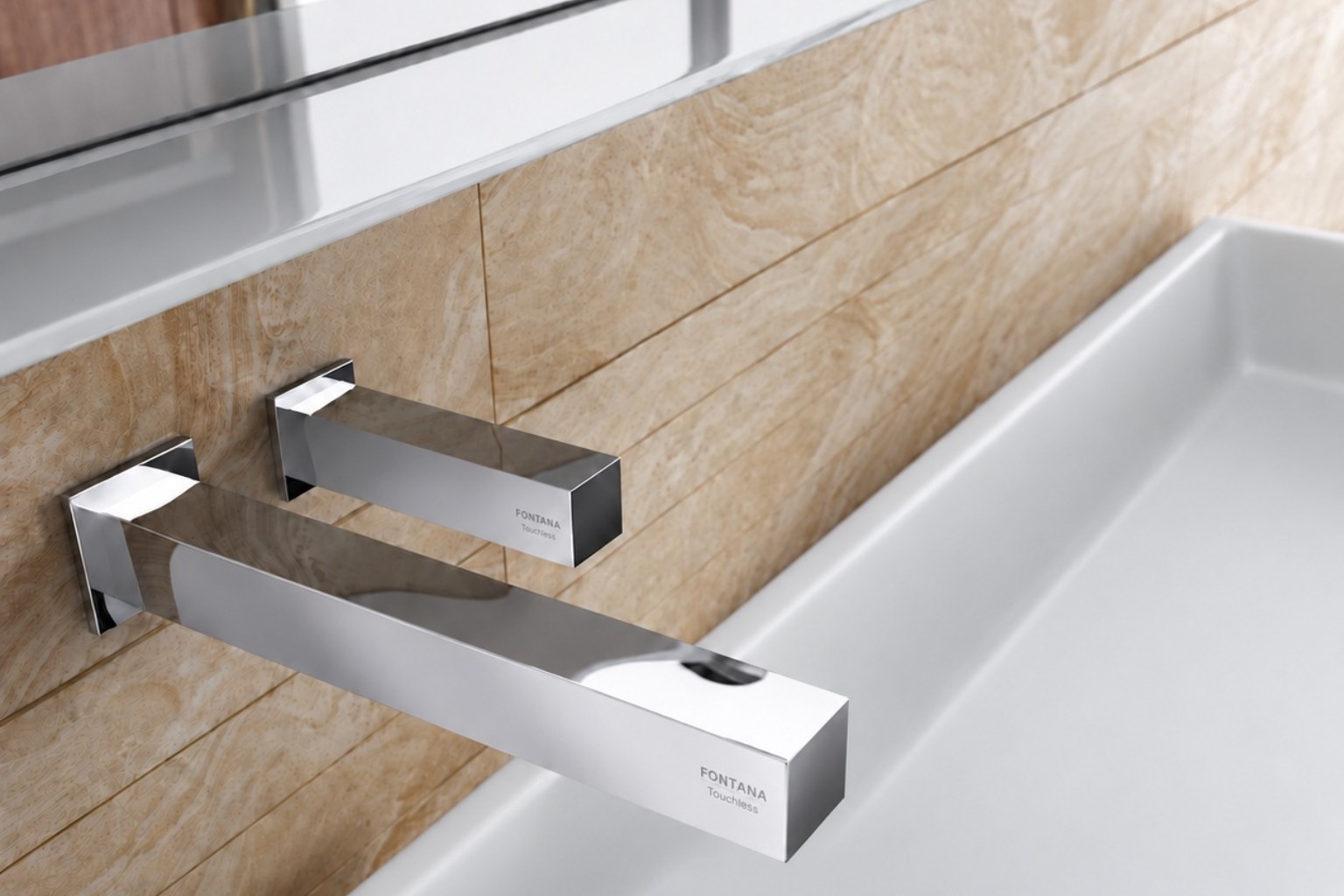
.jpg)
Commissioning Guidelines
Commissioning Criteria for Touchless Fixtures (AEC Guide)
In commercial restroom applications, touchless faucets and automatic soap dispensers function as coordinated electromechanical systems rather than passive plumbing components.
Read More
Sensor calibration, control logic, power delivery, solenoid response, flow regulation, and inlet pressure stability must operate within defined tolerances. Improper alignment or hydraulic imbalance commonly results in false triggering, premature shutoff, excessive water use, or accessibility conflicts in high-traffic environments.
This guide outlines commissioning criteria for AEC professionals to verify performance during design review, installation, and project closeout. The intent is to confirm alignment with Owner’s Project Requirements, applicable plumbing and accessibility codes, and functional performance expectations. Proper commissioning validates system integration, supports long-term maintainability, and ensures consistent user interaction throughout the restroom’s operational lifecycle.
Commissioning · Owner’s Project Requirements (OPR) · Functional Performance Testing (FPT) · WaterSense · ADA
Commissioning commercial touchless faucets should verify the complete sensor-to-water-delivery sequence under final installed conditions, because reliable restroom performance depends on detection-zone accuracy, power stability, electronic valve response, shutoff timing, hydraulic conditions, temperature control, basin interaction, and service accessibility working together. Architects, engineers, contractors, and commissioning teams can review a
touchless faucet commissioning performance-verification process covering sensor response, valve operation, water delivery, splash control, power stability, and final handover,
evaluate a
commercial sensor faucet with adjustable detection, electronic valve control, and AC power with battery backup for commissioning flexibility,
and compare a
thermostatic commercial touchless faucet requiring verification of sensor range, mixed-water temperature, AC/DC power, and repeated valve cycling
when establishing functional acceptance criteria for activation repeatability, false-trigger resistance, flow stability, safe temperature delivery, automatic shutoff, and dependable operation before facility turnover.
|
|
Commissioning · Performance Verification · Project Closeout
Commissioning Criteria for Touchless Fixtures
Verify sensor range, activation response, shutoff timing, flow rate, temperature limits, power modes, basin coordination, soap delivery, service access, and documented final settings.
Sensor Range · Run Time · Temperature Limits · AC/DC Verification
Fontana Touchless Fixture Commissioning
Verify Your Touchless Systems
Review commissioning criteria, fixture systems, exact products and technical closeout resources.
Fixture Systems
Featured Products
Performance Checks
Closeout Resources
Read More
Frequently Asked Questions: Commissioning Criteria for Touchless Fixtures (AEC Guide)
How do we categorize touch-free plumbing when prepping a building?
When getting a building ready, think of touch-free fixtures as regular plumbing and electrical parts. Make sure the mechanics, controls, power, and how people use them all work right. These parts usually fit under Division 22, but Divisions 26 and 28 come into play if there's hardwired power, transformers, or connections to a building management system.
What should we check early when planning?
Check the sensor type, water pressure, hot water delivery, mixing valves, and nearby materials early on. Writing this down early keeps you from having to readjust things later because of material changes or fixture placement.
What paperwork should the setup team sign off on?
The setup team should check papers that list sensor range, factory flow rates, power use, solenoid operation, and operating limits. The papers should clearly show what settings can be changed in the field versus what's fixed at the factory. That way, you can set things up without messing with the fixture itself.
How do we check the install before testing?
Before testing, make sure the fixture height, spout alignment, electrical insulation, and grounding are correct. Also, make sure nothing's blocking the sensors and that the water lines are clear so bits of debris don't mess with the solenoid.
What tests should we run?
Test how fast it turns on, how right the shutoff delay is, and if lights or shiny stuff cause it to turn on when it shouldn't. Also, check for steady water flow at different pressures, stable temperature, and if the safety shutoff works when things go wrong.
What rules apply to installing touch-free devices?
Usually, touch-free setups follow
ASHRAE guidelines, ADA rules, and EPA WaterSense standards. These help with testing, making sure things are accessible, and verifying water efficiency when finishing the project.
Related product categories
|
|
|