How Global Architecture Firms Are Leading the Shift to Touchless Fixtures
Studio & Firm Spotlights • Touchless Restroom Specs • High-Traffic Hardware • BIM / CAD / Cut Sheets
FontanaShowers® | Contractor + Architect Spec Hub
Touchless Restroom Packages That Match How Top Firms Actually Detail Projects
Global firms are pushing restrooms toward fewer touchpoints, tighter water control, and cleaner wall lines.
But the real shift is coordination: power strategy, service access, and repeatable fixture families that can scale across airports,
healthcare, campuses, and mixed-use towers. This page translates those design priorities into spec-ready moves and real product picks
you can carry into submittals.
Firm-Led Spec Patterns
High-Traffic Rated Hardware
Water + Hygiene Control
BIM / Specs / Install Docs
Contractor-friendly touchless packages succeed when the spec makes service reality obvious:
power choice, shutoff access, access panel locations, and a parts strategy that stays consistent across the building.
Why Leading Firms Are Choosing Touchless: The Practical Drivers Behind the Design
When global firms specify touchless, it is rarely about a single fixture. It is about reducing risk points, controlling consumption,
and making restrooms easier to operate at scale. The most consistent pattern is a system approach: sensor faucets, soap delivery,
and flush controls coordinated as one repeatable package.
-
Project-level examples:
Gensler’s LIXIL U.S. Headquarters project notes a completely touchless restroom created with partners.
Gensler project reference
-
Design research references:
Gensler has published a restroom design research PDF that many teams reference when discussing safer and more usable restrooms.
Gensler restroom research (PDF)
-
Healthy schools guidance:
Perkins&Will’s Healthy K12 strategies include touchless technology as part of healthier environments.
Perkins&Will Healthy K12 strategies
-
Specification norms:
Sloan summarizes how touch-free restroom products are commonly specified for hygiene and performance.
Sloan touch-free products overview
-
Holistic bathroom design:
Foster + Partners has published bathroom fittings work that reflects coordinated, system-based bathroom design.
Foster + Partners bathroom fittings
Takeaway for contractors and architects: touchless specs work best when written as a coordinated system,
with power, access, and maintenance made explicit before bid.
Spec-Ready Product Picks (High-Traffic Modules With Live Links)
Spec Quick Table + Commissioning Checklist (Built for Real Jobs)
Top firms push consistency. Contractors want clarity. Use this as a fast alignment tool during design coordination,
bid leveling, and field commissioning.
|
System
|
Mount / Use
|
Power Strategy
|
Service Access Note
|
Best Fit
|
Touchless Faucet
FS1327 series
|
Lavatory, public restrooms
|
Battery or hardwired (confirm per model)
|
Define access to controls and shutoff points. Confirm sensor window is protected and cleanable.
|
Airports, education, stadiums, high-use public zones
|
Sensor Toilet Flush
FS8098SLG
|
Toilet valve, high traffic
|
Battery or hardwired (confirm per model)
|
Require service clearance. Do not allow “sealed-in” valves behind finished surfaces.
|
Transit, arenas, institutional, corporate cores
|
Automatic Soap
FS9818
|
Wall mount, wash zones
|
Battery (typical), confirm per model
|
Call out refill method and cleaning access. Keep units reachable without ladders where possible.
|
Healthcare, education, airports, high-use public
|
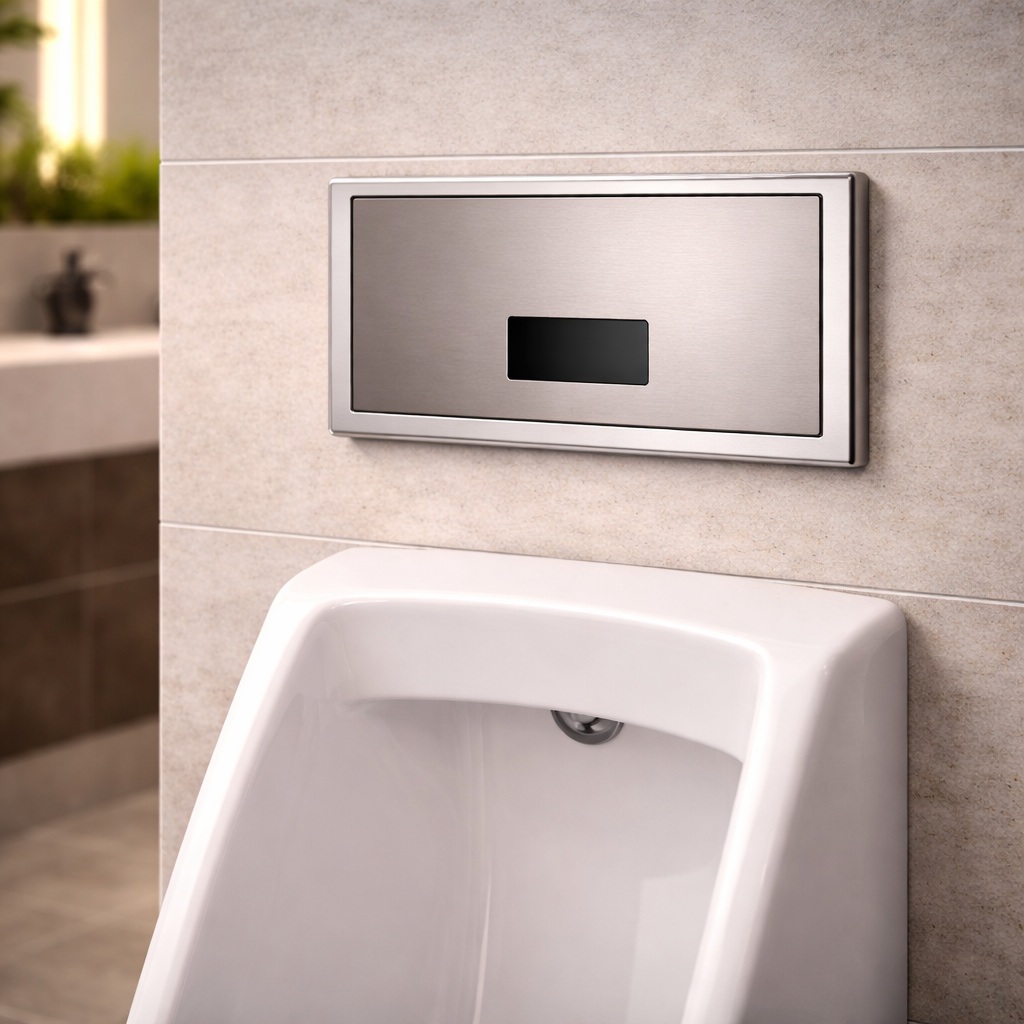
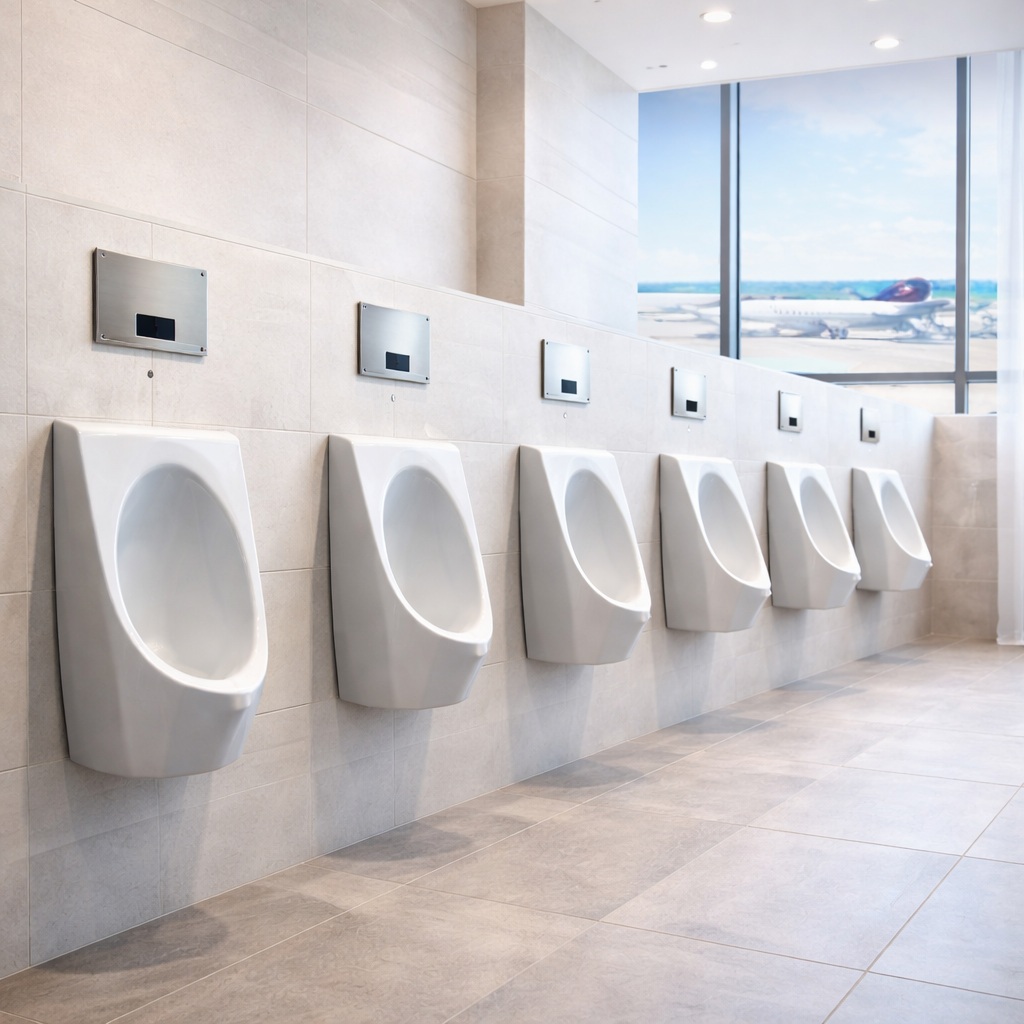
Concealed Urinal Flush
FS8977SN
|
Urinal banks, clean wall lines
|
Battery or hardwired (confirm per model)
|
Call out access panels and wall backing early. Confirm sensor line-of-sight and mounting height.
|
Stadiums, transit, campuses, convention centers
|
Commissioning Checklist (Field Use)
 .jpg)
- Confirm power choice: battery vs hardwired is coordinated in plans, submittals, and the field.
- Verify shutoffs: stop valves and isolation points are reachable without removing finished surfaces.
- Sensor behavior check: confirm activation range, false-trigger risk, and line-of-sight in the installed location.
- Flow intent: confirm aerator or laminar device and target flow for the project requirement.
- Pressure reality: verify acceptable operation at site pressure and during peak use conditions.
- Access panels: confirm panels exist where concealed equipment needs routine service.
- Finish protection: confirm cleaning agents and care notes are provided to facility staff.
- Spare parts plan: standardize a small set of parts across the facility to reduce downtime.
- Soap refill method: confirm refill workflow, capacity, and cleaning access at each dispenser.
- Owner handoff: include install docs, maintenance notes, and warranty references in the closeout package.
Product Videos (Spec Intent + In-Use)
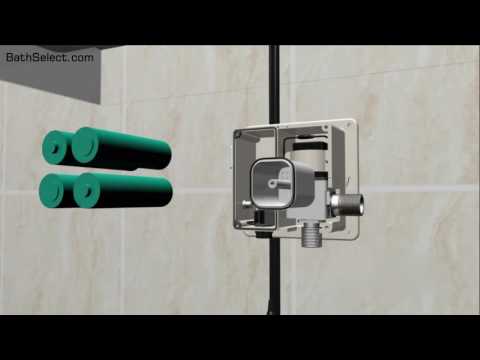
Two quick videos to align expectations on installation workflow and real-world operation.
These thumbnail cards open in a new tab and stay reliable across most CMS platforms.
Prefer embedded players? Use your approved CMS embed method and swap these thumbnails for embeds.
Engineering Notes: The “Firm-Level” Details That Make Touchless Work
When firms like Gensler, Foster + Partners, and other global studios influence a restroom direction, the spec still has to survive the field.
That means writing decisions in a way that can be built, serviced, and maintained without surprises.
- Decide power early: battery vs hardwired should be coordinated before bid to avoid scope creep and last-minute substitutions.
- Make service access non-negotiable: access panels and clearances belong in drawings, not only in submittals.
- Standardize fixture families: repeatable sensor platforms reduce training time, spares complexity, and downtime.
- Write the performance intent: call out target flow, auto shutoff behavior, and pressure tolerance expectations.
- Coordinate finishes: align finish codes across faucets, flush controls, dispensers, and plates to avoid mismatched swaps.
Request BIM/spec resources or a combined spec kit for the full touchless restroom package:
faucets, soap dispensers, and sensor flush systems.
BIM files hub
|
Installation instructions library
|
3D product rendering hub
Where This Firm-Led Touchless Strategy Fits Best
Airports, Transit, and Stadiums
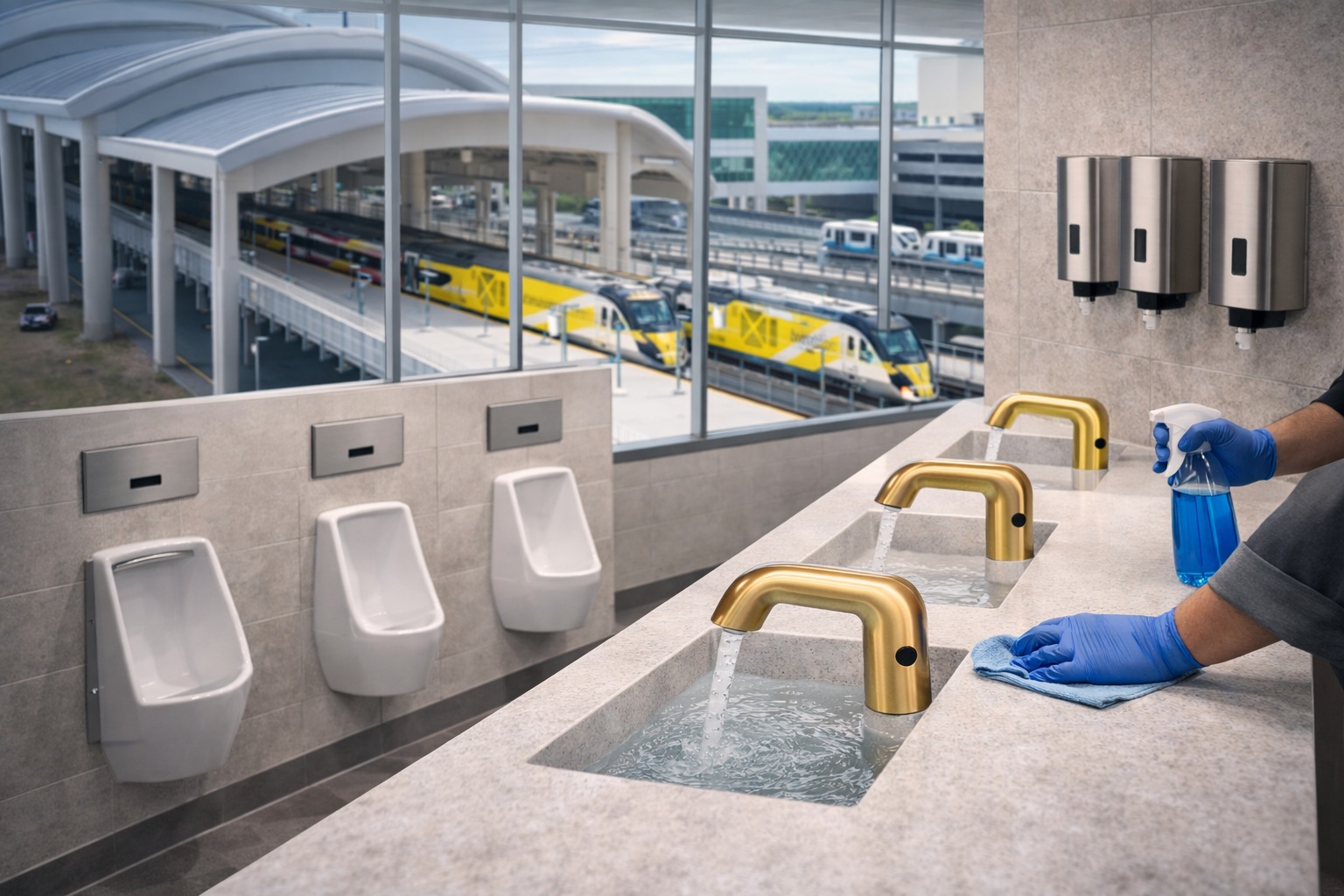 High-volume restrooms need dependable sensors, fast service access, and standardized parts.
Concealed plates and wall-mount dispensers help reduce cleaning friction and limit tampering points.
High-volume restrooms need dependable sensors, fast service access, and standardized parts.
Concealed plates and wall-mount dispensers help reduce cleaning friction and limit tampering points.
Hospitals, Clinics, and Labs
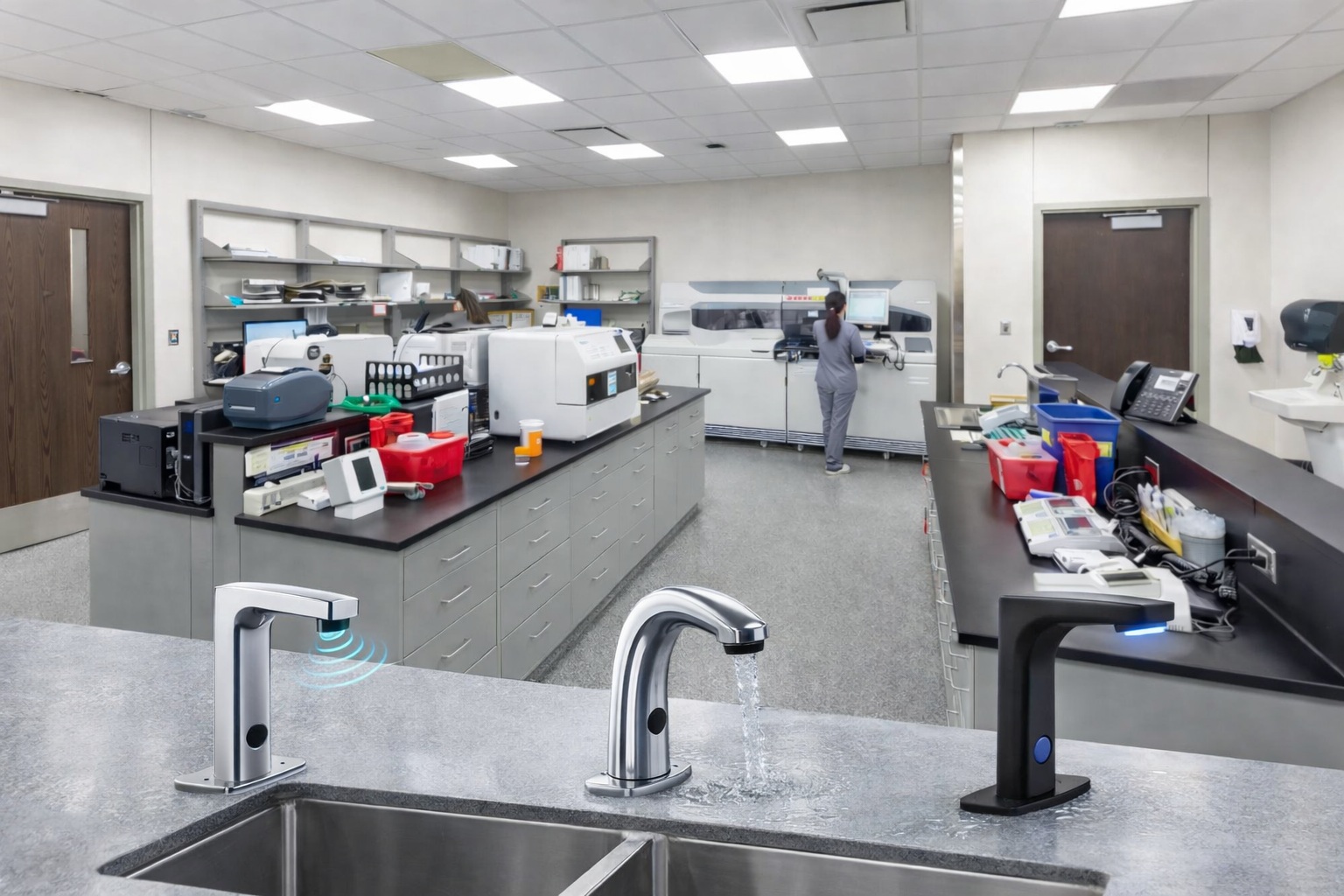 Infection-control priorities often demand touchless operation and cleanable surfaces.
Specs should define sensor behavior, water efficiency intent, and maintenance responsibilities.
Infection-control priorities often demand touchless operation and cleanable surfaces.
Specs should define sensor behavior, water efficiency intent, and maintenance responsibilities.
Universities and Institutional Campuses
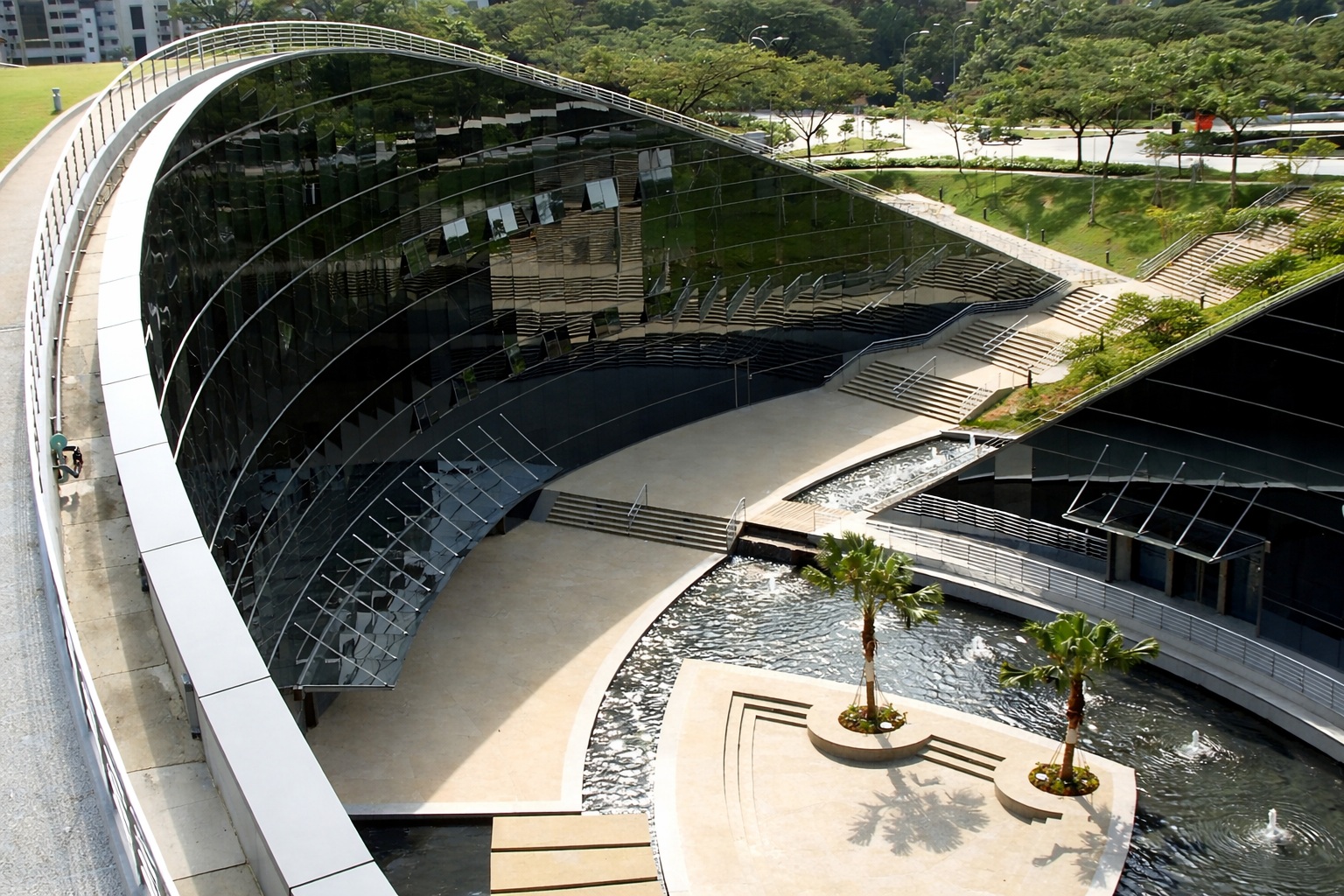 Campuses win when fixture families are standardized by building type.
This reduces training time, spare-part variation, and long-term service costs.
Campuses win when fixture families are standardized by building type.
This reduces training time, spare-part variation, and long-term service costs.
Commercial Towers and Mixed-Use
 For premium common areas, finish continuity and visual discipline matter.
A consistent touchless package keeps the design clean while protecting day-to-day performance.
For premium common areas, finish continuity and visual discipline matter.
A consistent touchless package keeps the design clean while protecting day-to-day performance.
Resource Library for Contractors, Engineers, and Spec Writers
What to Include in a “Firm-Led” Touchless Restroom Submittal

- Fixture schedule: sensor faucets, soap dispensers, toilet/urinal flush systems, finish codes.
- Power notes: battery vs AC options, access requirements, commissioning checklist.
- Rough-in guidance: valve locations, access panel clearances, recommended service space.
- BIM/CAD families: coordinated families for faster clash detection and layout review.
- Warranty + maintenance: service intervals, common parts, and care guidance for finishes and sensors.
Helpful hubs:
Automatic soap dispensers
|
Flush valve series
|
Warranty overview
Short “Spec Notes” You Can Paste into Plans
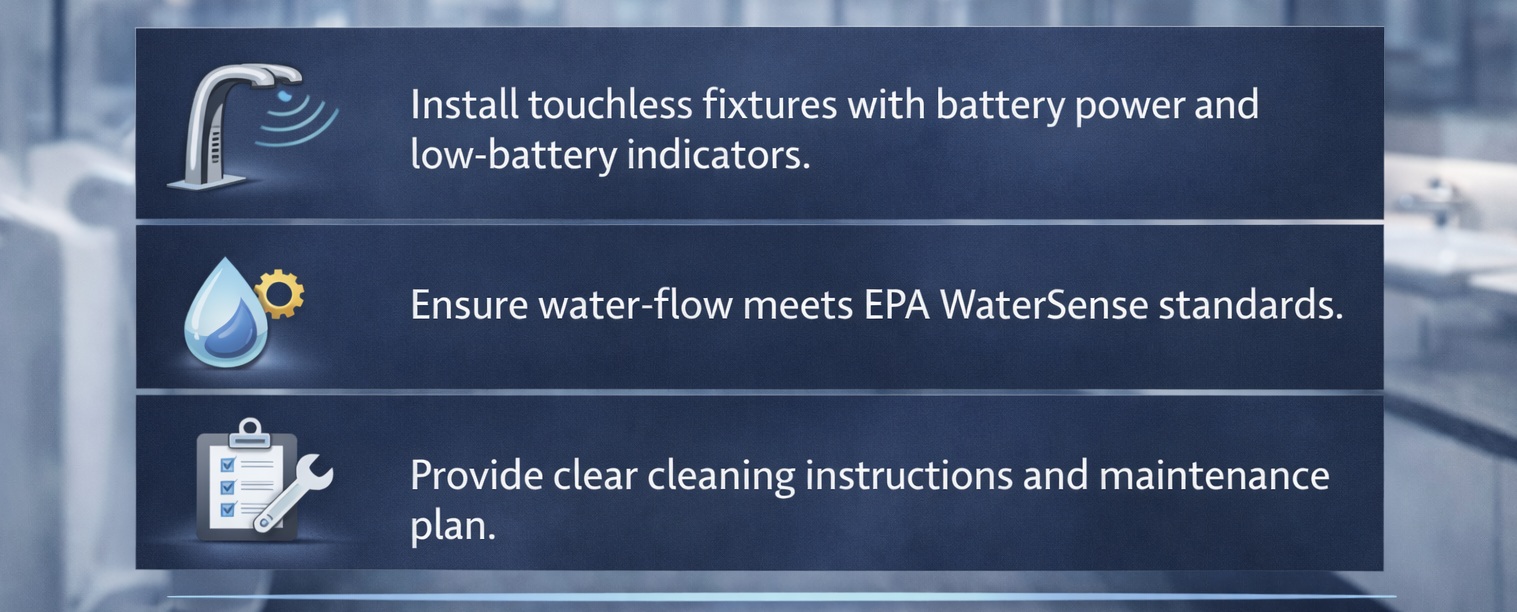
- Provide access panel locations for concealed flush systems and serviceable sensor components.
- Define power source and acceptable substitutes before bid to avoid late changes.
- Standardize finishes across the restroom package to avoid mismatched field swaps.
- Require submittals to include BIM/CAD, spec sheets, and installation guides for each family.
FAQ (Bid + Field)
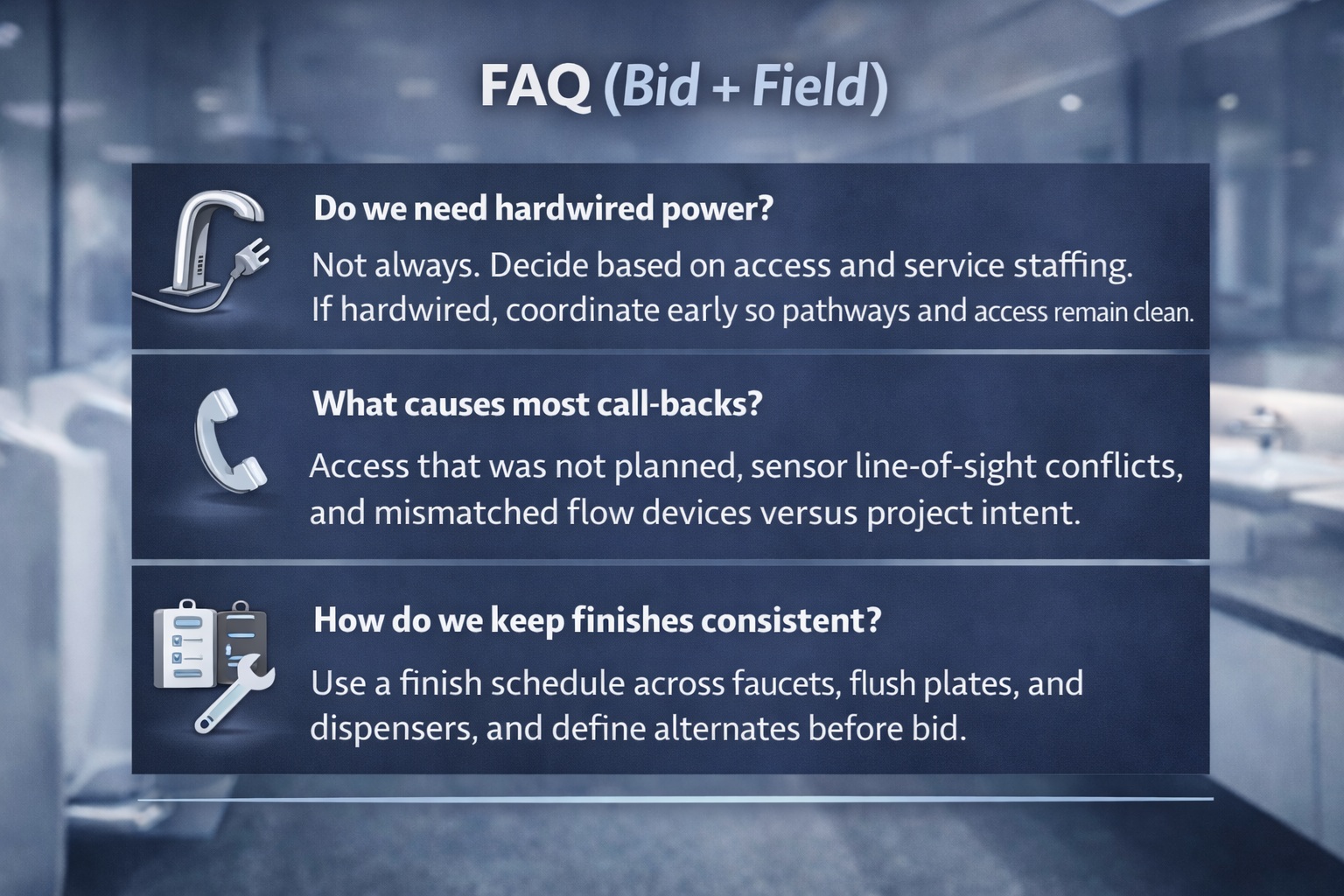
- Do we need hardwired power? Not always. Decide based on access and service staffing. If hardwired, coordinate early so pathways and access remain clean.
- What causes most call-backs? Access that was not planned, sensor line-of-sight conflicts, and mismatched flow devices versus project intent.
- How do we keep finishes consistent? Use a finish schedule across faucets, flush plates, and dispensers, and define alternates before bid.
|
|
|
When you are coordinating touchless fixtures across a building, the details decide whether the restroom performs or becomes a service problem. Use the products above as repeatable spec modules and align the power choice, access panel locations, shutoff access, and finish schedule before bid. Pull BIM files, cut sheets, and installation instructions into the submittal package so the field install matches the design intent.
|
|
|



 .jpg)