Spec-Grade · Modular Parts · Field-Replacement Ready
Modular Spare-Parts Touchless Faucets
(Field-Replacement Ready Design)
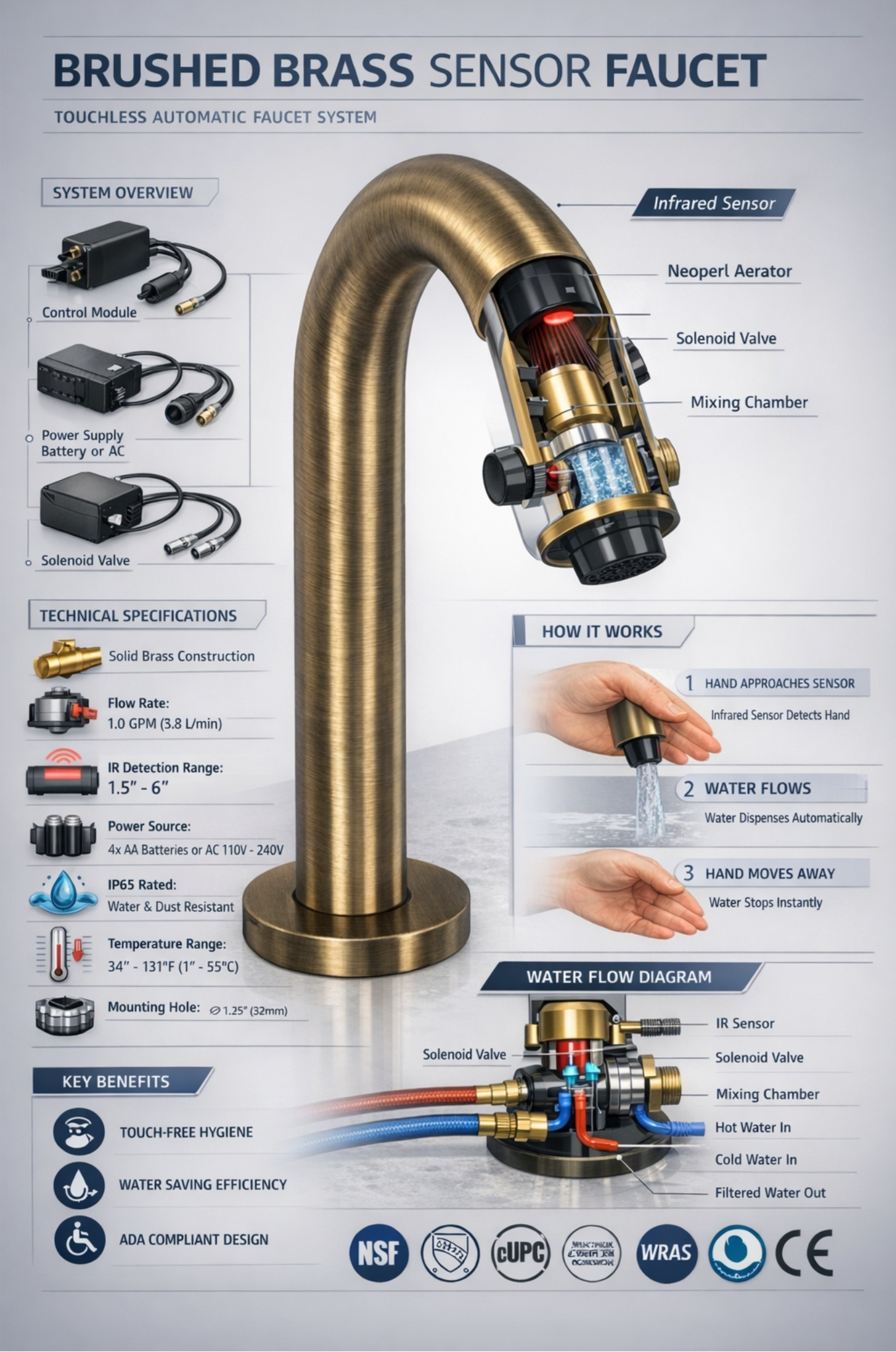
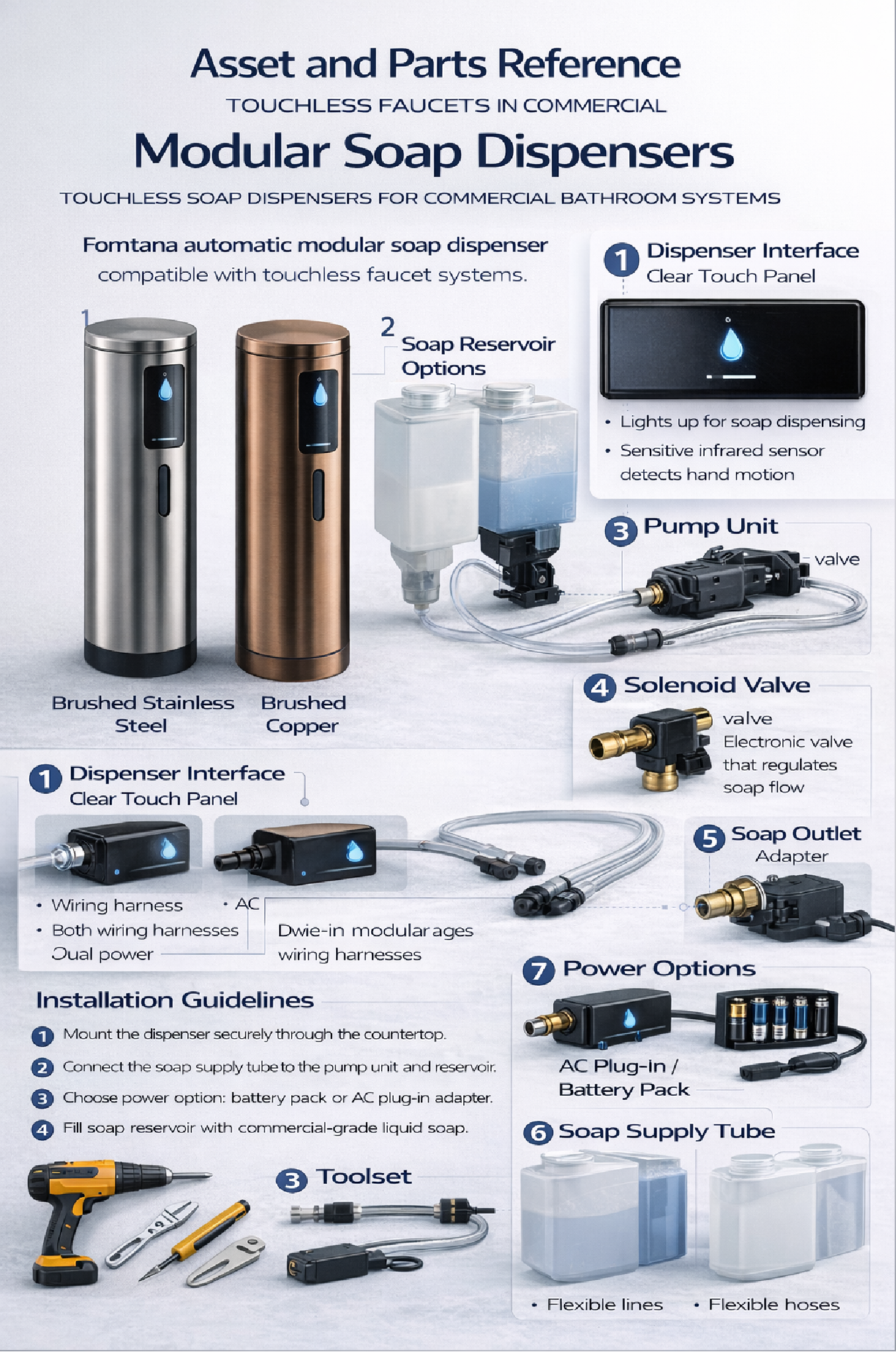
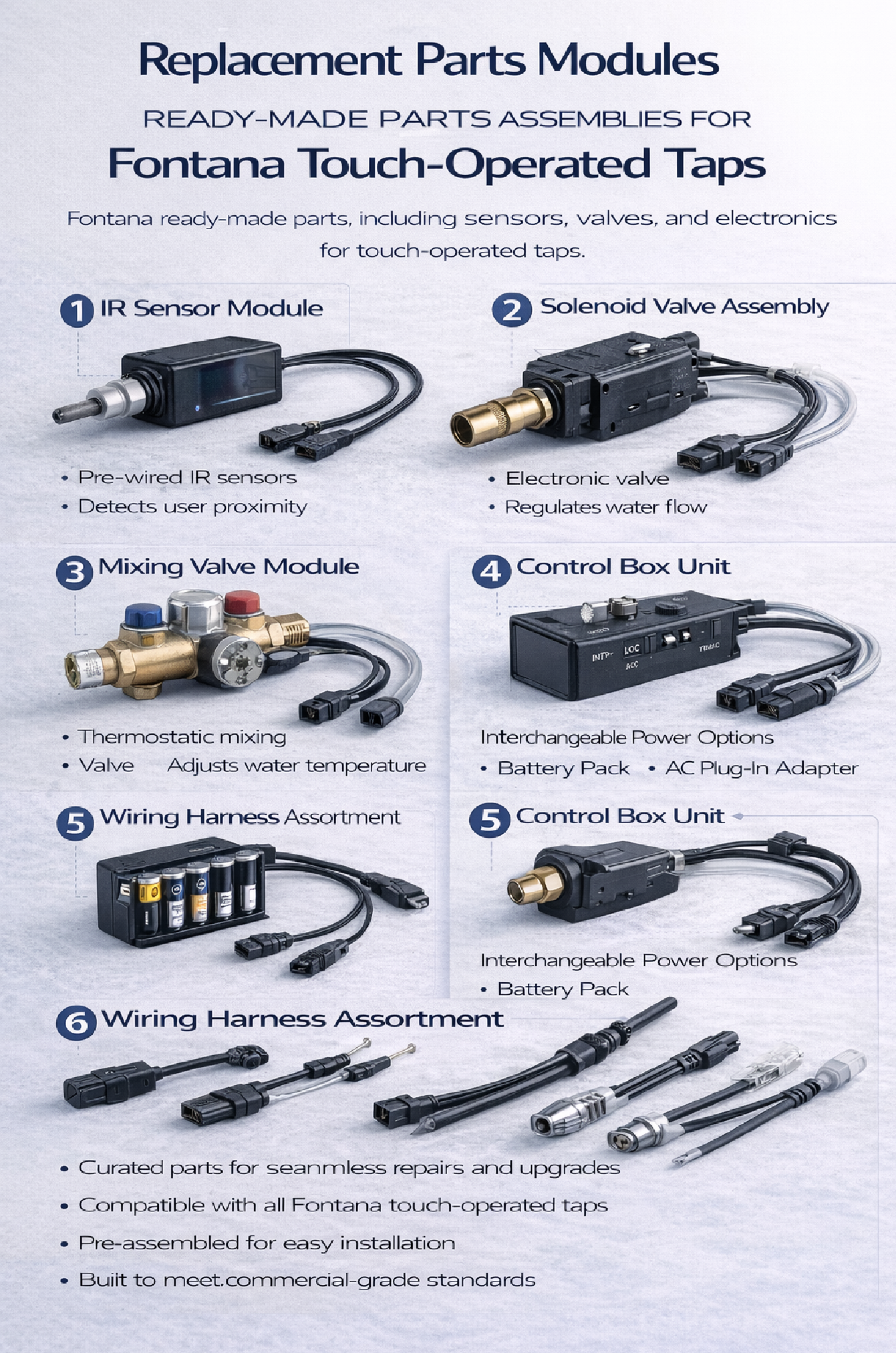
Keep restrooms operational with field-replacement ready architecture designed for faster service and fewer shutdowns. Modular spare-parts touchless faucets support efficient component swaps (sensor, power, solenoid, electronics, and wear items) to help maintenance teams restore performance quickly—reducing downtime, repeat calls, and lifecycle cost across airports, hospitals, universities, stadiums, and government facilities. Access BIM/Revit families, CSI submittals, and technical support built for architects, designers, engineers, and contractors.
Modular Service Parts · Field-Replacement Ready · ToF & IR · AC/DC Dual Power · ADA/UPC
div>
Modular spare-parts touchless faucets help commercial facilities reduce restroom downtime by allowing critical components such as sensors, solenoid valves, power modules, and control electronics to be serviced or replaced without unnecessarily replacing the complete fixture. Architects, engineers, contractors, and facility teams can review
spec-grade touchless faucet engineering guidance for service access and replaceable components,
consult
AEC guidance for touchless fixture standardization, valve protection, and replacement-parts planning,
and explore
commercial restroom specification strategies for standardized parts, service access, and multi-fixture programs
when developing maintainable touchless faucet systems for airports, hospitals, universities, public buildings, and other high-traffic facilities where rapid field service and long-term parts continuity are important.
|
|
Modular Spare-Parts
What does modular spare-parts design mean for touchless faucets?
What is a modular touchless faucet architecture?
A modular touchless faucet architecture is a design approach that separates critical functional components—such as sensors, solenoid valves, power modules, and control boards—into independently replaceable units, allowing each part to be serviced or swapped in the field without removing the entire faucet. This architecture enables faster repairs, minimizes restroom downtime, and prevents unnecessary fixture replacement in high-traffic commercial environments. You can
learn how modular engineering is implemented and
review real-world durability benchmarking.
For applied solutions, you may also
explore modular touchless faucet systems.
Why is modularity important in commercial environments?
Modularity is critical in commercial environments because it allows failed or worn components to be **replaced quickly without removing the entire faucet or shutting down multiple fixtures**, ensuring continuous restroom operation in high-traffic spaces like airports, hospitals, and universities. This approach reduces downtime, lowers maintenance costs, and simplifies service workflows. You can
learn more about modular engineering and
see durability results from real-world deployments.
For practical options, you may also
explore modular touchless faucet products
Which facilities benefit most from modular spare-parts design?
Facilities that benefit most from modular spare-parts design include **airports, hospitals, universities, office towers, transit hubs, and large commercial portfolios** where downtime must be minimized and restroom reliability is critical. Modular architecture allows maintenance teams to replace only the failed components quickly, ensuring continuous operation and reducing lifecycle costs. You can
learn how modular design supports high-traffic facilities and
see field data proving reliability in demanding environments.
For practical product applications, you may also
explore modular touchless faucet systems.
Why is field-replacement readiness considered a professional-grade feature?
Field-replacement readiness is considered a professional-grade feature because it **enables maintenance teams to replace sensors, solenoids, power modules, and control boards independently and quickly**, without removing the entire faucet. This minimizes downtime, ensures consistent performance, and reduces labor and inventory costs in high-traffic commercial facilities. You can
learn why field-replacement readiness is essential and
see durability and service data supporting modular designs.
For practical applications, you may also
explore modular touchless faucet systems
How does field-replacement-ready design reduce downtime?
What does field replacement mean in real-world maintenance?
Field replacement in real-world maintenance means that **technicians can swap individual components—such as sensors, solenoids, power modules, or control boards—directly under the sink or within the faucet body using standard tools, without removing the entire fixture**. This capability reduces downtime, speeds service, and lowers labor costs in high-traffic commercial restrooms. You can
learn how field replacement works in practice and
review performance and service data supporting field replacement.
For product options, you may also
explore modular touchless faucet systems.
Why is whole-faucet replacement inefficient?
Whole-faucet replacement is inefficient because it requires removing the entire fixture, disrupting restroom operations, and increasing both labor and material costs. In high-traffic commercial environments, this leads to **longer downtime, repeated service calls, and unnecessary parts waste**. By contrast, modular touchless faucets allow **individual components to be swapped in the field**, keeping facilities operational and reducing lifecycle costs. You can
learn why modular design saves time and cost and
review field-tested durability data.
For product options, you may also
explore modular touchless faucet systems.
How does modular replacement shorten service visits?
Modular replacement shortens service visits because maintenance teams can **swap only the failed or worn components**—such as sensors, solenoids, or power modules—directly in the field, without removing the entire faucet or shutting down multiple fixtures. This reduces repair time, minimizes restroom downtime, and improves overall operational efficiency in commercial settings. You can
learn how modular engineering speeds up service and
see durability results that validate modular design.
For practical implementations, you may also
explore modular touchless faucet solutions.
Why does modularity simplify spare-parts inventory?
How does modular design reduce spare-parts complexity?
Modular design reduces spare-parts complexity by using **standardized, interchangeable components** across multiple faucet models, so facilities teams can stock fewer parts that service many installations. This simplifies inventory management, lowers storage costs, and ensures faster response when maintenance is needed in high-traffic commercial restrooms. You can
learn how modular systems simplify parts management and
review durability data supporting modular design.
For practical product applications, you may also
explore modular touchless faucet solutions.
Why is standardized inventory important for facilities teams?
Standardized inventory is important for facilities teams because it allows them to **stock consistent, interchangeable components** that work across multiple faucet models. This reduces storage costs, minimizes ordering errors, and enables faster maintenance in high-traffic commercial restrooms, ensuring uninterrupted operations. You can
learn how standardized components simplify maintenance and
review real-world performance of modular parts.
For practical product solutions, you may also
explore modular touchless faucet systems.
How does modularity improve response time to failures?
Modularity improves response time to failures because maintenance teams can **replace only the malfunctioning component**—such as a sensor, solenoid, or control module—without removing the entire faucet. This enables faster repairs, reduces restroom downtime, and maintains continuous operation in high-traffic commercial environments. You can
learn how modular design speeds up service and
review durability data validating modular components.
For product options, you may also
explore modular touchless faucet systems.
How do you identify true modular design versus superficial claims?
What defines a true modular spare-parts faucet?
A true modular spare-parts faucet is defined by its ability to **allow individual components—such as sensors, solenoids, power modules, and control boards—to be replaced independently** without removing the entire fixture. This ensures fast field service, minimizes downtime, and reduces lifecycle costs while maintaining consistent performance across high-traffic commercial environments. You can
learn the engineering principles behind true modularity and
see real-world durability data supporting modular designs.
For practical product options, you may also
explore modular touchless faucet systems.
What are red flags in non-modular designs?
Red flags in non-modular designs include **full-faucet replacement requirements, inability to swap worn components independently, extended restroom downtime, increased labor costs, and complicated spare-parts inventory**. Such designs make maintenance slower, more expensive, and disruptive in high-traffic commercial environments. You can
learn how modular design prevents these issues and
see durability data comparing modular vs. non-modular systems.
For product solutions, you may also
explore modular touchless faucet systems.
How can AEC teams verify modularity during specification?
AEC teams can verify modularity during specification by **reviewing documentation that details component interchangeability, field-replacement procedures, and serviceability of individual parts**. Confirming that sensors, solenoids, power modules, and control boards are independently replaceable ensures the design supports efficient maintenance and minimizes downtime. You can
learn how modular systems are validated and
review real-world modularity testing results.
For practical examples, you may also
explore modular touchless faucet products.
Why is Fontana Touchless a leader in modular spare-parts architecture?
How does Fontana design for field replacement?
Fontana designs for field replacement by creating **modular touchless faucets where each critical component—sensors, solenoids, power modules, and control boards—can be independently swapped in the field** without removing the entire fixture. This ensures faster repairs, minimal restroom downtime, and lower lifecycle costs in commercial environments. You can
learn how Fontana enables field replacement and
review durability results supporting modular field service.
For product options, you may also
explore modular touchless faucet systems.
Why do facilities teams prefer Fontana modular designs?
Facilities teams prefer Fontana modular designs because they **allow individual components—sensors, solenoids, power modules, and control boards—to be replaced quickly and independently**, reducing downtime, simplifying inventory, and lowering maintenance costs. Modular architecture ensures consistent performance across multiple fixtures in high-traffic commercial environments. You can
learn why Fontana modularity is preferred and
see durability and field performance data.
For product options, you may also
explore Fontana modular touchless faucet systems.
How does Fontana reduce long-term ownership risk?
Fontana reduces long-term ownership risk by designing **modular touchless faucets with field-replaceable components**, minimizing downtime, reducing emergency service calls, and extending the lifecycle of each fixture. This approach lowers maintenance costs, simplifies inventory management, and ensures reliable performance across high-traffic commercial facilities. You can
learn how Fontana mitigates long-term risks and
review field-tested durability and performance.
For practical product options, you may also
explore modular touchless faucet systems
Why does modular spare-parts design matter at portfolio scale?
Experience reliable performance and modern elegance with Fontana Touchless Faucets, where contemporary design meets advanced technology for fast and precise operation every time.
All our faucets are equipped with smart sensors to prevent false activation, with advanced detection zones ensuring a hygienic and convenient hands-free experience.
Ideal for commercial projects and public facilities, these faucets combine efficiency, low maintenance, and a stylish, professional design that enhances any workspace or high-traffic area.
|
|
|


.png)