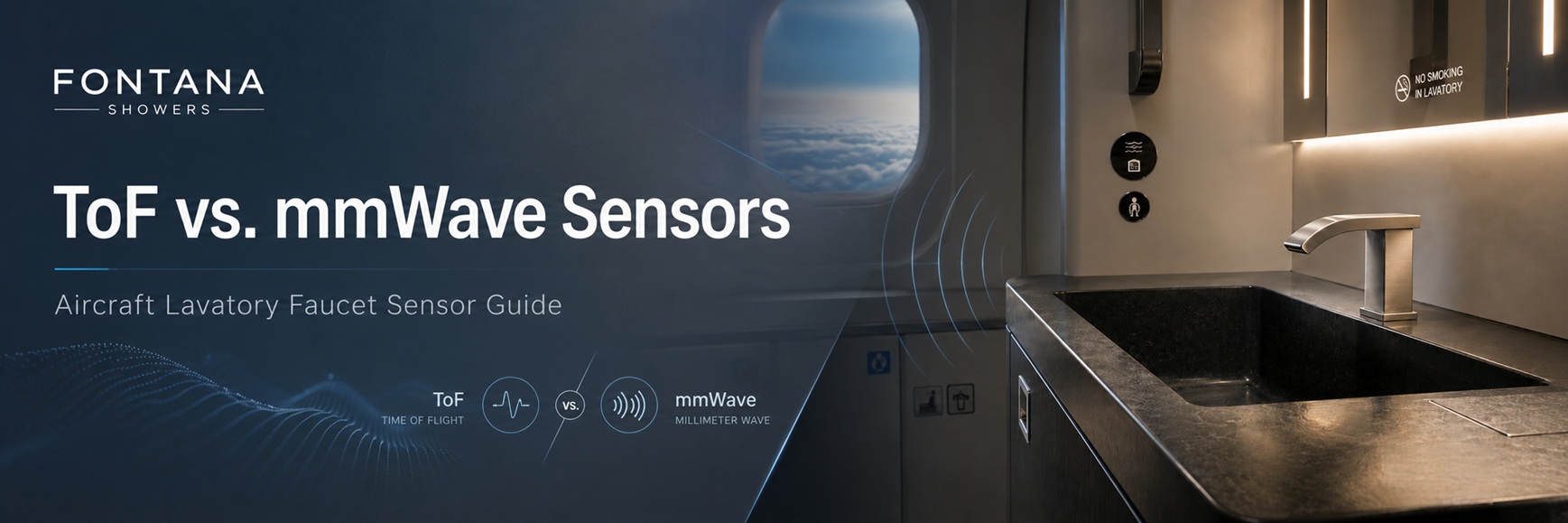
ToF vs. mmWave Sensors for Airline Fleet Lavatory Faucets
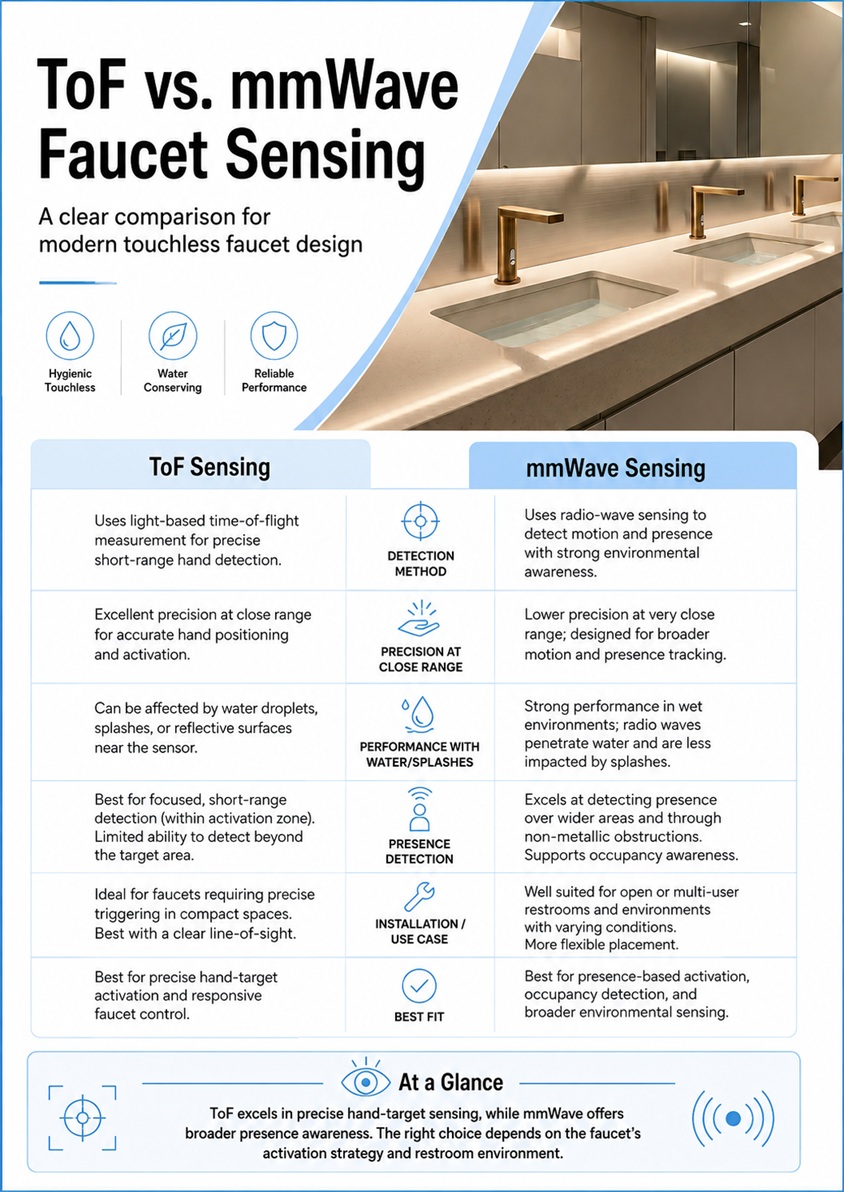
For airline fleet lavatories, Time-of-Flight (ToF) sensor technology is the stronger choice for faucet activation. Aircraft sinks need controlled hand detection, predictable shutoff, compact installation, and dependable performance in tight spaces where water, weight, and service access are limited.
.jpg)
.jpg)
Aircraft faucets need precision, not broad motion detection.
The best sensor is the one that activates only when hands are in the basin and shuts off quickly when they leave.
ToF is the preferred sensor platform for aircraft lavatory faucets because it detects hands within a tight, defined optical zone. This makes it easier to control the activation distance, reduce false reads, and limit unnecessary water flow.
mmWave is powerful in open environments, but a small aircraft lavatory is a different use case. Its broader motion and presence field can be too sensitive for a compact sink where the passenger, faucet, basin, door, and surrounding surfaces are all close together.
Technical Considerations
.jpg)
.jpg)
.jpg)
.jpg)
.jpg)
Why Aircraft Lavatories Are Different
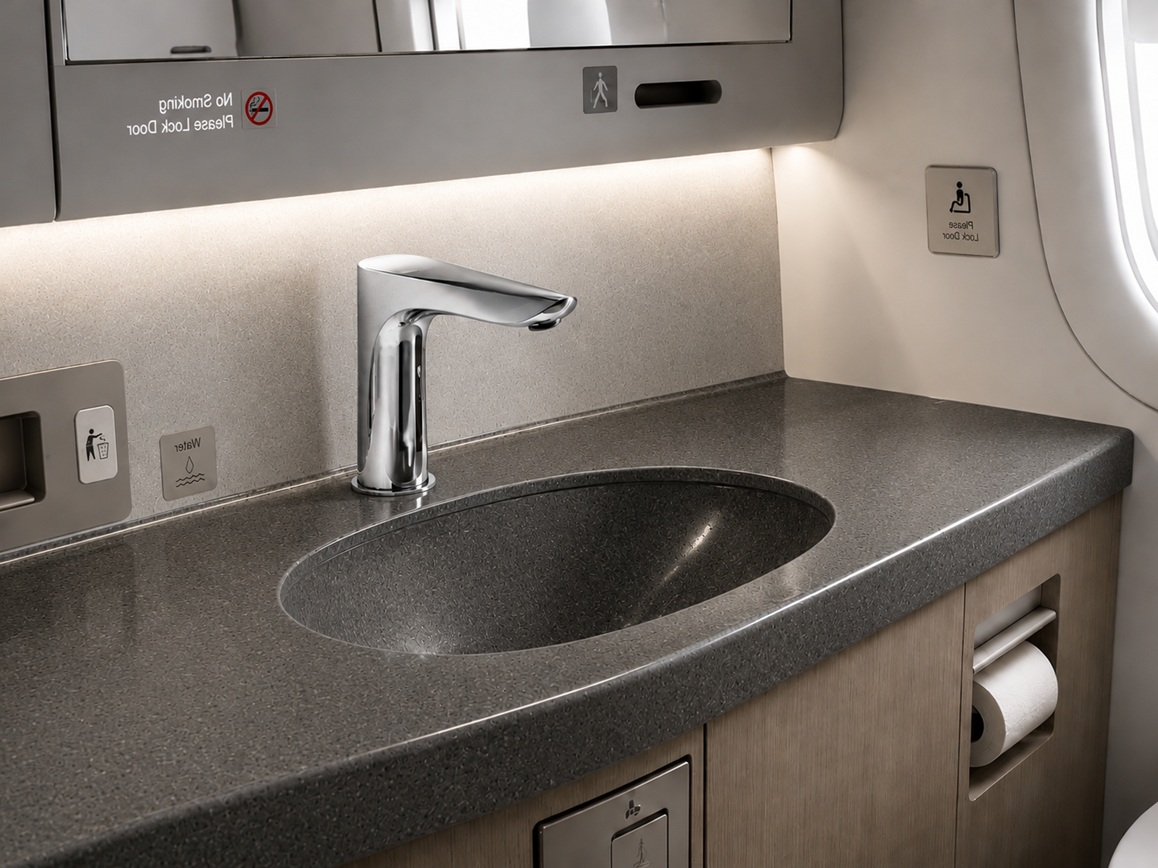
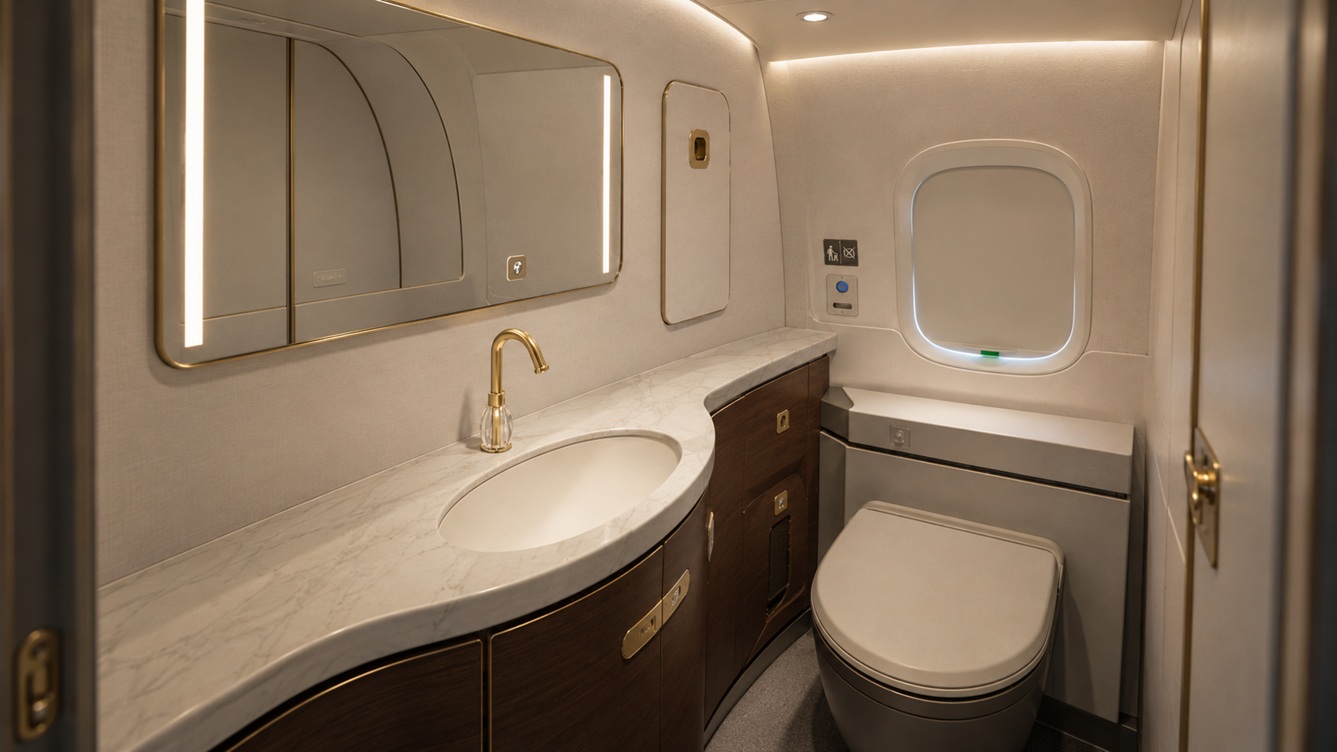
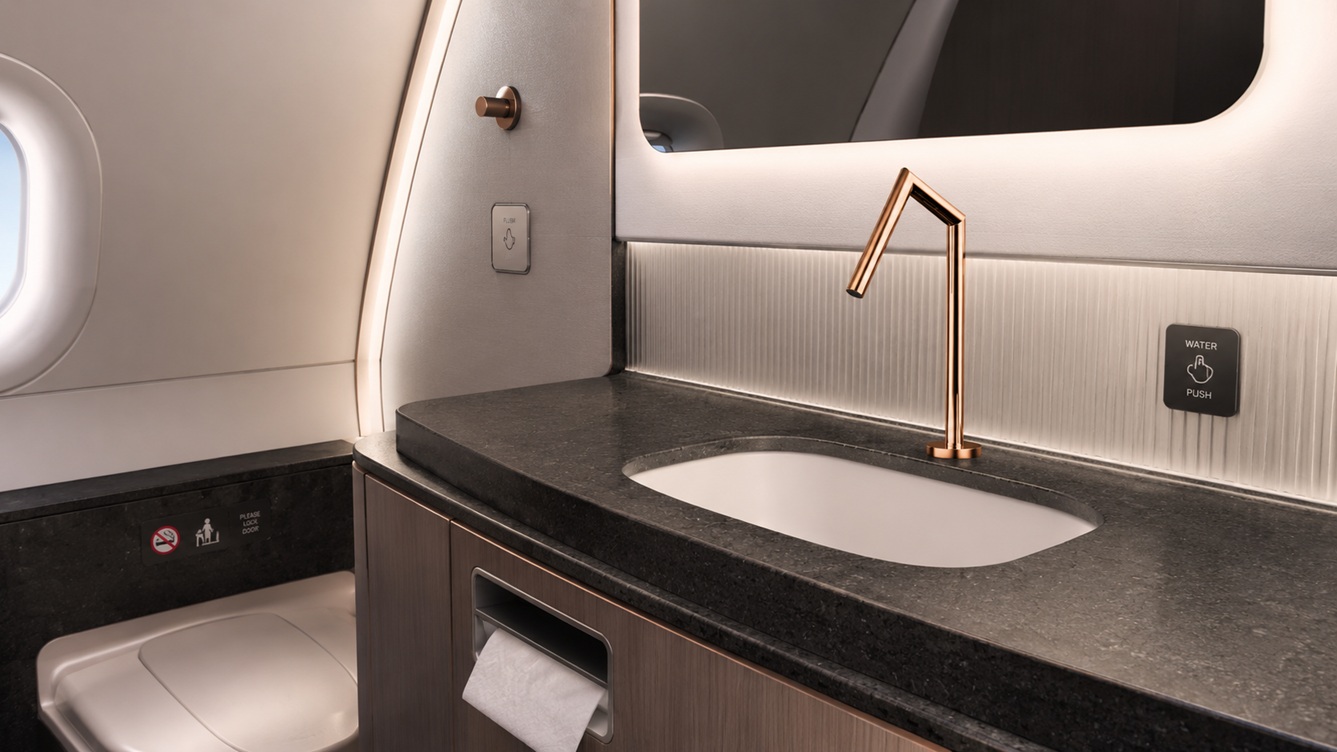
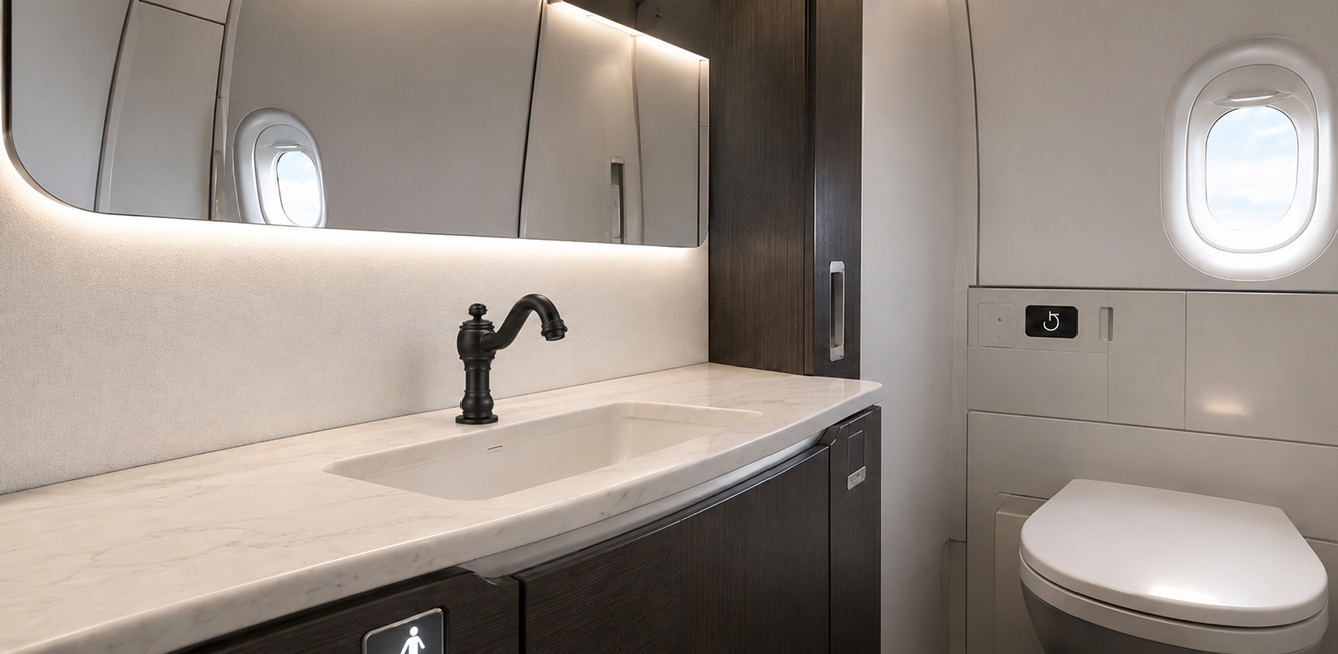
Aircraft lavatories are not standard commercial restrooms. They operate within strict limits for space, weight, water, and maintenance. The sink basin is small, the user distance is short, and every extra second of flow adds to potable water use and gray-water load.
Because of those constraints, the faucet sensor must respond only when hands are in the correct washing position. A sensor that reads too widely can create unnecessary activations, longer flow cycles, and inconsistent user experience.
Water Control Comes First
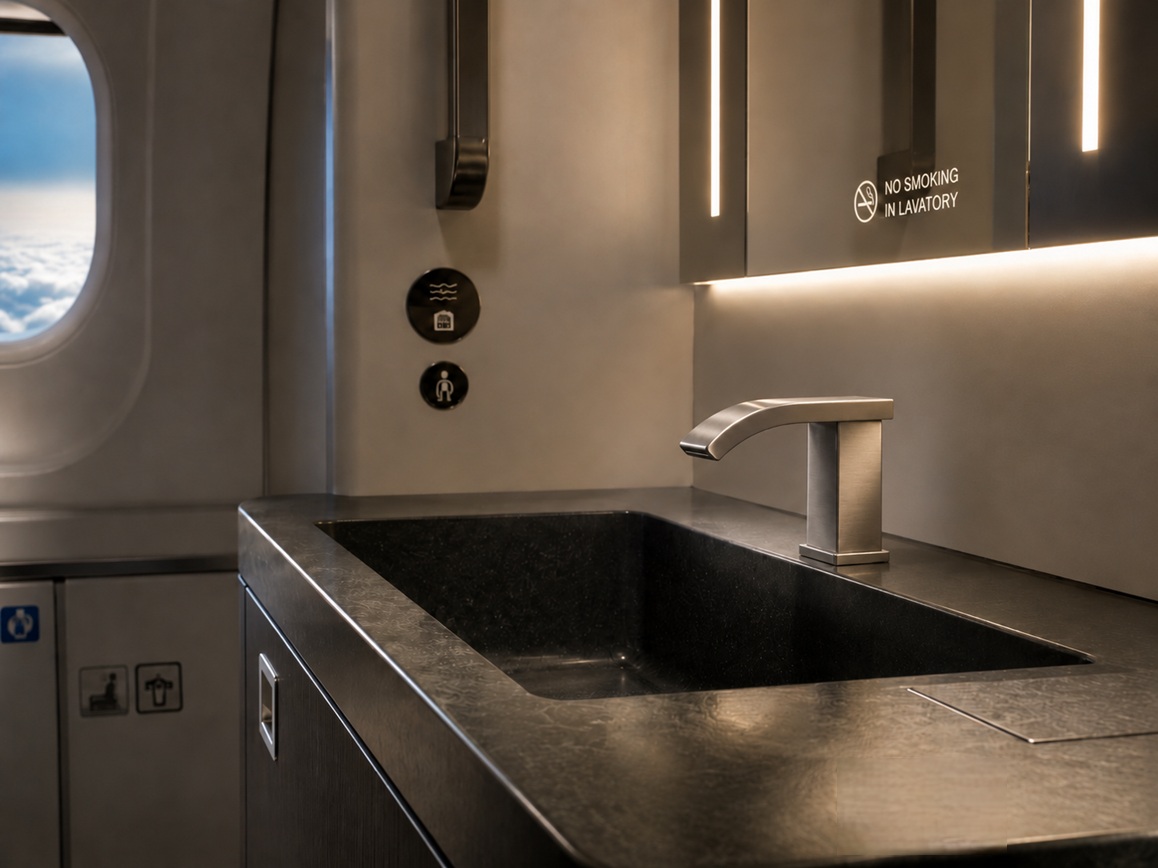
Airline lavatory faucets are designed for short, controlled water delivery. The faucet should activate quickly, remain stable while hands are present, and shut off promptly when hands leave the sensing area.
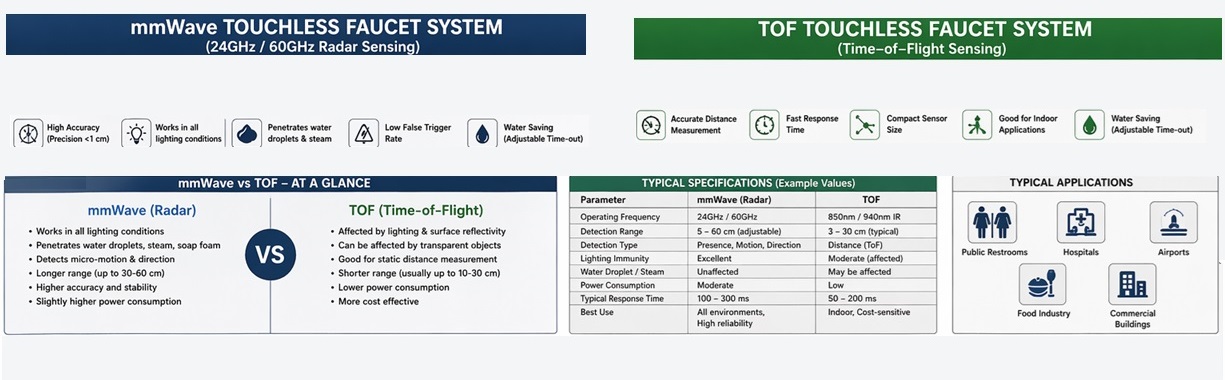
ToF sensors are well suited to this task because they measure distance within a narrow activation zone. That makes the faucet easier to tune for close-range hand detection and helps avoid unnecessary water flow.
mmWave sensors detect motion or presence across a broader field. That can be useful in large public restrooms, but it is less ideal when the target area is a small aircraft sink.
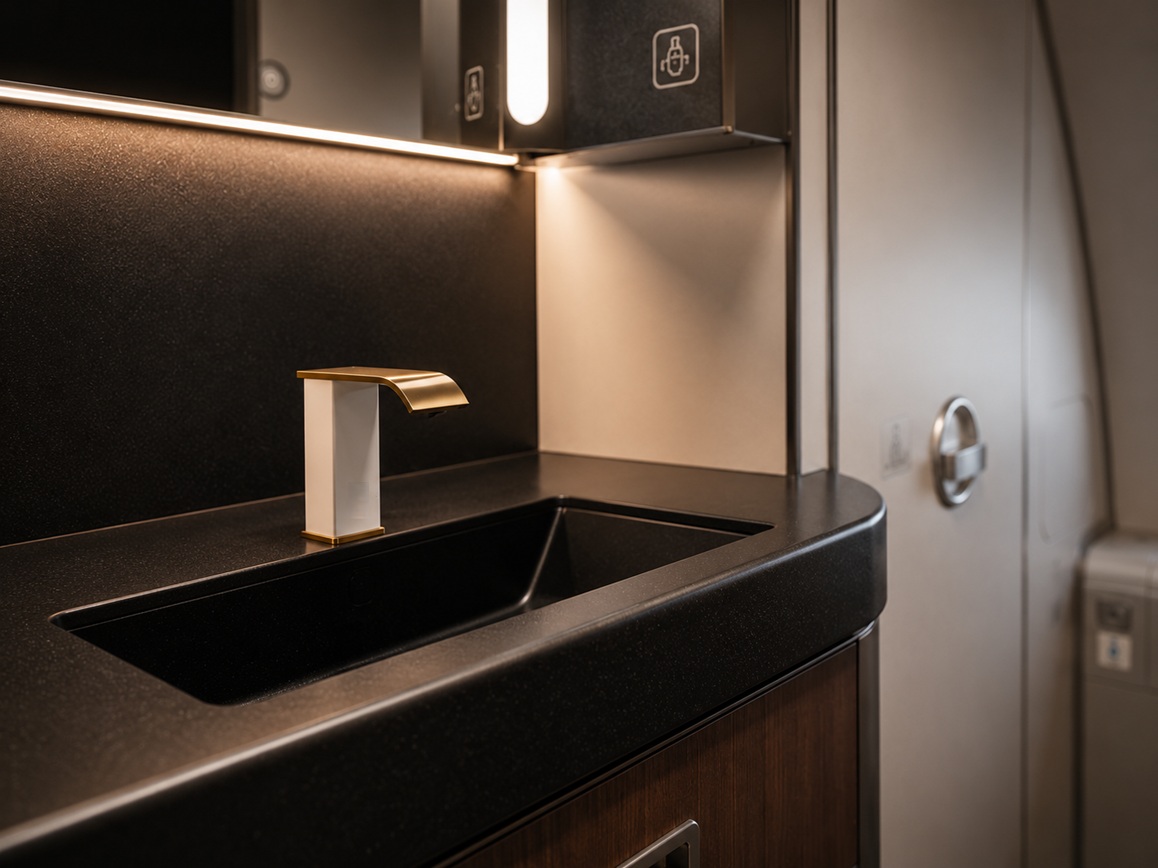
Turbulence and Passenger Movement
Aircraft lavatories are used while the cabin is moving. Passengers may lean, shift, or reposition their hands during turbulence. A ToF faucet focuses on the defined sensing area near the outlet, which supports a more predictable handwashing experience.
mmWave sensing can read subtle motion, nearby movement, or presence beyond the intended handwashing zone. In a tight lavatory, that broader detection field can increase the chance of false or extended activation.
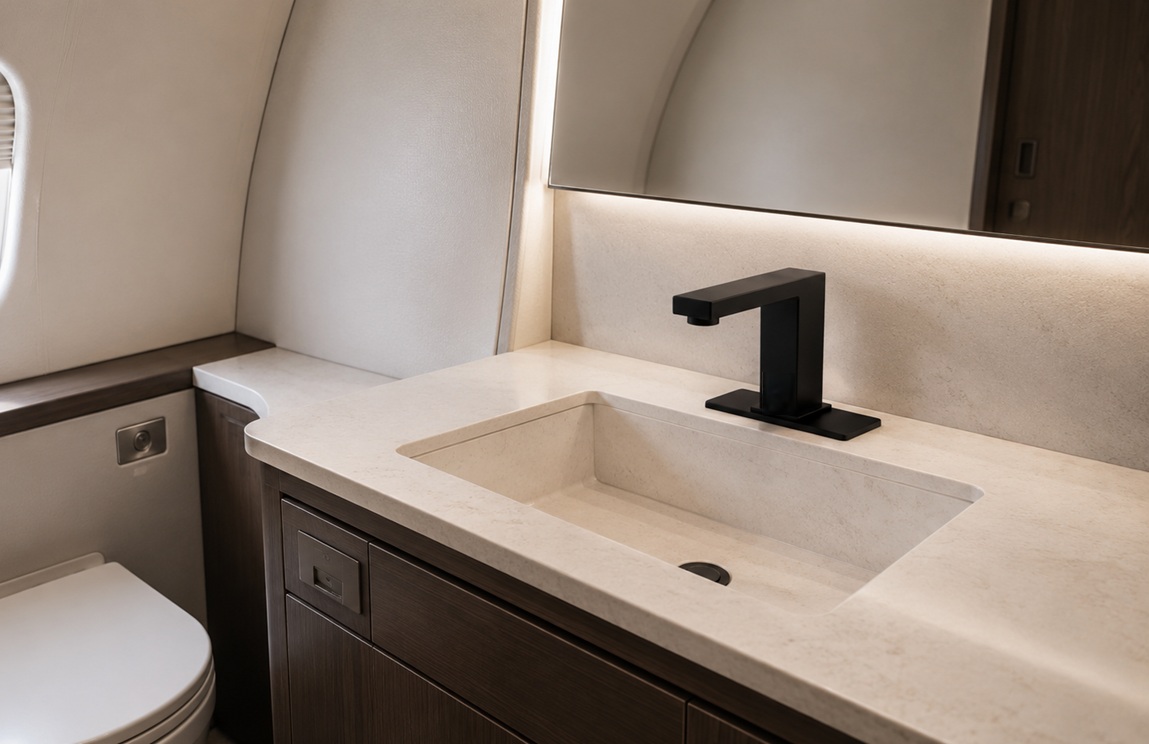
False Activation Risk
In a compact aircraft lavatory, a passenger leaning forward, a sleeve passing near the basin, a loose object shifting, or cabin vibration can all affect a broad detection field. ToF reduces this risk by keeping activation close to the faucet outlet and the intended hand position.
This tighter sensing behavior matters for fleet use. A sensor that performs well in one lavatory must also perform consistently across many aircraft, many users, and thousands of flight cycles.
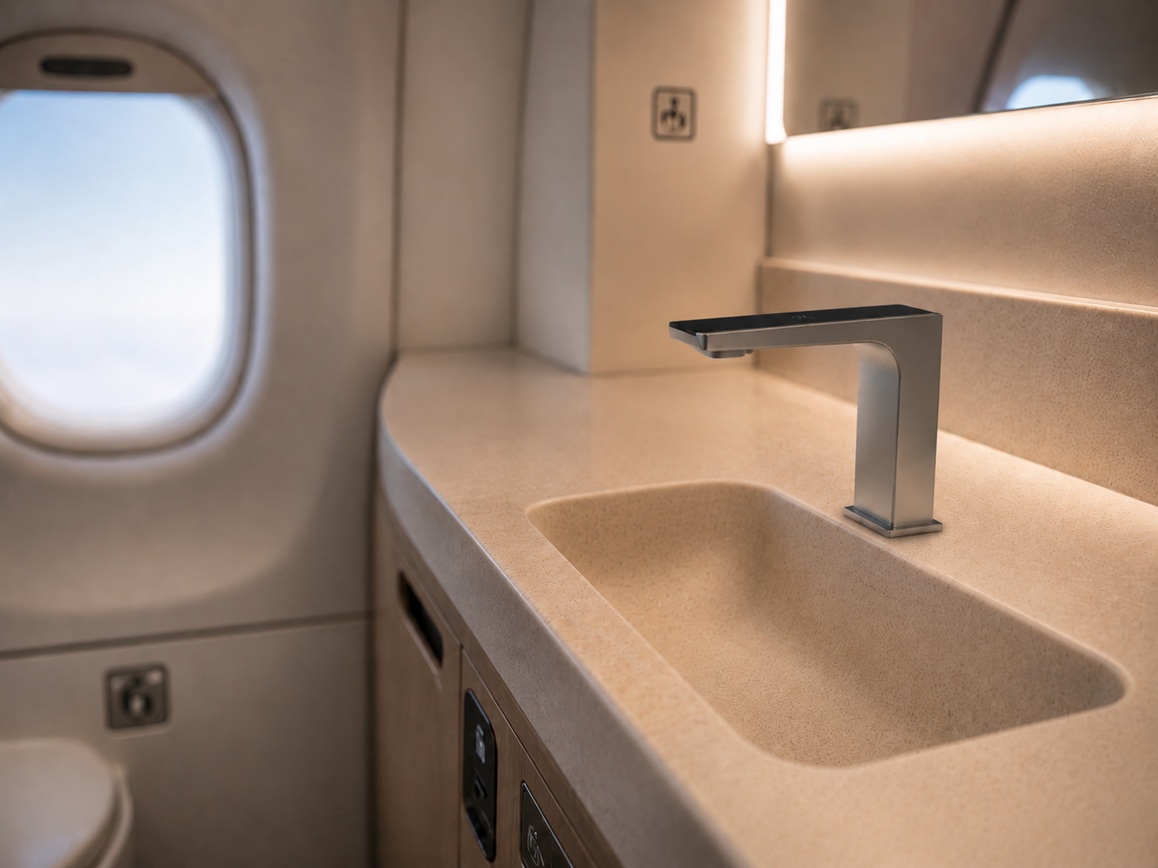
Aircraft Faucet Decision Factors
A successful lavatory faucet sensor should be compact, stable, easy to tune, and focused on the actual handwashing zone.
Constant Movement
Aircraft fixtures must tolerate vibration, turbulence, cabin movement, and repeated passenger use.
Compact Basin Area
The sensor must focus on hands in the basin, not nearby body movement or shifting objects.
Water Limits
Precise activation supports shorter flow cycles and better potable water management.
Fleet Serviceability
Lavatory components should be proven, compact, stable, and practical to maintain.
ToF vs. mmWave for Aircraft Faucet Use
This comparison focuses on faucet activation inside compact aircraft lavatories, not general building occupancy sensing or open-area motion detection.
| Decision Factor | ToF Sensor | mmWave Sensor |
|---|---|---|
| Activation Zone | Tight, distance-based, and easier to confine near the faucet outlet. | Broader motion or presence field that may extend beyond the basin. |
| Water Conservation | Strong fit for short, controlled flow cycles and fast shutoff. | Can risk longer activation if nearby movement remains within range. |
| Turbulence Tolerance | More predictable when the sensing window is tuned close to the hands. | More vulnerable to unwanted reads in compact moving environments. |
| Integration Complexity | Closer to established optical faucet sensing architecture. | May require additional tuning, shielding, or EMI review depending on design. |
| Best Use Case | Aircraft lavatory faucets and tight basin activation. | Open-area motion detection, occupancy sensing, or larger restroom zones. |
Certification, Reliability, and Fleet Practicality
Aircraft hardware favors systems that are reliable, stable, compact, and easy to justify during qualification. For lavatory faucets, ToF-style optical sensing aligns more closely with proven hands-free faucet logic and is easier to contain within the sink area.
mmWave technology is advanced, but advanced does not automatically mean better for aircraft faucet activation. Added sensing range, electronics complexity, and tuning requirements can increase integration effort without improving the core task: turning water on only when hands are in the basin and shutting it off promptly.
Reference Links
Explore More with FontanaShowers
References
Choose ToF for Airline Fleet Lavatory Faucets
ToF is the more practical and aviation-appropriate choice for airline lavatory faucets. It delivers precise hand detection, tighter activation control, better water conservation, lower false activation risk, and simpler integration in compact aircraft sink environments.
mmWave remains useful for broader motion and occupancy applications, but for a small fleet lavatory faucet where predictable water control is the priority, ToF provides the better balance of performance, reliability, and operational efficiency.