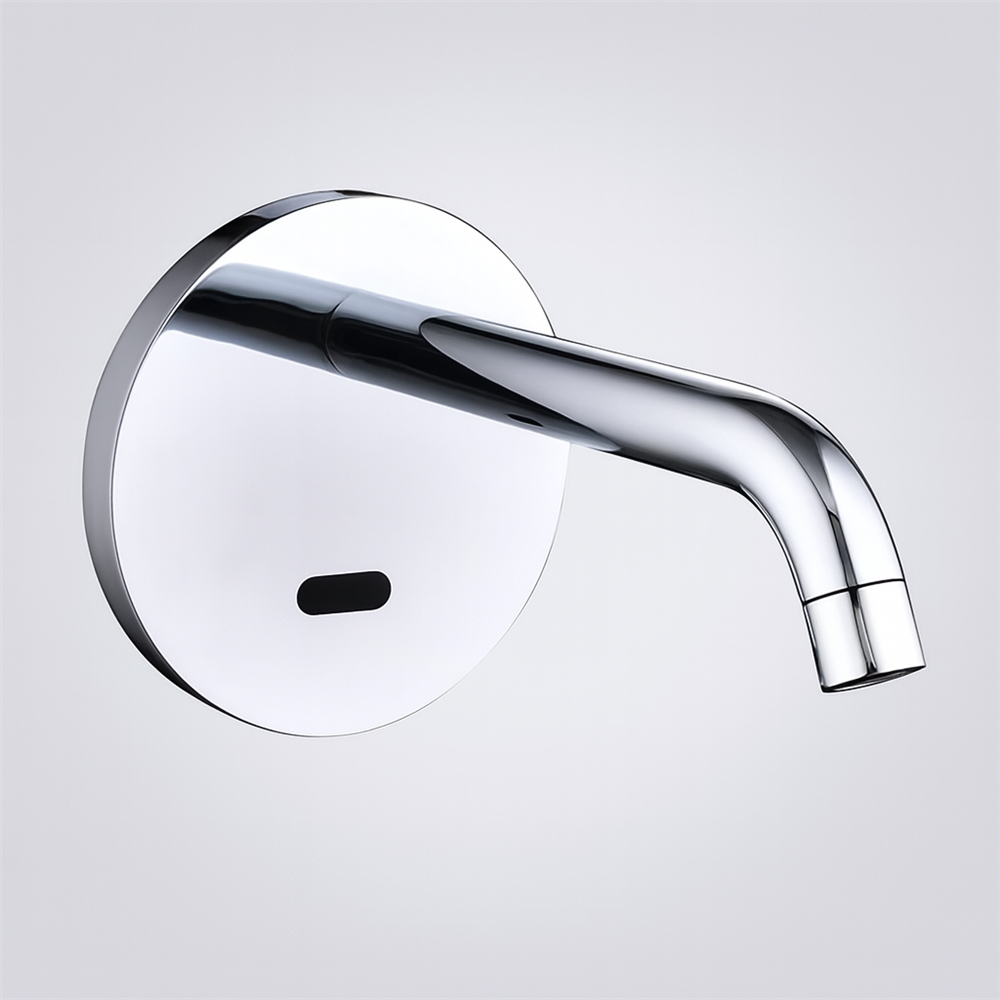
The Fontana AquaVista Flow™ Chrome Edition is one of the most elegant solutions for a restroom by sensor engineering. The product has an enhanced finish of polished brass, ensuring durabilit. The extremely slim profile promotes supreme integration into wall-mounting arrangements, thereby lending both elegance and pragmatism. Our infrared sensor-enabled faucet responds within seconds, affording hygienic operation from a safe distance, thus eliminating any contamination risk.
Sensitiveness of the device can be altered to fit requirements of all kinds, from commercial high-traffic areas to exclusive hospitality venues. The solenoid valve possesses a very precise rating, offering an even flow rate of 2.2 GPM, conserving water yet offering enough volume flow. The fixture has CE, WRAS, CUPC, ROHS, and Watermark certifications and complies with international standards. Various power supply configurations, be them DC, AC, or a hybrid of the two, instill versatility in installation options. The long-life battery concept promises 108,000 activations, while its robust plating furnishes hardy protection able to sustain periodic salt-spray tests. Built-to-last, with a lifecycle exceeding 350,000 cycles, guarante
AquaVista Flow Chrome Luxe Touchless Faucet FAQ
Adaptive Sensor Intelligence, Hydraulic Balancing & Preventive Diagnostics
The AquaVista Flow Chrome Luxe touchless faucet combines precision
infrared sensing, concealed electronic valve control, commercial-grade
brass construction, and intelligent flow management to provide reliable,
hands-free performance for healthcare, hospitality, airport, and
institutional restroom applications.
How should the adaptive infrared sensing field be optimized during commissioning?
After the finished basin and countertop are installed, verify activation from multiple hand-entry positions while checking for reflections from polished stone, mirrors, and stainless accessories. Proper calibration establishes a stable sensing field with rapid response and minimizes unintended activations.
Why is hydraulic balancing important before the electronic valve is placed into service?
Balanced inlet pressure allows the electronic valve to open and close consistently while maintaining uniform discharge characteristics. Proper hydraulic conditions reduce pressure shock, improve automatic shutoff accuracy, and extend the service life of internal valve components.
What maintenance procedure helps preserve long-term sensor accuracy?
Inspect and clean the sensor window, flush inlet strainers, verify connector integrity, and perform repeated activation tests during scheduled maintenance. Preventive servicing maintains detection precision and minimizes downtime in continuously occupied commercial facilities.
How can engineers verify electronic valve stability before project completion?
Run multiple consecutive activation cycles under varying inlet pressures while monitoring response time, discharge consistency, and automatic shutoff performance. Stable operation throughout repetitive testing confirms reliable communication between the sensor controller and the solenoid valve assembly.