FontanaShowers | WELL Certified Hospitality Bathroom Fixtures
Hospitality bathroom specification is increasingly connected to a larger performance question: how can plumbing fixtures contribute to healthier, more efficient and more maintainable hotel environments?
For architects, plumbing engineers, interior designers, sustainability consultants and hospitality developers, WELL Building Standard strategies provide a useful framework for evaluating this question. The distinction is important, however: WELL Certification applies to buildings and projects, not individual faucets, shower systems or bathroom fixtures. Individual products may contribute to strategies pursued by a WELL project, but should not independently be described as WELL Certified, WELL approved or WELL compliant.
Read MoreShow Less
Within that project-level framework, FontanaShowers bathroom fixtures can be evaluated as part of an integrated hospitality strategy involving hygiene, water management, accessibility, moisture control, serviceability and guest experience.
AEC teams developing hotels, resorts, wellness properties and mixed-use hospitality buildings can review FontanaShowers' hospitality bathroom fixture and shower system resources as part of the broader specification process.


WELL-Oriented Bathroom Design Starts With the System
A successful hospitality bathroom cannot be evaluated from fixture appearance alone.
The faucet, basin, drain, supply piping, mixing valve, shower controls, waterproofing, ventilation and maintenance strategy operate as one coordinated system. Under WELL v2, bathroom design intersects particularly with strategies involving Hygiene Support, water management and moisture management. WELL's current W08 Hygiene Support framework extends beyond basic handwashing and includes bathroom accommodations supporting a wider range of users.
Read MoreShow Less
This changes how an AEC specification should be written.
Instead of stating only:
“Provide touchless lavatory faucet.”
A stronger specification defines:
- rated flow and operating pressure;
- sensor detection architecture;
- activation and shutoff behavior;
- basin dimensions and spout reach;
- hot/cold or tempered-water configuration;
- power requirements;
- accessibility coordination;
- shutoff and service access;
- cleaning requirements; and
- commissioning criteria.
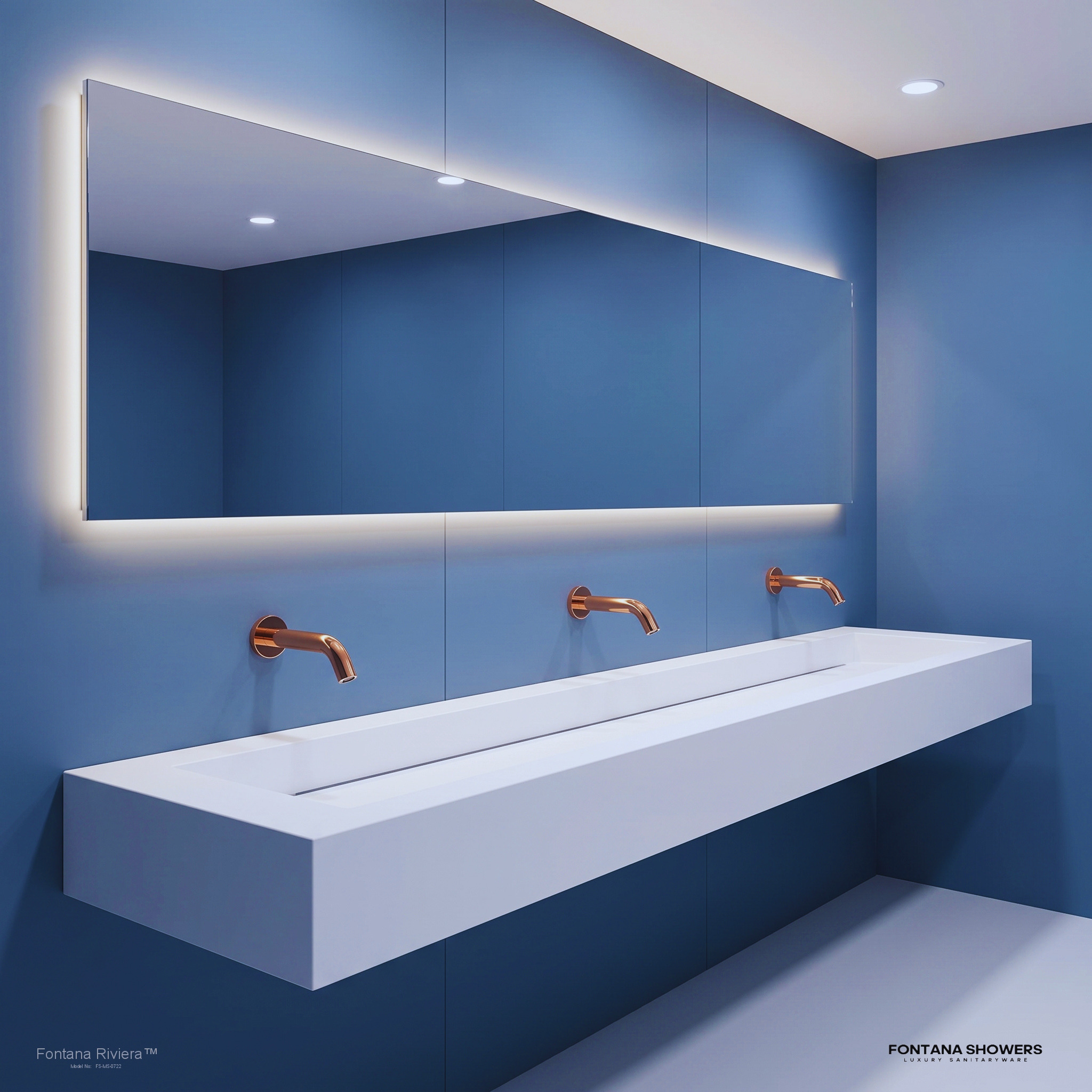
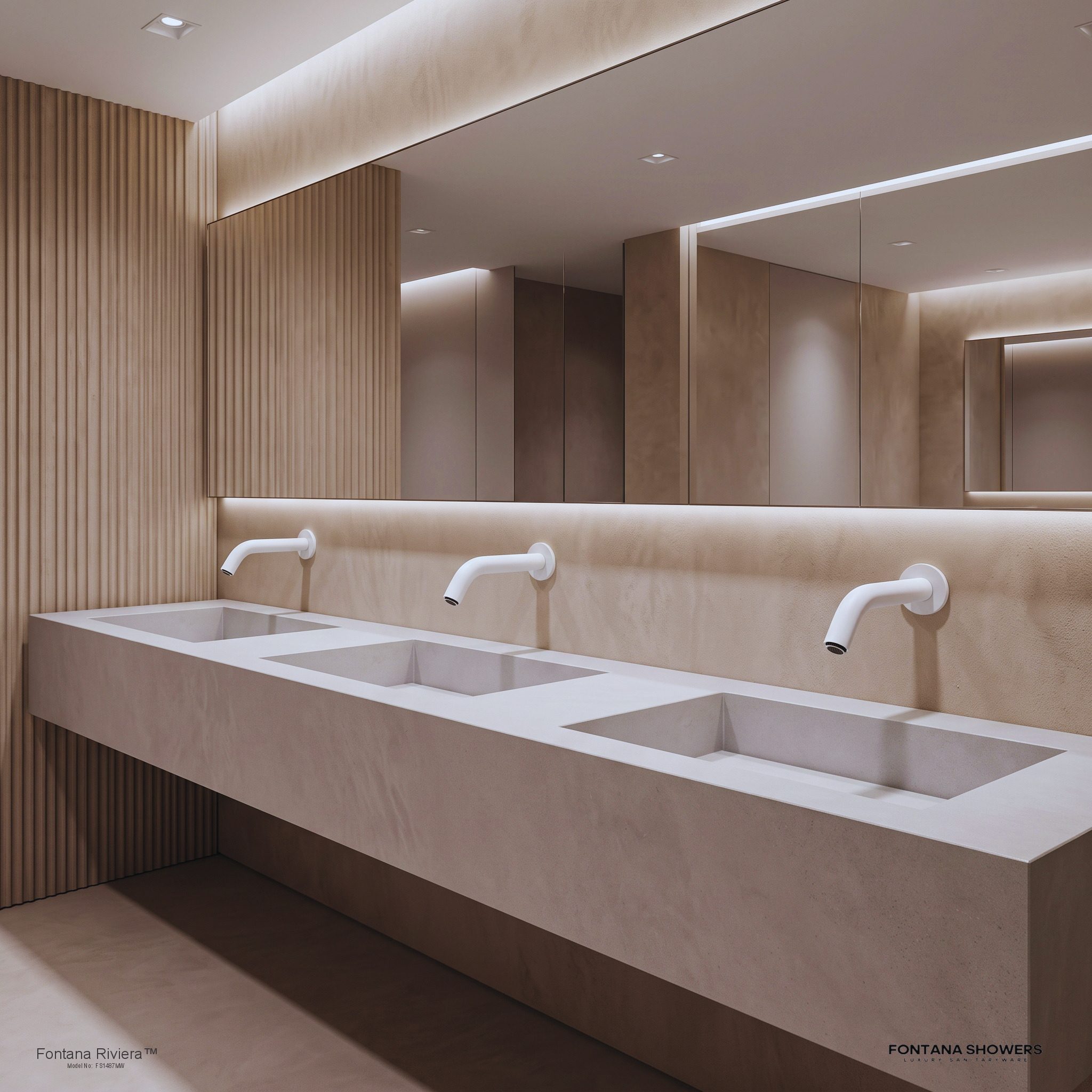
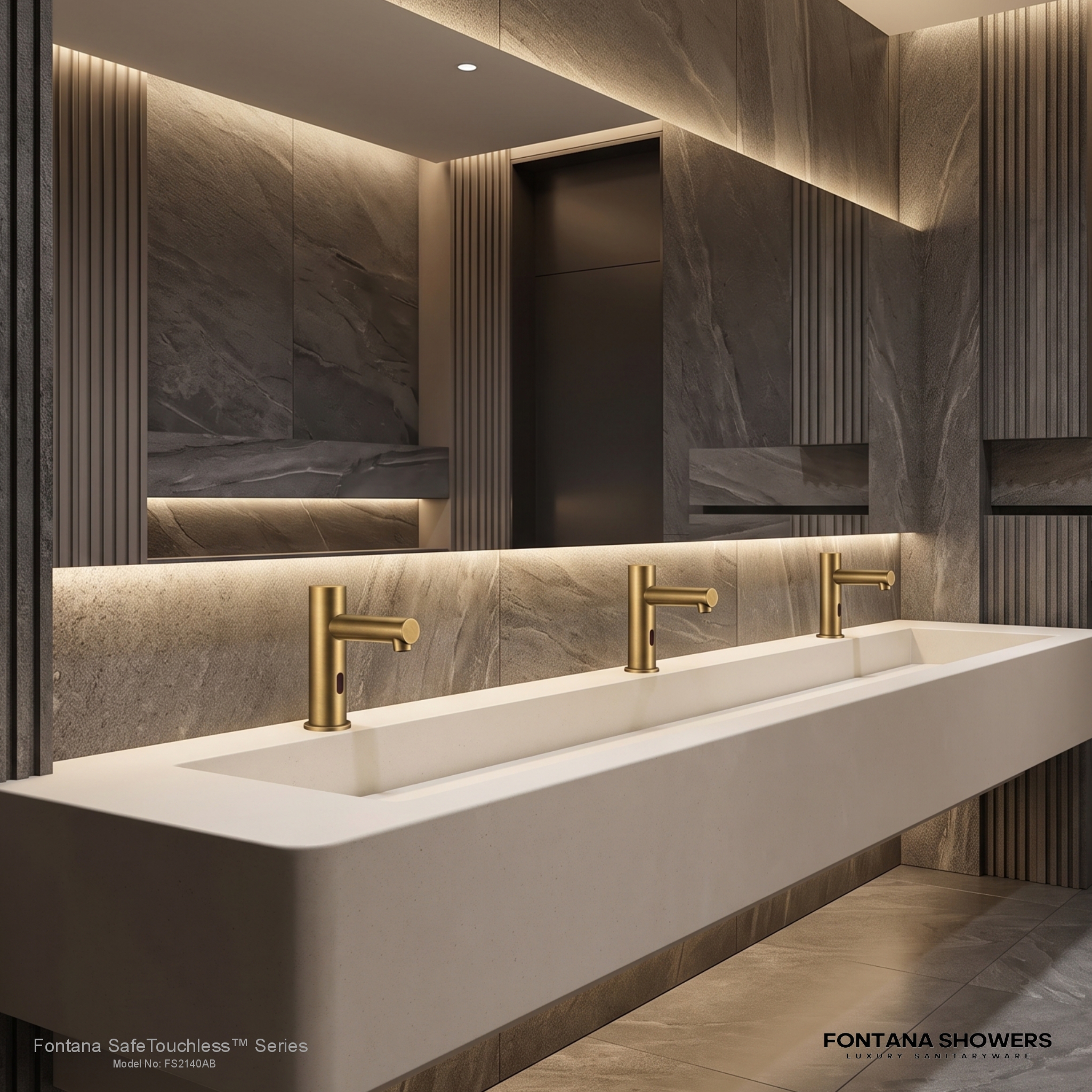
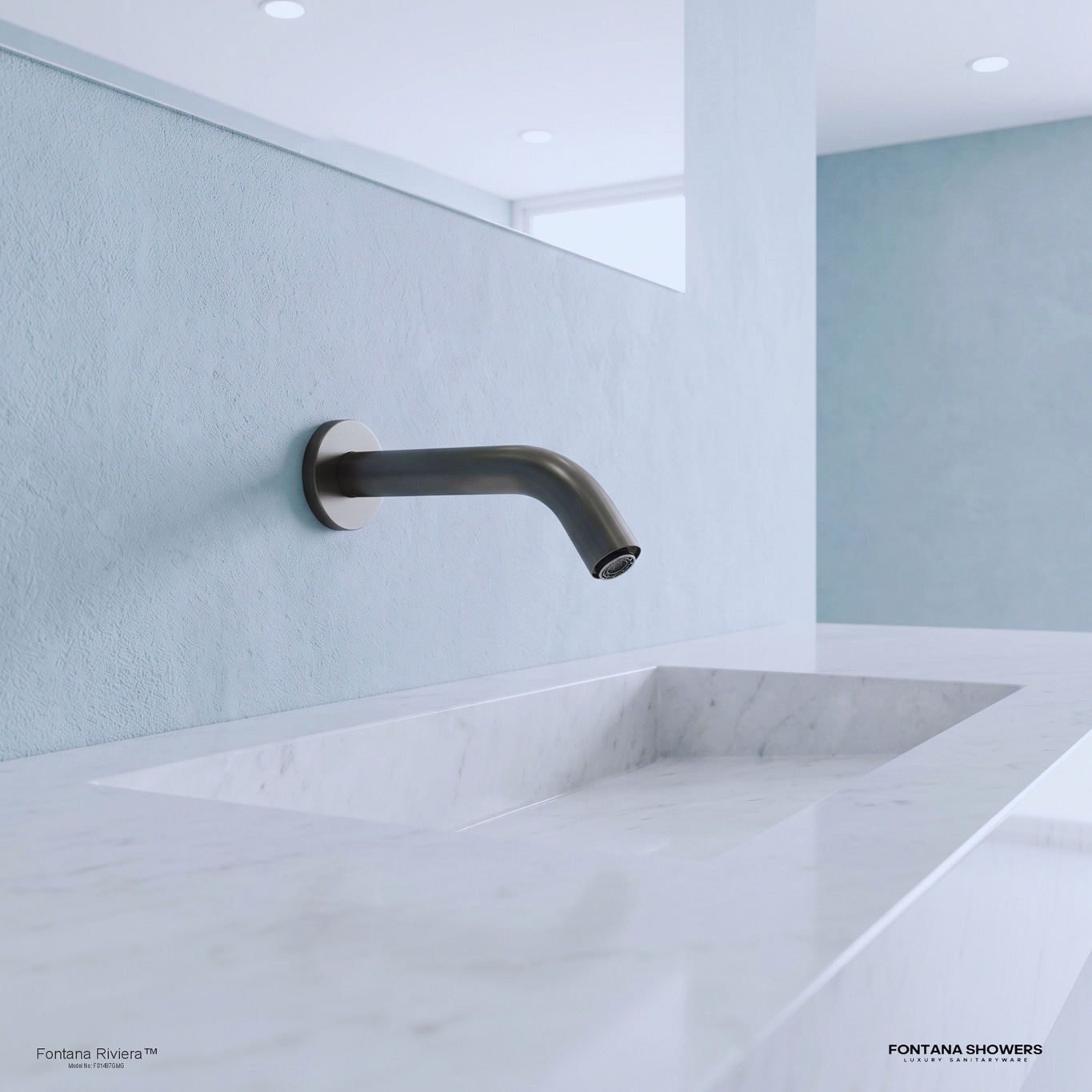
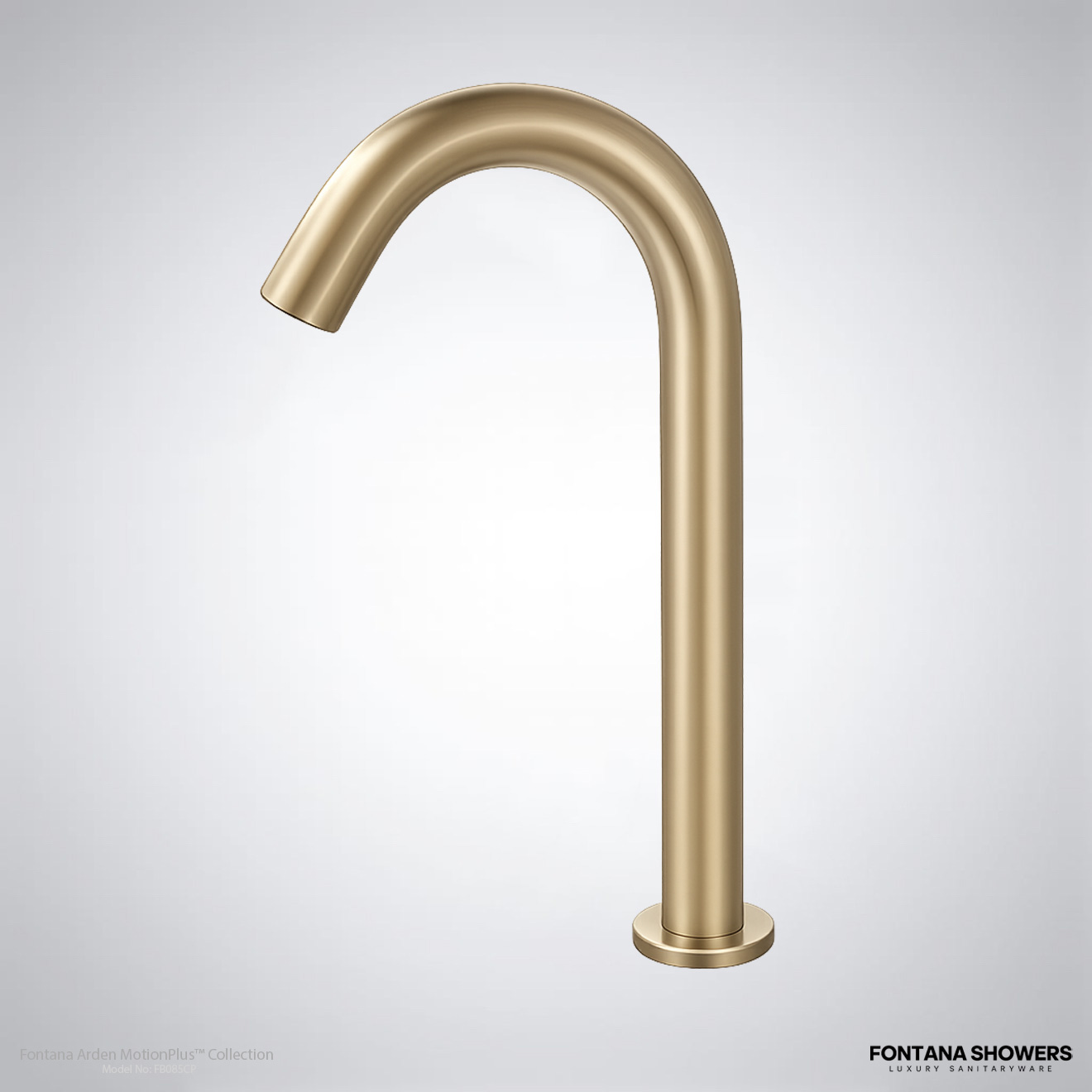
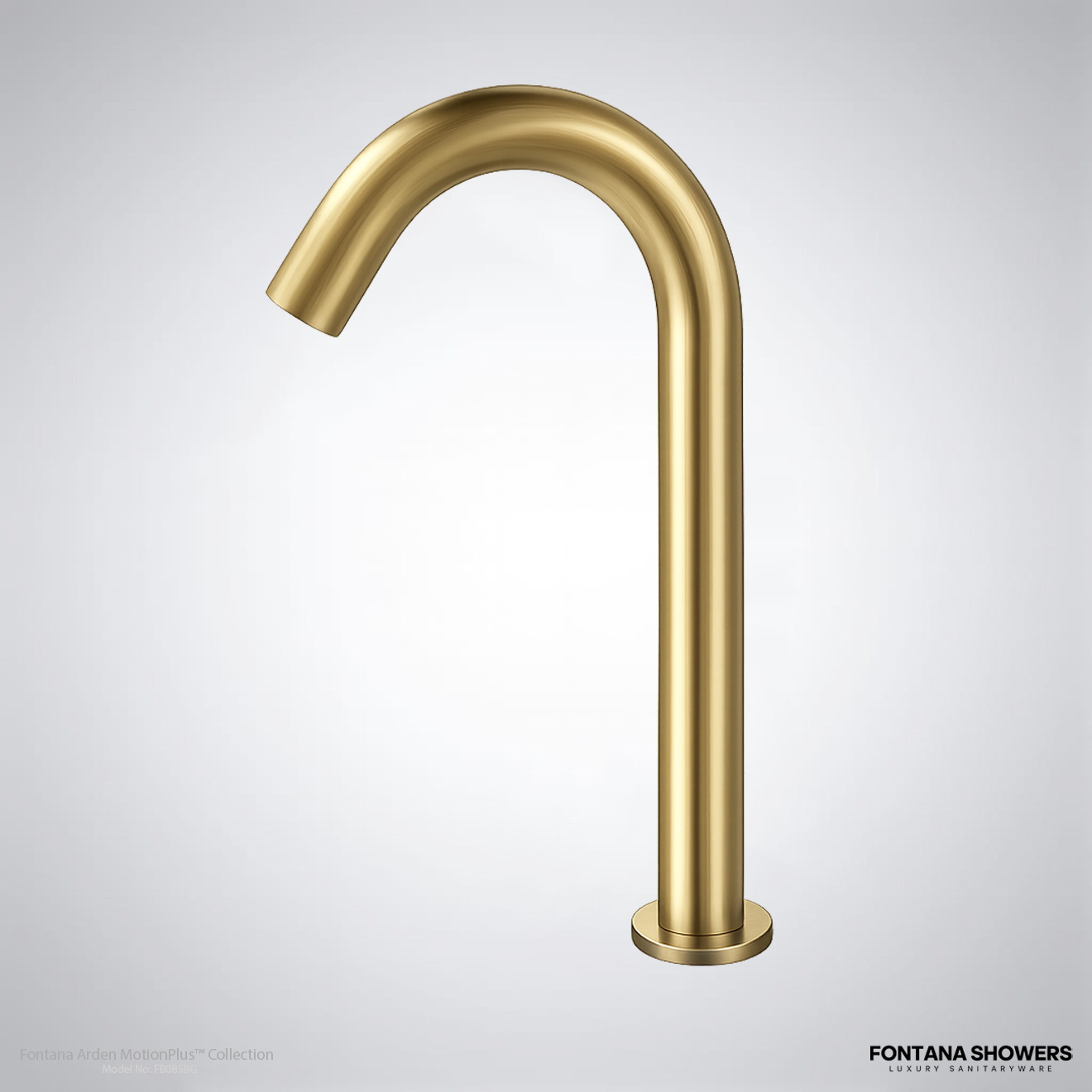
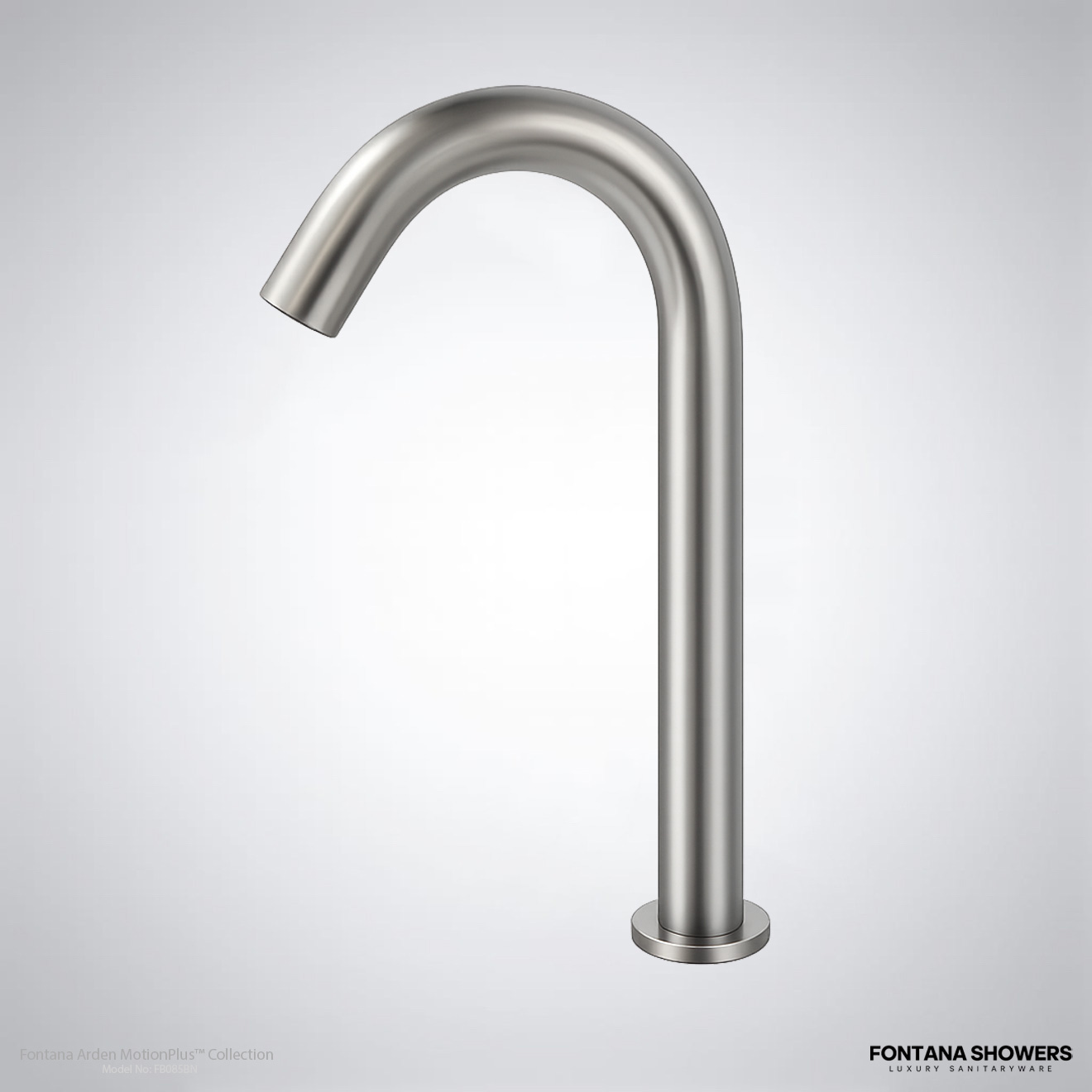
FontanaShowers' commercial touchless bathroom faucets provide an appropriate starting category for these performance-driven schedules.
Hygiene Support and Touchless Handwashing
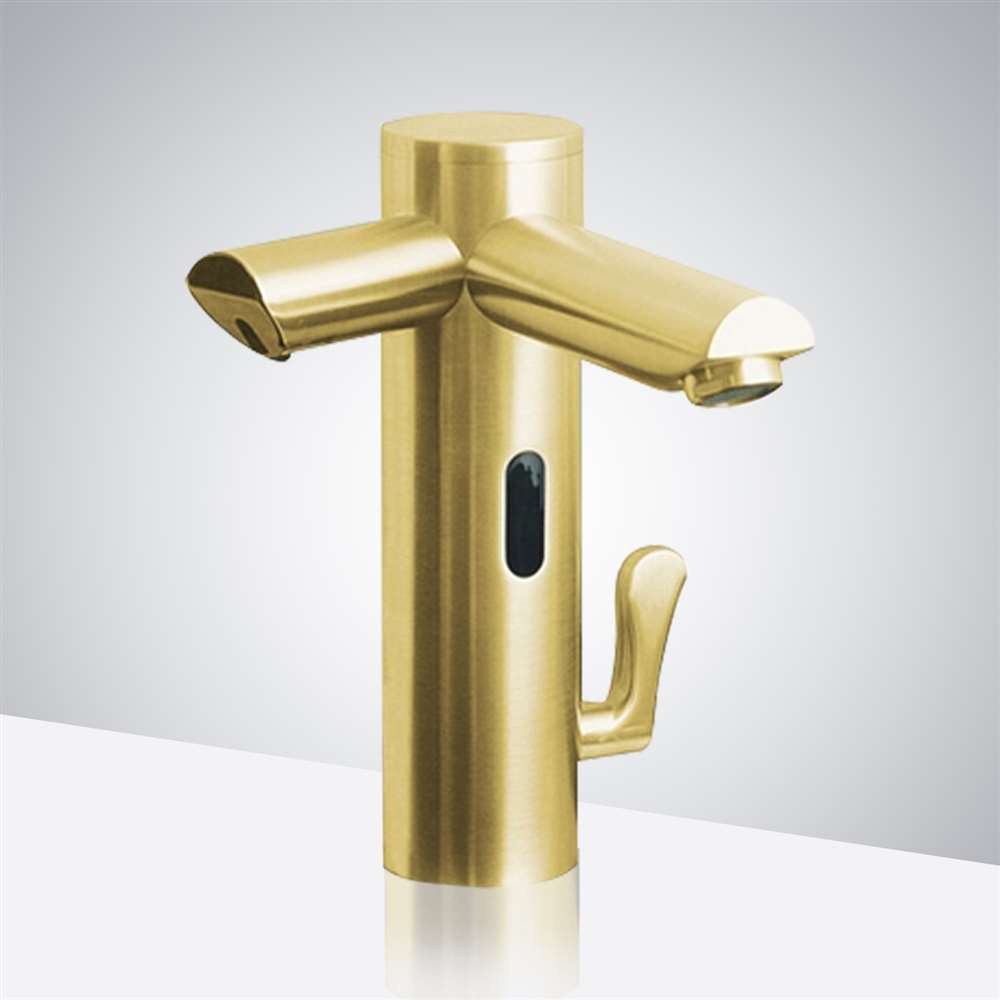
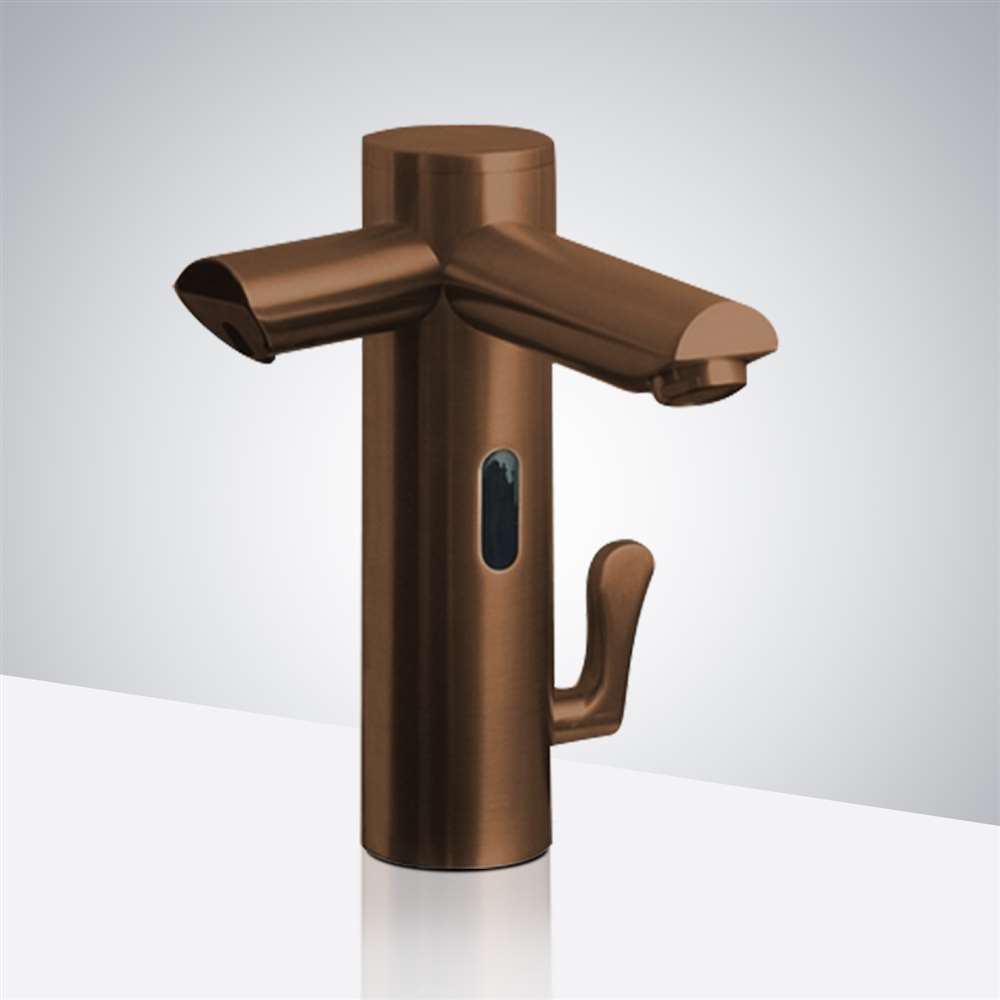
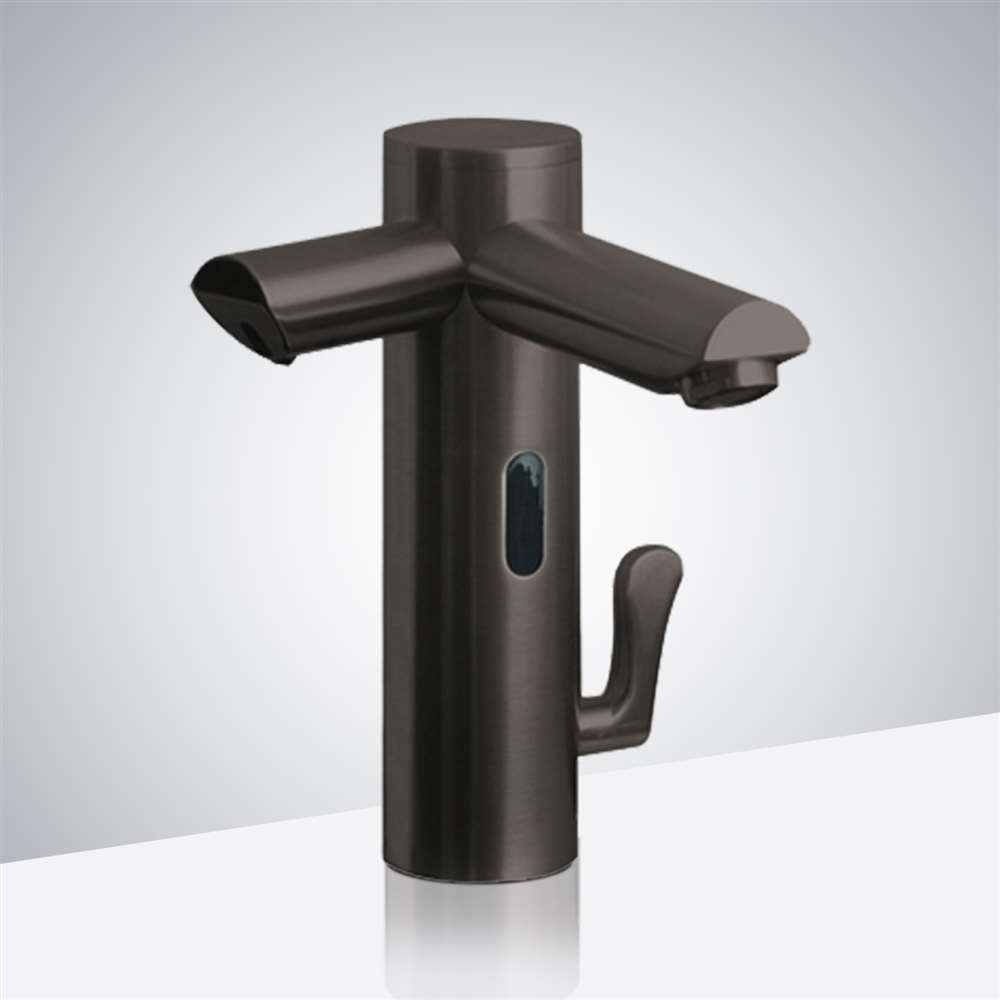
Automatic faucets can reduce the number of physical interactions required during the handwashing sequence. For hotel public washrooms, restaurants, conference floors, spas and wellness facilities, touchless activation can therefore support a more controlled user workflow.
However, sensor technology must be coordinated with the lavatory.
Read MoreShow Less
Spout projection, water trajectory and sensor detection zones should place both the activation envelope and water stream comfortably inside the basin. False activation from reflective surfaces, inadequate setback from the basin edge or excessive detection distance can negatively affect both usability and water consumption.
FontanaShowers describes its commercial touchless platform around controlled sensing, automatic shutoff and high-cycle applications, with specification resources for architects, engineers and facility teams.
Soap delivery should receive the same level of attention. Coordinating the faucet with automatic commercial soap dispensers can create a more consistent handwashing station while allowing designers to consider dispenser location, sensor interaction, refill access and countertop penetrations at the drawing stage rather than after installation.

Water Efficiency Without Sacrificing Function
Water efficiency in hospitality requires more precision than simply specifying “low-flow.”
EPA currently identifies 0.5 gallons per minute or less for public lavatory faucets as an appropriate efficiency criterion for faucets installed in non-private toilet facilities. EPA also cautions that public-lavatory flow criteria should not automatically be transferred to private residential-type lavatories, where use conditions are different.
Read MoreShow Less
For hotel design, this means public lobby restrooms and private guestrooms may require different engineering approaches.
The plumbing engineer should verify:
Q = flow rate × operating duration
For sensor faucets, controlling runtime can be as important as controlling nominal GPM because automatic shutoff limits unnecessary operation after the user leaves the detection field.
Illustrative Water-Use Chart
| Design ScenarioFlowActivation Duration700 Uses/DayApprox. Annual Use | ||||
|---|---|---|---|---|
| Existing/reference condition | 1.0 gpm | 12 sec | 140 gal/day | 51,100 gal/year |
| Efficient sensor design scenario | 0.5 gpm | 12 sec | 70 gal/day | 25,550 gal/year |
| Illustrative difference | — | — | 70 gal/day | 25,550 gal/year |
Illustrative engineering calculation only. Actual consumption depends on occupancy, operating pressure, flow control, user behavior, activation time and selected fixture.
For AEC teams, the key lesson is that flow, sensing and runtime must be modeled together.
Moisture Management Is Part of Bathroom Performance
A WELL-oriented hospitality bathroom also requires consideration of what happens when water leaves the intended flow path.
WELL W07 Moisture Management addresses strategies for reducing uncontrolled water and moisture conditions. Current WELL documentation includes attention to leak control at hard-piped fixtures and accessible or automatic shutoff strategies in applicable conditions.
Read MoreShow Less
For hotel bathrooms, practical coordination should therefore include:
- waterproofed wet-zone assemblies;
- positive drainage;
- properly sized shower drains;
- accessible isolation valves;
- concealed-connection inspection access;
- sealed wall and countertop penetrations; and
- maintenance procedures for identifying leaks before they damage adjacent construction.
Large-format architectural shower systems should be coordinated particularly carefully with drainage capacity, thermostatic controls, waterproofing and rough-in geometry.
Water Management and Legionella Risk
Fixture selection is only one component of building water management.
WELL's Water concept includes requirements associated with water quality and Basic Water Management, including development of a Legionella management strategy.
Read MoreShow Less
For hospitality projects, designers should therefore evaluate fixture selection alongside domestic hot-water distribution, temperature control, recirculation, dead-leg minimization, flushing protocols and commissioning.
A decorative faucet cannot solve a building-level water-management problem.
Conversely, a properly specified fixture can make system operation easier by providing predictable flow characteristics, accessible service components and appropriate control interfaces.
Accessibility Must Be Coordinated at Installation
Accessible design is also inseparable from fixture geometry.
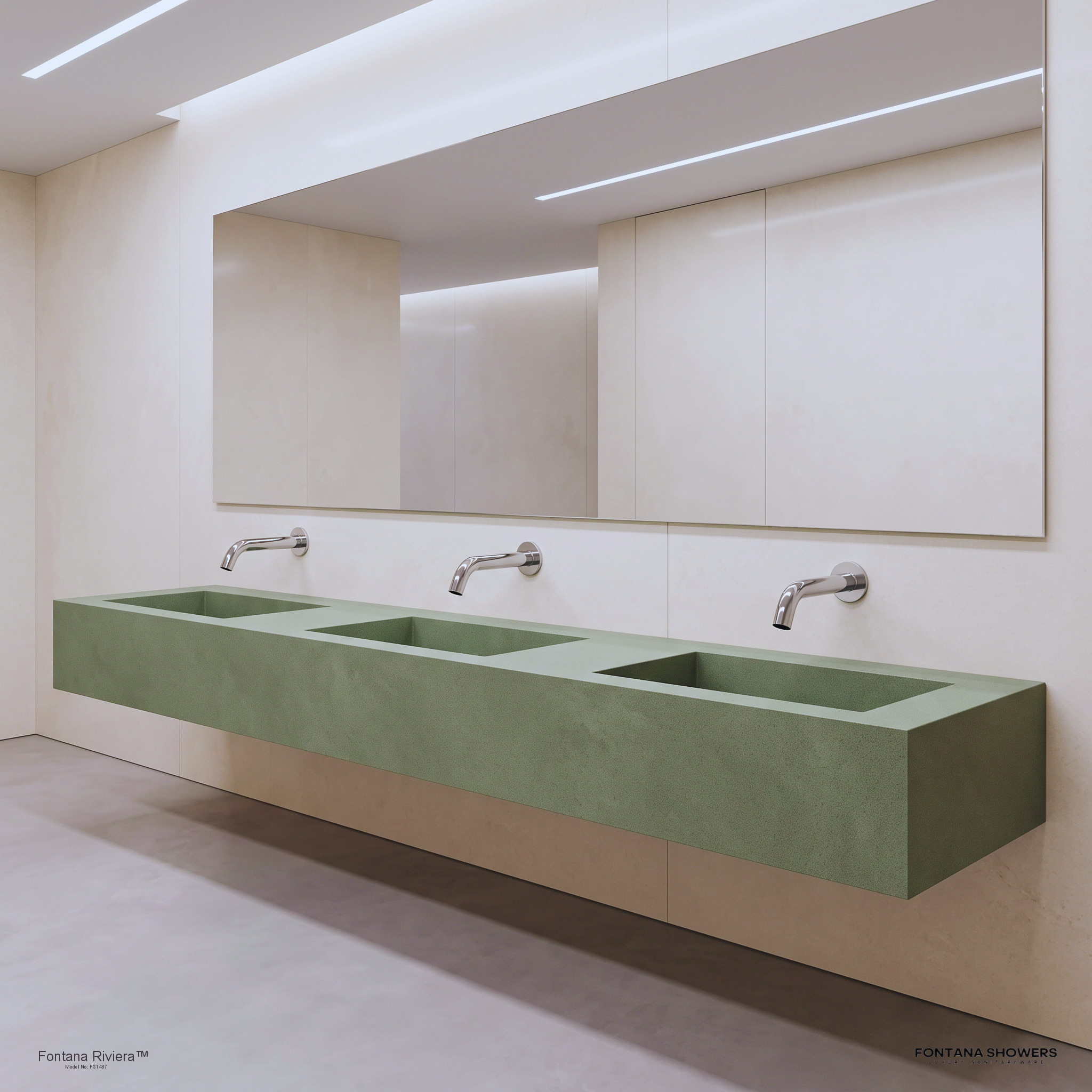
A touchless faucet may reduce the need for manual operation, but accessibility still depends on the completed lavatory assembly: mounting height, knee and toe clearance, reach ranges, basin depth, spout position and clear floor space must all be coordinated against the applicable accessibility requirements.
Read MoreShow Less
For this reason, accessibility should be verified in plans, elevations, sections and BIM coordination rather than inferred from the faucet alone.
FontanaShowers provides AEC resources for architects and designers and a BIM resource library for bathroom fixture coordination that can support this documentation workflow.


Hospitality Case Reference: 250-Key Wellness Hotel
Consider a hypothetical 250-key urban wellness hotel containing guestrooms, lobby washrooms, restaurants, meeting facilities, fitness spaces and a spa.
A WELL-oriented plumbing strategy could separate fixture requirements by operational zone.
Read MoreShow Less
Guestrooms: prioritize intuitive operation, acoustic comfort, temperature stability, drainage performance and maintainability.
Public restrooms: prioritize touchless handwashing, controlled faucet runtime, commercial-duty components and easy access for facilities personnel.
Spa and wellness areas: coordinate multi-function showers with thermostatic control, waterproofing, drainage and domestic hot-water capacity.
Food-and-beverage areas: coordinate handwashing locations, soap provision and operational hygiene protocols.
Back-of-house: prioritize durability, isolation capability and straightforward component replacement.
The lesson is not that one fixture type solves every WELL objective. The better strategy is to create a fixture schedule aligned with each hotel's occupancy, risk, maintenance and guest-experience requirements.
From Product Selection to Performance Verification
WELL Certification ultimately involves project documentation and performance verification rather than a product-labeling exercise. WELL's certification process includes documentation, professional Letters of Assurance and on-site verification requirements.
AEC specifications should therefore provide measurable acceptance criteria.
Read MoreShow Less
Commissioning may include:
- flushing supply piping;
- confirming operating pressure;
- checking leaks;
- verifying faucet flow;
- testing sensor activation and shutoff;
- calibrating mixed-water temperature;
- testing thermostatic shower controls;
- confirming drainage;
- verifying accessible installation dimensions; and
- documenting final settings for facilities management.
These requirements convert bathroom fixtures from decorative selections into maintainable building assets.
Specifying Hospitality Bathrooms for Wellness and Lifecycle Performance
The strongest WELL-oriented hospitality bathroom specification balances guest wellness, hygiene, water stewardship, accessibility, reliability and maintainability.
For architects and engineers, that means looking beyond finish schedules to the complete technical relationship between fixture, user, water supply, drainage and building operations.
FontanaShowers' commercial touchless faucets, automatic soap dispensers, architectural shower systems and professional specification resources can be evaluated within that broader design process. The objective is not to claim that an individual fixture is WELL Certified. The objective is to specify bathroom systems capable of supporting the performance strategies of a WELL-focused hospitality project.
For project teams beginning that process, the FontanaShowers hospitality bathroom design portfolio, commercial touchless faucet collection and architect and BIM specification resources provide practical starting points for product comparison, coordination and documentation.
Related WELL, Hospitality & AEC Resources
Use these FontanaShowers references and independent authority sources for WELL-oriented hospitality bathroom planning, touchless handwashing, water efficiency, plumbing standards, accessibility, moisture and water-management coordination, commissioning, BIM documentation and lifecycle facility operations.
Reference links are provided for project research and specification coordination. Inclusion does not imply that any individual FontanaShowers fixture is WELL Certified, WaterSense labeled, code approved or otherwise certified unless the exact scheduled model is supported by applicable documentation.