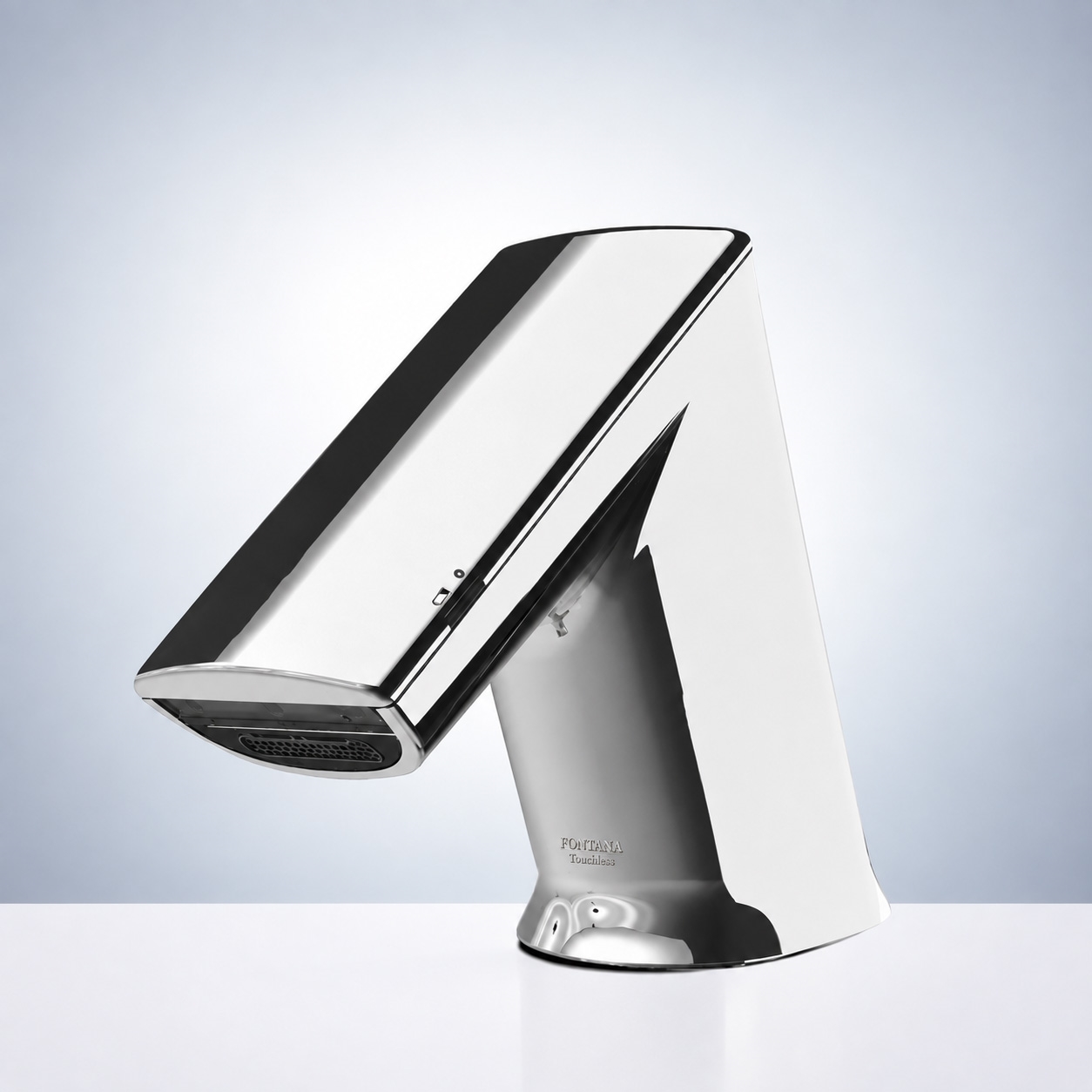
Minimize waste of water, by using the automatic bathroom sink hands free faucets. Standard faucets can be a breeding ground for germs and other bacteria and being completely touch-free operation means that you can avoid the mess and spread of germs entirely. This touchless faucet is not only hygienic but will immediately reduce water waste by eliminating unnecessary and unattended water flow.
The automatic faucet provides water only when needed. Additionally, these faucets are preset to shut off after approximately 30 seconds. Just because they are hands-free, they help reduce the spread of germs and keep the vanity area clean. Uses 4AA Alkaline Batteries (purchase separately). Water Pressure: 0.5 - 7.0 KGS/cm, 10-125 psi.Ideal for commercial use applications in public restrooms, restaurants, office buildings, public facilities, and hospitals. Fits all standard US plumbing. Designed with concealed wiring paths and hardened electrical connections to protect power delivery in hardwired commercial installations.
Fontana Verona Deck Mounted Chrome Automatic Hands Free Faucet FAQ
30-Second Safety Logic, Waterfall Hydraulics & Battery-Powered Commissioning
The Fontana Verona Chrome Automatic Hands Free Faucet combines touchless sensing, waterfall-style delivery, and ceramic valve control for efficient commercial washroom operation.
How should the 30-second automatic safety shutoff be verified during commissioning?
The faucet is preset to terminate water flow after approximately 30 seconds of continuous activation. During commissioning, technicians should intentionally maintain a valid presence within the sensing field and verify that the valve closes at the programmed timeout. After clearing the detection zone, normal activation should resume correctly. This test confirms that prolonged detection cannot result in continuous unattended water discharge.
Why does basin geometry require additional consideration with the waterfall-style outlet?
A waterfall-style discharge produces a broader stream profile than a conventional aerated outlet, making basin depth, drain position, and faucet setback important specification variables. Installers should confirm that the stream enters the effective washing zone without striking the basin wall at an excessive angle. Final commissioning should include splash testing at normal dynamic pressure to verify compatibility between the faucet outlet and selected lavatory geometry.
How should the 10–125 PSI operating range be evaluated under simultaneous fixture demand?
Supply pressure should be measured dynamically rather than relying only on static pressure readings. The faucet is specified for approximately 10–125 PSI, but pressure can decrease when nearby flush valves, faucets, or other fixtures operate simultaneously. Testing during representative peak demand confirms that the electronic valve receives adequate hydraulic supply and that waterfall discharge remains stable without excessive velocity or significant flow deterioration.
What battery-service procedure helps maintain consistent sensor and valve performance?
The automatic control system operates with four AA alkaline batteries. Facility teams should replace the batteries as a complete matched set rather than mixing new and partially discharged cells. The battery compartment and electrical connections should remain dry and accessible for service. After replacement, technicians should perform several activation and shutoff cycles to confirm stable sensor recognition and complete ceramic valve closure before returning the fixture to normal operation.


 Infrastructure Stability Achieved


 Chrome Shows Spots
  Lower Calibration Complaints