Commercial Water Management
Water Discipline
Explore how sensor-operated commercial faucets use automatic shutoff to manage water run-time, limit unattended flow, and support more consistent water-use practices in offices, schools, hospitality facilities and other busy public washrooms.
Automatic Shutoff, More Controlled Water Use
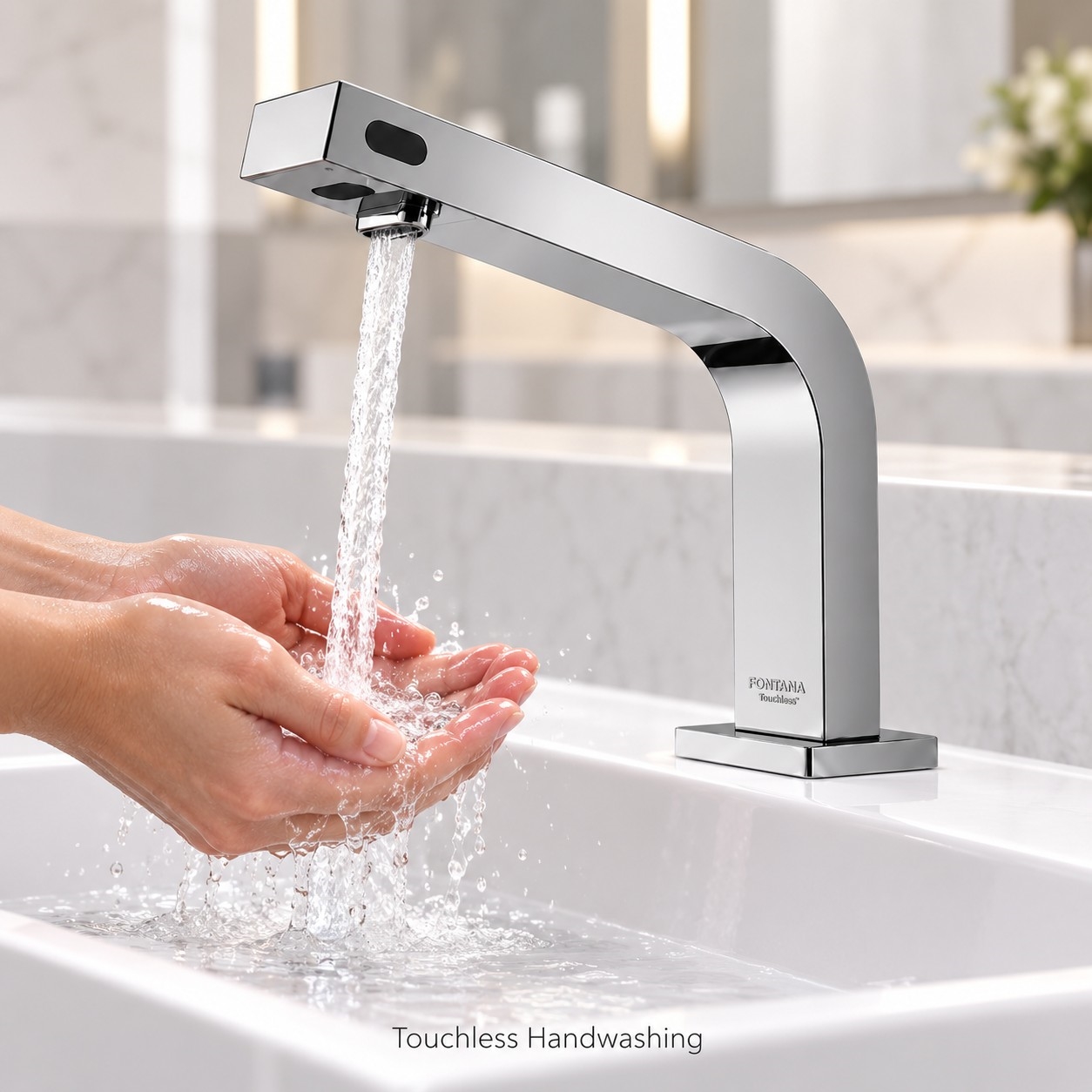
In a busy washroom, a manually operated faucet can remain open after someone finishes rinsing or leaves the basin. Sensor-operated faucets can stop water automatically when hands leave the detection area. This helps limit unintended run-time while keeping the normal washing sequence convenient. Actual water use also depends on outlet flow rate, user behavior, settings and maintenance.
Sensor selection influences how reliably a faucet begins and ends its water cycle. The linked ToF vs IR vs mmWave engineering comparison describes detection methods; the water-management priority is responsive activation and dependable automatic shutoff.
ToF vs IR vs mmWave engineering comparison
Read More
Manual flow versus automatic shutoff
Manual faucets rely on a person to close the valve after use, and partially open handles can allow unnecessary flow. Sensor-operated fixtures can end a cycle when the user withdraws. Water-loss reduction depends on shutoff timing, accurate detection, mechanical valve condition and the actual faucet flow rate.
Automatic Flow Control
How automatic shutoff supports disciplined daily water use
A conventional manual faucet usually requires a deliberate closing action after washing. A properly configured sensor faucet can stop flow once hands leave the intended use area. That change reduces dependence on user memory and can shorten accidental unattended flow. Automatic shutoff is a practical control measure, not a guarantee of a particular percentage of water savings.
|
Water-control consideration
|
Manual faucet operation
|
Automatic sensor control
|
|
Water-control consideration: Water-flow trigger
|
Manual faucet operation: A person opens the handle manually
|
Automatic sensor control: Hands entering the sensor zone can begin flow
|
|
Water-control consideration: Water shutoff
|
Manual faucet operation: Depends on user closing the handle
|
Automatic sensor control: Can stop automatically after hands withdraw
|
|
Water-control consideration: User action
|
Manual faucet operation: A separate closing step is normally required
|
Automatic sensor control: No manual closing step during normal operation
|
|
Water-control consideration: Unattended flow
|
Manual faucet operation: A forgotten open handle may keep running
|
Automatic sensor control: A defined stop response limits continued flow
|
|
Water-control consideration: Control precision
|
Manual faucet operation: Depends on handle position and user attention
|
Automatic sensor control: Depends on detection geometry and controller settings
|
|
Water-control consideration: Lighting and environment
|
Manual faucet operation: Usually independent of optical sensing
|
Automatic sensor control: Sensor design must manage ambient conditions
|
|
Water-control consideration: Maintenance needs
|
Manual faucet operation: Check cartridges, handles and supply leaks
|
Automatic sensor control: Check solenoid, sensor, aerator and leaks
|
|
Water-control consideration: Best application
|
Manual faucet operation: Situations with reliable manual user control
|
Automatic sensor control: Repeated short-use cycles needing automatic shutoff
|
Automatic shutoff principle
The practical benefit is not simply automatic activation. It is reliable valve closure when hands leave the detection area, helping limit unnecessary run-time and reduce accidental water loss during repeated washroom use.
10–30 cm
Documented sensing-distance criterion; 12 cm preset target
<30°
Documented sensing-angle criterion
IP67
Documented PCB/electronics waterproofing criterion
200,000
Lifecycle activation cycles followed by performance checks
Scope note: these figures describe Fontana finished-faucet inspection criteria. They establish neither a universal water-saving percentage nor guaranteed savings for a specific installation; verify actual run-time and flow conditions.
Why unattended water flow matters
Busy public washrooms face repeated short washing cycles, variable user habits, basin splash, occasional misuse and high fixture turnover. A handle left slightly open may continue running well after its intended use. Even small recurring periods of unattended flow can add to facility water consumption over time.
Automatic shutoff reduces dependence on the user remembering to close the faucet completely. However, it cannot compensate for every cause of water loss: dripping valves, leaking connections, excessive flow settings and poorly maintained components still require inspection and corrective action.
Run-Time Control
How sensor activation controls run-time
Sensor-operated faucets begin delivering water when the controller recognizes hands in a defined activation area. When the hands leave, the controller can close the valve after its configured response interval. The operating cycle thus follows actual user presence rather than a permanently open handle position.
For high-traffic facilities, the useful result is repeatable start-and-stop behavior: flow begins for handwashing and ends when the intended interaction finishes. Accurate sensing and correct timer settings help avoid unnecessary continuation. The linked engineering article explains the sensing configuration in
why Fontana uses precision ranging for touchless faucets.

Controlled Water Flow
Why controlled flow depends on sensor placement
A clearly defined hand-detection area helps water run during rinsing and stop when hands withdraw.
No Active User
No hands detected in the intended washing area.
Hands In Range
Presence is detected and the faucet supplies water.
Hands Withdrawn
Controller closes the valve after the defined interval.
This simplified water-control sequence illustrates automatic shutoff. Real products may apply debounce timing, filtering, anti-interference checks, maximum-run-time limits and product-specific operating rules.
Reducing nuisance flow and wasted run-time
Unintended activation can cause water to run when nobody is washing. Reliable target detection helps distinguish hands from basin reflections, nearby objects and movement outside the intended use area, which supports more controlled faucet operation.
Reliable detection can prevent unnecessary on-cycles, while automatic shutoff can limit how long an unintended cycle continues. Both depend on the specific product configuration; for a closer analysis of activation errors, see
false activations in IR, ToF and mmWave touchless faucets.
Why maintenance protects water-control performance
A sensor faucet still depends on a clean detection window, suitable installation geometry and a correctly operating valve. Residue, obstructed optics, misalignment, damaged wiring, blocked filters or solenoid faults can disrupt normal start-and-stop behavior. A leaking valve may waste water even when the sensor is functioning.
Maintenance teams should inspect sensor response, valve closure, aerator condition, supply connections and signs of dripping as part of routine checks. Automatic shutoff is most useful when the entire assembly works consistently, rather than when a timer alone is assumed to provide complete water-loss protection.
Shutoff Detection Zone
Accurate sensing supports timely automatic shutoff
Users can present their hands at different positions beneath a spout, while nearby fixtures may occupy the same general detection field. Sensor angle, range, basin depth, drain position and mounting geometry influence whether the controller recognizes a valid interaction and knows when it ends.
For additional guidance on avoiding detection outside the intended wash zone, see
why detection-zone control matters more than maximum sensor range.
What dependable shutoff testing requires
Fontana finished-product inspection criteria include sensing distance, sensing angle, ambient-light variation, adjacent-device behavior, moisture protection, environmental exposure and lifecycle operation. These checks address the conditions that can affect consistent water activation and shutoff in commercial use.
These evaluations matter because water discipline depends on accurate on-and-off response through repeated cycles. A sensor should recognize intended use and release the valve when the interaction ends. Finished-system validation must therefore assess sensor behavior and valve operation together under documented test conditions.
Water-Control
Manual and sensor-operated faucets can both be used responsibly, but automatic models provide a control advantage when users forget to close a handle. Sensor operation can terminate flow after hands leave the basin area, limiting one common source of unnecessary run-time without requiring an additional user action.
The practical value of automatic shutoff is not a guaranteed percentage reduction in water consumption. It is a repeatable stopping mechanism that can work alongside appropriate flow rates, sensible timing, leak inspection and regular maintenance to help facilities control avoidable water use.
Water-Control Selection Criteria
Do not specify a faucet solely because it is labeled “water-saving.” Check its rated flow, activation and shutoff behavior, maximum-run-time provisions if available, sensor positioning, valve serviceability and applicable test evidence. Estimate savings only from measured use conditions and comparable baseline assumptions.
|
|
|